
Caregiver decision guide
When Does a Senior Need Overnight Care? Recognizing the Warning Signs Before a Crisis
Most families wait until a frightening incident to arrange overnight care. This guide helps adult children identify the earlier, evidence-based warning signs — from nocturia-related fall risk to caregiver sleep loss — that signal when professional overnight help should begin.
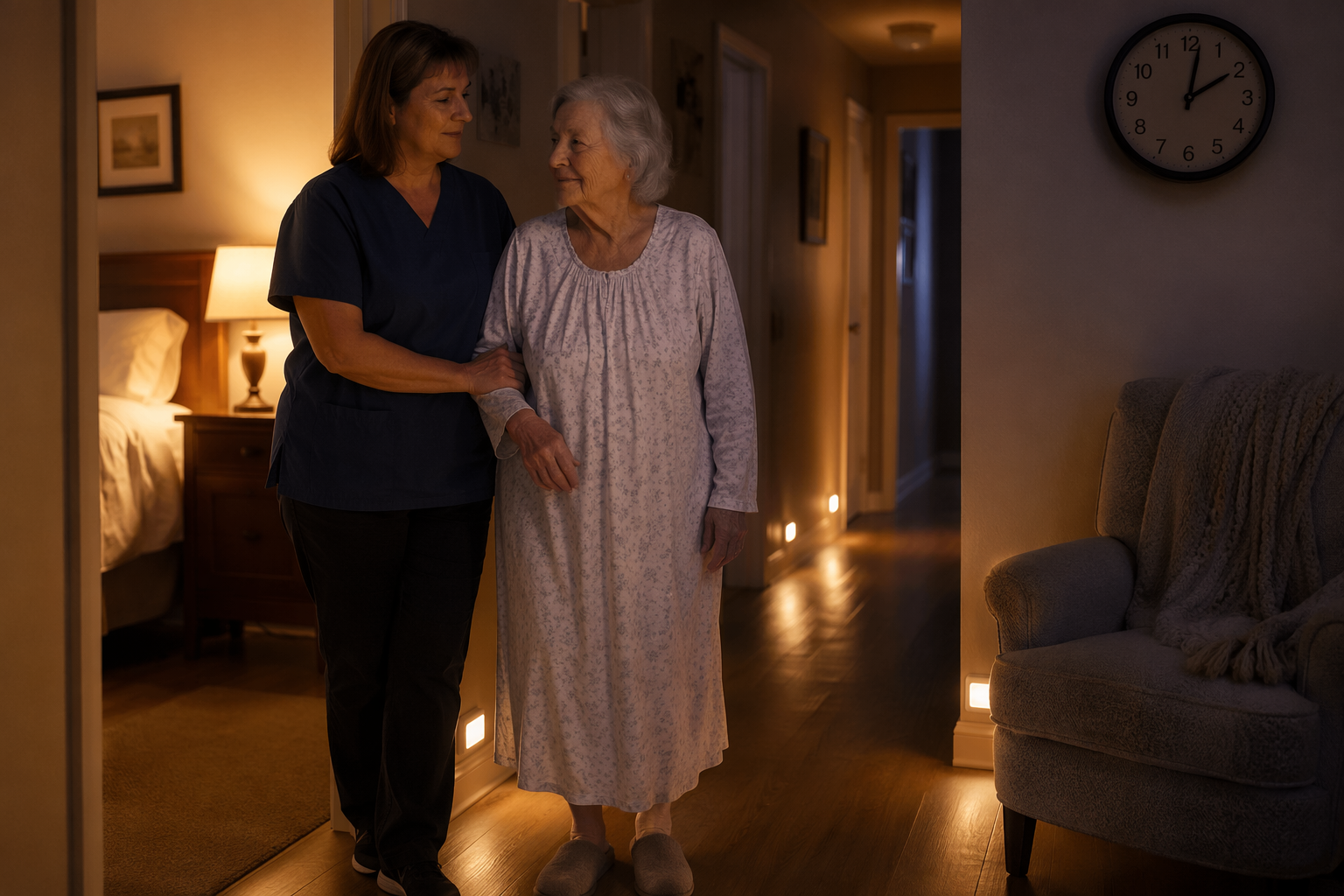
Why Overnight Care Is Different from 24-Hour Care — and Why Families Miss the Early Signs
Most families do not begin thinking about overnight care until something goes wrong. A parent falls on the way to the bathroom at 2:00 AM. A spouse with dementia wanders out the front door while the caregiver is asleep. An emergency room visit reveals a fractured hip that could have been prevented with a simple assist. These crises are the moments that force the conversation, but they are rarely the first sign that overnight help is needed.
Overnight care occupies a specific niche that families often confuse with full-time, 24-hour care. It typically involves an 8- to 12-hour shift during nighttime hours, provided either by an awake caregiver who remains alert throughout the shift or by a sleeping caregiver who can respond quickly when needed. This is distinct from 24-hour care, which covers all hours of the day and night with rotating shifts or a live-in arrangement. It is also distinct from dementia-specific overnight care, which focuses on managing behaviors like sundowning and wandering — though dementia is one of several clinical factors that can warrant overnight support.
The reason families miss the early signs is that they accumulate gradually. A parent who used to sleep through the night now gets up three times to use the bathroom. A caregiver who used to feel rested now wakes up every time the parent stirs, losing chunks of sleep that add up over weeks and months. These patterns feel manageable — until they are not. The goal of this guide is to help you recognize those patterns before they escalate into a crisis.
The Nighttime Risk Landscape: Why Darkness Compounds Danger
Nighttime is not simply daytime with the lights off. The overnight hours introduce a distinct set of risks that make falls, injuries, and medical events more likely and more dangerous. Understanding this landscape is the first step in recognizing why overnight care is a separate safety concern — not just an extension of daytime supervision.
- Reduced vision and depth perception. Even with nightlights, the dim environment makes it harder to judge distances, spot obstacles, and maintain balance. For older adults with age-related vision changes like cataracts or macular degeneration, the risk multiplies.
- Slower reaction times. The body's natural circadian rhythm slows reflexes and cognitive processing during late-night hours. An older adult who can catch themselves during the day may not be able to react quickly enough at 3:00 AM.
- Medication side effects that peak at night. Diuretics taken earlier in the day can cause urgent bathroom needs during sleeping hours. Sedatives, sleep aids, and certain blood pressure medications can cause dizziness, confusion, or unsteadiness when the person gets up suddenly.
- Lack of immediate assistance. During the day, a caregiver or family member is usually nearby. At night, the senior may be alone for hours, meaning a fall that occurs at 2:00 AM could go undiscovered until morning — significantly increasing the risk of complications.
- Disorientation from waking. Waking from deep sleep can cause temporary confusion, especially in older adults. This disorientation increases the likelihood of missteps, forgetting where the bathroom is, or attempting unsafe movements.
These factors do not exist in isolation. They compound each other. An older adult who gets up to use the bathroom at night is navigating low light, possible medication side effects, and the grogginess of waking — all while their caregiver is asleep and unable to help. This is the context in which the clinical warning signs below become urgent.
Clinical Warning Signs That Warrant Overnight Care
Certain clinical indicators are strong predictors that an older adult needs supervision during nighttime hours. These are not vague concerns — they are measurable, evidence-based risk factors that research has linked directly to nighttime injury and harm.
History of Falls
The single strongest predictor of a future fall is a past fall. According to the CDC, more than 1 in 4 older adults (65+) falls each year, and falling once doubles the chances of falling again. If your parent has already fallen — even if the injury was minor — their risk of a more serious fall is significantly elevated. Falls that occur at night are particularly dangerous because the delay in getting help can turn a treatable injury into a life-threatening one.
Nocturia and Frequent Bathroom Trips
Nocturia — the need to wake and urinate multiple times during the night — is one of the most underrecognized fall risks. The University of Alabama at Birmingham (UAB) Study of Aging found that older adults who experience nocturia were nearly 30% more likely to fall. Each bathroom trip during the night is a separate exposure to fall risk: getting out of bed, walking in low light, navigating to the bathroom, and returning. For a senior who gets up three or four times a night, those risks accumulate rapidly.
Dementia, Sundowning, and Wandering
Dementia introduces specific nighttime dangers that go beyond general fall risk. The Alzheimer's Association reports that 6 in 10 people living with dementia will wander at least once, and many do so repeatedly. Sundowning — increased confusion, agitation, and restlessness that begins in the late afternoon and extends into the night — can make the overnight period especially hazardous. A person with dementia who wakes disoriented may attempt to leave the house, try to fulfill a long-forgotten obligation, or become agitated and combative. These behaviors are not manageable through simple supervision; they require a caregiver who is trained to respond with validation and redirection rather than confrontation.
Post-Hospital Vulnerability
Hospitalization is a major destabilizing event for older adults. The combination of the original illness or injury, the disruption to sleep and routine, and the deconditioning that occurs during a hospital stay can leave a senior significantly weaker and more confused than before admission. The first few nights home from the hospital are a high-risk period for falls, medication errors, and complications. Overnight care during this transition can provide the monitoring and assistance that prevents a readmission.
Caregiver-Centered Warning Signs: When Your Own Health Signals a Need for Help
Many family caregivers hesitate to seek overnight help because they frame the decision around their parent's needs alone. But the caregiver's own health is a legitimate and critical data point. If you are the one providing nighttime supervision, your physical and mental state directly affects the quality and safety of that care.
Chronic Sleep Loss
Research from the Family Caregiver Alliance shows that family caregivers lose an average of two hours of sleep every single night when providing care. Over a week, that is 14 hours of lost sleep. Over a month, it is more than 60 hours. This level of chronic sleep deprivation impairs judgment, slows reaction times, weakens the immune system, and increases the risk of accidents and errors. A sleep-deprived caregiver is not a safe caregiver — for themselves or for the person they are caring for.
Anxiety at Bedtime
If you feel a knot in your stomach every evening as bedtime approaches, that is a warning sign. Anticipatory anxiety about what the night might bring — a fall, a wandering episode, a medical emergency — is your brain telling you that the current situation is not safe. This anxiety is not a personal failing; it is a rational response to an unsustainable caregiving arrangement.
Burnout Symptoms
The Cleveland Clinic reports that more than 60% of caregivers experience symptoms of burnout. These symptoms include emotional and physical exhaustion, irritability, changes in sleep or appetite, withdrawal from loved ones, and feeling hopeless. When nighttime caregiving is a contributing factor, bringing in professional overnight help is not an admission of failure — it is a necessary intervention that protects both the caregiver and the care recipient.
The 'Half of Falls' Problem: Why Off-Hours Are the Most Dangerous
One of the most compelling data points for overnight care comes from research on when falls actually occur. Industry data from Sensi.AI found that nearly 50% of falls happen during off-hours — the times when home care providers are not present. This statistic underscores a fundamental gap in most home care arrangements: daytime coverage leaves the most dangerous hours uncovered.
Think about what this means in practical terms. A family may have a caregiver who comes in for four hours each morning to help with bathing, dressing, and breakfast. They may have another caregiver who visits in the evening to prepare dinner and assist with medication. But the 10 hours between 9:00 PM and 7:00 AM — the hours when falls are most likely to be unwitnessed and most likely to result in delayed treatment — are left to the family caregiver or to no one at all.
Overnight care directly addresses this gap. Whether awake or sleeping nearby, an overnight caregiver ensures that someone is present during the highest-risk hours. This single intervention can dramatically reduce the likelihood of an unwitnessed fall and the cascade of complications that follow.
Awake Care vs. Sleep Care: A Decision Framework for Overnight Support
Not all overnight care is the same. The two primary models — awake care and sleep care — serve different needs, and choosing the right one depends on the senior's specific risk profile.
| Factor | Awake Care | Sleep Care |
|---|---|---|
| Caregiver state | Remains alert and awake for the entire shift | Sleeps in the home but can wake quickly to respond |
| Best for | High fall risk, severe confusion, wandering, recent hospital discharge, frequent bathroom needs | Moderate fall risk, occasional nighttime needs, general supervision and reassurance |
| Typical cost | $120–$200 per night (flat rate) or $25–$35/hour | Often lower flat rate; some agencies charge a reduced sleep rate |
| When to choose | The senior cannot be left alone for more than a few minutes at night | The senior is generally stable but benefits from having someone nearby |
| Common tasks | Continuous monitoring, bathroom assistance, repositioning, medication reminders, managing confusion | Responding to calls, assisting with occasional bathroom trips, emergency response |
The decision between awake and sleep care should be guided by the senior's specific needs, not by cost alone. A senior with a history of nighttime falls, severe dementia with wandering, or a recent hospital discharge likely needs awake care. A senior who is generally stable but lives alone and would benefit from having someone nearby in case of emergency may do well with sleep care.
If the warning signs you are noticing go beyond overnight needs — for example, if your parent needs assistance with most activities of daily living throughout the day as well as at night — you may be looking at a need for 24-hour care rather than overnight care alone. Our guide on 10 Warning Signs Your Elderly Parent Needs 24-Hour Home Care can help you evaluate the next level of support.
What Overnight Care Costs — and How to Think About Affordability
Cost is often the first concern families raise when considering overnight care, and it is a legitimate one. The national median cost of nonmedical in-home care in 2026 is $34 per hour, according to A Place for Mom's 2026 Costs of Long-Term Care and Senior Living Report. However, overnight care is often priced differently than hourly daytime care.
| Cost Model | Typical Range | Notes |
|---|---|---|
| Hourly agency rate (overnight) | $25–$35/hour | Varies significantly by state; Mississippi median ~$25/hr, South Dakota ~$44/hr |
| Flat overnight rate (awake) | $120–$200/night | Common for 8-12 hour awake shifts; may include a minimum number of hours |
| Flat overnight rate (sleep) | $80–$150/night | Lower rate reflects that the caregiver sleeps; may have a reduced response-time expectation |
| 24/7 care (for comparison) | $6,000–$10,000+/month | Requires multiple caregivers or a live-in arrangement; significantly higher than overnight-only |
These figures are national averages, and actual costs vary widely by location, level of care needed, and whether you hire through an agency or directly. Some agencies offer reduced rates for sleep shifts, while others charge a flat overnight fee regardless of whether the caregiver sleeps.
If cost is a barrier, explore financial assistance options. Our guide on Financial Help for Family Caregivers covers Medicaid waivers, VA benefits, long-term care insurance, and other funding sources that may help offset the cost of overnight care.
Your Action Guide: Checklists, Conversation Starters, and Next Steps
If you have read this far and recognize several of the warning signs in your own situation, the next step is to move from recognition to action. Below is a practical checklist to help you assess your parent's overnight needs, start the conversation, and take the first steps toward arranging care.
Overnight Care Warning Sign Checklist
- Has your parent fallen in the past 12 months, even without serious injury?
- Does your parent get up to use the bathroom two or more times per night?
- Has your parent been diagnosed with dementia or Alzheimer's disease?
- Does your parent show signs of sundowning — increased confusion, agitation, or restlessness in the evening or night?
- Has your parent been hospitalized in the last 30 days?
- Do you lose 2 or more hours of sleep per night because of caregiving responsibilities?
- Do you feel anxious or dread as bedtime approaches?
- Have you experienced symptoms of burnout — exhaustion, irritability, feeling hopeless — in the last month?
- Does your parent live alone with no one present during the night?
If you checked three or more of these items, it is worth having a serious conversation about overnight care. If you checked five or more, the need is likely urgent.
Conversation Starters for Talking to Your Parent
Talking to a parent about needing help at night can be one of the hardest parts of the process. Here are a few approaches that can make the conversation easier:
- Frame it around safety, not dependence. "I worry about you getting up in the dark. Having someone here at night would mean I can sleep knowing you are safe."
- Use your own needs as the reason. "I am not sleeping well because I am listening for you at night, and it is affecting my health. Having a night caregiver would help both of us."
- Start with a trial period. "Let's try it for two nights and see how it feels. If you hate it, we can stop." A trial reduces the pressure of a permanent decision.
- Involve a third party. A doctor, social worker, or trusted friend can sometimes say things that a family member cannot. A recommendation from a healthcare provider carries weight.
What to Expect When Contacting an Agency
When you call a home care agency about overnight care, they will typically ask about:
- The senior's specific needs — bathroom assistance, medication reminders, repositioning, fall risk, dementia behaviors
- The hours needed — exact start and end times, whether awake or sleep care is appropriate
- The home environment — whether there is a separate room for the caregiver, bathroom access, any pets or other considerations
- Pricing and payment — hourly vs. flat rate, minimum night commitments, cancellation policies, and whether they accept insurance or long-term care benefits
Before calling, it helps to have a clear picture of your parent's functional level. Our ADL/IADL Assessment Guide provides a structured way to evaluate specific activities of daily living and instrumental activities of daily living — the kind of information agencies need to match the right caregiver to your situation.
Broader Planning for Home Assistance
Overnight care is often one piece of a larger care plan. If you are just beginning to explore home assistance, our 8-Step Action Plan for Setting Up Home Assistance walks through the full process — from assessing needs to hiring and managing caregivers. And if you are still unsure whether your parent's overall situation warrants professional help, the Practical Decision Guide for In-Home Services can help you evaluate the full picture.
The decision to bring in overnight care is rarely easy. It involves financial considerations, emotional adjustments, and practical logistics. But the alternative — waiting for a crisis — is almost always harder. The warning signs are there. The data supports acting on them. The question is not whether your parent might benefit from overnight care, but whether you can afford to wait until a fall, a wandering episode, or an ER visit makes the decision for you.
Questions to bring to a clinician or OT
This is not medical, legal, or a family's final decision — only a framework. Bring these questions to a clinician, occupational therapist, or your local Area Agency on Aging.
Find Local HelpRelated reading
- Which Overnight Care Option Is Right for Your Parent? A Risk-Based Decision Matrix for Falls, Wandering, Incontinence, and Sundowning
- Overnight Care for Elderly Parents with Dementia: Managing Sundowning, Wandering, and Caregiver Sleep Deprivation
- Where to Start When Your Aging Parent Needs Help: A 5-Step Triage Framework for New Caregivers
Noticed something outdated or inaccurate on this page? Flag a correction. We review every report against CDC, NIA, and AARP HomeFit guidance before updating a page.