
Clinical term
Aging in Place: A Comprehensive Guide for Families and Caregivers
Aging in place means more than staying in a familiar house. The CDC definition, shared by the National Institute on Aging, is “the ability to live in one’s own home and community safely, independently, and comfortably, regardless of age, income, or ability level.” [1] That definition is useful because it does not stop at preference. It asks whether the home, the care system, the money, and the surrounding community can actually support the person who wants to remain there.
That is where many family conversations get uncomfortable. Most adults over 50 want to age in place, with reported preference estimates ranging from 77% to 93%, yet only about 10% of U.S. homes have the core features usually associated with basic aging readiness: a step-free entry, a bedroom and bathroom on the first floor, and at least one accessibility feature. [2] A parent saying, “I want to stay home,” may be stating something deeply reasonable. The next question is whether the house and the family system are ready to carry that wish.
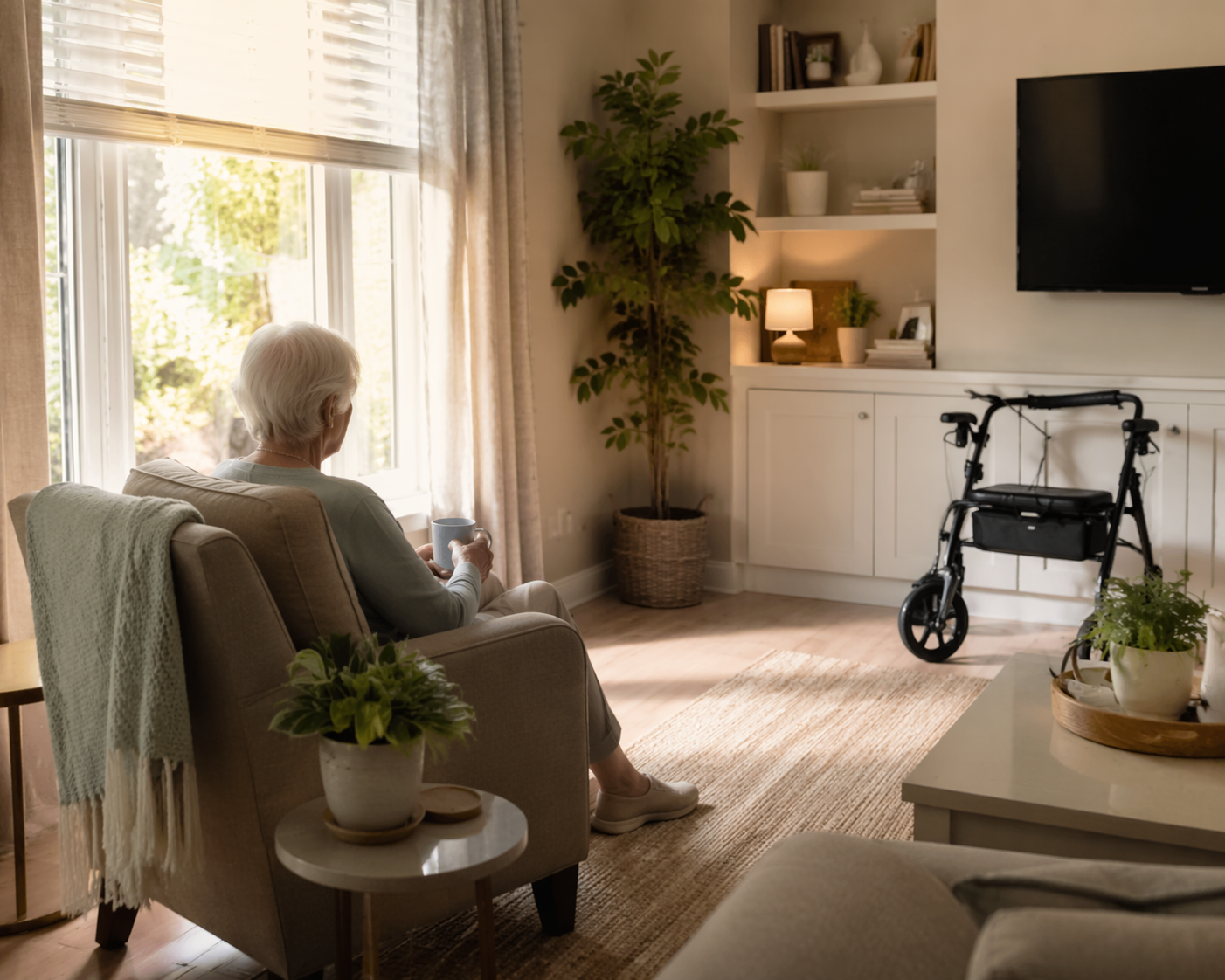
What Aging in Place Requires
The phrase can sound peaceful, almost passive. In practice, aging in place is an active arrangement. Someone has to notice the loose rug before the fall, refill the pill organizer before the missed dose, call the plumber before the only bathroom becomes unusable, and decide who answers the phone when a motion alert goes off at 2 a.m.
For a family just starting, it helps to separate the plan into three working questions:
- Can the home be entered, used, and exited safely as mobility changes?
- Can daily needs be met by the older adult, unpaid caregivers, paid help, or some combination of those?
- Can the costs be covered without assuming that family labor is unlimited or free?
Those questions do not decide in advance whether aging in place is the right answer. They make the decision visible. For a narrower explanation of the definition and the preparedness gap, see Aging in Place: Definition, Data, and the Readiness Gap.
Start With the House, Not the Wish
The house is often the first reality check because it is the part everyone can see. Stairs, bathtub walls, narrow doorways, dim hallways, basement laundry, and a front step that was never a problem at 62 can become the reason a good plan fails at 82.
Falls deserve special attention. CDC-linked aging research commonly reports that about one-third of adults 65 and older fall each year, and that roughly two-thirds of falls occur in or around the home. [2] Those figures do not mean every older adult needs a full remodel. They do mean families should treat fall prevention as a home systems issue, not as a matter of telling someone to “be careful.”
A useful first pass is room by room. The entry needs a safe way in during rain, snow, or low light. The bathroom needs support at the toilet and shower, not just a bath mat. The bedroom needs a clear path to the bathroom at night. The kitchen needs frequently used items within reach, not stored above shoulder height or below knee level. The laundry setup matters if the washer is in the basement. The family member who visits on Sunday afternoon may not see the hazards that appear at midnight.
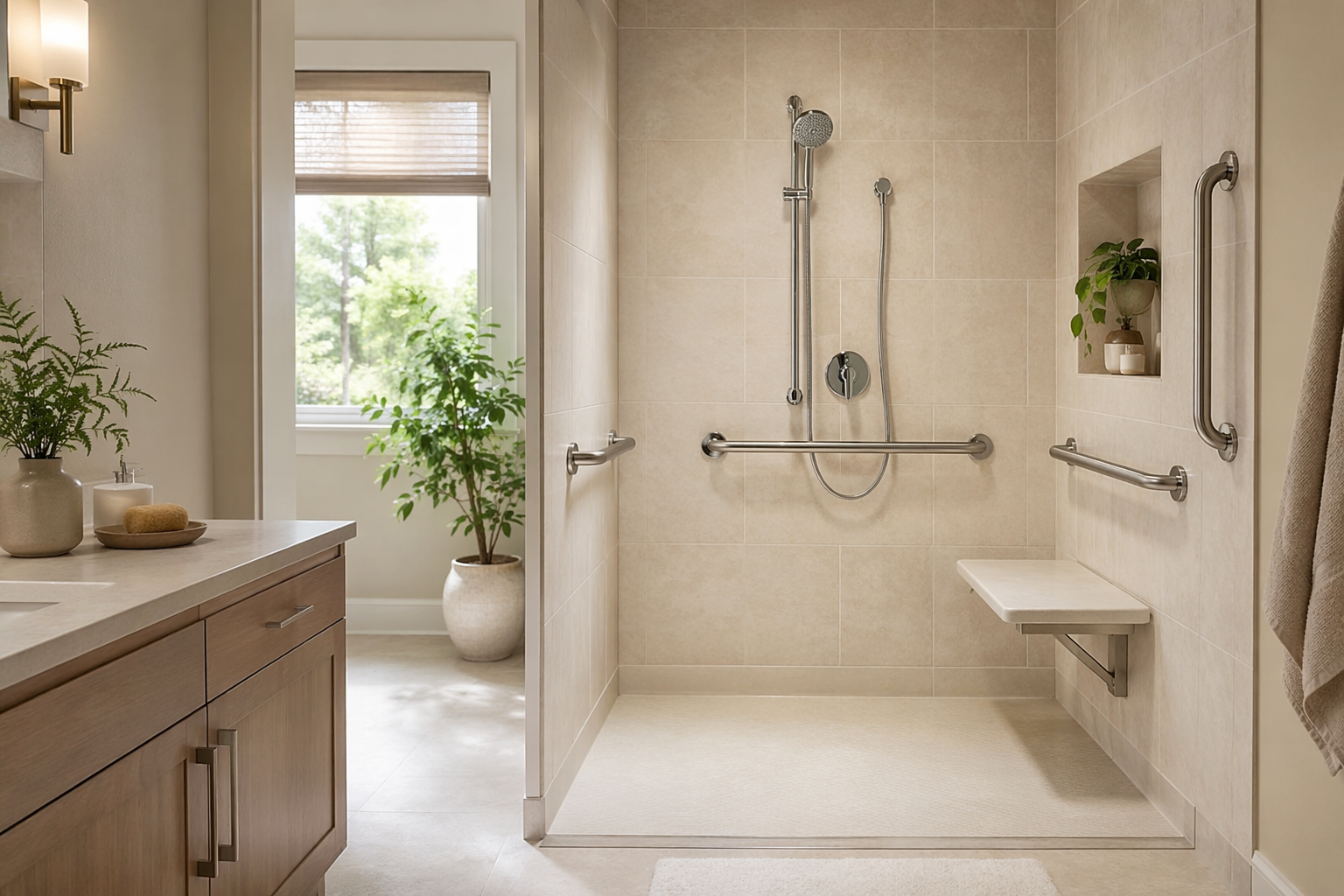
For hands-on inspection, use a room-by-room aging-in-place checklist before buying equipment. If the family is already responding to a fall, discharge, or sudden decline, a 72-hour caregiver checklist may be more useful than a long home project list.
Small Fixes and Structural Changes Are Different Decisions
Some changes are simple: brighter bulbs, removed throw rugs, a shower chair, lever-style handles, or a better night-light path. Others change the house itself: a ramp, widened doorway, curbless shower, stair lift, first-floor bedroom conversion, or accessible entrance.
Cost estimates vary because homes vary. Commercial remodeling summaries commonly place average aging-in-place modification costs around $3,000 to $15,000, while major whole-home remodels can reach $50,000 or more. [3] Those figures are not a quote for any one house. They are a warning against assuming that grab bars alone solve a home that has a second-floor bedroom, basement laundry, and no accessible bathing option.
A professional assessment can prevent families from spending money in the wrong order. An occupational therapist, physical therapist, qualified home safety assessor, or Certified Aging-in-Place Specialist can connect the person’s actual mobility, vision, balance, cognition, and daily routines to the built environment. For that step, compare professional home safety assessments, the home modification priority guide, and guidance on how to find, vet, and hire a CAPS specialist. Bathroom plans deserve particular care because a beautiful bathroom can still be unsafe; start with common bathroom design mistakes that raise fall risk before approving finishes.
Match the Plan to Functional Needs
Aging in place planning should be based on what the person can do on an ordinary bad day, not on their best performance when company is over. The relevant questions are plain: Can they bathe safely? Transfer from bed to chair? Prepare food? Manage medications? Hear the phone? Use the toilet at night? Get out of the house in an emergency? Notice a scam call? Recover if the power goes out?
The answers may change after hospitalization, a new diagnosis, a medication change, or the death of a spouse who quietly handled half the household. A plan that worked last year may now depend on one daughter’s lunch break, one neighbor’s goodwill, or one caregiver agency having staff available on short notice.
Fall prevention belongs in this functional review, but it should not sit alone. Strength, balance, medication side effects, footwear, vision, lighting, and household layout all interact. Families who need a broader framework can use Fall Prevention for Older Adults: The Four Pillars to avoid treating the house as the only problem.
Caregiving Capacity Is Part of the Budget
Families often price aging in place by adding up equipment and home modifications. That misses the recurring cost: human help. Bathing, dressing, meals, medication reminders, transportation, housekeeping, supervision, companionship, and overnight response do not disappear because the older adult is at home.
Current long-term care cost summaries place national median in-home care rates roughly in the $27 to $35 per hour range, depending on the type of home care and source methodology. [4] A few hours a week may be manageable. Four hours a day, seven days a week, becomes a different household budget. Overnight care, dementia supervision, or split shifts can move the cost beyond what families expected when they first compared staying home with moving to assisted living.
Assisted living is not automatically cheaper or better; national monthly estimates commonly fall around $4,500 to $5,350, depending on source and care level. [3][4] The fair comparison is not “home equals free” versus “facility equals expensive.” It is the specific home plan, with paid and unpaid labor counted, compared with the specific residential option and the services included there.
| Planning item | What families often count | What also needs to be counted |
|---|---|---|
| Home safety | Grab bars, ramp, shower chair | Assessment, installation quality, future mobility changes |
| Daily help | A few agency hours | Minimum shifts, weekends, overnight response, backup coverage |
| Family care | Who lives closest | Work schedules, sibling conflict, travel time, emotional strain |
| Transportation | Doctor visits | Groceries, pharmacy, social visits, bad-weather rides |
| Technology | Device price | Monitoring responsibility, privacy, false alerts, monthly fees |
Unpaid care is real care. CDC-linked summaries estimate tens of millions of informal caregivers in the United States, with co-resident caregivers often providing more than 37 hours of care per week and the annual value of unpaid care estimated in the hundreds of billions of dollars. [2] Those large numbers can sound abstract, but the family version is concrete: missed work, rearranged childcare, delayed medical appointments for the caregiver, and the sibling who becomes the default because everyone else is “too far away.”
If several relatives are involved, write down the jobs before resentment writes them for you. Who handles medication refills? Who pays bills? Who visits weekly? Who takes the parent to appointments? Who is the emergency contact? Who gets paid back? The guide on sharing the load with siblings can help turn a vague group text into a schedule. When the gap requires outside help, start with home help for the elderly and, for non-medical companionship, how to hire a private companion.
The Financial Squeeze Is Usually in the Middle
Aging in place is often presented as the affordable choice because the house is already owned or the rent is already familiar. Sometimes that is true, especially when the person needs light support and the home is already accessible. It becomes less true when the plan depends on recurring paid care, major remodeling, or a family caregiver reducing work hours.
The middle-income problem is especially hard to plan around. Some households have too much income or assets to qualify easily for Medicaid-funded long-term services, but not enough to privately pay for years of in-home care without depleting savings. CareScout’s discussion of long-term independence costs identifies this middle-class squeeze as a major planning challenge rather than a rare exception. [4]
Before assuming the house makes aging in place inexpensive, build a monthly estimate with at least four lines: home modifications, paid help, household operating costs, and caregiver-related costs. The last line may include mileage, missed wages, respite care, legal paperwork, or paying someone for tasks the family used to do casually.
For payment planning, see Paying for Home Help for an Elderly Parent and Hidden Money for Family Caregivers. These guides cannot make care cheap, but they can help families stop overlooking benefits, policies, and reimbursement paths that may already exist.
Funding Sources Can Help, but They Are Not Universal
Some funding sources can materially change an aging-in-place plan. The VA Specially Adapted Housing program lists a maximum grant amount of $126,526 for fiscal year 2026 for eligible veterans with qualifying service-connected disabilities. [5] That is a major resource for the households that qualify, but it should not be treated as a general home modification fund for all older adults.
Rural homeowners may also encounter USDA Section 504 repair grants, which NerdWallet summarizes as grants of up to $10,000 for eligible homeowners age 62 or older who cannot repay a repair loan. [6] Medicaid Home and Community-Based Services waivers may help with some supports, but eligibility, covered services, waiting lists, and consumer-directed options vary by state.
A practical funding search should be specific: veteran status, rural location, Medicaid eligibility, local housing programs, state assistive technology programs, nonprofit repair groups, and long-term care insurance terms. The broader home modification funding navigator is the better next stop when the question becomes, “Who might pay for this?”
Technology Supports the Plan; It Does Not Replace One
Monitoring technology can make aging in place safer, especially when adult children live far away. Medical alert systems, fall detection, medication dispensers, smart speakers, door sensors, stove shutoff devices, cameras in limited areas, and passive motion monitoring can all reduce blind spots.
The hard part is not only choosing a device. Someone must receive alerts, interpret them, and respond. A fall alert at 2 a.m. is not a plan unless the family has decided who calls, who has a key, when emergency services are contacted, and what happens if the older adult refuses help.
Privacy and consent belong in the first conversation, not after installation. A parent may accept a pendant but not a camera. They may agree to stove monitoring but reject location tracking. Cognitive decline may change the consent conversation over time, but dignity should not be treated as an optional feature. For device options, use the elderly monitoring systems guide. For the family conversation itself, start with how to talk to your parent about monitoring technology.
The Community Around the Home Matters
A safe house can still be an isolating place. Aging in place depends on more than the front door and bathroom. Groceries, pharmacy access, primary care, specialists, faith communities, friends, safe sidewalks, transportation, and a reliable way to reach help all affect whether home remains livable.
Loneliness is not a decorative concern. Research summarized in aging-in-place discussions reports that about one-third of adults 45 and older feel lonely. [2] That does not mean every person living alone is unsafe or unhappy. It does mean families should ask what regular human contact will look like after driving stops, friends move away, or a spouse dies.
Harvard Health’s community assessment guidance points families toward practical questions: Can the older adult reach medical care, food, social connection, and daily services from where they live? [7] If the answer depends entirely on one adult child’s car, that dependency should be named rather than hidden inside the phrase “we’ll figure it out.”
When Staying Home Needs Conditions
The most useful aging-in-place plans include reconsideration points. This is not the same as threatening a parent with “the nursing home” if they do not cooperate. It is a way to protect everyone from pretending that a plan is still working after the evidence changes.
Families can name conditions in advance:
- A fall with injury triggers a home safety reassessment and medication review.
- Repeated missed medications trigger a change in supervision, dispensing, or care hours.
- Unsafe cooking triggers meal support, appliance changes, or stove shutoff technology.
- Caregiver exhaustion triggers respite, paid help, or a family meeting about the care load.
- A budget shortfall triggers a review of benefits, home equity options, care hours, and alternative living arrangements.
Some families avoid these thresholds because they sound like failure. They are actually the opposite. They let an older adult’s wish to stay home be taken seriously enough to support it with rules, money, backup, and honesty.
Aging in place is realistic when the home can be adapted, care responsibilities are explicitly shared or paid for, risks are monitored without erasing dignity, and the family has named the conditions under which staying home would need to be reconsidered.
References
- Aging in Place: Growing Older at Home, National Institute on Aging
- Aging in Place: Are We Prepared?, Delaware Journal of Public Health
- Aging in Place: Statistics + How to Prepare in 2026, Choice Mutual
- The Cost of Aging in Place: Financial Planning for Long-Term Independence, CareScout
- Home Accessibility Funding Options in 2026, Harmar
- Home Modification Grants and Loans for Persons with Disabilities, NerdWallet
- Aging in Place: Assessing Your Community, Harvard Health Publishing
Browse more in the Glossary.