
UnitedHealthcare 2026 Changes: What Seniors Losing Coverage or Facing Higher Costs Need to Know (UHC)
insuranceUnitedHealthcare's 2026 Medicare Advantage changes — including service area reductions, benefit cuts, and a shift to HMO plans — mean that automatic reenrollment could lead to surprise costs or lost coverage. This guide explains the scale of the changes, who is affected, and the urgent steps seniors and their families should take during open enrollment.

The 2026 UnitedHealthcare Shake-Up: Why Auto-Renewal Is a Risk This Year
For millions of seniors on Medicare Advantage, the annual fall ritual is usually the same: the Annual Notice of Change (ANOC) arrives in the mail, gets a quick glance, and the plan auto-renews on January 1. In 2026, that routine could be a costly mistake.
UnitedHealthcare, the nation's largest Medicare Advantage carrier serving over 13 million members, has made sweeping changes to its 2026 portfolio. According to reporting by Healthcare Dive in October 2025, the insurer reduced its Medicare Advantage footprint by 109 counties and exited one state entirely. While UnitedHealthcare's official press release states its plans will still be available to 94% of Medicare eligibles, the geographic pullback and a strategic shift toward HMO plan designs mean that hundreds of thousands of seniors face non-renewal notices or significant changes to their existing coverage.
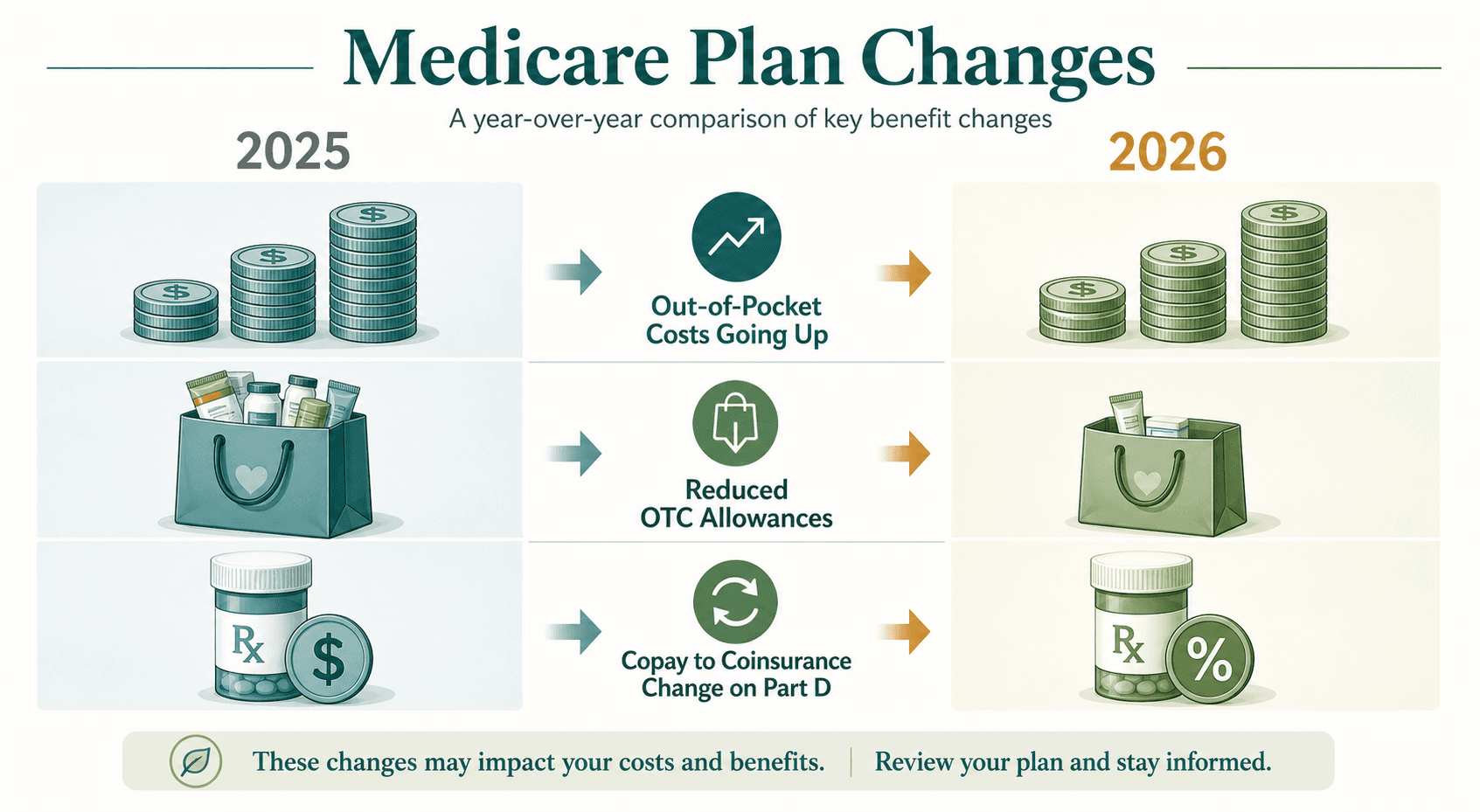
The changes are not limited to geography. UnitedHealthcare is prioritizing HMO plan designs, which will reach 92% of eligible beneficiaries in 2026, up significantly from prior years. For seniors accustomed to the flexibility of a PPO — where you can see out-of-network providers at a higher cost — this shift could mean losing access to current doctors or specialists. The carrier is also trimming over-the-counter (OTC) benefits for non-SNP plans, raising out-of-pocket maximums, and shifting drug cost structures in ways that could surprise anyone who does not read the fine print.
This guide walks through exactly what changed, who is affected, and — most importantly — the concrete steps you need to take before the Medicare Open Enrollment Period ends on December 7.
Who Is Affected by UnitedHealthcare's 2026 Service Area Reductions?
Not every UnitedHealthcare member will receive a non-renewal letter, but the number who will is substantial. Understanding which category you fall into is the first step in deciding what to do.
Group 1: You Received a Non-Renewal Notice
If your specific plan is being discontinued or your county is no longer in UnitedHealthcare's service area, you will receive a formal non-renewal notice. This letter typically arrives in September or October alongside your ANOC. It means your current plan will not exist on January 1, 2026, and you must choose a new plan — either from UnitedHealthcare's remaining offerings or from another carrier.
The 109-county reduction and the full-state exit mean this group is larger than in previous years. While UnitedHealthcare has not published a member-level breakdown, the geographic scope of the pullback is the most aggressive among major carriers. For comparison, Humana reduced by 194 counties and 3 states, and Aetna by 100 counties and 1 state.
Group 2: Your Plan Is Changing Significantly
Even if your plan is still offered in your county, the plan itself may look very different in 2026. The most common change is a switch from a PPO to an HMO design. If your plan was a PPO in 2025 and is now an HMO, your network of available doctors and hospitals will narrow. You may need to select a primary care physician and obtain referrals to see specialists — requirements that did not exist under your previous plan.
Other significant changes include reduced OTC allowances, higher out-of-pocket maximums, and new restrictions on special supplemental benefits for chronic conditions. These changes do not trigger a non-renewal notice, but they can substantially alter the value and cost of your coverage.
- Plan type change: PPO → HMO (narrower network, referral requirements)
- Reduced OTC allowance for non-SNP plans
- Higher out-of-pocket maximum (up to $9,250 for MA)
- New restrictions on food, utility, and wellness benefits for chronic condition plans
Group 3: Your Plan Looks the Same — But Costs Changed
Even if your plan name, network, and structure are identical, premiums, deductibles, and copays can change. The average monthly premium for general enrollment Medicare Advantage plans increased by $2.84 (nearly 22%) compared to 2025, according to Healthcare Dive. Drug tiers may have shifted, moving a medication you take from a copay tier to a coinsurance tier. The only way to know is to read your ANOC line by line.
Key 2026 Benefit Cuts and Cost Increases to Watch For
The 2026 plan year includes several industry-wide and UnitedHealthcare-specific changes that directly affect out-of-pocket costs. The table below summarizes the most important shifts from 2025 to 2026.
| Benefit or Cost Element | 2025 | 2026 | Impact |
|---|---|---|---|
| MA Maximum Out-of-Pocket (MOOP) | $9,200 (in-network) | $9,250 (in-network) | Higher ceiling on annual cost exposure |
| Part D Out-of-Pocket Cap | $2,000 | $2,100 | $100 increase in maximum drug costs |
| Part D Maximum Deductible | $590 | $615 | Higher deductible before coverage kicks in |
| Part B Monthly Premium | $185.00 (2025 est.) | $202.90 | Standard increase for 2026 |
| Average Part C Monthly Premium | ~$11.16 | ~$14.00 | Roughly 22% increase in average premium |
| OTC Allowance (Non-SNP Plans) | Varies by plan | Reduced in many plans | Less flexible spending on everyday health items |
| Special Supplemental Benefits for Chronically Ill | Broad eligibility | Restricted (alcohol, cannabis, tobacco, cosmetic surgery excluded) | Fewer options for food, utilities, and wellness |
For UnitedHealthcare specifically, the shift toward HMO designs is the most consequential structural change. HMO plans typically offer lower premiums and more predictable costs, but they require members to stay within a defined network and obtain referrals for specialist care. Seniors who have been on a PPO plan and value the freedom to see any doctor without a referral may find the HMO model restrictive.

Part D Changes in 2026: Higher Deductibles and a New Coinsurance Reality
Prescription drug coverage is undergoing some of the most significant changes for 2026. While the Inflation Reduction Act's $2,000 out-of-pocket cap was a landmark change for 2025, that cap has risen to $2,100 for 2026. The maximum Part D deductible has also increased from $590 to $615.
Perhaps the most impactful change for seniors on multiple medications is the industry-wide shift from fixed copays to percentage-based coinsurance for higher-tier drugs. According to UnitedHealthcare's own educational materials, many plans are now applying coinsurance to Tiers 3, 4, and 5, while keeping copays for Tiers 1 and 2.
How Coinsurance Changes Your Costs
Under a copay system, you pay a fixed dollar amount for each prescription — say $47 for a Tier 3 drug. Under coinsurance, you pay a percentage of the drug's list price. If a Tier 3 drug costs $600 and your plan has a 20% coinsurance after a $400 deductible, your first fill would cost $440 ($400 deductible + $40 coinsurance). After the deductible is met, each subsequent fill costs 20% of the drug price.
- Tier 1 (Preferred generics): Typically still $0–$5 copay
- Tier 2 (Non-preferred generics): Typically $7–$15 copay
- Tier 3 (Preferred brand): Often moving to coinsurance (10%–25%)
- Tier 4 (Non-preferred brand): Often moving to coinsurance (25%–50%)
- Tier 5 (Specialty): Almost always coinsurance (25%–33%)
UnitedHealthcare's 2026 plans still offer $0 copays for Tier 1 prescriptions, which is a valuable feature for seniors on generic medications. But for those on higher-tier drugs, the coinsurance shift can dramatically increase monthly costs, especially early in the year before the deductible is met.
Your Action Plan: 5 Steps to Take Before Open Enrollment Ends (Dec 7)
The Medicare Open Enrollment Period runs from October 15 to December 7. If you do nothing, your current plan will auto-renew — but as detailed above, that could mean higher costs, a narrower network, or a plan that no longer covers your doctors. Here is what to do now.
Step 1: Read Your Annual Notice of Change (ANOC) Carefully
Your ANOC is mailed in September. It lists every change to your plan for the coming year — premiums, deductibles, out-of-pocket maximums, drug tier placements, network changes, and benefit reductions. Do not skim it. Compare it side by side with your 2025 Summary of Benefits. Pay special attention to:
- Any mention of plan discontinuation or non-renewal
- Changes to your plan type (PPO → HMO)
- Increases in the maximum out-of-pocket limit
- Drug tier changes for medications you take regularly
- Reductions in OTC or supplemental benefits
Step 2: Use the Medicare Plan Finder — Now with Provider Network Listings
For the first time in 2026, the Medicare Plan Finder on Medicare.gov includes provider network listings. This is a major improvement. You can now search for plans and immediately see whether your current doctors and preferred hospitals are in-network — without having to call each plan or visit individual provider directories.
Enter your medications, preferred pharmacies, and doctors. The tool will show you estimated annual costs for each plan, including premiums, deductibles, and drug costs. This is the single most important tool for comparing your options.
Step 3: Check If You Qualify for a Special Enrollment Period (SEP)
If you received a non-renewal notice because your plan is being discontinued or your county is no longer served, you qualify for a Special Enrollment Period. This SEP allows you to enroll in a new Medicare Advantage plan or return to Original Medicare (with or without a Part D plan) outside the standard Open Enrollment window.
Other SEP-qualifying events include moving out of your plan's service area, losing employer-sponsored coverage, or qualifying for Extra Help. If you think you qualify, contact Medicare at 1-800-MEDICARE or your State Health Insurance Assistance Program (SHIP) to confirm.
Step 4: Contact Your State Health Insurance Assistance Program (SHIP)
SHIP provides free, unbiased, one-on-one counseling for Medicare beneficiaries. Counselors are trained to help you compare plans, understand your ANOC, and navigate enrollment. They do not sell insurance and do not represent any carrier. This is the safest resource for personalized guidance, especially if you are overwhelmed by the volume of changes.
For broader support navigating senior care services, including help coordinating medical appointments and community resources, see our guide on Senior Health Services Coordination: How Area Agencies on Aging Help Families Navigate Care.
Step 5: Compare Alternatives — Other Carriers and Medigap
While UnitedHealthcare is reducing its footprint, other carriers are expanding. Elevance Health is adding 64 counties and 1 state for 2026. Centene is adding 51 counties. Depending on where you live, you may have competitive options from these or other carriers that offer similar benefits with broader networks.
If you are considering leaving Medicare Advantage entirely, Medigap (Medicare Supplement Insurance) is an option — but only if you are within your 6-month Medigap Open Enrollment Window (which starts when you enroll in Part B at age 65 or older) or have a guaranteed issue right. Outside of these windows, insurers can use medical underwriting and may deny coverage or charge higher premiums based on health conditions.
Exploring Your Alternatives: Other Carriers and Medigap Options
If you are among the seniors who need to find a new plan for 2026, you have several paths forward. The right choice depends on your health needs, budget, preferred doctors, and tolerance for network restrictions.
Option 1: Switch to Another Medicare Advantage Carrier
The Medicare Advantage market remains competitive. While UnitedHealthcare, Humana, and Aetna are all reducing their footprints, other carriers are moving in. The table below shows the directional changes for 2026.
| Carrier | 2026 Direction | Counties Added / Reduced | States Added / Exited |
|---|---|---|---|
| UnitedHealthcare | Reducing | -109 counties | -1 state |
| Humana | Reducing | -194 counties | -3 states |
| Aetna (CVS Health) | Reducing | -100 counties | -1 state |
| Elevance Health | Expanding | +64 counties | +1 state |
| Centene | Expanding | +51 counties | No change |
If you live in a county where Elevance or Centene is expanding, you may find plans with competitive $0 premiums, robust OTC allowances, and broad local networks. Use the Medicare Plan Finder to compare these options against any remaining UnitedHealthcare plans in your area.
Option 2: Consider Medigap (If You Are in Your Open Enrollment Window)
Medigap policies supplement Original Medicare (Part A and Part B). They allow you to see any doctor or hospital that accepts Medicare nationwide — no networks, no referrals. However, Medigap does not cover prescription drugs, so you would need to enroll in a separate Part D plan.
UnitedHealthcare also offers Medigap plans (A, B, G, K, L, and N) and insures over 4.5 million seniors through this product line. Premiums vary significantly by location. For example, a 66-year-old woman in Philadelphia, PA might pay $165.58/month for Plan G, while the same plan in Brooklyn, NY could cost $326.75/month. In Mobile, AL, Plan G is approximately $141.82/month.
The key constraint is timing. The 6-month Medigap Open Enrollment Window begins when you are 65 or older and enrolled in Part B. During this window, you have guaranteed issue rights — insurers cannot deny you coverage or charge higher premiums due to pre-existing conditions. After this window closes, you may face medical underwriting. If you are still within your window, switching to Medigap is worth serious consideration, especially if you value provider flexibility and predictable out-of-pocket costs.
If the financial impact of higher out-of-pocket costs or premium changes is a concern, our guide on The Hidden $7,200 Gap: A Practical Guide to Finding Financial Help When Caring for Aging Parents provides resources for families facing unexpected expense burdens.
Timeline: Key Dates for the 2026 Medicare Open Enrollment
Missing a deadline can lock you into a plan you do not want or leave you without coverage. Mark these dates on your calendar.
- September 2025: Annual Notice of Change (ANOC) and non-renewal notices mailed by UnitedHealthcare and all Medicare Advantage carriers
- October 1, 2025: Medicare Open Enrollment begins — you can start comparing plans on Medicare.gov
- October 15 – December 7, 2025: Medicare Open Enrollment Period — you can switch Medicare Advantage plans, switch from Original Medicare to Medicare Advantage (or vice versa), and change Part D plans
- December 7, 2025: Open Enrollment ends — any changes made by this date take effect January 1, 2026
- January 1, 2026: New coverage begins for all plans selected during Open Enrollment
- January 1 – March 31, 2026: Medicare Advantage Open Enrollment Period — if you are enrolled in a Medicare Advantage plan, you can switch to a different MA plan or return to Original Medicare (with a Part D plan) once during this period
For families managing the broader financial and care coordination challenges that come with aging, understanding how rising healthcare costs affect overall budgets is critical. Our article on The Hidden Costs of Aging in Place in 2026: Why Families Underestimate the True Price Tag explores how Medicare changes fit into the larger picture of home care expenses.
See This Term in Context
- Help for Elderly and Disabled Adults at Home: A Family Guide to In-Home Care, HCBS, and Daily Living Support
A practical guide for family caregivers navigating the patchwork of in-home services and payment options — from personal care and home health to meal delivery and transportation — so their loved one can age in place safely.
- Senior Health Care Services: A Complete Taxonomy and Decision Framework for Family Caregivers
A comprehensive guide for family caregivers navigating the fragmented landscape of senior health care services. Learn how to build a personalized 'care stack' by understanding service types, settings, costs, and payment sources.
- Hospice vs. Palliative Care: A Family Caregiver’s Decision Framework
Understand the critical difference between hospice and palliative care — when each starts, what changes for your family, and how to recognize the right time to transition. This guide helps adult children caring for a seriously ill parent make informed, timely decisions.
Also related: The Hidden $7,200 Gap: A Practical Guide to Finding Financial Help When Caring for Aging Parents, The Hidden Costs of Aging in Place in 2026: Why Families Underestimate the True Price Tag, Senior Health Services Coordination: How Area Agencies on Aging Help Families Navigate Care
Comments
Join the discussion with an anonymous comment.