
Dementia Bathing Refusal: A Caregiver’s Guide to Overcoming Bath Resistance with Dignity
Bathing refusal in dementia is not stubbornness—it is a fear-based response to neurological changes. This guide helps family caregivers understand why resistance happens and provides practical, person-centered techniques to make bathing safer and less distressing for everyone.
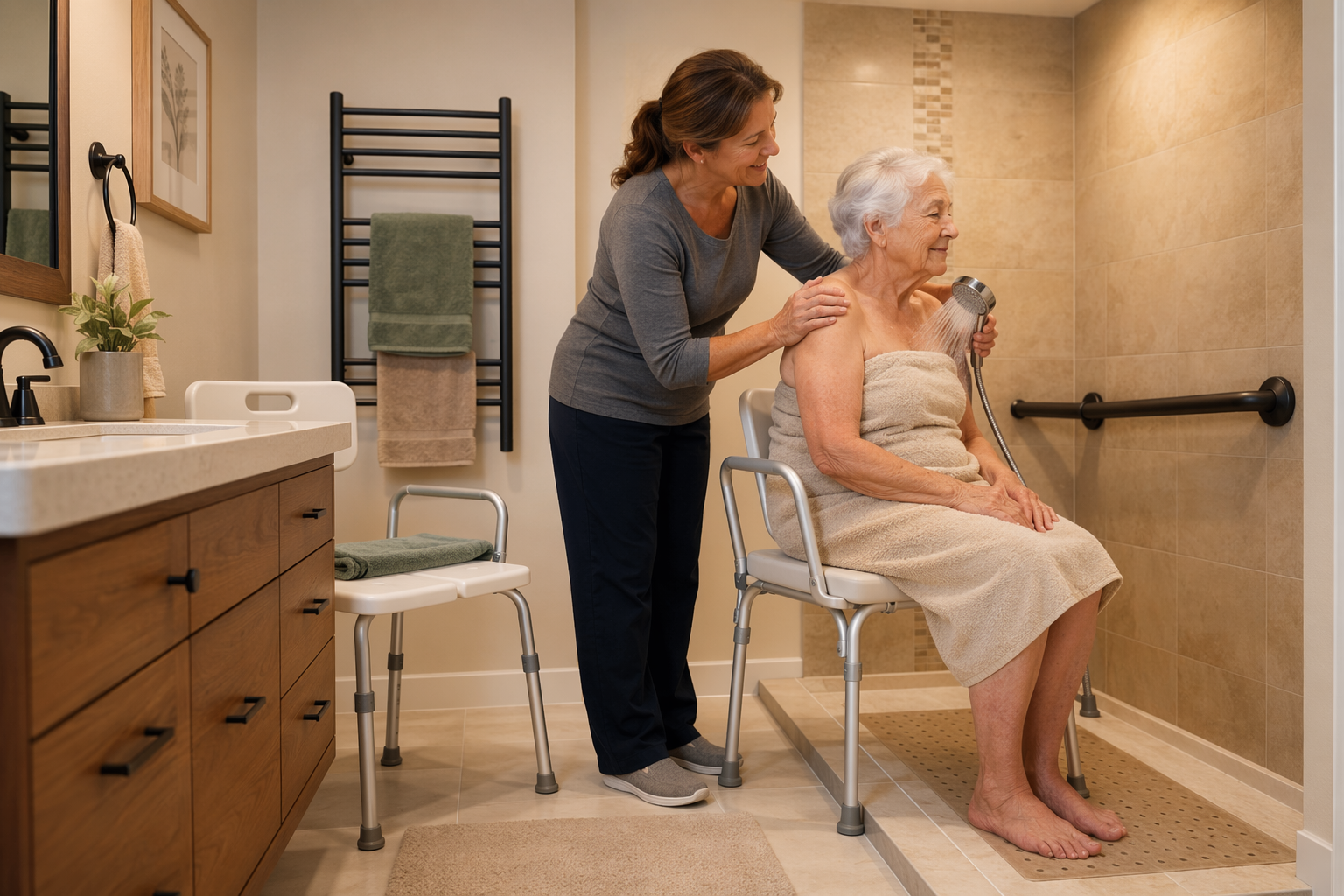
Why Dementia Changes Bathing Behavior
When a person with Alzheimer's or another dementia refuses to bathe, it is easy to interpret the resistance as stubbornness or a lack of cooperation. But the behavior almost always has a neurological root. The brain changes caused by dementia alter how a person perceives their own body, their environment, and the sensations that come with bathing.
The National Institute on Aging explains that a person with dementia may regard bathing as scary, embarrassing, or physically unpleasant. This is not an exaggeration. Depth perception deteriorates as dementia progresses, making the edge of a bathtub or the surface of the water appear as a threatening drop-off. The person cannot accurately judge how far down the water is, so stepping in feels like stepping into a void.
Sensory processing also changes. The Family Caregiver Alliance notes that shower water can feel like stinging to someone with dementia because the brain misinterprets normal pressure as pain. Cold air on wet skin, the sound of running water, and the sensation of being undressed can all trigger a fight-or-flight response. Add to this the loss of dignity that comes with needing help for a private activity, and the result is a person who is genuinely terrified — not being difficult.
Setting Realistic Bathing Expectations
One of the most common sources of caregiver stress is the belief that a full bath or shower is required every day. For someone with dementia, that standard is neither necessary nor advisable.
The National Institute on Aging and the Alzheimer's Association both recommend bathing two to three times per week, with sponge baths on the other days. The Family Caregiver Alliance goes further, stating that daily bathing is not necessary unless the person is incontinent — once or twice a week may be sufficient. Over-bathing can dry out aging skin, making it more prone to cracking and infection.
If a full bath or shower is impossible on a given day, the one body part per day approach is a practical alternative. The Alzheimer's Association suggests washing one area of the body each day — arms one day, legs the next, torso the next — so that over the course of a week the person is fully clean without ever enduring a long, overwhelming session.
- Full baths or showers: 2–3 times per week is sufficient for hygiene.
- Sponge baths: Use on non-bath days to maintain cleanliness without triggering resistance.
- One body part per day: Wash a different area each day to avoid overwhelming the person.
- Incontinence care: More frequent cleaning may be needed, but full immersion is not required.
Pre-Bath Preparation: Setting the Stage for Success
The environment matters enormously. A cold, dimly lit bathroom with hard surfaces and unfamiliar equipment will amplify every fear. Preparing the space before the person enters can prevent resistance before it starts.
The NIA recommends making the bathroom inviting — warm, well-lit, and organized. Gather all supplies in advance so you never have to leave the person alone. Check the water temperature before they enter; the NIA home safety guide advises setting the water heater to a maximum of 120°F to prevent scalding, as people with dementia may not be able to communicate that the water is too hot.
- Warm the room: Turn on a space heater or run warm water for a few minutes before the person undresses.
- Gather everything: Towels, washcloths, soap, shampoo, lotion, clean clothes — have it all within arm's reach.
- Check the water: Test the temperature with your wrist or a thermometer. 120°F maximum.
- Set up equipment: Place the tub bench, non-slip mat, and handheld showerhead before the person enters.
- Improve lighting: Bright, even light reduces shadows that can look like holes or obstacles to someone with depth perception problems.
For a broader walkthrough of home safety, see the Room-by-Room Fall Prevention Checklist, which covers bathroom-specific hazards in detail.
Communication Techniques That Reduce Resistance
How you approach the person verbally and non-verbally can determine whether bathing becomes a battle or a manageable routine. The goal is to preserve the person's sense of control and dignity at every step.
The NIA recommends using matter-of-fact language — a calm, direct statement like It's time for a bath now rather than asking Do you want to take a bath? (which invites a refusal). Offering limited choices preserves autonomy without overwhelming the person: Do you want to bathe now or in 15 minutes?
- Give limited choices: 'Would you like to bathe now or after lunch?' — not 'Do you want to bathe?'
- Use step-by-step cues: 'Put your feet in the tub. Now hold the bar. Now sit down.' Break the task into single actions.
- Try the 'watch me' technique: Demonstrate each step — 'I'm putting my hand in the water. See? Now you try.'
- Let them participate: Hand the person a washcloth or let them hold the handheld showerhead. Having a role reduces feelings of helplessness.
- Avoid arguments: If the person says 'I already bathed,' do not correct them. Redirect: 'Let's just freshen up a bit.'
Addressing Specific Fears: Water, Cold, and Exposure
Each fear has a specific solution. Understanding the source of the distress allows you to address it directly rather than trying to override it with persuasion.
Fear of the shower spray (the 'stinging' sensation)
The Family Caregiver Alliance advises adjusting the shower pressure to the softest possible setting. A handheld showerhead with adjustable flow allows you to control both the direction and the intensity of the water. Aim the spray at the person's back or shoulders first, not their face, and let them see and touch the water before it hits their body.
Fear of stepping into the tub or shower
Depth perception problems make the tub edge look like a cliff and the water surface look impossibly far away. The Alzheimer's Association recommends filling the tub with only 2–3 inches of water before the person enters. The Family Caregiver Alliance suggests letting the person get into the tub with very little water first, then filling it once they are seated and comfortable. Never convert a shower user to a bath or vice versa — the unfamiliarity will increase anxiety.
Fear of being cold
Wet skin in cool air is genuinely uncomfortable, and someone with dementia may not be able to articulate that they are cold. Use a towel warmer to preheat towels and robes. Keep a large towel draped over the person's shoulders throughout the bath to retain warmth and provide a sense of covering. The NIA recommends putting a towel over the person's shoulders to reduce the feeling of exposure.
Fear of being naked and vulnerable
Loss of modesty is deeply distressing. The Alzheimer's Association recommends using large towels to wrap around the person for privacy and only uncovering one area at a time. Keep the bathroom door closed and the room warm. If the person is more comfortable bathing in a swimsuit or with a towel wrapped around them, allow it — the goal is cleanliness, not conventional bathing protocol.
Equipment Adaptations for Dementia-Friendly Bathing
The right equipment can transform bathing from a frightening ordeal into a manageable routine. For someone with dementia, the key considerations are safety, comfort, and visual clarity.
| Equipment | Why It Helps | Key Feature for Dementia |
|---|---|---|
| Handheld showerhead with adjustable pressure | Allows you to control water direction and intensity; avoids the 'stinging' sensation | Soft-flow setting; detachable so the person does not have to stand under a fixed spray |
| Padded tub bench or transfer bench | Eliminates the need to step over the tub edge; allows seated bathing | Padded seat for comfort; contrasting color against the tub for visibility |
| Grab bars in contrasting colors | Provides stability during entry, exit, and position changes | Contrasting color (e.g., white bar on a dark wall) helps depth perception |
| Non-slip adhesive strips or mat | Reduces fall risk on wet surfaces | Bright or patterned strips improve visibility of the wet zone |
| Raised toilet seat with handrails | Makes transfers from bath to toilet safer and easier | Handrails provide support for standing and sitting |
| Towel warmer | Pre-warms towels and robes; reduces the shock of cold air on wet skin | Creates a comforting, spa-like element that can reduce resistance |
Related reading
Noticed something outdated or inaccurate on this page? Flag a correction. We review every report against CDC, NIA, and AARP HomeFit guidance before updating a page.
Part of the Fall Prevention section.