
When Falls Signal the Need for 24-Hour Care: A Decision Guide for Families
If your parent has recently had a fall, you may be wondering whether 24-hour supervision is necessary. This guide helps you weigh fall risk factors, costs, and care options to make an informed decision.
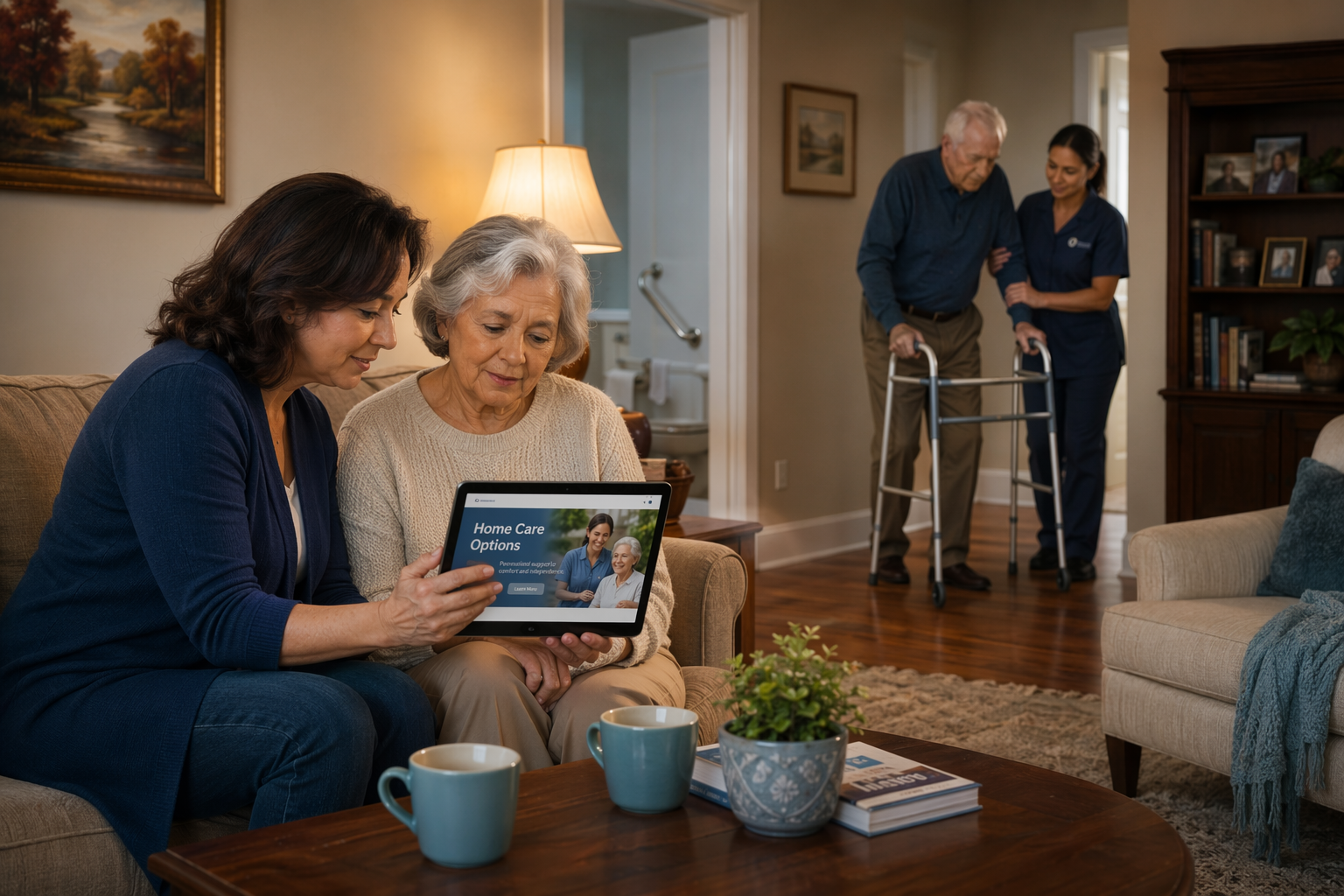
The discharge planner says the words that land like a second blow: "Maybe your mom needs 24‑hour care now." You are still holding the hospital bag, still replaying the phone call from the neighbor who found her on the bathroom floor. Now there is a decision you did not ask for, and no one is giving you a clear way to make it.
One Fall Is a Signal, Not a Fluke
According to the CDC, more than one out of four older people falls each year. And falling once doubles your chances of falling again. That is not a statistic you can shrug off. The first fall is a signal, not an accident. In 2021, falls caused over 38,000 deaths among older adults and nearly 3 million emergency department visits. The total healthcare cost of non‑fatal falls? $80 billion per year (2020 data), with 67% paid by Medicare. These numbers are not meant to scare you. They are meant to shift your framing: this is a recurring risk, not a one‑time event. The question is not whether another fall can happen, but how to reduce the odds and the harm when it does.
Home care providers list ten signs that 24‑hour supervision may be warranted—frequent falls, confusion, wandering, bathroom accidents, family caregiver exhaustion. That list is useful as a screening tool, but it does not tell you what to do. You can check off five of these and still not know whether you need round‑the‑clock care or just more help during the day. The real decider is what happens after dark.
The Nighttime Decides Everything
Most families assume that "24‑hour care" means a caregiver lives in and is available all the time. But there is a critical difference between live‑in care and 24‑hour awake care.
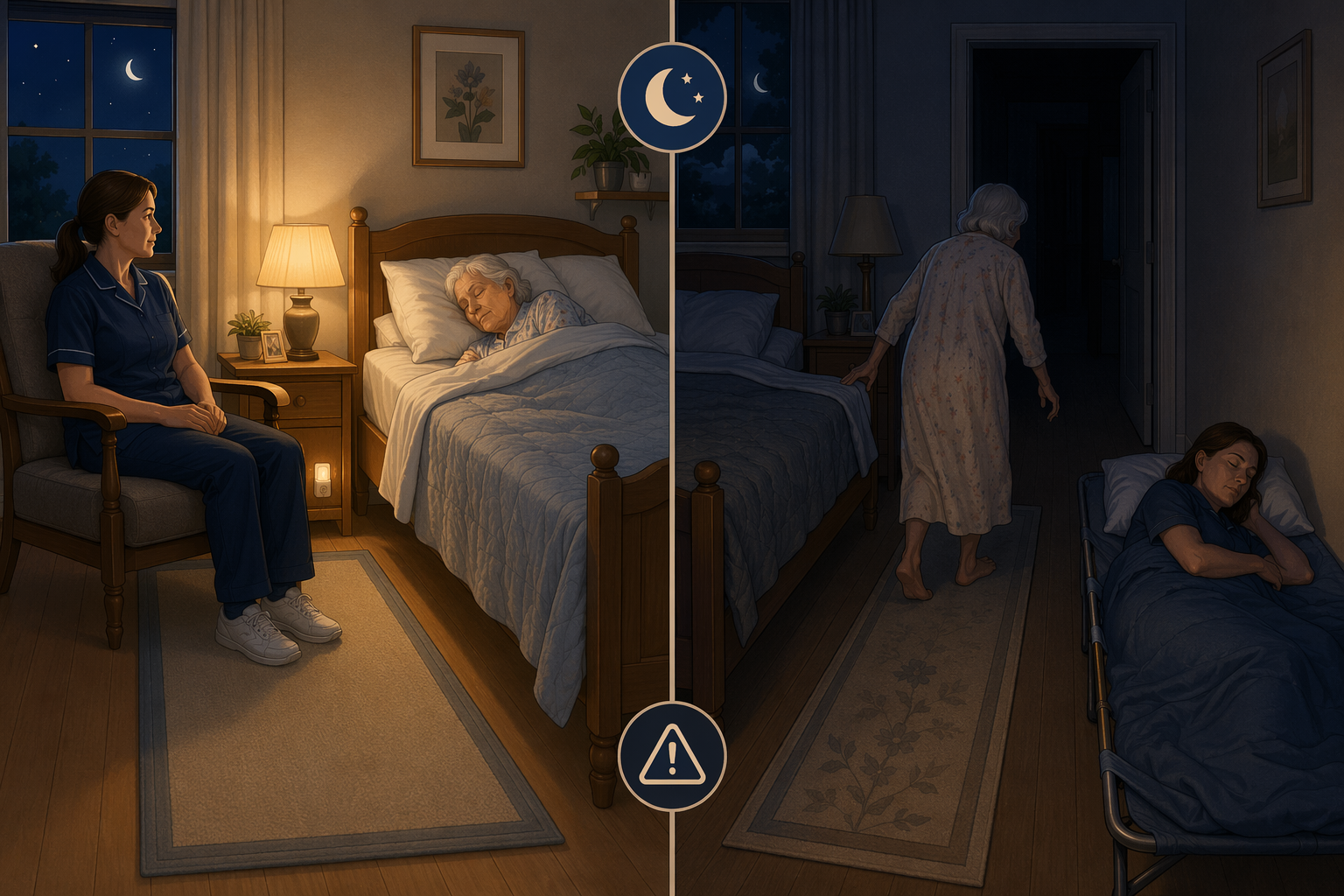
With awake care, two or three caregivers rotate shifts so someone is always awake and ready to help with trips to the bathroom, brief changes, or sundowning episodes. Live‑in care, by contrast, requires the caregiver to receive at least eight hours of uninterrupted sleep per 24‑hour period, plus four hours off during the day and two days off per week.
That sleeping gap is precisely when the risk peaks. Nighttime falls are more dangerous: slower response, disorientation in the dark, the urgency of nocturia, the confusion of sundowning. If your parent needs to get up to the bathroom three times a night or has a history of wandering, live‑in care cannot cover that. The caregiver has to sleep, and the senior is left to navigate the hallway alone.
"24-hour care provides active overnight monitoring, which is especially helpful for people who sundown or need to get to the bathroom."
And in some states, the choice is already made for you: California does not permit live‑in care arrangements at all, so 24‑hour awake care is the only option.
The Cost Calculus: $24,733 vs. $18,658
The cost of 24/7 nonmedical home care in 2026 is $34 per hour nationally, according to A Place for Mom’s market report. That comes out to $816 per day, $5,712 per week, and $24,733 per month. The average service duration is 15 to 20 months.
Compare that to the cost of a single serious fall. A 2024 study by Reider et al., cited by the National Council on Aging, found the average inpatient visit for a fall injury costs $18,658. An emergency department visit alone costs $1,112.
| 24/7 Home Care (monthly) | Inpatient Fall Visit (per event) | |
|---|---|---|
| Cost | $24,733 | $18,658 |
| Data source | APFM 2026 | NCOA/Reider 2024 |
| Duration | Ongoing (avg 15–20 months) | Single hospitalization |
Do not read this as "spend $25k to save $18k." It is not that simple. A second fall can still happen even with care, and that $18,658 figure does not include the hip replacement surgery, the months of rehabilitation, or the lost independence. The real calculation is about probability: one serious fall can offset months of supervision, especially if the risk of falling again is high.
Also important: Medicare will cover intermittent skilled home health care (less than seven days a week or less than eight hours a day) after a fall, but it does not cover 24/7 custodial supervision. That means families pay out of pocket or rely on long‑term care insurance, Medicaid (for those who qualify), or VA benefits for qualifying veterans.
When 16 Hours Is Enough
Here is the nuance that most articles miss: not every post‑fall family needs round‑the‑clock awake care. Vicki Demirozu of Giving Care with Grace puts it plainly: "Many patients discharged from the hospital can thrive with 16 hours of daily care and do not need permanent 24/7 coverage."
The decision comes down to whether the nighttime hours are safe. Here is a simple rubric.
- Consider 8–16 hours of daytime care if: • The parent is stable overnight — no sundowning, no frequent bathroom trips, no wandering. • They can call for help if needed (e.g., have a medical alert pendant). • They have low fall risk at night based on a recent assessment. • They are cognitively aware enough to use a call button or phone.
- 24-hour awake care is indicated if: • The parent has active nighttime needs — getting up to the bathroom three or more times a night. • Sundowning or confusion occurs after dark. • The recent fall happened at night or during a bathroom trip. • There is a history of sleepwalking or wandering. • The family caregiver is already sleep‑deprived — because if you are the one getting up, you are at risk too.
The rubric is not a formula. It is a way to match your specific situation to the level of supervision that actually reduces risk, without automatically jumping to the most expensive option.
How to Start the Conversation
Once you have a clearer picture of the risk, you still have to talk about it. With a parent who values their independence, the approach matters as much as the facts.
- With your parent: Frame it as helping them stay at home, not as taking away control. Say, "I want to help you stay in your own home safely. Let’s figure out what support you need so you don’t end up back in the hospital." Focus on preventing another fall, not on supervision.
- With the physician: Ask specific questions. "Is my parent safe to be alone at night?" is more actionable than "Do they need more care?" Mention the CDC’s STEADI initiative — many clinics use it and can provide a formal fall risk assessment.
- If they resist: Acknowledge the hard feelings. "I know this is not what you want. Neither do I. But I need to know you are safe, and right now I am scared of another fall." Sometimes the most honest sentence is the most effective.
The decision about 24‑hour care is rarely clear‑cut. But the framework is: start with the nighttime risk, weigh the cost of another fall against the cost of supervision, and match the level of care to the actual danger. Do not assume the hospital discharge plan is the final answer. And do not let guilt drive you into a decision that does not fit your finances or your family’s capacity. The best plan is the one that reduces the probability of the next fall, given the resources you have.
Related reading
Noticed something outdated or inaccurate on this page? Flag a correction. We review every report against CDC, NIA, and AARP HomeFit guidance before updating a page.
Part of the Fall Prevention section.