
STEADI: intervene
Fire Pit Burn First Aid for Older Adults
Know exactly what to do in the minutes after an older adult is burned at a backyard fire pit — cool with cool running water, avoid ice and ointments, and recognize the burn size, location, and appearance signs that mean call 911 or seek a burn center instead of treating at home.
Start with cool running water, not a debate
Most fire pit safety tips for seniors belong before anyone lights the flame. This guide starts later, when an older adult has already pulled a hand, forearm, foot, or leg back from the fire and everyone nearby has an opinion. The useful first move is plain: get the burned skin under cool running water. Mayo Clinic says to use cool, not cold, running water for about 10 minutes for a minor burn, while also watching for signs that the burn is not minor at all [1].
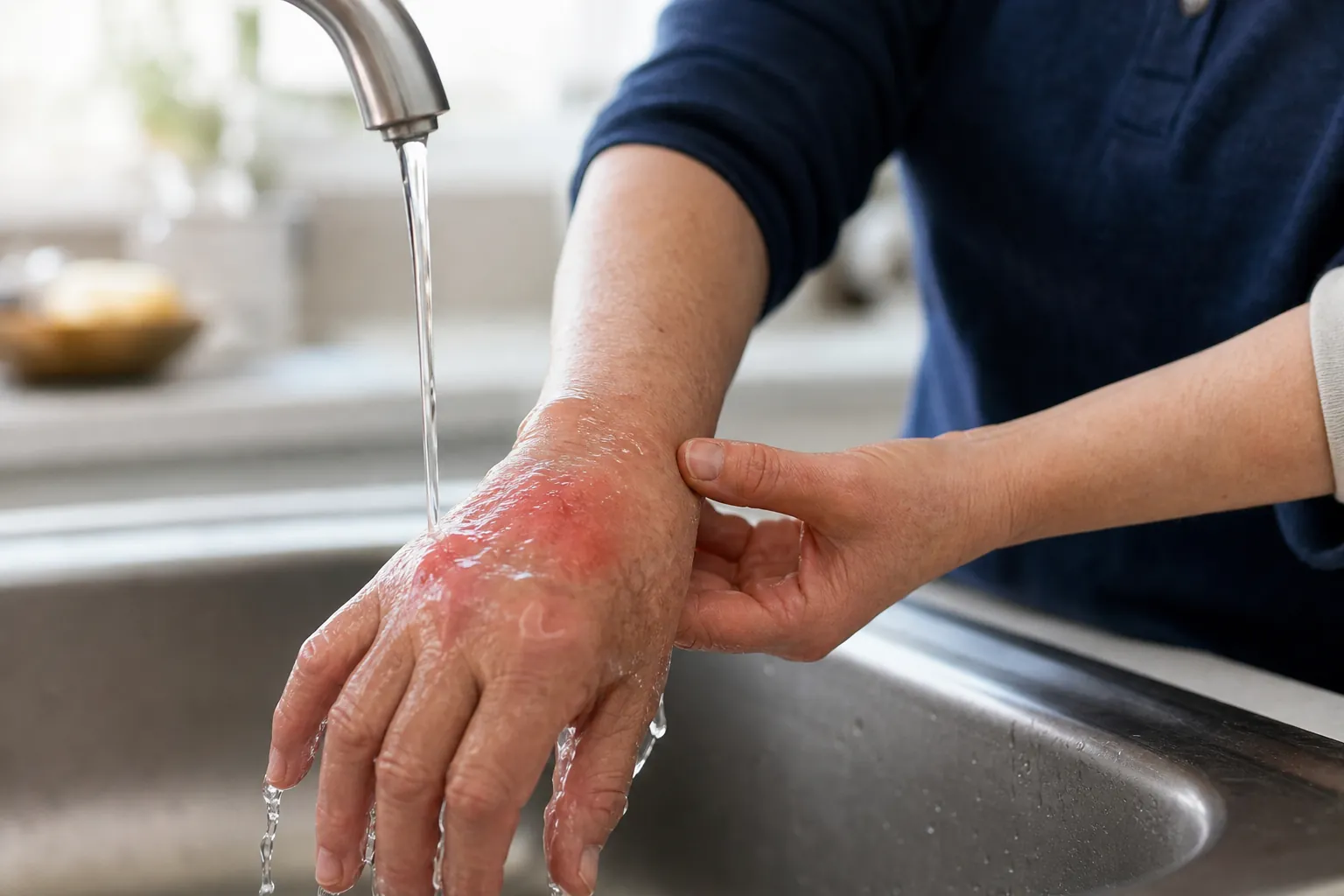
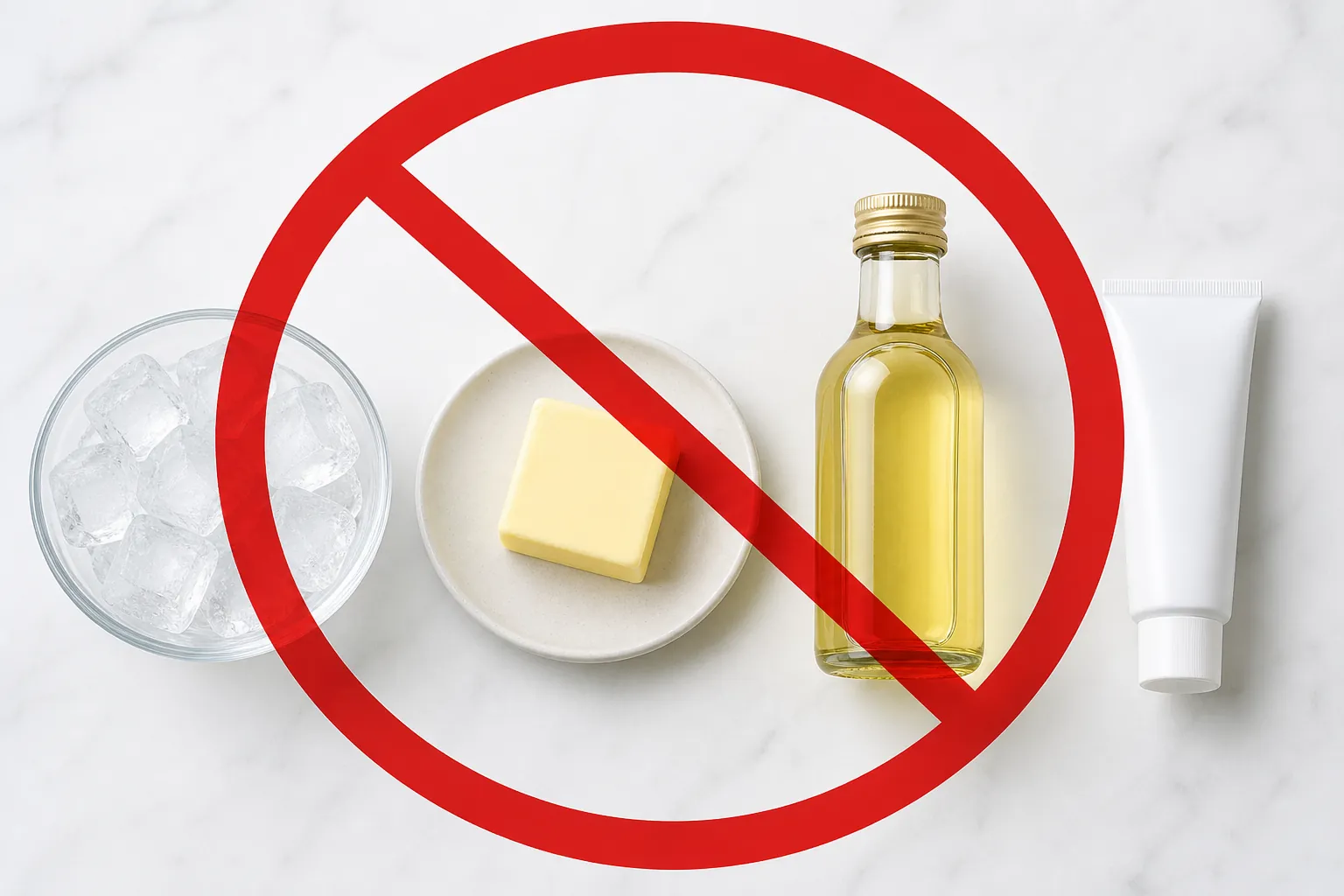
The American Burn Association is equally clear about what not to do: never use ice, do not apply butter, oils, or ointments, and do not pop blisters [2]. University of Utah Health summarizes early burn care as the Four Cs — cool, clean, cover, call — and says cooling should be done with cool running water for at least 10 minutes [3]. Those sources do not give one identical stopwatch rule: Mayo says about 10 minutes, Utah says at least 10 minutes, and the American Burn Association says to cool with running water for several minutes [1][2][3]. In the kitchen or on the patio, that means the number is less important than the direction: keep cooling with cool running water while you decide whether this burn belongs in home care or emergency care.
This is triage guidance, not medical advice or a home diagnosis. If the burn’s size, location, appearance, smoke exposure, or the person’s overall condition makes you unsure, treat uncertainty as a reason to call for medical help rather than as a reason to wait.
The first few minutes
Move the person away from the heat source first. If clothing, a blanket, or a chair cushion is still hot or smoking, the burn is not over yet. Once the heat source is no longer touching the person, get the burned area under a gentle stream of cool running water. A sink, shower, or hose can do the job if it gives steady cool water without pressure that hurts the skin.
- Use cool running water. Do not use ice water, ice packs, snow, or frozen food.
- Keep butter, cooking oil, essential oils, ointments, and greasy “soothing” products off the burn.
- Do not pop blisters. A blister may look like something that needs to be “released,” but opening it creates another wound.
- After cooling, cover the area with a clean dressing if the burn appears suitable for home care and covering does not delay urgent help.
- Call for help early if the person is faint, confused, short of breath, badly shaken, or if the burn matches any of the emergency signs below.
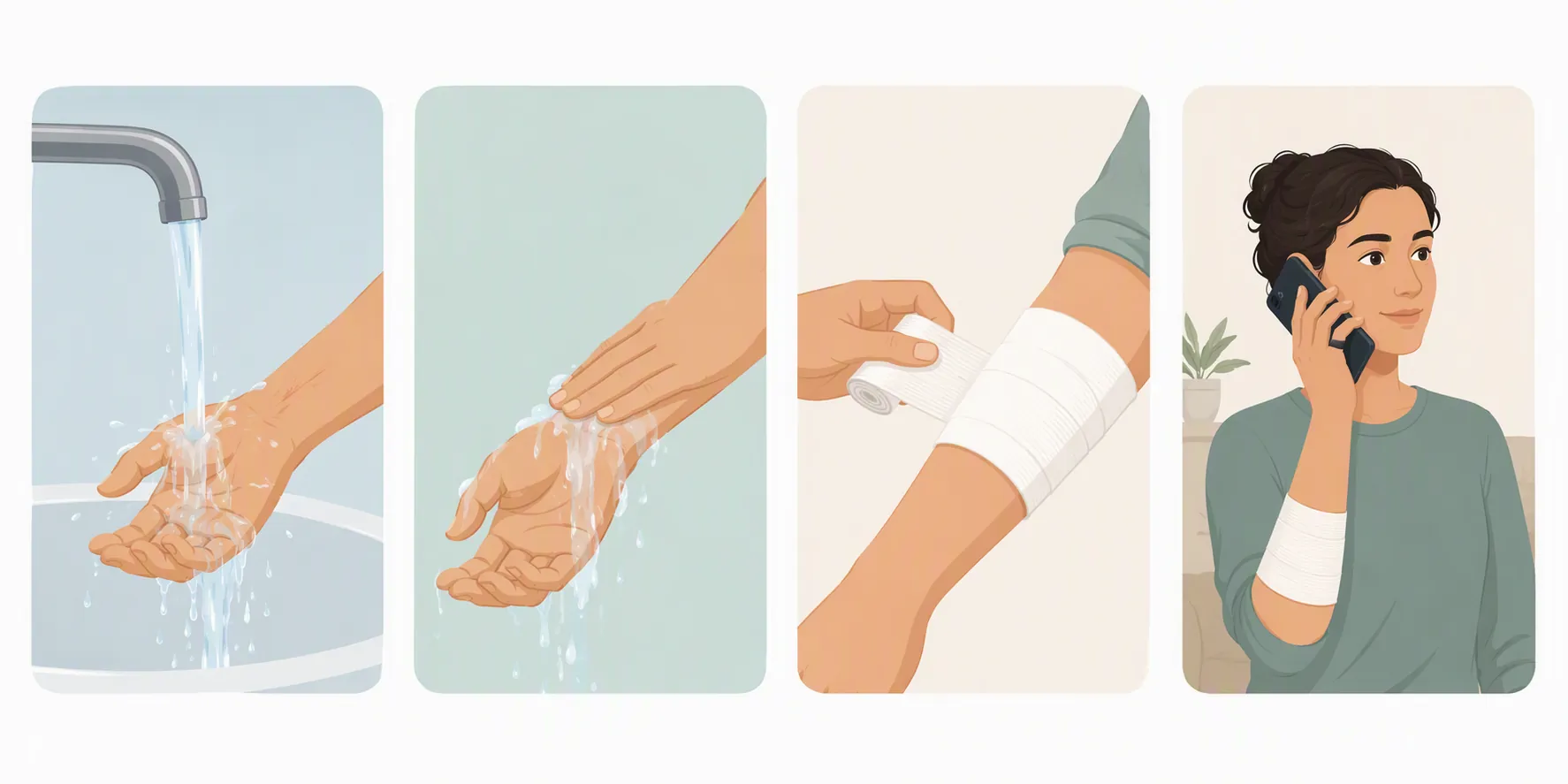
The order matters because the wrong helpful-looking action can make the next person’s job harder. Ice can injure tissue. Butter and oils trap mess on the skin and are specifically discouraged by the American Burn Association. Ointments may feel like treatment, but the first job is cooling and triage, not coating the wound [2].
When the burn is too large for home care
Size is one of the fastest decisions because it does not require you to name the burn degree. Mayo Clinic lists a burn larger than 3 inches across as a reason to seek emergency medical help [1]. The American Burn Association tells people to seek medical care for burns larger than the person’s hand [2]. Those are not identical measures, but they point in the same practical direction: if you are spreading your fingers over the area and still not covering it, or if the burn is plainly more than a small patch, stop treating it like a kitchen nuisance.
For an older adult, do not spend precious time trying to make the measurement exact. Keep cooling if you can do so safely, and call 911 or a clinician for direction. If the burn is clearly large, worsening, or paired with weakness, dizziness, or breathing trouble, call 911.
Location can make a small burn serious
A burn does not have to cover much skin to create a big problem. Mayo Clinic says emergency care is needed for burns on the face, hands, feet, genitals, buttocks, or over a major joint, and for burns that wrap around an arm or leg [1]. The American Burn Association also identifies burns involving the face, hands, feet, or genitals as situations that may need care at an ABA-verified burn center [2].
Hands and feet are easy to underestimate in the moment. A burned palm may still move. A burned foot may still bear weight while the person insists they are fine. But those areas have jobs to do, and swelling, pain, and skin damage can interfere quickly. Burns over a knee, elbow, wrist, ankle, or another major joint deserve the same respect because movement can pull on damaged skin and make ordinary care harder.
Appearance signs that should end the home-care discussion
Do not try to diagnose burn depth at the patio table. Use appearance as a danger screen. Mayo Clinic says to seek emergency care for a burn that looks charred, leathery, or dry [1]. In practical terms, skin that looks white, brown, black, waxy, dry, or leathery after a fire-pit burn is not a “watch it overnight” situation.
Blisters also change the tone of the decision. The American Burn Association says not to pop blisters [2]. A small blister on a younger adult’s finger might tempt a family to wait and see. On an older adult, especially when the burn is on a hand, foot, joint, or larger area, that same blister should move you toward a call to a clinician, urgent care, emergency department, or burn center rather than a home remedy.
Smoke inhalation changes everything
If the person may have inhaled smoke, call 911. Mayo Clinic includes smoke inhalation among the signs that emergency medical help is needed for a burn [1]. Do not let a visible skin burn distract from breathing, coughing, hoarseness, confusion, or a person who seems suddenly weak after being close to smoke.
This is one of those moments when a calm phone call beats a calm guess. A person can look more composed than they are, especially at a family gathering where they do not want to become the emergency. If smoke exposure is part of the story, let emergency responders decide how serious it is.
Why older adults get a lower emergency threshold
The lower threshold is not fussiness. Allegheny Health Network explains that older adults can burn more quickly and more deeply because their skin is thinner, and older skin heals more slowly [4]. Mayo Clinic also says babies and older adults may need emergency care for even minor burns [1]. University of Utah Health goes further in its contact-burn guidance and says to consult a doctor for even a first-degree burn on an older adult [3].
That means the question is not, “Would I go in for this if it were my own arm?” The better question is, “Is this an older person’s thinner, slower-healing skin, and am I completely sure it is small, superficial, in a low-risk location, and not worsening?” If the answer is not a clean yes, make the call.
A simple call-or-care-at-home screen
Use this only after the person is away from the heat and cooling has started. If any item in the emergency column fits, call 911, seek emergency care, or contact an ABA-verified burn center instead of continuing home treatment.
| What you see or know | What to do |
|---|---|
| Burn larger than 3 inches across, or larger than the person’s hand | Seek medical care; call 911 if the burn is large, worsening, or the person seems unwell [1][2] |
| Burn on the face, hands, feet, genitals, buttocks, or over a major joint | Seek emergency care or burn-center guidance [1][2] |
| Burn wraps around an arm or leg | Seek emergency care [1] |
| Skin looks charred, leathery, dry, white, brown, or black | Call 911 or go to emergency care [1] |
| Possible smoke inhalation | Call 911 [1] |
| Older adult with even a minor-looking burn and you are unsure | Call a doctor, nurse line, urgent care, emergency department, or burn center for direction [1][3] |
If the burn happened because the person tripped, collapsed, or fell into the fire pit area, do not let the burn become the only problem you check. Pain, a new inability to stand, a twisted limb, or a suspected break belongs on the same crisis path as what to do after an elderly parent falls and fractures a bone.
If it appears small enough for home care
A small, mild-looking burn on an older adult still deserves a follow-up call if there is any doubt. If a clinician has told you it can be managed at home, keep the care boring: cool, clean, cover, and call if it worsens. Do not add ice later. Do not decide that butter, oil, or ointment becomes useful once the first panic has passed. Do not open blisters.
After the urgent decision is made, check tetanus status. Mayo Clinic says a tetanus booster may be needed after a burn if the person has not had one in the past 5 years [1]. That matters, but it comes after cooling, after removing the person from danger, and after deciding whether the burn needs emergency care.
For broader older-adult fire risk at home, use the apartment fire safety checklist for seniors. For planning the next gathering before anyone gets burned, return to how to keep your elderly parent safe around a fire pit. Right now, the line is simpler: cool the burn with cool running water, keep the folk remedies off it, and call for medical help sooner for an older adult than you might for yourself.
References
- Burns: First Aid — Mayo Clinic
- Burn First Aid — American Burn Association
- Beating the Burn: Preventing and Treating Contact Burns — University of Utah Health
- Burn Prevention for Seniors — Allegheny Health Network
Related reading
Noticed something outdated or inaccurate on this page? Flag a correction. We review every report against CDC, NIA, and AARP HomeFit guidance before updating a page.
Part of the Fall Prevention section.