
STEADI: Intervene
How to Lower Fall Risk From Cyclosporiasis in Seniors
For adults 65+, cyclosporiasis is less dangerous as an infection than as a trigger for dehydration, weakness, and falls — and a fall can do more harm than the infection itself. Caregivers can lower that risk by learning the warning signs that need medical help and by taking kitchen-level produce precautions during outbreaks.
When a stomach illness becomes a fall risk
Cyclosporiasis risks and prevention for older adults should start with the hallway, not the parasite. An older adult can have “just diarrhea” in the afternoon and be unsafe walking to the bathroom by evening. The glass of water is still half full. The banana is untouched. A parent says, “I’m fine,” but keeps one hand on the counter a beat longer than usual.
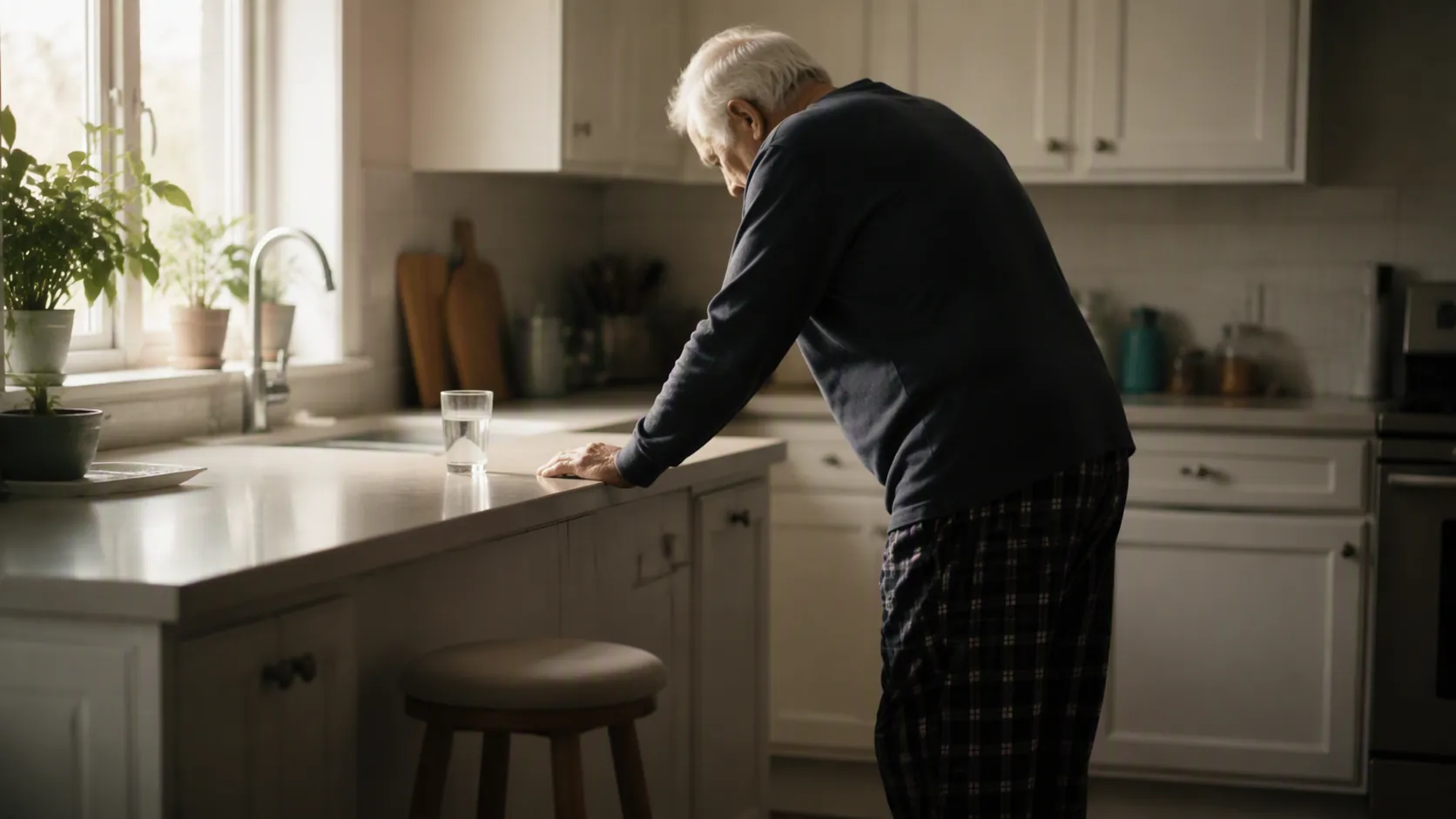
That is the part caregivers cannot afford to miss. Dr. Luis Marcos of Stony Brook Medicine, quoted by AARP, described dehydration as “the primary concern” for older adults with cyclosporiasis. He also listed possible complications that belong directly in a fall-prevention conversation: electrolyte problems, acute kidney injury, weakness, dizziness, falls, and worsening chronic conditions.[1]
That does not mean there is a Cyclospora-specific fall-injury statistic proving how often this infection leads to broken hips or head injuries. The better-supported point is narrower and still important: prolonged watery diarrhea can drain fluid and electrolytes; in an older adult, dehydration can show up as weakness, dizziness, confusion, and poor standing balance; those changes make bathroom trips and nighttime walking more dangerous.
Older adults also have less margin when foodborne illness hits. FoodSafety.gov notes that adults 65 and older are at higher risk from foodborne illness because of age-related changes including a weaker immune response, slower gastrointestinal movement, less efficient liver and kidney clearance, decreased stomach acid, and chronic conditions.[2] CDC similarly identifies adults 65 and older as a group at increased risk for serious food poisoning.[3]
A fall may become the lasting injury even when the infection itself is rarely fatal. That is why cyclosporiasis in a senior is not only a food-safety problem. It is a mobility problem.
The 2026 outbreak numbers are moving
As of the CDC outbreak page updated August 3, 2026, CDC reported 1,947 illnesses and 98 hospitalizations in a multistate Cyclospora outbreak linked by investigators to iceberg lettuce.[4] Those figures should be treated as a dated snapshot, not a final count.
You may also see different numbers in other public reports. CDC’s July 14, 2026 Health Alert Network notice reported 1,645 confirmed domestic cases since May 1, 2026, with 141 hospitalizations, and AARP reported more than 11,500 cases confirmed or under investigation on July 27, 2026.[5][1] Those figures are not interchangeable; they reflect different dates, reporting categories, and outbreak accounting. The useful caregiver takeaway is simpler: May 1 through August 31 is the annual cyclosporiasis season, and counts can climb while investigations are still underway.[5]
The basics explain why a caregiver may miss the connection. Cyclospora usually is not spread directly from person to person, and illness is rarely fatal.[6] Symptoms often begin about a week after exposure, though the range can be from a few days to more than two weeks.[7] Without treatment, illness can last from several days to more than a month, and symptoms can go away and come back.[7]
So a parent may be weak on Thursday from produce eaten the previous week. Or the family may relax when diarrhea eases, only to have it return. “It’s been going on for a while” is not reassuring in a person who already uses a cane, takes blood pressure medication, has kidney disease, or has fallen before.
Warning signs caregivers should not wait out
The caregiver’s job is not to diagnose Cyclospora at home. It is to notice when diarrhea has started changing a person’s safety. With an older adult, the question is not only “How many times have they gone to the bathroom?” It is also “Can they still get there and back without falling?”
AARP’s clinician guidance flags dehydration symptoms that warrant help even after only one to two days of diarrhea: dizziness, confusion, decreased urination, dry mouth, and rapid heartbeat.[1] Each of those signs has a fall-prevention meaning.
- Dizziness means the person should not be rushing unassisted to the bathroom, especially from bed or a low chair.
- Confusion can turn a familiar route into a hazard: missed walker, forgotten grab bar, wrong light switch, or standing before fully awake.
- Decreased urination suggests the body may not be keeping up with fluid losses, even if the person says they are drinking.
- Dry mouth can be an early visible clue, especially when paired with untouched drinks or new fatigue.
- A rapid heartbeat after diarrhea can be a sign the body is under strain; it is not something to explain away as nervousness.
Other symptoms should push the family toward prompt medical care rather than watchful waiting: blood in the stool, persistent vomiting, high fever with chills, severe abdominal pain, inability to keep fluids down, severe diarrhea of more than six to eight episodes per day, or diarrhea that lasts beyond two to three days without improvement.[1]
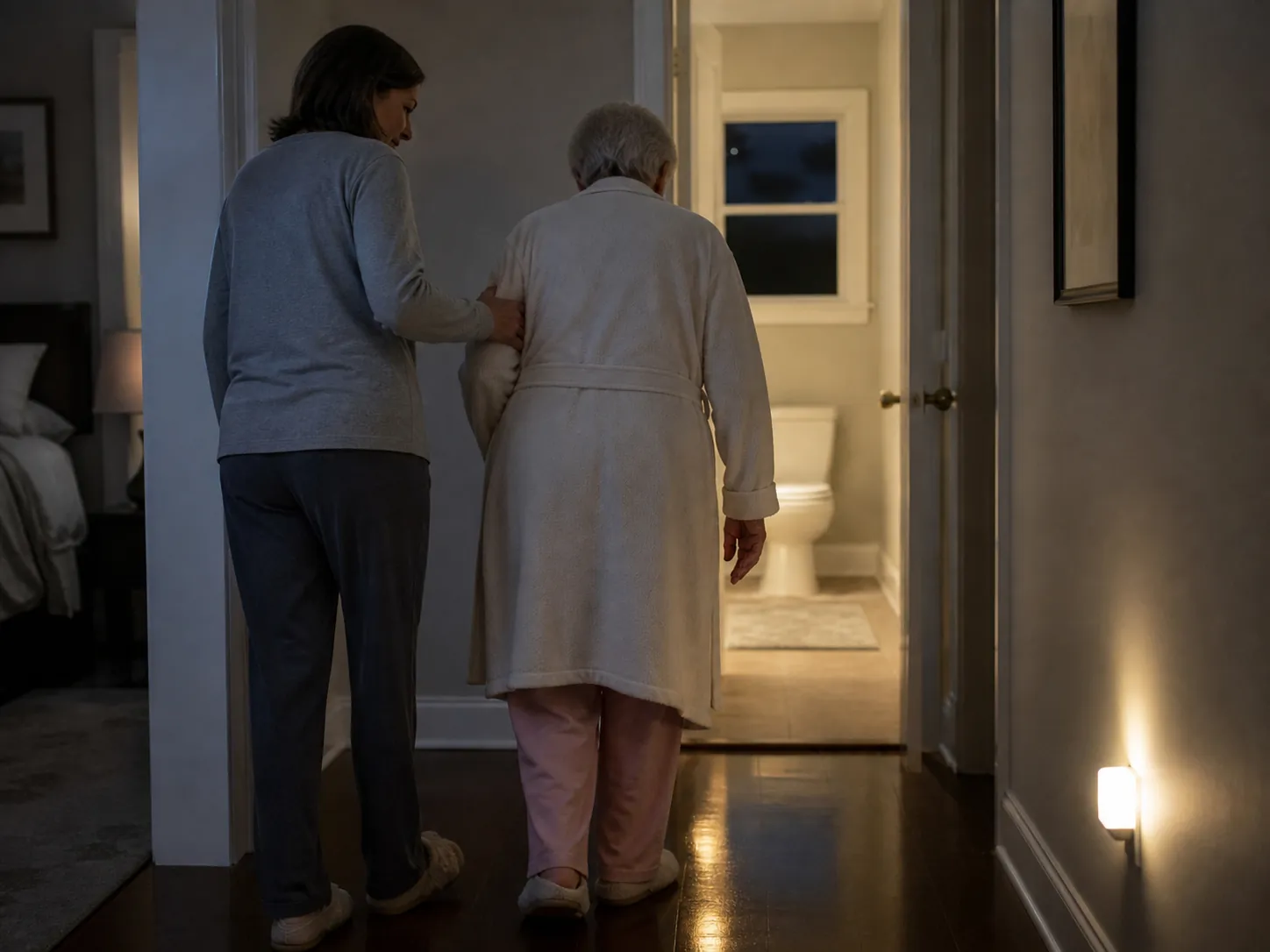
During the sick days, toileting becomes a supervised activity for many older adults, not because they have suddenly lost independence, but because the conditions have changed. More urgency, more trips, less fluid, less sleep, and dizziness are a bad combination. A person who is normally steady may need help standing from the toilet. A person who usually walks to the bathroom alone at night may need a nightlight, clear path, walker within reach, and someone listening for them.
New weakness should be treated as a mobility warning, not just an infection symptom. If an older adult is holding furniture, leaning on the sink, sitting back down suddenly, or saying they feel “wobbly,” the safest assumption is that the next bathroom trip could be the one where they fall.
Treatment questions belong with a clinician. AARP and CDC materials discuss prescription treatment and the need to consider issues such as sulfa allergy and medication interactions, but those decisions should be made by a medical professional who knows the person’s kidney function, medications, allergies, and chronic conditions.[1][5]
Kitchen prevention helps, but it cannot promise zero risk
Prevention advice is often reduced to “wash your produce,” which is true as far as it goes and too thin for outbreak season. CDC recommends washing all fruits and vegetables under running water, including items that will be peeled; scrubbing firm produce with a clean produce brush; cooking food to at least 158°F, or 70°C, when appropriate; and refrigerating cut, peeled, or cooked produce within two hours.[8]
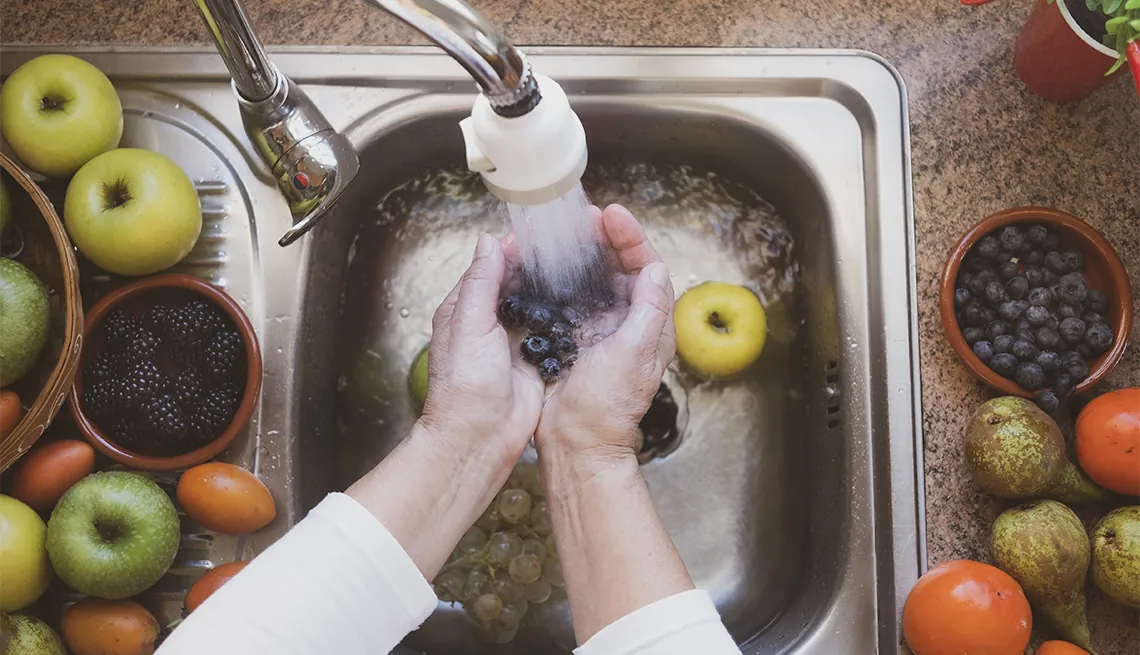
Those steps are worth doing carefully. They are not a guarantee. FDA says Cyclospora cayetanensis can be difficult to control on fresh produce and that chlorine and other common antimicrobial produce treatments are not effective against it.[9] That matters because the usual mental shortcut — “it was washed at the farm,” “it was rinsed at the store,” “the bag says prewashed” — may not reduce risk as much as families assume.
Hand hygiene still matters, but alcohol sanitizer is not the answer for Cyclospora. Dr. Erika Noel, an infectious disease specialist quoted by AP News, said alcohol-based hand sanitizers do not kill Cyclospora and that soap and water do. She also suggested, as expert advice rather than CDC or FDA instruction, a soak using three parts water to one part vinegar to help remove some germs from produce.[10]
The uncertainty around sources is another reason not to overstate what a home kitchen can do. Consumer Reports noted that FDA was investigating four separate Cyclospora outbreaks in 2026 and that, of four outbreaks in 2023, three never had a source identified.[11] When no single source is confirmed, families cannot simply avoid one named product and assume the risk is gone.
A practical outbreak-season routine looks less like panic and more like friction: check CDC and FDA outbreak notices before buying implicated produce; rinse produce under running water; scrub firm items with a clean brush; keep cut fruit and vegetables refrigerated; do not leave prepared produce out through a long afternoon; wash hands with soap and water before food prep and after bathroom cleanup; and if a recall names a product in the refrigerator, throw it away rather than trying to disinfect it.
What to change at home when an older adult gets diarrhea
Once an older adult is sick, fall prevention has to move closer to the bathroom. The riskiest moments are often ordinary ones: standing up from bed, turning quickly toward the toilet, reaching for toilet paper, pulling clothing up while lightheaded, or walking back in the dark.
- Keep the route to the bathroom clear of shoes, laundry, cords, pet bowls, and throw rugs.
- Put a light within easy reach, and use nightlights before the first nighttime trip.
- Place the walker or cane where the person can reach it before standing, not across the room.
- Encourage slow position changes: sit up, pause, stand, pause, then walk.
- Increase supervision if there is dizziness, confusion, new weakness, or urgent diarrhea.
- Do not let embarrassment decide the safety plan. A parent who would never ask for help toileting may still need standby assistance for a few days.
Hydration deserves attention, but not guesswork. Some older adults have heart failure, kidney disease, sodium restrictions, or medications that change what “drink more” should mean. If diarrhea is continuing, if fluids are not staying down, or if dehydration signs appear, the safer move is to call the clinician and describe exactly what is happening: number of diarrhea episodes, vomiting, urination, dizziness, confusion, temperature, heart rate if known, and whether the person can stand and walk safely.
This is also a time to review the home’s fall plan. Families who want a broader checklist can use the Fall Prevention FAQ for Seniors and Caregivers or the printable Fall Prevention Handout for Seniors. If heat is part of the picture, the senior heat safety checklist is especially relevant because heat, dehydration, dizziness, and falls often overlap.
The decision frame for caregivers
Cyclosporiasis in a senior is usually not frightening because it is highly lethal or easily passed from one person to another. It is frightening because it can quietly remove the fluids, strength, attention, and steadiness an older adult needs to move safely at home.
During the May–August outbreak season, prevention means both safer produce handling and earlier recognition of dehydration-related fall risk. Wash, cook, chill, and watch recall notices. Then watch the person: urine, mouth, balance, alertness, heartbeat, bathroom trips, and whether “I’m fine” matches what their body is doing.
Last verified: August 5, 2026. This article is educational and is not a substitute for medical advice, diagnosis, or treatment. For sudden worsening, unsafe standing or walking, signs of dehydration, or symptoms that meet the warning signs above, contact a clinician or seek urgent care. For planning beyond this infection, use the site’s fall-risk assessment, dehydration and heat-safety resources, and after-a-fall response guides.
References
- Cyclospora Outbreak: What Older Adults Need to Know, AARP, July 27, 2026.
- Older Adults, FoodSafety.gov.
- People at Increased Risk for Food Poisoning, CDC.
- CDC Cyclosporiasis Outbreak Investigation, July 2026, CDC, updated August 3, 2026.
- CDC HAN-00531, CDC, July 14, 2026.
- About Cyclosporiasis, CDC.
- Symptoms of Cyclosporiasis, CDC.
- Preventing Cyclosporiasis, CDC.
- Cyclosporiasis and Fresh Produce, FDA.
- Cyclospora Produce Washing Tips, AP News.
- Cyclospora Outbreak 2026: What Consumers Need to Know, Consumer Reports.
Related reading
Noticed something outdated or inaccurate on this page? Flag a correction. We review every report against CDC, NIA, and AARP HomeFit guidance before updating a page.
Part of the Fall Prevention section.