
Hidden Home Safety Hazards That Standard Checklists Overlook
This article reveals five hidden home safety hazards—pet-related falls, clothing fires, surface transitions, portable bed rail entrapment, and carbon monoxide—that standard checklists overlook, and explains how family caregivers can identify and fix them after completing basic safety measures.
By the time most families ask about hidden hazards in home safety for older adults, they have already done the visible work. The bathroom has grab bars. The throw rugs are gone. There is a nightlight in the hall. Maybe someone has walked through a room-by-room fall checklist and fixed the obvious problems.
That first pass matters. It catches many of the hazards that make a home plainly unsafe. But it can also create a little too much confidence, because older adults are not usually injured by “the home” in the abstract. They are hurt in the exact moment when they step over a doorway lip in worn slippers, turn around because the dog has followed them into the bathroom, lean into a bed rail that was bought to help them, or stand too close to a burner with a loose sleeve.
The larger warning sign is hard to ignore: adults 65 and older account for 71% of consumer product-related deaths each year while making up 16% of the population, according to CPSC data cited by the National Council on Aging.[1] That figure does not mean every household object is equally dangerous. It does mean everyday products and ordinary rooms deserve a second look once the standard checklist is finished.
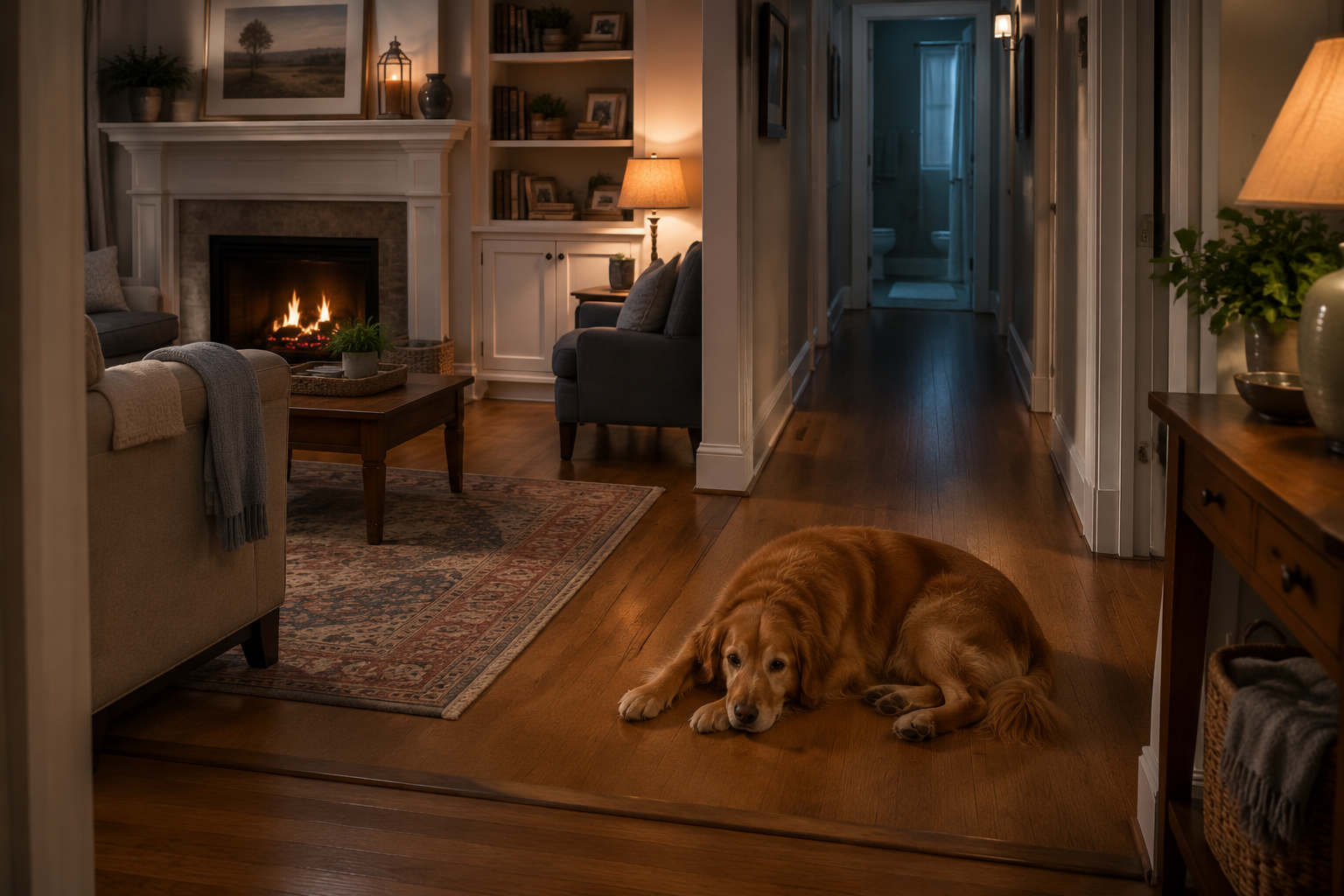
Start With the Route, Not the Room
A second-pass safety audit should follow the older adult’s actual movements. Watch the path from bed to bathroom. Watch the route from favorite chair to kitchen. Watch what happens when the phone rings, when the dog gets excited, when the hallway is dim, and when the person is tired enough to move by habit instead of attention.
If the first inspection asks, “Is there a rug here?” the second inspection asks, “What does this person’s foot do right here?” That is where the missed hazards start to show up.
Pets Turn a Clear Path Into a Moving Obstacle
A dog lying across the hallway does not look like clutter. A cat weaving around ankles does not look like a fall hazard until someone is already correcting their balance. Pets are especially easy to miss because families are used to stepping around them, and because the animal may behave differently when a visitor is watching.
The mechanism is simple. Many older adults take shorter steps, turn more slowly, and need more time to adjust when something enters their path. Add low light, stiff joints, slippers, urgency to reach the bathroom, and a pet that moves unpredictably, and the safe hallway on the checklist becomes a negotiation.
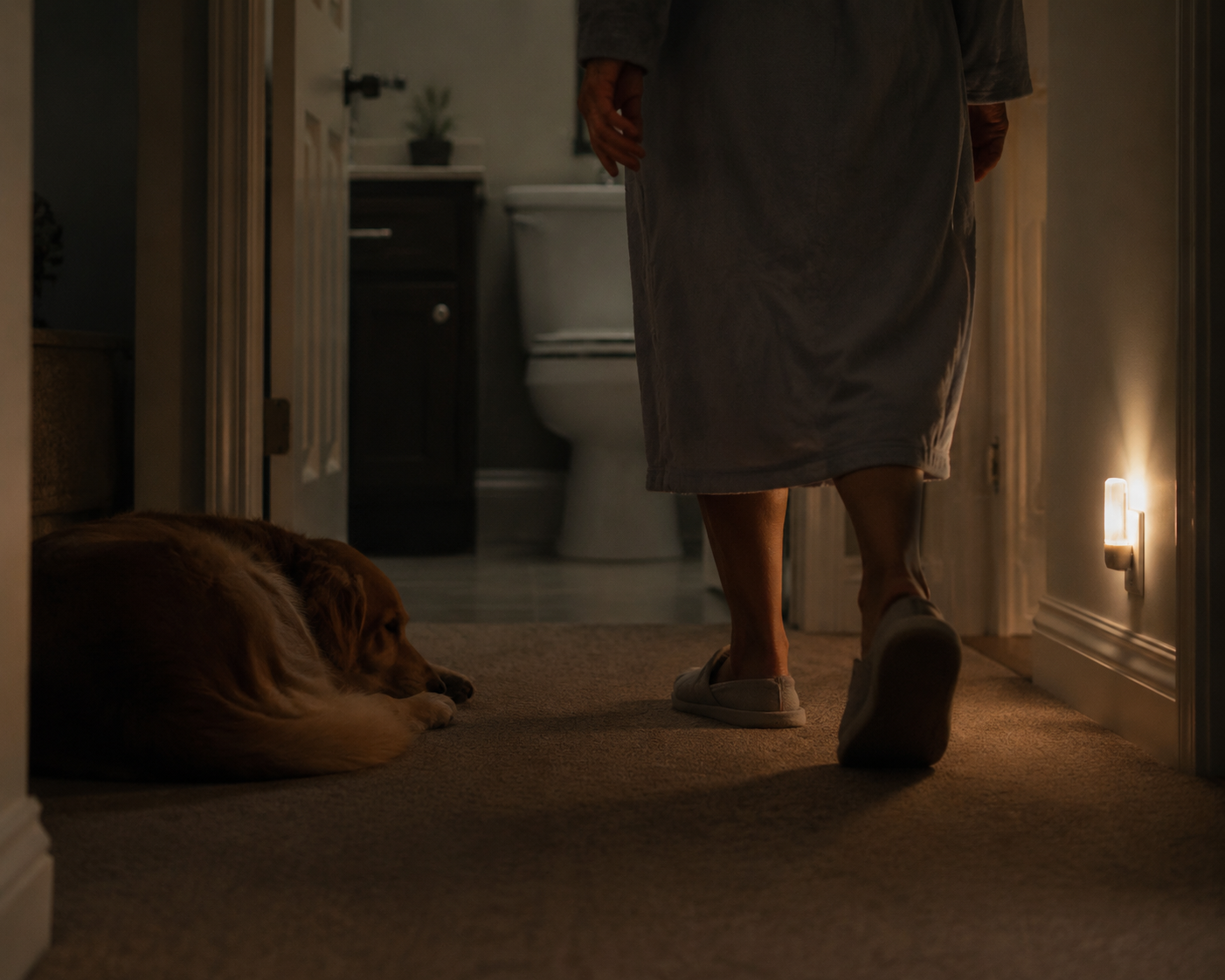
Do not judge this only in daylight. Ask what happens during the first bathroom trip after bedtime. Does the pet sleep in the walking path? Does it jump up when the older adult stands? Does it follow into the bathroom and settle behind the door? A pet that is harmless at noon can be a real obstacle at 2 a.m.
The fix is not usually to remove the pet from the home. It is to create a predictable pet zone during high-risk movement: overnight, during bathing, when meals are being carried, or when the older adult is using a walker. A baby gate, closed bedroom door, crate, or blocked-off kitchen area can be enough if it is used at the times when movement is least steady.
For long-distance caregivers, this is one of the better things to check by video. Ask the older adult to place the phone where you can see the floor, then have them walk the real route they take at night. If the pet appears in the frame, that is useful information, not an interruption.
Doorway Transitions Catch Feet Before Anyone Calls Them a Hazard
Interior thresholds are easy to overlook because they belong to the house. A slight rise from tile to wood, a metal strip between rooms, or a soft edge where carpet meets hard flooring may have been there for years. The problem is not that the threshold is dramatic. The problem is that it is just enough to interrupt a step.
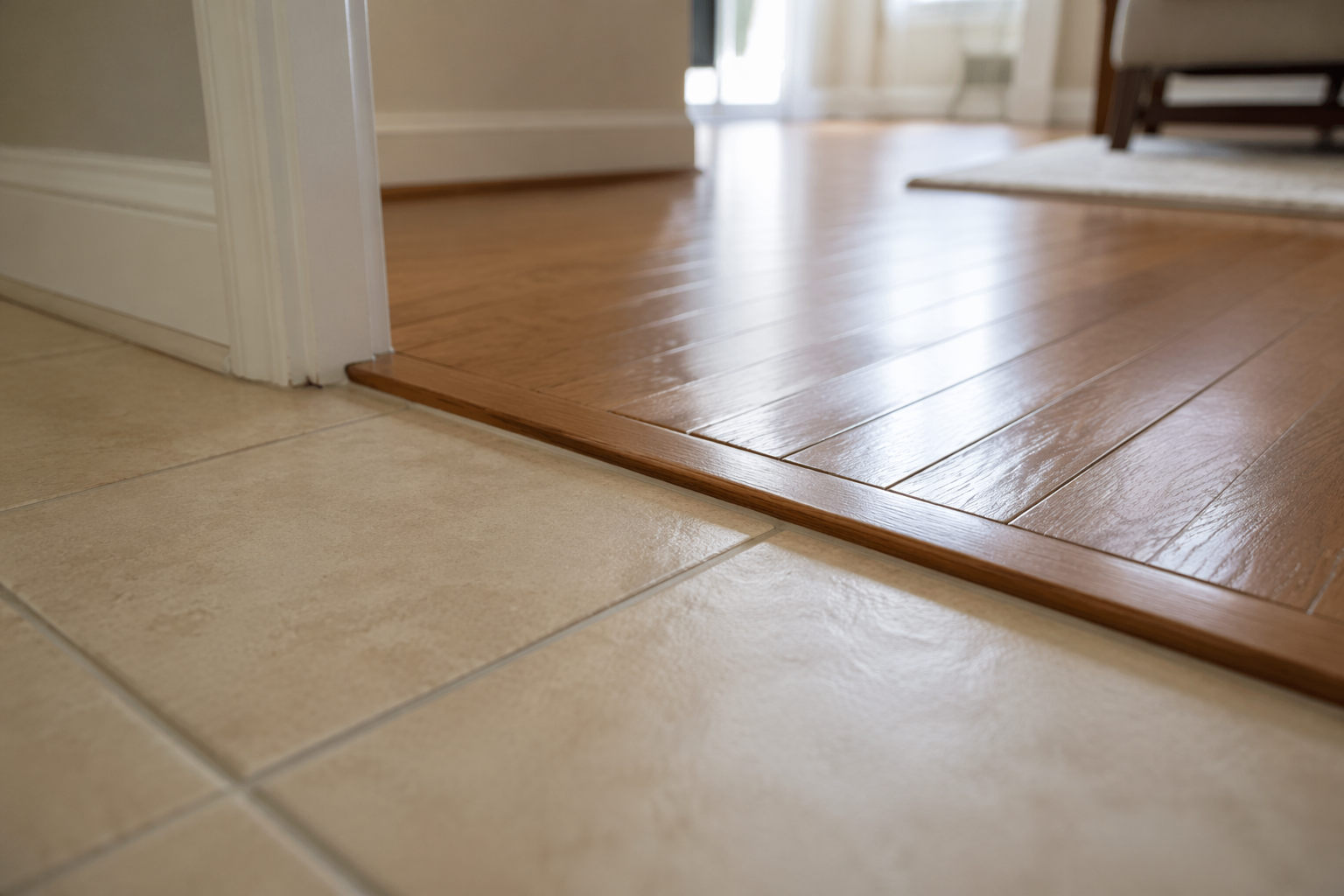
The National Council on Aging identifies surface transitions at doorways as a hidden home hazard for older adults because the change in flooring can create a trip point, especially when it is hard to see or slightly raised.[1] This is the kind of hazard that gets missed when a checklist only asks about loose rugs and clutter.
Watch the feet. Does one toe drag over the threshold? Does the person shorten their step before crossing? Do they look down every time? Do they catch the edge with a slipper sole or shuffle sideways through the doorway? Those small adjustments mean the body has already identified the hazard.
Contrast matters here. A threshold that blends into both floors gives aging eyes very little warning. High-contrast tape can make the edge visible. A properly installed threshold strip can smooth or clarify the transition. If the older adult has vision changes, the goal is not a prettier doorway; it is a doorway their foot and eye can read before weight shifts forward.
Footwear belongs in the same inspection. Soft slippers that fold under the toes, backless house shoes, and thick rubber soles can all behave differently at a raised edge. If a threshold has already caught a shoe once, treat that as evidence.
Lighting Needs to Match the Task
“Improve lighting” is too vague to finish the job. Older adults, especially those with cataracts or other vision changes, may need substantially more light than younger adults to see the same detail; the CDC STEADI fall-prevention materials note the importance of checking home hazards and lighting as part of fall prevention.[2] The practical question is whether the person can see the actual obstacle soon enough to adjust.
Task areas need brighter, directed light: the stove controls, medication area, bathroom sink, stairs, and the chair where shoes are put on. The night route needs motion-sensor lighting that comes on before the person reaches the threshold or the bathroom doorway. A nightlight behind the person is often less helpful than one that lights the next step.
Loose Clothing Near Heat Is a Fire Pathway
Kitchen safety advice often focuses on whether the stove is left on. That matters, but clothing fires deserve their own attention. Adults 65 and older have a clothing fire death rate 14 times higher than people under 65, according to CPSC data cited by NCOA.[1]
This is not a reason to make cooking sound forbidden. It is a reason to watch the body position around heat. A loose sleeve can pass over a burner when someone reaches for a cabinet. A robe tie can hang near a space heater. A lap blanket can shift too close to smoking materials or an upholstered chair. The danger is the combination of flame or heat, loose fabric, slower reaction time, and sometimes reduced sensation or attention.
Look during the normal routine, not after the kitchen has been cleaned for company. What does the older adult wear for breakfast? Do sleeves fall toward the cooktop? Are towels kept near burners? Is a space heater close to bedding, curtains, or a favorite chair? Does the person smoke while seated in upholstered furniture? NCOA identifies loose sleeves near stoves, smoking materials in upholstered furniture, and space heaters near bedding as clothing-fire vectors for older adults.[1]
The corrections are plain: tighter sleeves for cooking, no robe or draping shawl at the stove, towels moved away from burners, space heaters kept away from bedding and fabric, and smoking materials kept out of upholstered seating areas. Families sometimes avoid this conversation because it sounds personal. But fabric near heat is not a personality issue. It is a setup.
Portable Bed Rails Can Prevent One Risk and Create Another
Portable bed rails are often bought with good intent. A family sees an older adult struggling to sit up, sliding toward the edge, or reaching for a dresser for support, and the rail looks like a simple answer. Sometimes it is helpful. But a rail that does not fit the mattress and bed frame, or does not meet current safety standards, can create an entrapment hazard.
CPSC data cited by NCOA estimates about 16 deaths per year among adults 65 and older from portable bed rails that do not meet ASTM F3186-17 safety standards.[1] That number is small compared with the national burden of falls, so it should not be treated as a top population-level risk. It is still a serious product warning because the pathway is severe: a person can become trapped between the rail, mattress, or bed frame and be unable to free themselves.
A second-pass audit should identify every portable bed rail in the home, including ones bought online, borrowed from a friend, or left over from a previous surgery. Check the label and product information for compliance with ASTM F3186-17. Check whether the rail is installed exactly as directed. Then check the gaps: between the rail and mattress, between the rail and headboard, and between the mattress and bed frame.
Also ask what job the rail is doing. If it is being used as a handle for getting out of bed, a properly chosen transfer pole, bed assist device, or therapy-recommended setup may be safer. If it is being used to keep someone from falling out of bed, the answer may involve bed height, floor protection, medication review, nighttime toileting, or clinical guidance rather than simply adding a barrier.
Carbon Monoxide Is Quiet Enough to Be Missed
Carbon monoxide does not behave like a loose rug. No one sees it and says, “We should fix that.” The risk usually comes from fuel-burning equipment or engine-powered tools, including generators, furnaces, and similar sources. NCOA, citing CPSC data, reports about 45 carbon monoxide deaths per year among older adults.[1]
Again, the absolute number is not the point. Carbon monoxide deaths are far less common than fall deaths, but they are highly preventable. They are also easy to misread in an older adult because early symptoms such as confusion or fatigue can look like illness, medication effects, dehydration, poor sleep, or cognitive change.
The home should have carbon monoxide detectors with battery backup on every level. If bedrooms are separated from the main living area, detectors should be placed where sleeping adults will hear them. Batteries and expiration dates need to be checked, not assumed. A detector still mounted on the wall after years of service may no longer be within its useful life.
Generator use deserves a direct question, especially after storms. A caregiver should know whether the older adult owns one, where it is stored, who sets it up, and whether it is ever run in a garage, near a door, or near a window. The safest inspection is the one that happens before the power goes out.
A Practical Second-Pass Walkthrough
Once the basic checklist is done, walk the home again in the order the older adult actually uses it. If you are visiting, do it at the usual time of day. If you are remote, ask for a slow video call and have the camera pointed at the floor, doorways, stove area, bed, and detector locations.
| What to watch | What it may reveal | What to change |
|---|---|---|
| Bed-to-bathroom route with pets present | A moving obstacle during the highest-risk nighttime trip | Create a secure pet zone during sleep hours and bathroom trips |
| Interior doorways and flooring changes | A raised or low-contrast edge that catches toes or slippers | Add contrast, repair the transition, or install an appropriate threshold strip |
| Cooking and heating routines | Loose sleeves, towels, bedding, or blankets near heat sources | Change clothing habits near the stove and move fabric away from heaters and flames |
| Portable bed rails | A product meant to help transfers that may create entrapment gaps | Confirm ASTM F3186-17 compliance, correct installation, and whether another transfer aid is safer |
| CO detector placement and condition | A silent hazard with symptoms that can be mistaken for other problems | Install battery-backup detectors on every level and check age, batteries, and audibility |
This walkthrough should feel more like watching a routine than inspecting a staged room. The important clues are often small: a pause before a doorway, a hand reaching for furniture, a pet shifting into the path, a sleeve brushing the front of the stove, a detector that no one has tested because it has always been there.
A safer home is not one that passed a generic checklist once. It is one that has been inspected against the particular ways an older adult moves, cooks, sleeps, and may fail to notice danger.
References
- Hidden Home Hazards: Older Adults More Likely to Die from Falls and Fires, National Council on Aging, https://www.ncoa.org/article/hidden-home-hazards-older-adults-more-likely-to-die-from-falls-and-fires/
- STEADI - Older Adult Fall Prevention, Centers for Disease Control and Prevention, https://www.cdc.gov/steadi/index.html
Related reading
Noticed something outdated or inaccurate on this page? Flag a correction. We review every report against CDC, NIA, and AARP HomeFit guidance before updating a page.
Part of the Fall Prevention section.