
STEADI: Intervene
Senior Flash Flood Emergency Kit Checklist
Flash floods leave little time to pack, so a senior's emergency kit has to be truly grab-and-go. This checklist covers the supplies that matter most for older adults — medications with a written list, power for medical devices, backup daily aids, and waterproof documents — and how to keep them ready all year.
A flash-flood warning is a bad time to discover that the emergency bag has water, a flashlight, and no idea what dose of blood thinner Mom takes.
Flash floods do not give a family the leisurely version of preparedness. The National Weather Service warns that 6 inches of fast-moving water can knock over an adult, 12 inches can carry away many vehicles, and the rule is simple: Turn Around Don’t Drown. [1] CDC flood safety guidance is just as blunt: do not ignore evacuation orders, and do not drive or walk across flooded roads, streams, or creeks. [2]
That is why an emergency preparedness checklist for seniors for flash-flood conditions cannot be a generic disaster kit with “medications” tacked on near the end. For many older adults, the kit is a medical continuity bag: the thing that lets someone leave fast and still use oxygen, CPAP, insulin, a walker, glasses, dentures, hearing aids, incontinence supplies, a special diet, and the correct prescriptions after the door closes behind them.
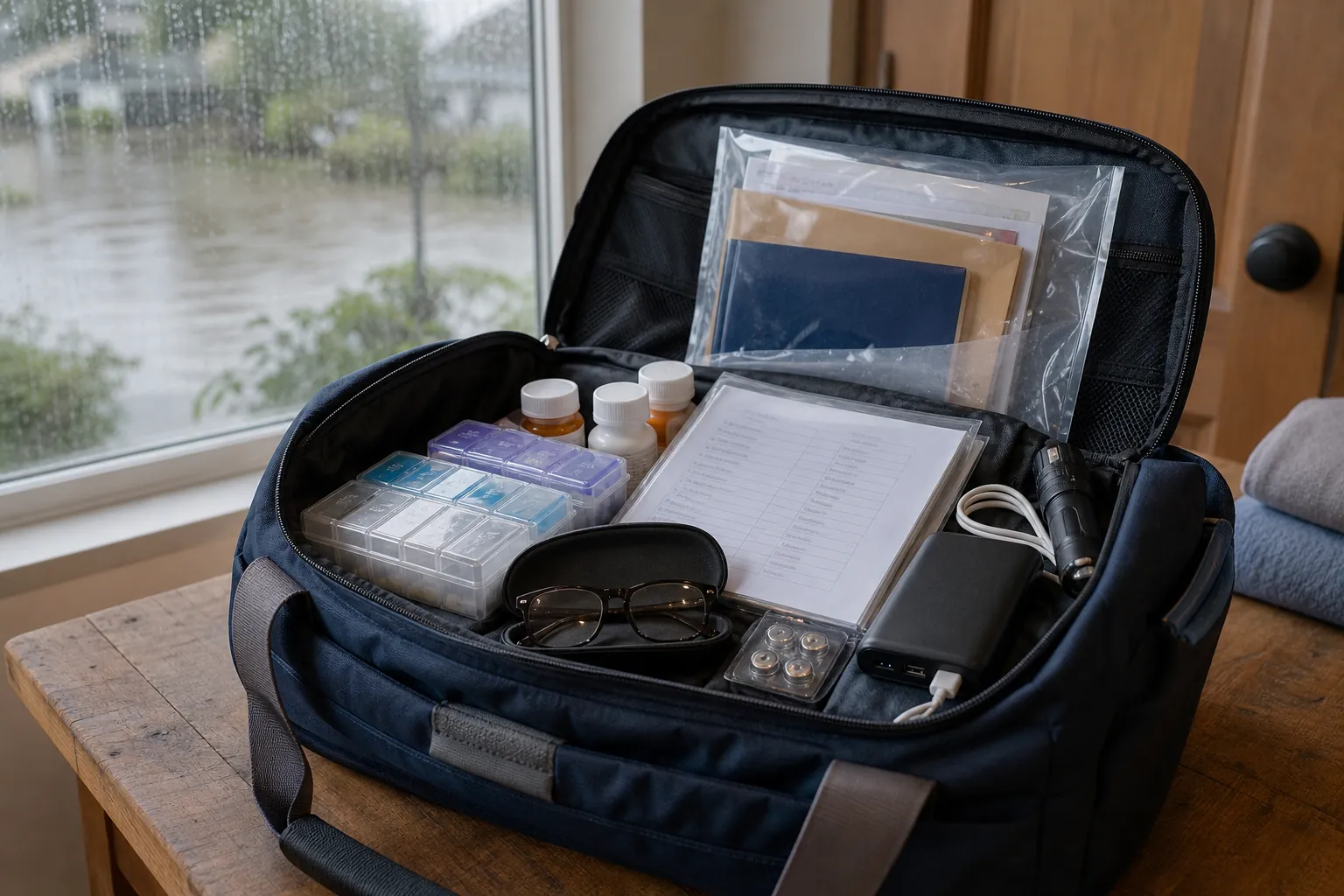
This is the kit piece of the flood plan. For full evacuation steps, use the Flood Evacuation Safety Checklist for Seniors. For the harder timing question—leaving before a warning when an older adult needs extra time—use When Seniors Must Leave Before a Flood Warning. Here, the standard is narrower and less forgiving: if the warning arrives now, the bag has to be ready now.
The senior flash-flood kit, in the order it should be packed
Pack the kit so the most failure-prone items are easiest to find: medication information first, power and device supplies next, then daily aids and waterproof documents. Water and food still matter, but they are not the part most families forget until shelter staff are trying to identify pills from memory.
| Kit layer | What to include | What to check |
|---|---|---|
| Medications and medical information | Prescription medicines, over-the-counter drugs, vitamins, written medication names, doses, schedules, prescriber/pharmacy contacts, allergy list, and refill plan | Update at every medication change; remove expired items; confirm supply target with a clinician or pharmacist |
| Power-dependent medical devices | Charging cords, backup batteries or power bank where appropriate, CPAP supplies, oxygen equipment needs, electric wheelchair or scooter charging plan, insulin cooling plan, nebulizer supplies if used | Test batteries and chargers; label cords; confirm safe backup-power options with the device supplier or clinician |
| Daily assistive aids | Spare eyeglasses, hearing-aid batteries or charger, dentures and supplies, cane or walker-related needs, incontinence briefs, mobility or transfer items, special-diet food | Pack the exact items the person uses daily, not vague substitutes |
| Waterproof records and payment continuity | Copies of ID, insurance card, prescriptions, emergency contacts, care plan, device information, benefit/payment details, and key phone numbers | Keep in a waterproof pouch; update after insurance, pharmacy, doctor, address, or contact changes |
| Basic evacuation supplies | Water, shelf-stable food, flashlight, radio, batteries, first aid supplies, hygiene items, phone charger, cash, change of clothes, and pet/service-animal items if relevant | Rotate food, water, and batteries on the same schedule as the medical kit |
Medications: the part that cannot be reconstructed from good intentions
Medication is where many emergency kits for older adults quietly fail. A scoping review on natural disasters and medication preparedness among older adults identified medication stockpiling, insulin, oxygen, nebulizer supplies, and daily-living aids as core preparedness items; it also found that most older adults do not bring prescriptions or remember medication names and doses during disasters. [3] That is not a character flaw. It is what happens when stress, noise, water, evacuation instructions, and chronic conditions arrive together.
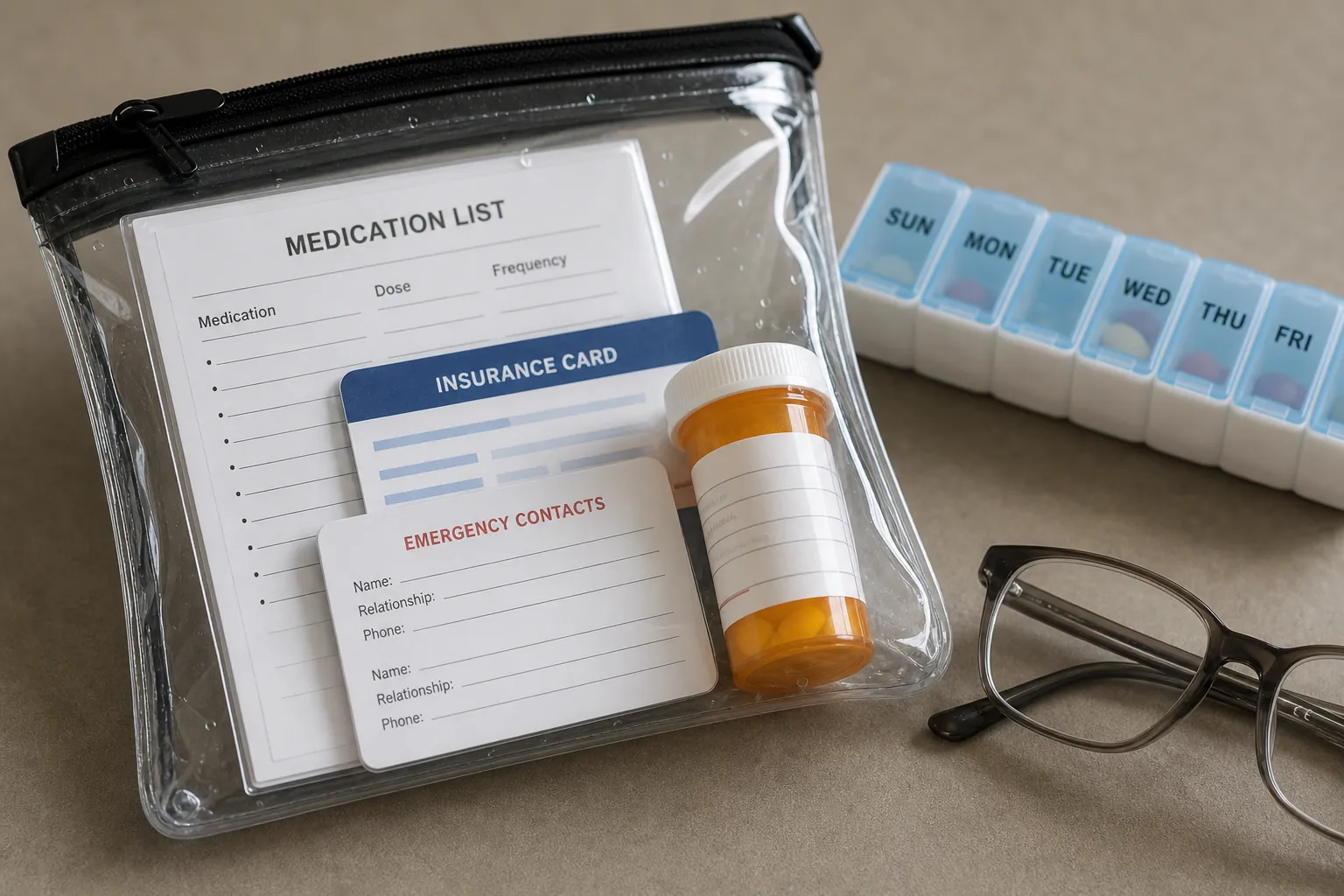
The medication section of the bag should include the medicines themselves when possible, but the written list is just as important. Put a printed medication list in a waterproof pouch and keep a second copy with the caregiver or emergency contact. For each item, write the medication name, strength, dose, time taken, reason it is used if helpful, prescribing clinician, pharmacy, and any allergy or serious reaction. Include prescription drugs, over-the-counter medicines, vitamins, and supplements; Ready.gov specifically includes prescriptions, OTC drugs, and vitamins in its kit guidance. [4]
Do not rely on “the small white pill,” a pharmacy app that may not load, or a caregiver’s memory from across town. The person reading the list may be a shelter nurse, a paramedic, an out-of-state relative, or the older adult on a day when sleep, pain, or fear has made recall unreliable.
How much medication belongs in the kit?
There is a real difference between minimum survival-kit guidance and better senior-specific planning. The Red Cross survival-kit list calls for a 7-day supply of medications and medical items. [5] Its older-adult preparedness guidance recommends keeping at least 30 days of medications. [6]
Treat 7 days as the bare minimum to discuss, not the dream version of readiness. A flash flood may not keep someone out of the house for a full month, but pharmacy access, transportation, insurance processing, mail delivery, refrigeration, and refill timing can all break in ordinary, annoying ways. Ready.gov notes that about half of all Americans take a prescription daily and that an emergency can make refills difficult. [4] For a senior who cannot safely miss doses, “we’ll refill it later” is not a plan.
Because prescriptions, insurance limits, controlled-substance rules, storage requirements, and medical risks vary, confirm the supply target with the prescribing clinician and pharmacist. Ask plainly: “What is the safest emergency supply we can keep, how should it be stored, and what do we do if we evacuate before the next refill?”
Medication items to pack or document
- Current prescription medications, packed according to pharmacy and clinician instructions.
- Over-the-counter drugs the person actually uses, such as pain relievers, allergy medicine, stomach medicine, or stool softeners, if appropriate for that person.
- Vitamins and supplements, because they can interact with prescriptions and should not be invisible to a clinician.
- A current written medication list with names, strengths, doses, timing, prescribers, pharmacy phone number, allergies, and major diagnoses.
- A refill plan: pharmacy name, prescription numbers if useful, insurance information, mail-order details if used, and who is allowed to pick up or manage refills.
- Supplies tied to medication use, such as glucose meter supplies, insulin administration supplies, sharps container plan, or medication cups, when relevant.
- A note on storage needs, especially for refrigerated medicine such as insulin, with instructions confirmed by the clinician or pharmacist.
The update rule is simple: when a medication changes, the kit changes that day. New dose, new pill, stopped medication, new pharmacy, new allergy, new prescriber—each one makes the old list unsafe.
Power-dependent devices need a written power plan, not a hopeful cord in the bag
For an older adult who uses CPAP, oxygen, an electric wheelchair, a scooter, a nebulizer, a hospital bed, a lift device, a communication device, or refrigerated medication, electricity is part of the medical plan. The Red Cross older-adult guidance specifically tells older adults to plan for the power needs of medical devices. [6] That plan belongs in the bag in writing, because the person making decisions during an outage may not be the person who set up the equipment.
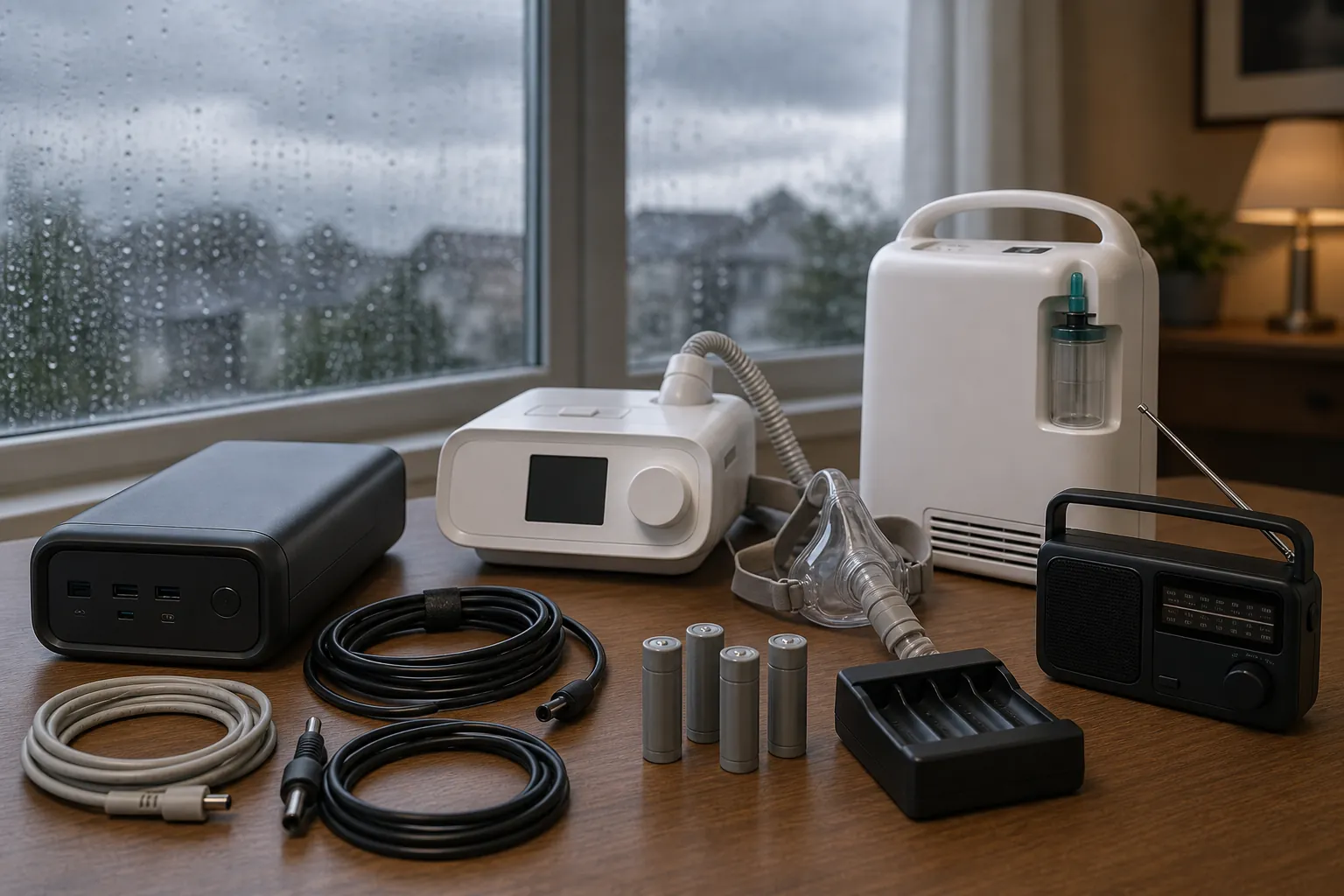
Write down each device, what it does, how long it can run on its internal battery if it has one, what charger or adapter it needs, who supplies it, and what to do if the home loses power. Label cords with the device name. Put chargers in the go-bag when duplicates are available; if not, attach a tag to the bag that says exactly which cord must be grabbed.
This is the point to involve the device supplier, clinician, oxygen provider, pharmacist, or home health team. Ask whether a backup battery is appropriate, whether a portable option exists, how long supplies can safely last, and what the evacuation destination must be able to support. For a deeper household plan around outages and medically necessary equipment, use How to Build a Power Outage Plan for Elderly Parents; the flood kit should carry the portable pieces and the written instructions.
Device and power items to account for
- CPAP or BiPAP: mask, tubing, filters, power cord, backup power instructions, and cleaning needs.
- Oxygen: concentrator or portable oxygen instructions, supplier contact, backup plan, tubing, cannulas, and evacuation destination requirements.
- Electric wheelchair or scooter: charger, battery information, manual mode instructions if applicable, and transportation needs.
- Insulin or other temperature-sensitive medication: cooling method, storage limits, pharmacy contact, and clinician-approved instructions.
- Nebulizer: machine or portable unit, medication, tubing, mask or mouthpiece, cleaning supplies, and power needs.
- Phone and communication devices: charging cable, wall plug, power bank, written contacts, and any accessibility settings the person relies on.
- Hearing aids or rechargeable hearing devices: spare batteries, charger, cleaning tool, and a labeled case.
Generator safety has a hard boundary. The Red Cross warns that gasoline, propane, natural gas, or charcoal-burning devices must never be used indoors because carbon monoxide is invisible and can kill quickly. [7] A garage, porch, hallway, or open window does not turn an unsafe setup into a safe one. If the medical plan depends on backup power, the safe version has to be worked out before the storm, not improvised while someone is trying to breathe, sleep, or keep insulin usable.
Daily aids are medical equipment when a person cannot function without them
A spare pair of glasses looks minor until the first pair is left on a nightstand during evacuation. Dentures, hearing-aid batteries, cane tips, incontinence briefs, and special-diet food do not make dramatic preparedness posters. They are still the difference between a displaced older adult who can function and one who is dependent on strangers for avoidable problems.
The Red Cross older-adult guidance recommends extra assistive items such as a cane or eyeglasses and planning for special-diet food. [6] The medication-preparedness review also identifies daily-living aids—including wheelchairs, hearing aids, canes, walkers, dentures, glasses, and incontinence briefs—as important disaster kit components for older adults. [3]
- Vision: spare eyeglasses in a hard case, magnifier if used, and a copy of the current eyeglass prescription if available.
- Hearing: hearing-aid batteries, charger, cleaning supplies, labeled case, and written instructions if the device is difficult for others to manage.
- Dentures: denture cup, adhesive, cleaning tablets or supplies, and a labeled container.
- Mobility: cane, walker, wheelchair needs, extra cane tips if used, transfer belt if prescribed or used safely, and a note about how the person transfers.
- Continence: briefs, pads, wipes, barrier cream, disposal bags, and enough supply for several days away from home.
- Diet: shelf-stable foods that match the person’s actual medical or swallowing needs, not just whatever emergency food is cheapest.
- Skin and foot care: socks, well-fitting backup footwear if feasible, wound-care supplies if prescribed, and any clinician-directed supplies for fragile skin.
Pack duplicates only where duplicates make sense. A second walker may not fit in a duffel, but the bag can still carry a written note: “Walker is by the bedroom door; grab before leaving.” The point is to remove guessing from the evacuation.
Waterproof documents should answer the questions someone else will ask
Paper is useless if it turns to pulp in a wet bag. Put copies in a waterproof pouch, and keep digital copies where the family can reach them if phones and accounts are still available. The pouch should not be a scrapbook. It should answer the questions that delay care, shelter intake, refills, transportation, and payment.
- Photo ID and a backup copy of the insurance card.
- Medicare, Medicaid, private insurance, pharmacy benefit, or supplemental coverage information, as applicable.
- Current medication list and prescription information.
- Emergency contacts, including one local contact and one out-of-area contact if available.
- Clinician, pharmacy, oxygen supplier, home health agency, dialysis center, device supplier, or specialist contact information, as relevant.
- A short care summary: diagnoses that matter in an emergency, allergies, mobility limits, communication needs, cognitive concerns, diet restrictions, and device needs.
- Advance directive, health care proxy, or power-of-attorney information if the person uses those documents.
- Benefit and payment information needed to keep money available during mail disruption.
Ready.gov’s older-adult guidance recommends switching Social Security and other federal benefits to direct deposit or Direct Express so finances are not dependent on mail delivery after an emergency. [8] That belongs in preparedness for the same reason medication lists do: displacement is easier to survive when ordinary systems do not collapse over one missing card, check, password, or phone number.
The basic supplies still belong in the bag
A senior-specific kit does not replace water, food, light, radio, first aid, and hygiene supplies. It puts them in the right proportion. The Red Cross survival-kit guidance lists one gallon of water per person per day, a 3-day evacuation food supply, and a 2-week food supply for home use. [5] Those supplies should be packed around the medical layer, not instead of it.
- Water and shelf-stable food that the older adult can open, chew, swallow, and safely eat.
- Battery-powered or hand-crank radio.
- Flashlight or headlamp, with batteries checked on schedule.
- First aid supplies.
- Hygiene supplies, including hand sanitizer, wipes, tissues, and personal care items.
- Phone charger, charging cable, and power bank.
- Change of clothes, socks, and sturdy footwear.
- Small bills or other backup payment method, stored safely.
- Keys, spare key plan, or lockbox information if a trusted helper may need access.
- Service-animal or pet supplies if applicable, including food, leash, carrier, waste bags, and records.
Make the bag usable by the person who may actually grab it
A kit assembled by an adult child across town has to work for the older adult, a neighbor, a home aide, or first responders. Label the bag clearly. Put it where evacuation actually starts: near the main exit, mobility device, bedroom door, or caregiver handoff spot. If the person uses a walker, do not hide the bag where they have to bend into a closet during a warning.
Use labels that survive stress: “MEDICATION LIST,” “CPAP CORD,” “HEARING AID BATTERIES,” “INSURANCE,” “OXYGEN SUPPLIER.” Put the most urgent documents and medication list in the same waterproof pouch every time. If a necessary item cannot live in the bag, attach a bright tag or checklist to the handle with the exact item and location.
| If this item cannot stay packed | Write this on the grab tag |
|---|---|
| Refrigerated insulin | Grab insulin from refrigerator door shelf; use cooling pouch; follow pharmacist instructions |
| Primary CPAP cord | Grab CPAP cord from wall outlet beside bed |
| Walker | Grab walker from bedroom doorway |
| Dentures used overnight | Grab denture case from bathroom sink |
| Phone | Grab phone from charger and put power bank in outside pocket |
Keep the list short enough to use. A five-item grab tag can save a kit that cannot hold everything. A twenty-five-item tag is just another thing no one will finish while water is rising.
What not to postpone until the warning
Some parts of the kit can be assembled in an afternoon. Others require phone calls. Those calls are still part of the checklist.
- Ask the pharmacist how to maintain an emergency medication supply and how refills work after evacuation.
- Ask the clinician which medications cannot be missed, which require temperature control, and what to do if doses are delayed.
- Ask the oxygen, CPAP, wheelchair, or medical-device supplier what backup-power and evacuation instructions apply to that exact equipment.
- Ask the local emergency management office or utility about any medical-device registry, priority-notification process, or sheltering information available in the area.
- Ask the older adult what they use every morning and every night; the missing item is often part of a routine no one else notices.
Be careful with advice that comes only from a product seller or a single manufacturer blog. Device-specific guidance belongs with the clinician, supplier, manufacturer instructions, or emergency professionals who can account for the person’s equipment and health status. A flood kit is not the place for guessed water-depth limits, improvised charging setups, or “probably fine” medication storage.
Maintenance is the checklist
The bag is not finished when it is packed once. It is finished only if it stays current. Put a recurring reminder on the calendar to re-check the kit at least every six months: medication dates, written doses, battery charge, hearing-aid supplies, water, food, documents, phone numbers, insurance cards, and device instructions.
Then add the stricter rule: re-check it at every medication change. A flash flood kit assembled “someday” is not a grab-and-go kit when the warning arrives.
References
- Flood Safety: Turn Around Don’t Drown, National Weather Service
- Flood Safety, CDC
- Natural disaster and medication preparedness among elderly, PMC
- Build A Kit, Ready.gov
- Survival Kit Supplies, American Red Cross
- Emergency Preparedness for Older Adults, American Red Cross
- Floods, American Red Cross
- Older Adults, Ready.gov
Related reading
Noticed something outdated or inaccurate on this page? Flag a correction. We review every report against CDC, NIA, and AARP HomeFit guidance before updating a page.
Part of the Fall Prevention section.