
STEADI: Intervene
Heat Wave Safety Checklist for Seniors During El Niño
A declared El Niño summer raises heat risk for older adults in ways generic tips miss. Use this source-anchored checklist to act on CDC HeatRisk alerts, review heat-sensitive medications before the season peaks, and catch the dehydration-dizziness-fall chain early.
As of August 5, 2026, an El Niño summer is no longer a planning possibility. NOAA declared El Niño on June 11, 2026 and reported a 63% chance that sea-surface temperatures would exceed 2.0°C, NOAA’s “very strong” class.[1] Carbon Brief’s climate update framed the same developing pattern as one reason 2026 has an increased chance of record warmth.[2] That does not mean El Niño causes a particular heat wave in a particular city. It does mean families should stop treating heat safety for an older parent as a vague seasonal reminder.
For older adults aging at home, the useful question is smaller and more urgent: what changes today when the heat risk rises? Heat already concentrates harm in older people. Climate Central has reported that more than 80% of U.S. heat deaths occur among people over 60, and identifies heat as the leading weather-related killer in the United States.[3] WHO has reported that heat-related mortality among people 65 and older rose by about 85% between 2000–2004 and 2017–2021.[4] The checklist below is educational, not medical advice, and it does not replace a clinician’s instructions. It is meant to help a caregiver decide who checks in, what they check, and when “please drink water” is no longer a plan.
Use CDC HeatRisk as the daily trigger
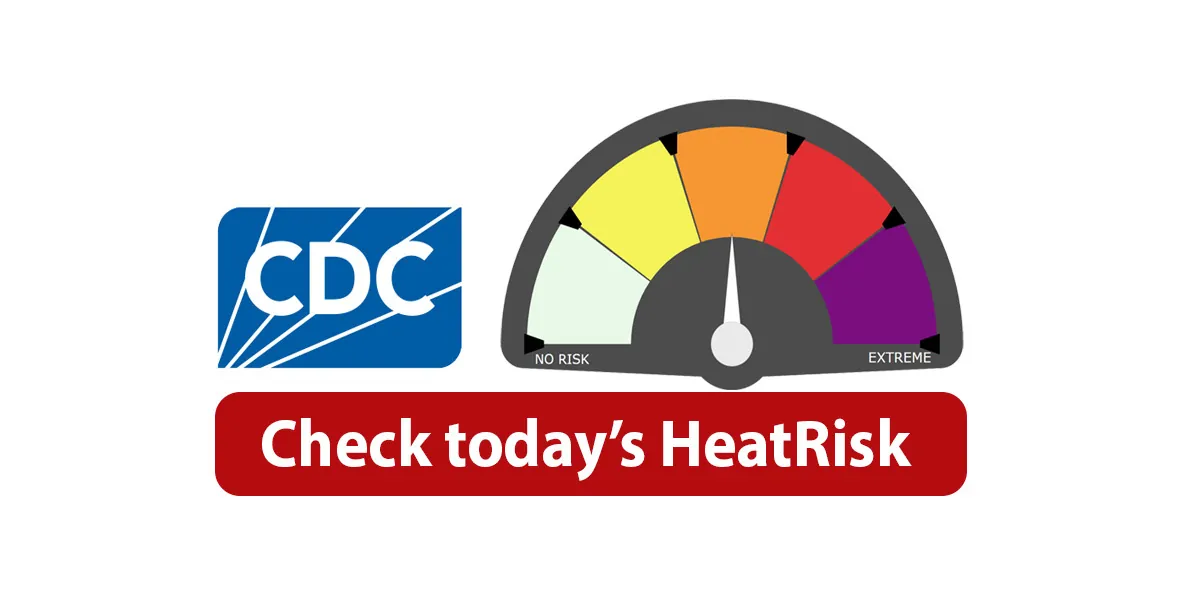
The CDC HeatRisk dashboard gives caregivers an outside signal instead of forcing them to judge the day by how the morning feels.[5] Check it for the older adult’s location early in the day, then check again if the forecast changes or an alert is issued. The point is not to memorize a color chart. The point is to decide whether today’s contact is a casual reminder, a verified check-in, or an intervention.
| If HeatRisk is low or ordinary for that location | If HeatRisk is rising or alerts are in place |
|---|---|
| Confirm the cooling plan still works: air-conditioning, working blinds or curtains, a room thermometer if available, and a reachable backup contact. | Switch from “remember to drink” to a real check-in: ask what they have drunk, whether the air-conditioning is on, and whether they feel dizzy when standing. |
| Make sure the older adult knows where they would go if the apartment becomes too hot. | Verify cooling access, not just intention. If the home is not adequately cooled, arrange transportation to a cooler place before the hottest part of the day. |
| Review the medication list before the first serious heat stretch, especially diuretics, blood-pressure drugs, sedating medications, and drugs with dehydration or kidney-risk concerns. | If the person is on water pills or has a fluid restriction, call the clinician for heat-day instructions before pushing extra fluids.[6] |
| Agree on who will call or visit if the caregiver is at work, traveling, or unreachable. | During dangerous heat, the CDC caretaker checklist says to visit at-risk adults at least twice a day and ask whether they are drinking more than usual, whether they have air-conditioning access, whether they know how to keep cool, and whether they know heat-stress signs.[6] |
A phone call can miss the room. Older adults often answer “I’m fine” from a hot chair because standing up feels like work, because they do not want to bother anyone, or because the fan is blowing directly on them and feels reassuring. CDC guidance for older adults says not to rely on a fan as the main cooling source during extreme heat.[6] WHO’s public heat guidance uses more conditional language around fans in very high temperatures, but for a caregiver plan, the safer operational rule is simple: a fan is not proof that the home is cool.[4][6]
What to ask on a heat-day call
- “Is the air-conditioning on right now, and is the room actually cooling?”
- “What have you had to drink since you woke up?” CDC tells older adults to drink more than usual and not wait until they feel thirsty, unless a clinician has limited fluids.[6]
- “Are you taking any water pills today, or did the doctor tell you to limit fluids?” If yes, do not improvise a hydration target; ask the clinician for the heat-day plan.[6]
- “When you stand up, do you feel lightheaded, weak, unsteady, or like you need to grab furniture?”
- “If I need you to leave for a cooler place, who can drive you, and where are your keys, walker, phone, charger, and medications?”
If the answers are vague, move from asking to verifying. A neighbor can knock. A family member can stop by before lunch. The caregiver who waits until evening may be checking after the day’s heat has already done the most damage.
Prepare the home before the alert peaks
The best heat-wave safety work happens before anyone is flushed, dizzy, or arguing that the apartment is “not that bad.” Walk through the home before a high-risk stretch and decide who owns each task.
- Cooling: Confirm that air-conditioning works, the older adult knows how to use it, and the bill or thermostat setting is not stopping them from turning it on.
- Room check: Put a simple thermometer in the room where they spend the most time if that helps the family stop guessing.
- Backup location: Choose a cooled destination before the heat wave: a relative’s home, a cooling center, a library, a senior center, or another place the older adult will actually agree to use.
- Transportation: Name the driver, backup driver, and pickup time. “We’ll figure it out” is weak planning when taxis are delayed and family members are at work.
- Walking path: Clear the route from chair to bathroom, kitchen, bedroom, and exit. Heat-related dizziness turns loose rugs, cords, low tables, and poor lighting into fall hazards.
- Medication access: Keep the current medication list in one place, including over-the-counter pain relievers, sleep aids, and supplements.
A broader room-by-room home check belongs in the same plan, not in a separate “someday” project. If the home has not been reviewed recently, use the Fall Prevention Handout to look for hazards that become more dangerous when an older adult is tired, dehydrated, or unsteady.
The heat-to-fall chain is the senior-specific risk
Heat safety articles often stop at “stay cool and drink water.” For older adults, that skips the step where heat becomes a fall. The more useful chain is: heat stress, less fluid reserve, dehydration, blood-pressure shifts, dizziness on standing, then a fall on the way to the bathroom, kitchen, or door.
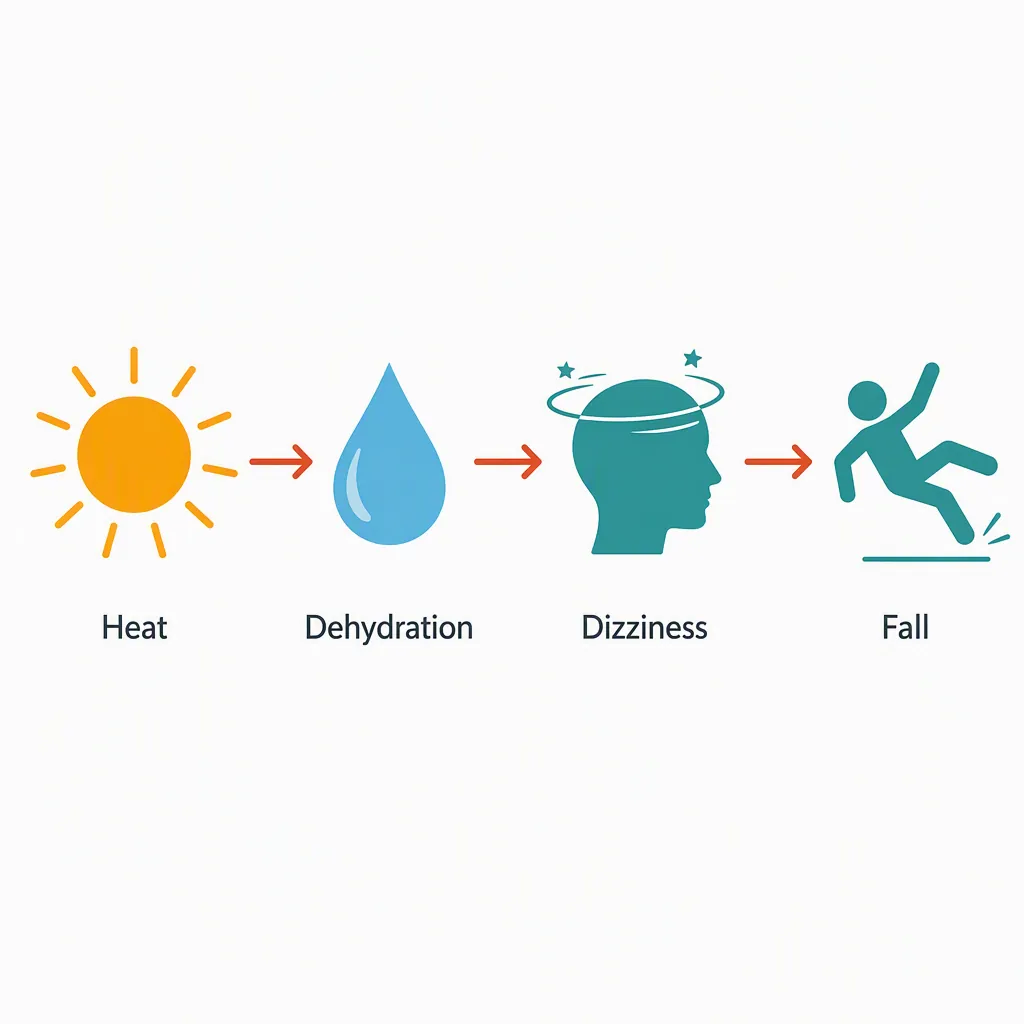
A cohort study of 30,634 adults age 65 and older found that 37.9% were dehydrated. Falls occurred in 13.3% of dehydrated older adults compared with 10.2% of non-dehydrated older adults. The study found dehydration was positively associated with falls, and loop diuretic use was also associated with falls.[7] Those numbers do not prove that every dehydrated person will fall, and they do not prove that heat caused every dehydration episode. They do show why a heat checklist for seniors has to include standing dizziness, medication review, and fall prevention.
The caregiver’s job is not to diagnose dehydration over the phone. It is to notice the pattern early: drinking less than usual, sweating or overheating, taking medicines that change fluid balance or alertness, and feeling lightheaded when standing. Once that pattern appears, the plan should change. The older adult may need a visit, a cooler location, clinician guidance, or emergency help depending on symptoms.
Review heat-sensitive medications before the hottest stretch
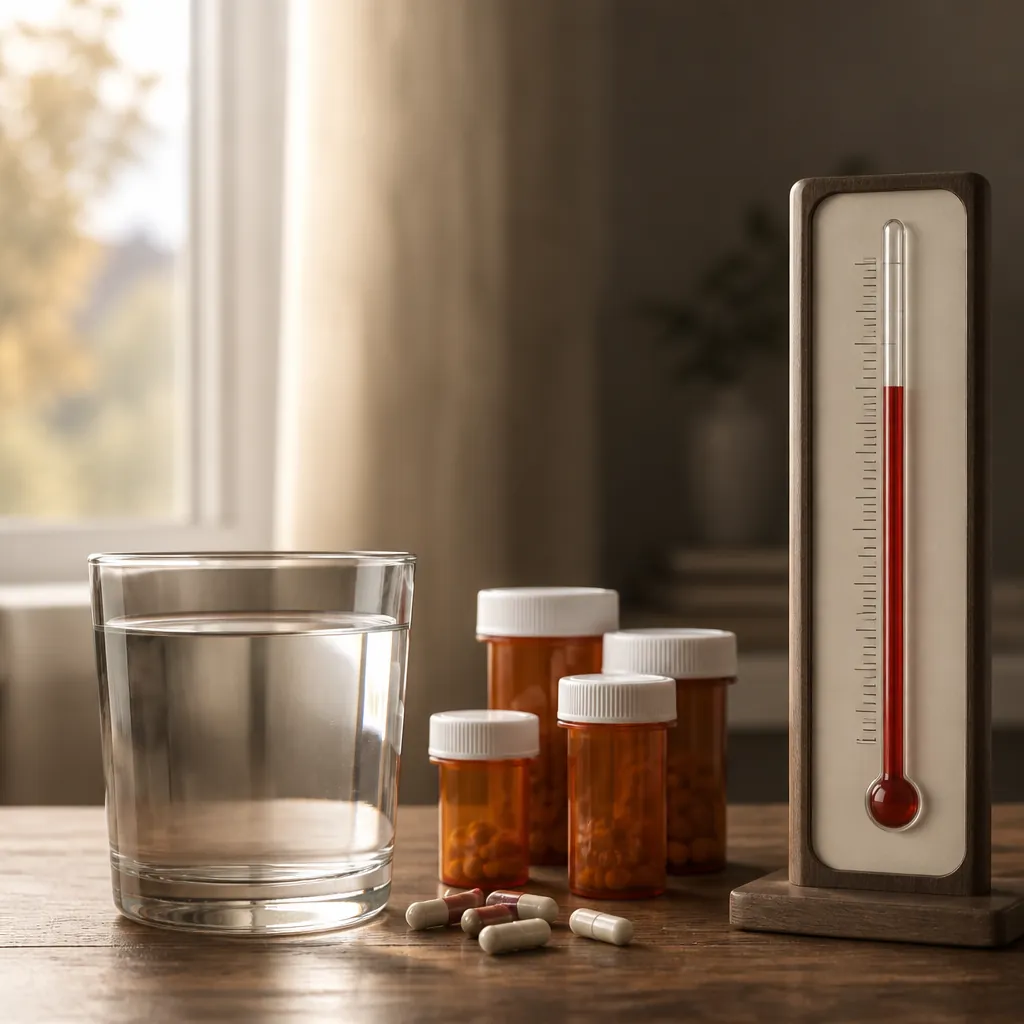
Do not stop, skip, or change prescribed medications because the forecast is hot. Do call the prescribing clinician or pharmacist before the peak heat period if the older adult takes medications that can worsen heat tolerance, fluid balance, blood pressure, kidney stress, sedation, dizziness, or fainting risk. CDC clinician guidance specifically flags medication-related pathways such as volume depletion, hypotension, and sedation that can matter on hot days.[8]
| Medication type to ask about | Why it matters during heat | Caregiver action |
|---|---|---|
| Diuretics, including loop diuretics | Can contribute to volume depletion and blood-pressure changes; loop diuretic use was associated with falls in the Hamrick cohort.[7][8] | Ask the clinician what to do on very hot days, especially if the person is also told to limit fluids. |
| Beta blockers and other cardiovascular medications | Can affect cardiovascular response and may contribute to heat vulnerability or hypotension in some patients.[8] | Ask whether heat alerts should change monitoring, fluid advice, or blood-pressure precautions. |
| Tricyclic antidepressants and other antidepressants | Some can affect sweating, temperature regulation, alertness, or blood pressure.[8] | Ask what warning signs should trigger a call, especially if the person has dizziness or confusion. |
| Benzodiazepines, antipsychotics, sleep medicines, and other sedating drugs | Sedation, slowed reaction time, and impaired judgment can raise fall risk when heat is already causing weakness or lightheadedness.[8] | Ask whether timing, monitoring, or extra supervision is needed during heat alerts; do not change dosing without medical direction. |
| NSAIDs and other medicines with kidney or fluid-balance concerns | Heat and dehydration can increase concern for kidney stress in vulnerable adults.[8] | Ask the pharmacist or clinician whether over-the-counter pain relievers are safe during a heat wave for this specific person. |
This is also why medication review belongs inside fall prevention, not off to the side. A pill that is safe and necessary can still change what a hot day requires. If your family has not connected medication changes with fall risk before, the article on subpotent levothyroxine and falls in seniors is a useful example of why a medication list should be part of a fall-risk conversation.
What to have ready before calling the clinician
- The full medication list, including over-the-counter NSAIDs, sleep aids, allergy medicines, and supplements.
- The reason you are calling: upcoming HeatRisk alerts, poor cooling at home, dizziness on standing, recent falls, fluid restriction, or water-pill use.
- The practical question: “On dangerous heat days, how much should they drink, what symptoms should make us call, and are there any medication-specific precautions?”
- The emergency boundary: “Which symptoms mean we should call 911 instead of waiting for a callback?”
During dangerous heat, verify instead of reminding
When heat risk is high enough that the older adult is at meaningful risk, reminders become too soft. CDC’s caretaker checklist is concrete: visit at-risk adults at least twice a day, ask whether they are drinking more than usual, confirm they have access to air-conditioning, make sure they know how to keep cool, and check that they know signs of heat stress.[6]
- Morning: Check HeatRisk for the older adult’s location. If risk is elevated, call early enough to change the day’s plan.
- Before the hottest part of the day: Confirm the room is cooled, not just that a fan is running. If cooling is not adequate, arrange a move to a cooler place.
- At each check-in: Ask what they have drunk, whether they have eaten, and whether standing causes dizziness, weakness, or unsteadiness.
- If they take diuretics or have fluid limits: Follow the clinician’s heat-day instructions rather than giving blanket fluid advice.
- If dizziness or weakness is present: Reduce walking alone, keep the phone within reach, clear the path to the bathroom, and arrange in-person observation.
- Evening: Check again. Heat stress in an older adult can build across the day, and a person who sounded fine in the morning may be less steady later.
The bathroom trip deserves special attention. Heat waves increase drinking for many people, diuretics may increase urgency, and nighttime walking may be less steady. Put a light on the path, move obstacles, keep mobility aids within reach, and do not let pride decide whether someone walks alone while dizzy.
Know when symptoms outrun the checklist
Older adults do not always develop heat emergencies in the dramatic way families expect. The American Geriatrics Society notes that heat stroke can develop gradually over several days in older adults, and identifies a core body temperature of 104°F as a heat-stroke threshold.[9] If an older adult is confused, fainting, severely weak, unable to stay awake, or showing signs that make you suspect heat stroke, treat it as an emergency rather than continuing the checklist.
- Call emergency services if heat stroke is suspected, if the person is very confused or loses consciousness, or if symptoms are severe.
- Move the person to a cooler place while help is on the way if it is safe to do so.
- Do not give fluids unless the person is awake and able to swallow; AGS specifically cautions that fluids should only be given under those conditions.[9]
- If the person fell, has pain, hit their head, takes blood thinners, or cannot get up safely, use a post-fall response plan instead of trying to lift them quickly.
For what to do after a fall, keep the Fall Prevention FAQ handy before the heat wave, not after everyone is panicked.
The seasonal plan
For the rest of this El Niño season, make the routine plain: check CDC HeatRisk for the older adult’s location, review heat-sensitive medications before the peak heat period, confirm real cooling access, and watch for the dehydration–dizziness–fall chain. If the older adult is on water pills or fluid restriction, get clinician instructions before dangerous heat. If they become dizzy, confused, faint, or too weak to walk safely, the heat plan has already become a fall-prevention plan.
References
- El Nino forms, expected to strengthen. NOAA. June 11, 2026.
- State of the climate: Rapidly developing El Niño raises chance of record-warm 2026. Carbon Brief.
- People 60+ Face the Greatest Risk from Extreme Heat. Climate Central.
- Climate change: Heat and health. World Health Organization.
- HeatRisk. Centers for Disease Control and Prevention.
- Heat and Older Adults (Aged 65+). Centers for Disease Control and Prevention.
- Association Between Dehydration and Falls in Older Adults. Mayo Clinic Proceedings: Innovations, Quality & Outcomes. 2020.
- Heat and Medications – Guidance for Clinicians. Centers for Disease Control and Prevention.
- Tip Sheet: Hot Weather Safety Tips for Older Adults. HealthInAging.org, American Geriatrics Society.
Related reading
Noticed something outdated or inaccurate on this page? Flag a correction. We review every report against CDC, NIA, and AARP HomeFit guidance before updating a page.
Part of the Fall Prevention section.