
STEADI: intervene
Why Seniors Should Evacuate Wildfire Zones One Level Early
Seniors who wait for a mandatory evacuation order face the highest risk in a wildfire — fire and smoke move faster than an older body can. Learn the Ready/Set/Go levels, why leaving one level early is the protective choice, and how caregivers can move a reluctant parent out before the GO NOW order comes.
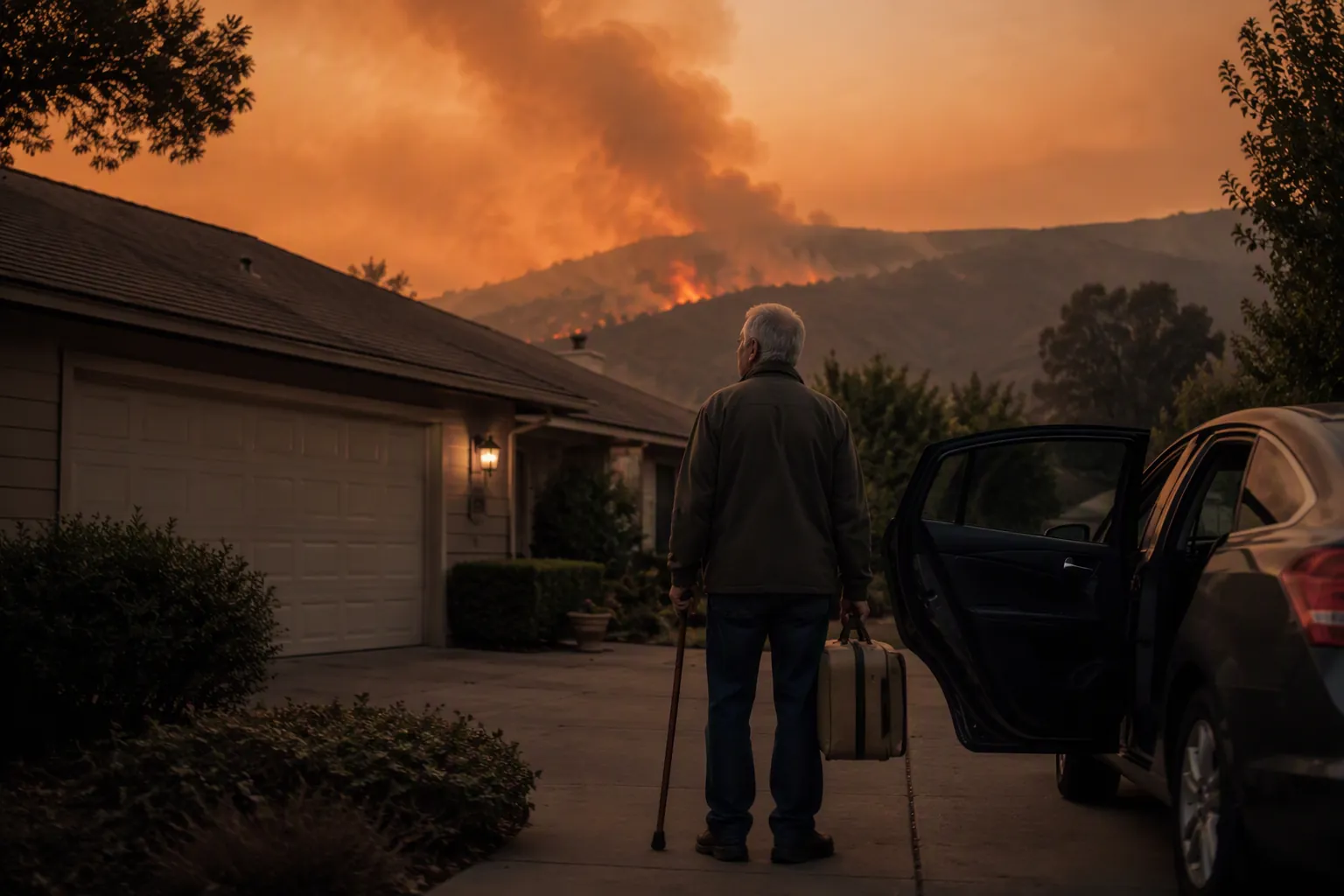
The argument usually starts with one calm sentence from the older adult: “They haven’t told us to go.” That sounds reasonable until you picture what still has to happen: shoes, medications, oxygen equipment, the walker, the dog, the locked back door, the car pointed the right way, the adult child calling twice because the first call went to voicemail, and smoke thickening over the road.
For seniors in wildfire zones, the evacuation trigger should come before the mandatory GO NOW order. Of all the evacuation safety tips for seniors in wildfire zones, this is the one that decides whether the rest of the plan has time to work: leave or relocate at the first official warning or Ready/Level 1 stage if evacuation will take extra time, and treat Set/Level 2 as the latest acceptable departure—not the start of the family debate.
What “one level early” means in a real evacuation
Wildfire alerts are not identical everywhere, but many communities use a three-stage idea: get ready, get set, go. Some call those Ready/Set/Go. Others use Level 1, Level 2, and Level 3. The wording on your county alert matters, but the family decision should already be made before the alert arrives.
| Common alert language | What the general public may hear | What a senior household should do |
|---|---|---|
| Ready / Level 1 / evacuation warning | Prepare, monitor alerts, be ready to leave | If the senior needs extra time, transportation help, oxygen, a walker, medication sorting, or cognitive support, begin leaving or relocating now. |
| Set / Level 2 | Conditions are worsening; be ready to leave at a moment’s notice | Leave now unless there is a specific official instruction that makes leaving unsafe. This is not the time to start persuading. |
| Go / Level 3 / mandatory evacuation | Leave immediately | This is too late to be the planned trigger for a slower evacuation. |
CAL FIRE’s evacuation guidance is unusually direct on this point: “It’s safer to leave before a mandatory order is issued. Don’t wait for orders.” That sentence should carry more weight in a family argument than a driveway assessment of whether the smoke looks close enough yet.[1]
For a healthy adult with a fueled car, clear vision, no medical equipment, and no one else to move, “wait and see” may still be a bad habit. For a senior who needs help standing, remembering pills, transferring into a vehicle, or staying calm in smoke and noise, it is worse than a habit. It burns the only resource that family can actually control: lead time.
The Camp Fire age profile is why this advice is not overprotective
Early evacuation can feel insulting to an older adult who has lived through storms, outages, bad seasons, false alarms, and neighbors who panic too quickly. It can feel like being managed. It can also turn out to be unnecessary if the wind shifts. Those are real costs. They are not the same size as the cost of waiting too long.
After the 2018 Camp Fire in Paradise, California, the age profile of the dead was blunt: the average victim age was 72, and 77% of identified victims were over 65.[2][3]
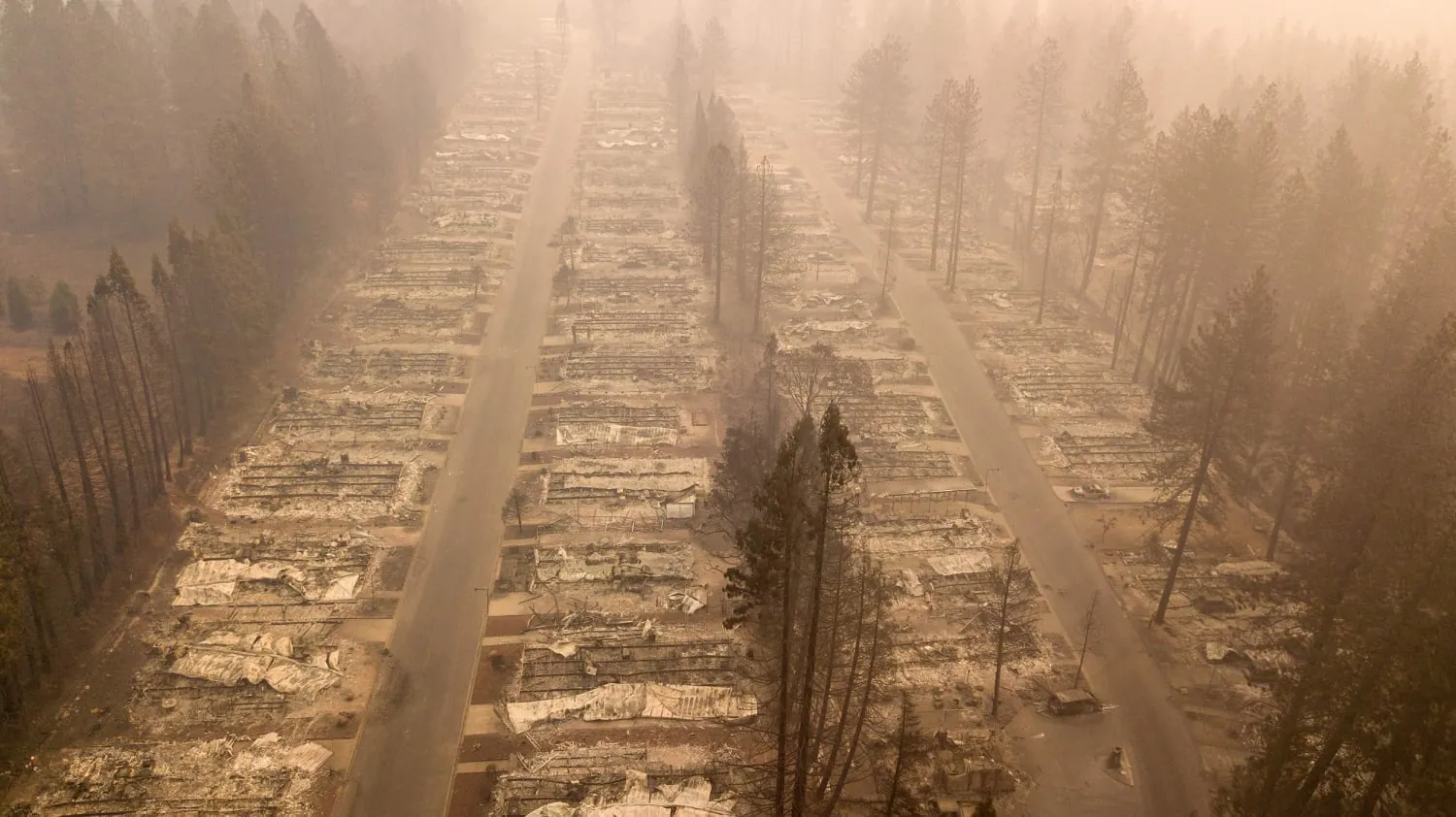
That does not mean every older adult who waits will die, and it does not prove one single reason for every death. It does show the group that paid the highest price when evacuation failed. When the oldest residents are so heavily represented among the identified victims, the safer timing rule should move earlier, not later.
The practical lesson is not that seniors are helpless. Many are not. The lesson is that wildfire evacuation systems are built around speed, information, and road capacity, while aging often adds friction exactly where speed matters most. A stiff hip slows the walk to the car. Low vision makes smoke and dusk harder to read. Hearing loss can delay awareness of alerts. Mild confusion can turn a familiar medication routine into ten minutes of searching. A power outage can make a garage door, lift chair, oxygen concentrator, or phone charger part of the evacuation problem.
A mandatory order compresses all of that into the same hour when everyone else is entering the road network. That is why Level 3 is a terrible first move for a household that already knows it moves slowly.
Why waiting for “mandatory” fails older bodies first
A wildfire evacuation is not one action. It is a chain of small actions that all have to happen under pressure. The person has to believe the alert, decide to leave, tell someone, dress, gather essentials, move through the house, lock up, get into the vehicle, join traffic, and tolerate smoke, heat, sirens, uncertainty, and delay.
For a senior, the weak link may not be bravery or common sense. It may be the body. It may be the aide who cannot arrive because the road has changed. It may be the adult daughter who lives 40 minutes away on a normal day and cannot make that drive once the evacuation route is crowded. It may be the parent who can walk to the mailbox but cannot safely hurry across a smoky driveway while carrying a bag.
Smoke also changes the decision before flames are visible. It can make breathing harder, reduce visibility, and make a familiar route feel unfamiliar. The family that waits until the fire “looks close” may be waiting for the wrong signal. The road, the air, the power, or the person’s stamina can fail before the flame front is in sight.
This is why the trigger should not be, “When Mom agrees it looks dangerous.” The trigger should be an outside signal chosen in advance: Ready, Level 1, evacuation warning, or the earliest local alert that says the area may need to leave. If the senior has major mobility, medical, or cognitive limits, that signal means relocation begins.
The caregiver conversation has to happen before fire season
The worst time to negotiate evacuation is after the alert, when a parent is watching local news, texting a neighbor, and insisting the order is not mandatory yet. By then, every sentence has to compete with fear, pride, habit, and the need to control one’s own home.

The cleaner conversation happens before smoke is visible. It is not a long lecture about disaster preparedness. It is a pre-commitment: “If our area reaches Level 1 or an evacuation warning, we leave for the hotel, my house, your sister’s house, or the agreed safe place. We do not decide again during the fire.”
That agreement should be specific enough that no one has to improvise under pressure:
- Name the exact local alert that starts action: Ready, Level 1, evacuation warning, or the first official notice your county uses before a mandatory order.
- Name the destination: not “somewhere safe,” but the first-choice and backup place.
- Name the caller: the adult child, neighbor, aide, or care manager who starts the move.
- Name the transportation plan: whose car, which pickup point, and what happens if that person cannot get through.
- Name the non-negotiable reason: leaving early protects time for the senior’s body, equipment, medication, and route.
The wording matters because the caregiver is trying to avoid a courtroom-style debate over whether the fire is close enough. A better script sounds like this: “We agreed that the warning is our trigger. I’m not asking you to decide if the fire is close. I’m asking us to follow the rule we made when we were calm.”
If the parent’s real fear is losing control, say that plainly: “Leaving at Level 1 is how you stay in control. Waiting until Level 3 means the county, the traffic, and the smoke decide for us.” That frame is more honest than pretending early evacuation is convenient. It may be annoying. It may mean sleeping badly in a guest room. It may mean coming home to an untouched house. That is still a better outcome than needing rescue because the family tried to save one more normal evening.
Home-health aides need the same trigger
Aides and paid caregivers should not be left with vague instructions like “call us if it gets bad.” They need the same trigger the family uses. If the client’s area reaches the agreed warning level, the aide should know who to call, whether to begin packing medications, whether transportation is coming, and when the aide’s own safety requires leaving.
This is especially important for seniors with dementia, serious mobility limits, or medical equipment. If your family needs the equipment side of the plan, use a separate, detailed guide such as wildfire evacuation for parents with walkers or dementia. The timing rule here is simpler: aides should not be asked to solve a Level 3 evacuation that the family could have started at Level 1.
Do not let map-checking replace the trigger
Families often lose time by collecting more proof. One person checks the county map. Another checks a social media group. Someone calls a neighbor who says the smoke is worse on the ridge but traffic is still moving. The parent says the alert is only a warning. Nobody is technically doing nothing, but nobody is leaving either.
Information is useful until it becomes a delay tactic. Once the agreed senior trigger has arrived, the next job is movement. If the alert changes while the car is already on the road, the family has gained time. If the alert changes while everyone is still arguing in the kitchen, the family has lost the margin that older adults most need.
For go-bags, smoke precautions, and the broader home checklist, use a separate preparation guide such as the senior wildfire evacuation and smoke safety checklist. But do not let the existence of a checklist blur the main decision. A perfect bag in the hallway does not help if the person waits until the road is already unsafe.
For seniors in wildfire zones, leaving early is not panic. It is the safety margin.
References
- Go! Evacuation Guide — CAL FIRE
- Older Californians at increased risk from wildfires — CalMatters
- Poor, elderly and too frail to escape: Paradise fire killed the most vulnerable residents — Los Angeles Times
Related reading
Noticed something outdated or inaccurate on this page? Flag a correction. We review every report against CDC, NIA, and AARP HomeFit guidance before updating a page.
Part of the Fall Prevention section.