
Flagship section
Fall Prevention
The flagship section, built directly on the CDC STEADI screen-assess-intervene model. Contains the fall risk screening quiz, the post-fall decision tree for active crisis situations (conscious/responsive checks, when to call 911 vs. urgent care, what to watch for in the following 72 hours), risk-factor explainers (medication side effects, vision, balance), and numbered warning-sign guides. This is the only group that owns crisis-path content; modification and mobility groups link back here rather than duplicating triage guidance.
Plan ahead
other
 —
—The $58 Billion Gap: How to Find and Access Financial Help Programs for Elderly Care That Most Families Don't Know About
An estimated $58 billion in federal and state benefits for older adults goes unclaimed each year. This guide helps adult children of aging parents find and apply for financial assistance programs like Medicaid HCBS waivers, Medicare Savings Programs, SSI, SNAP, and VA benefits with current 2026 eligibility thresholds and step-by-step application strategies.
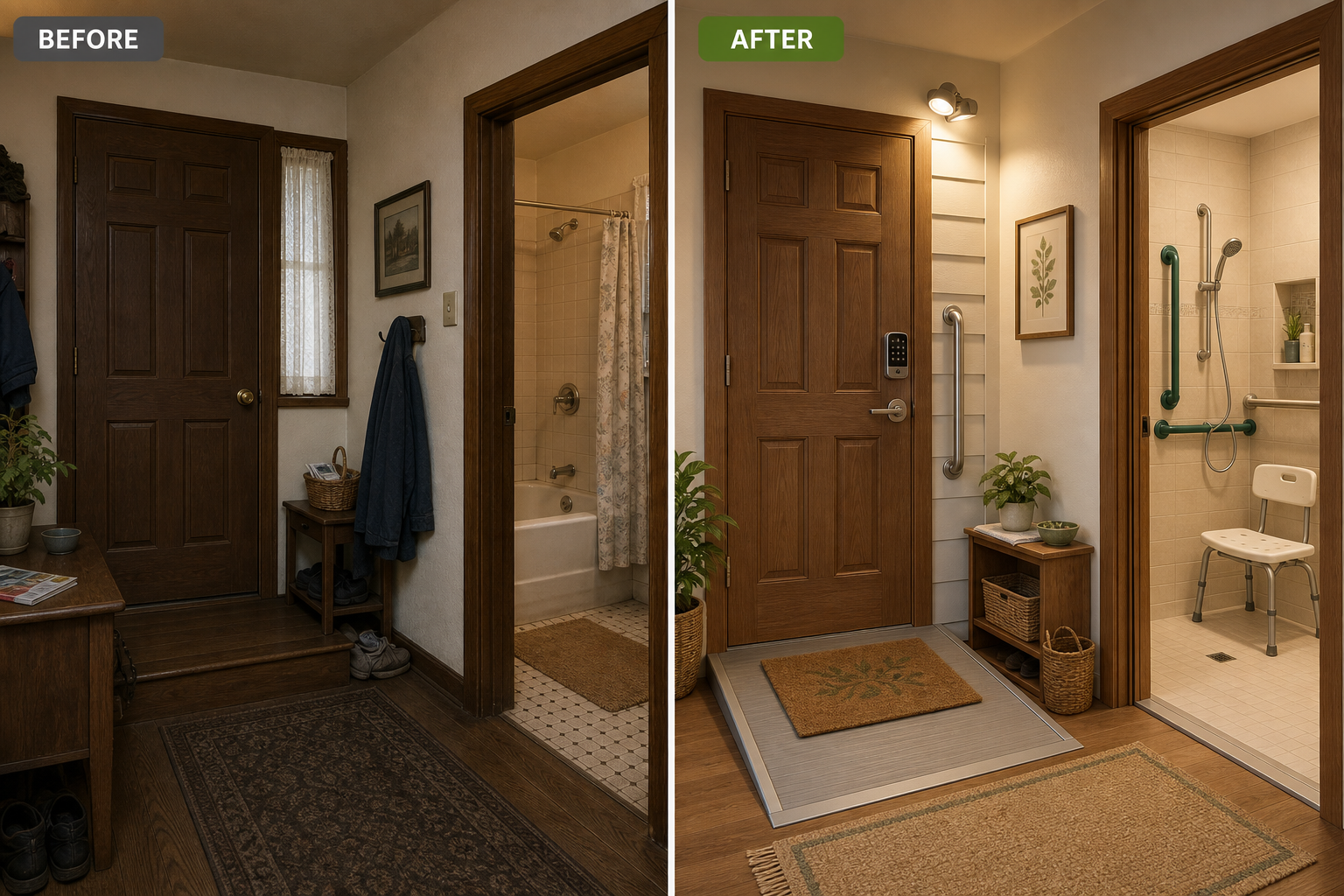 —
—Dementia-Friendly Home Modifications: A Stage-by-Stage Guide to Adapting Your Home for Alzheimer's and Memory Loss
This guide helps adult children understand how to modify a parent's home for dementia safety across early, middle, and late stages. It explains why dementia modifications are fundamentally different from general aging-in-place remodeling, with room-by-room guidance on contrast, wayfinding, wandering prevention, and when to prioritize familiarity over new features.
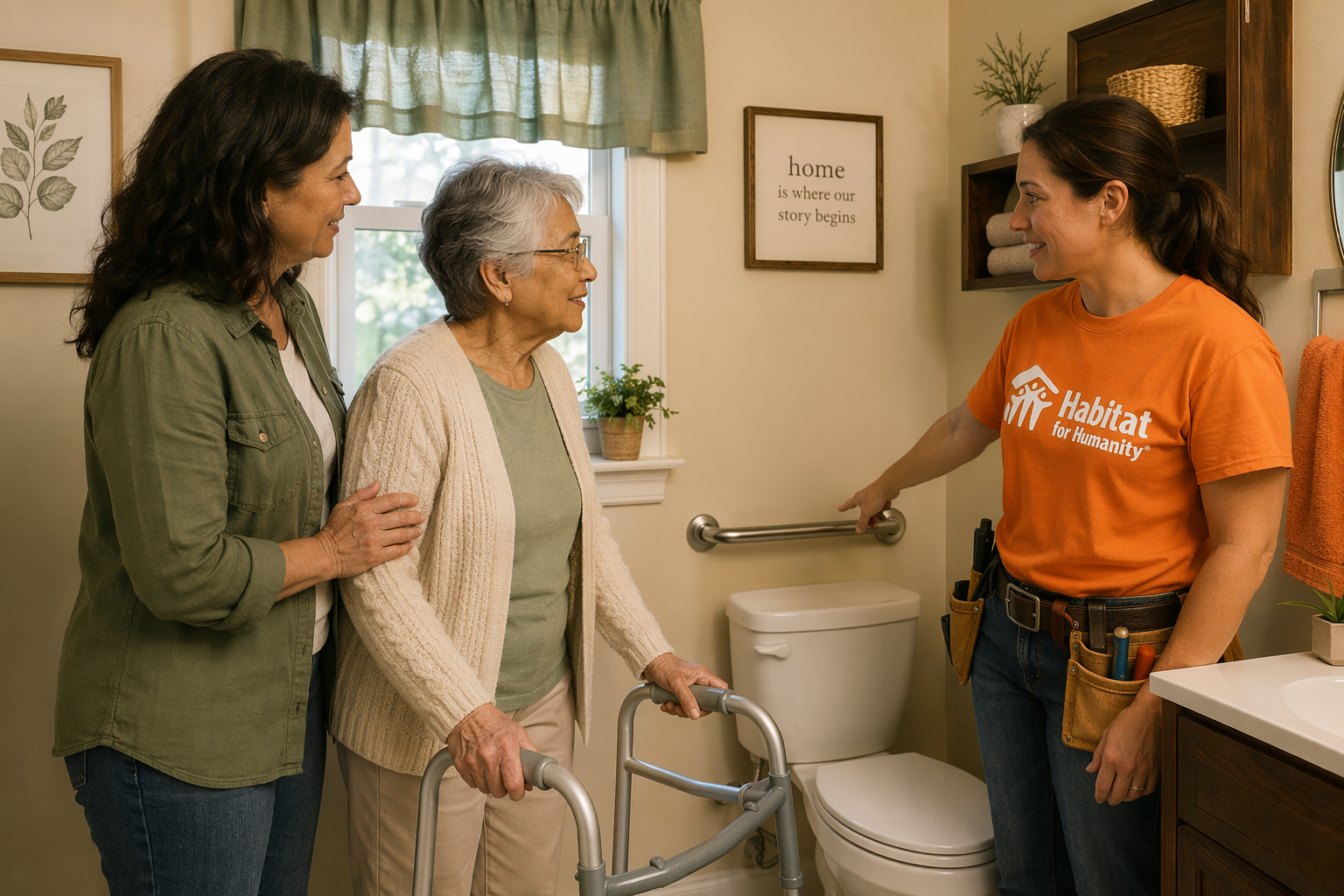 —
—How Habitat for Humanity's Aging in Place Program Works: A Complete Guide for Family Caregivers
This guide explains Habitat for Humanity's free or subsidized Aging in Place program for low-income older adults. Learn about the Housing Plus model, covered modifications, eligibility, the step-by-step application process, and how it compares to other funding sources.
 —
—Late-Stage Alzheimer's Care: A Complete Daily-Care Guide for Family Caregivers
A practical, task-by-task reference for family caregivers providing round-the-clock care for a loved one in late-stage Alzheimer's (FAST stages 6–7). Covers positioning, feeding, incontinence, pain recognition, pressure sore prevention, and when to consider hospice.
 —
—Live-In Companion for Elderly: Complete Guide to Costs, Hiring, and Payment Options (2026)
This comprehensive guide helps adult children understand the three distinct live-in care models, what they cost in 2026, how to find and vet a caregiver, and how to pay for care through private funds, insurance, VA benefits, and Medicaid waivers.
 —
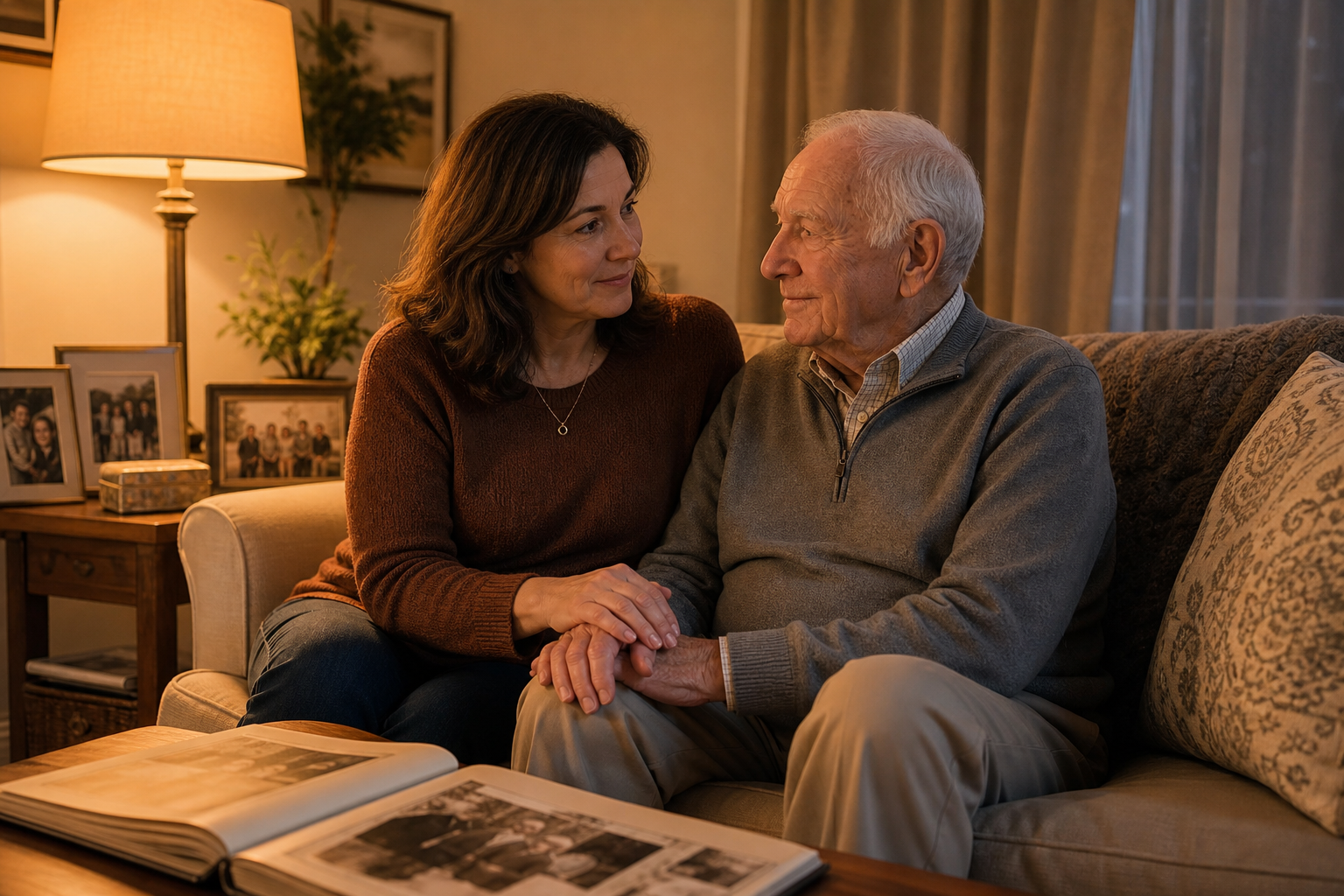
—A Seasonal Timeline for Daylight Saving Time and Senior Sleep
This seasonal guide provides a step-by-step caregiver timeline for managing daylight saving time transitions in older adults, with separate strategies for spring-forward and fall-back to prevent sleep disruption, sundowning, and health complications.
 —
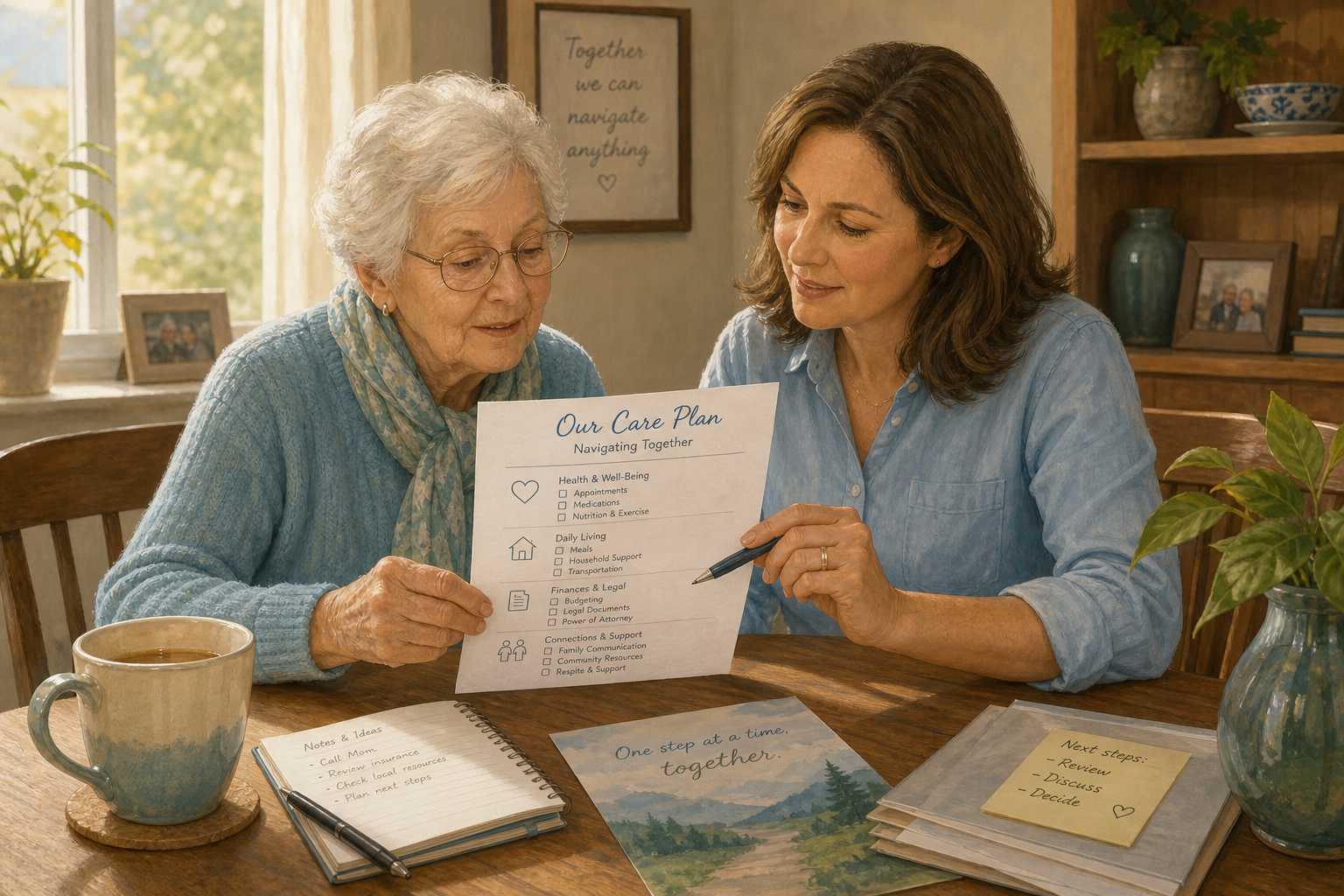
—How to Manage Sundowning in Dementia: A Practical Guide for Family Caregivers
Sundowning — the late-afternoon and evening confusion, agitation, and restlessness that affects many people with Alzheimer's and dementia — is one of the most exhausting challenges family caregivers face at home. This guide explains why sundowning happens and walks through a layered, evidence-grounded management approach: environmental modifications, daily routine adjustments, in-the-moment response strategies, and clear criteria for when to call a doctor.
 —
—Taking Care of Elderly Parents: A Step-by-Step Guide for Adult Children Just Starting the Caregiving Journey
This comprehensive guide provides a structured, seven-domain framework for adult children who have recently realized their aging parent needs help. It transforms overwhelm into manageable action by covering how to recognize signs, start the conversation, handle legal and financial essentials, build a care team, create a care plan, and prevent burnout from the start.
 —
—When a Parent Needs Help: A Recognition Guide for Adult Children
This guide helps adult children distinguish between normal aging and a genuine need for support by using the IADL framework — enabling earlier action before a crisis forces the issue.
 —
—Wildfire Smoke Safety Checklist for Seniors and Caregivers
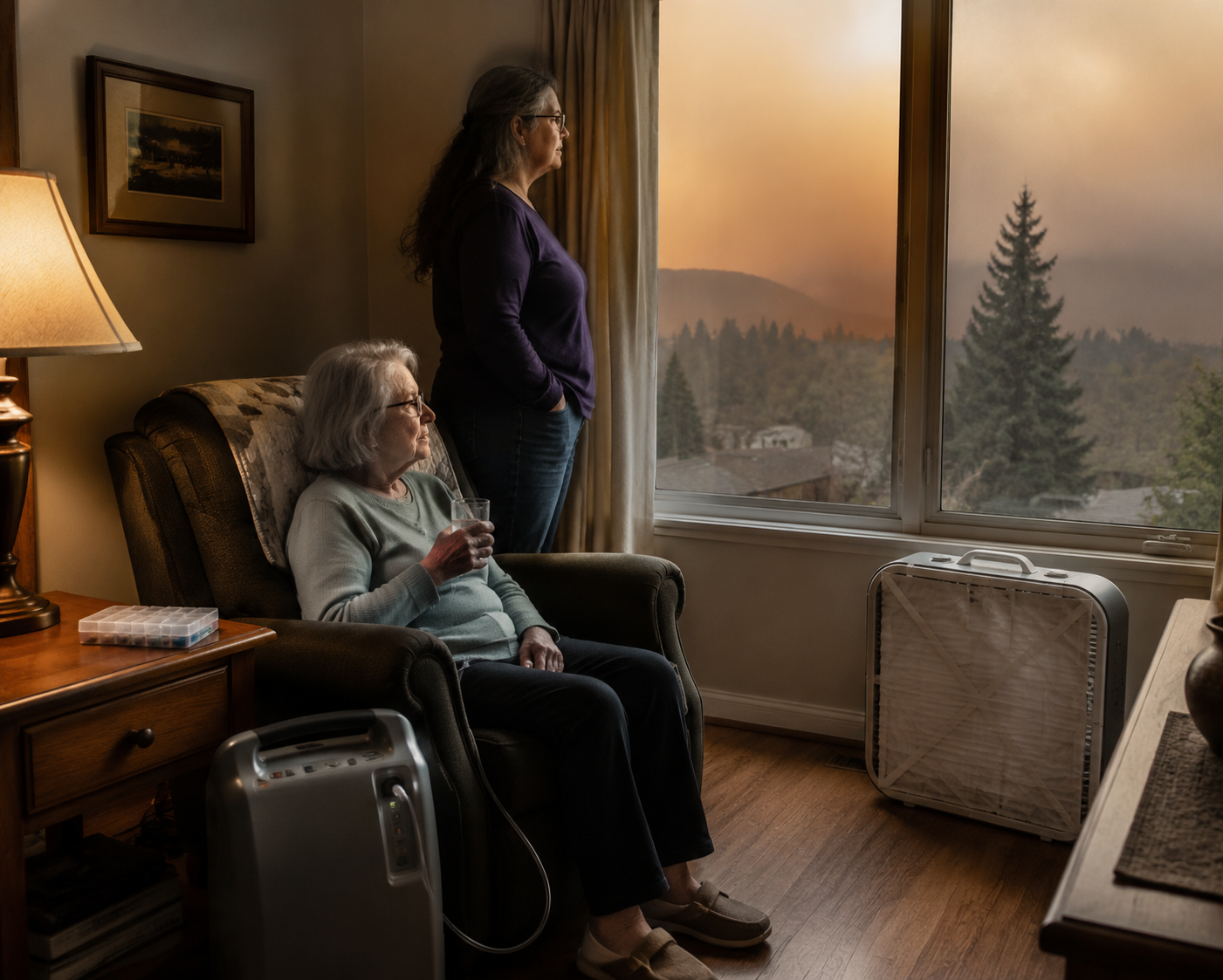
Wildfire smoke poses greater risks to older adults than the general population. This three-phase checklist helps family caregivers prepare ahead, safely shelter indoors, and manage recovery steps — including the often-overlooked connection between smoke exposure and fall risk.
 —
—The real health toll of wildfire smoke on older adults
Wildfire smoke is far more dangerous for seniors than most family caregivers realize — it triggers cardiovascular events, respiratory crises, and emerging cognitive effects. This guide explains the biological pathways, reviews recent large-scale studies, and outlines what symptoms to watch for.
 —
—Aging in Place vs. Senior Living in 2026: A 5-Factor Decision Framework for Families After a Crisis
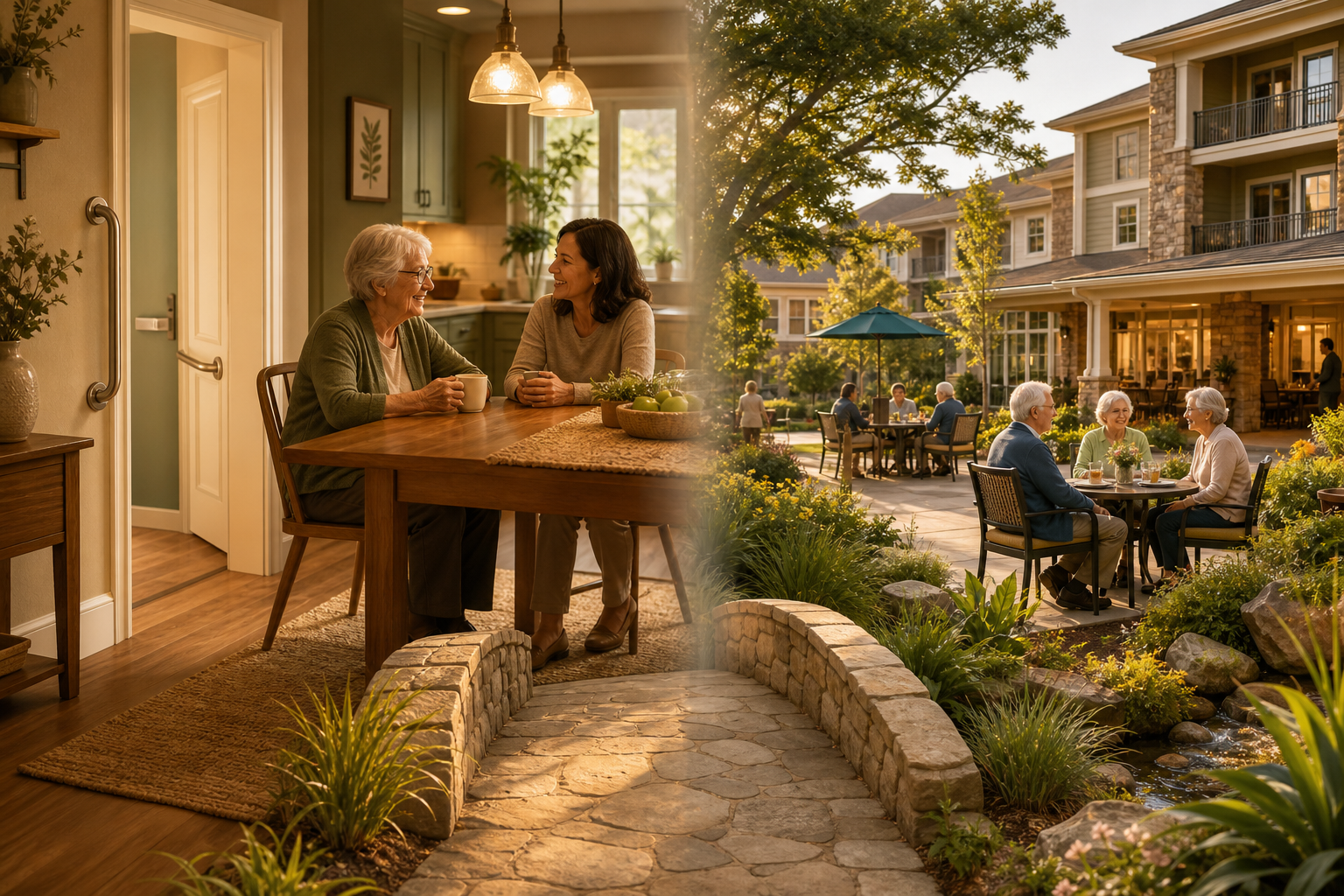
After a fall, dementia diagnosis, or sudden functional decline, families face an urgent choice: modify the family home or move to a senior living community. This guide provides a structured five-factor framework — ADL dependencies, cognitive status, home safety readiness, social isolation risk, and 3-year cost projection — to help adult children make a confident, informed decision.