
Flagship section
Fall Prevention
The flagship section, built directly on the CDC STEADI screen-assess-intervene model. Contains the fall risk screening quiz, the post-fall decision tree for active crisis situations (conscious/responsive checks, when to call 911 vs. urgent care, what to watch for in the following 72 hours), risk-factor explainers (medication side effects, vision, balance), and numbered warning-sign guides. This is the only group that owns crisis-path content; modification and mobility groups link back here rather than duplicating triage guidance.
Plan ahead
other
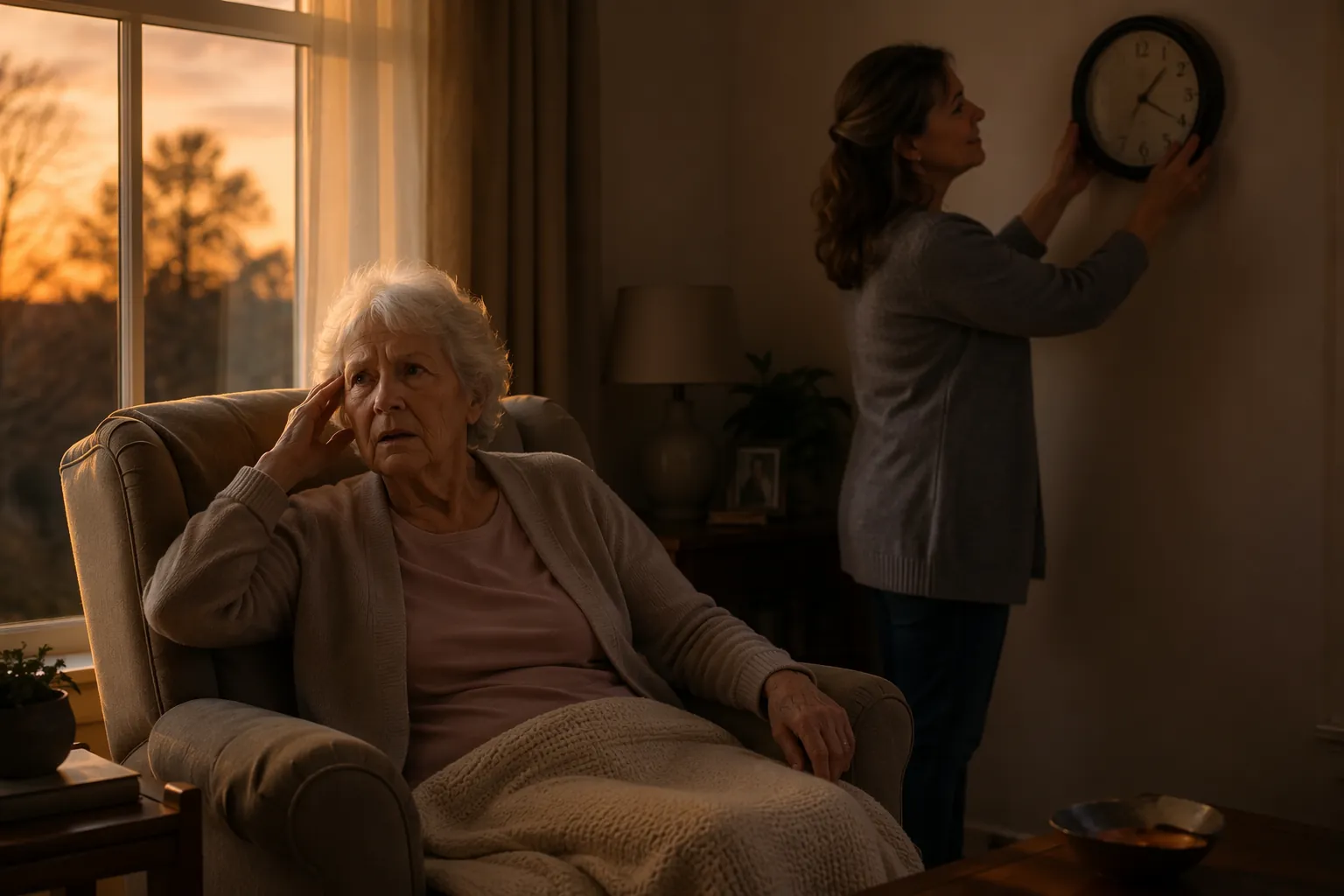 —
—How Daylight Saving Time Affects Seniors with Dementia
This article explains why the semi-annual clock change disrupts circadian rhythms in dementia, worsening sundowning and sleep fragmentation. It provides a practical pre-transition plan caregivers can start days ahead to reduce confusion, agitation, and health risks.
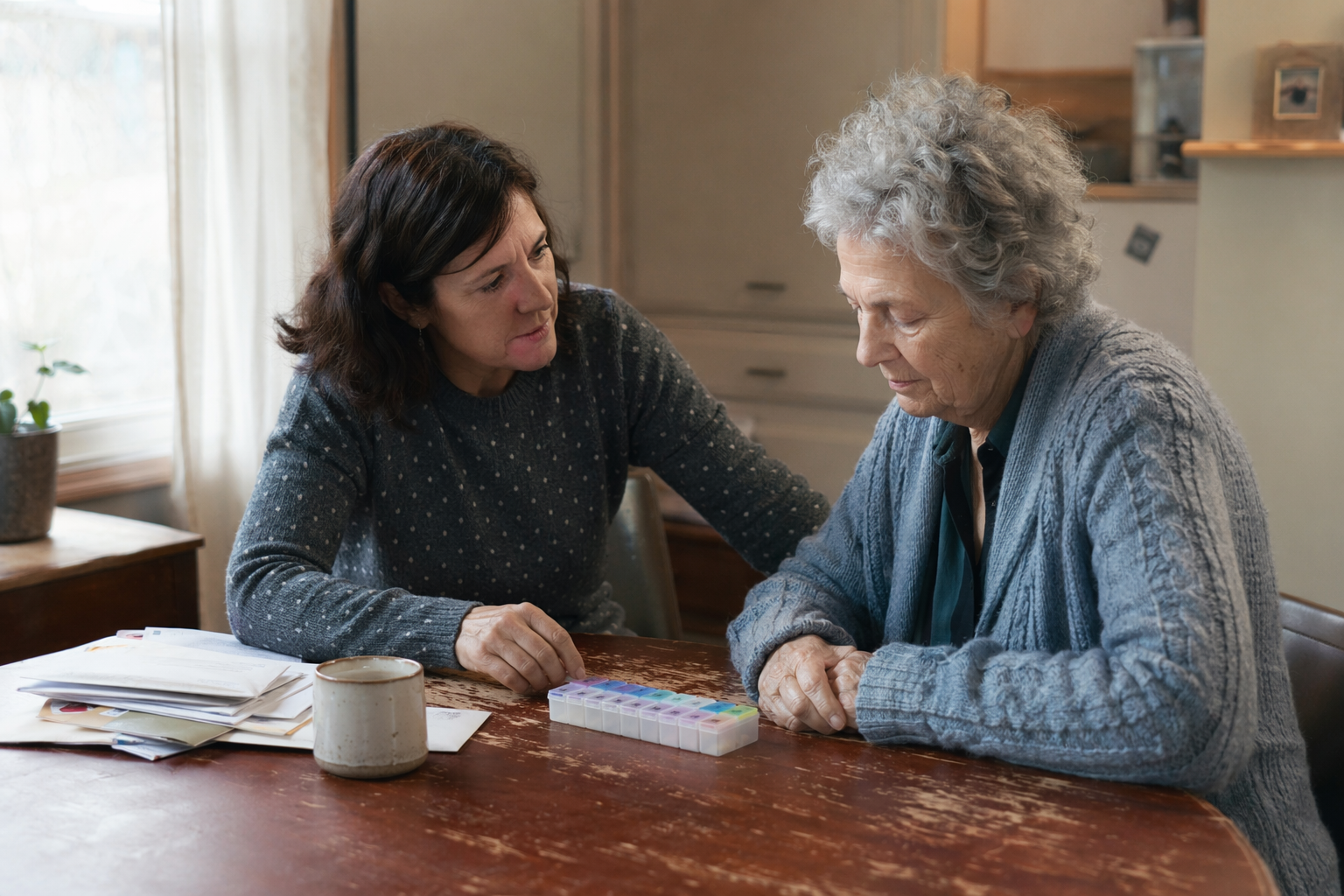 —
—Help for Elderly Parents: A Practical Action Plan for When You First Notice Something Isn't Right
This article provides a sequenced, five-phase action plan for adult children who have noticed warning signs in an aging parent but are unsure where to start — from assessing the situation objectively to building a coordinated support plan with available resources and funding options.
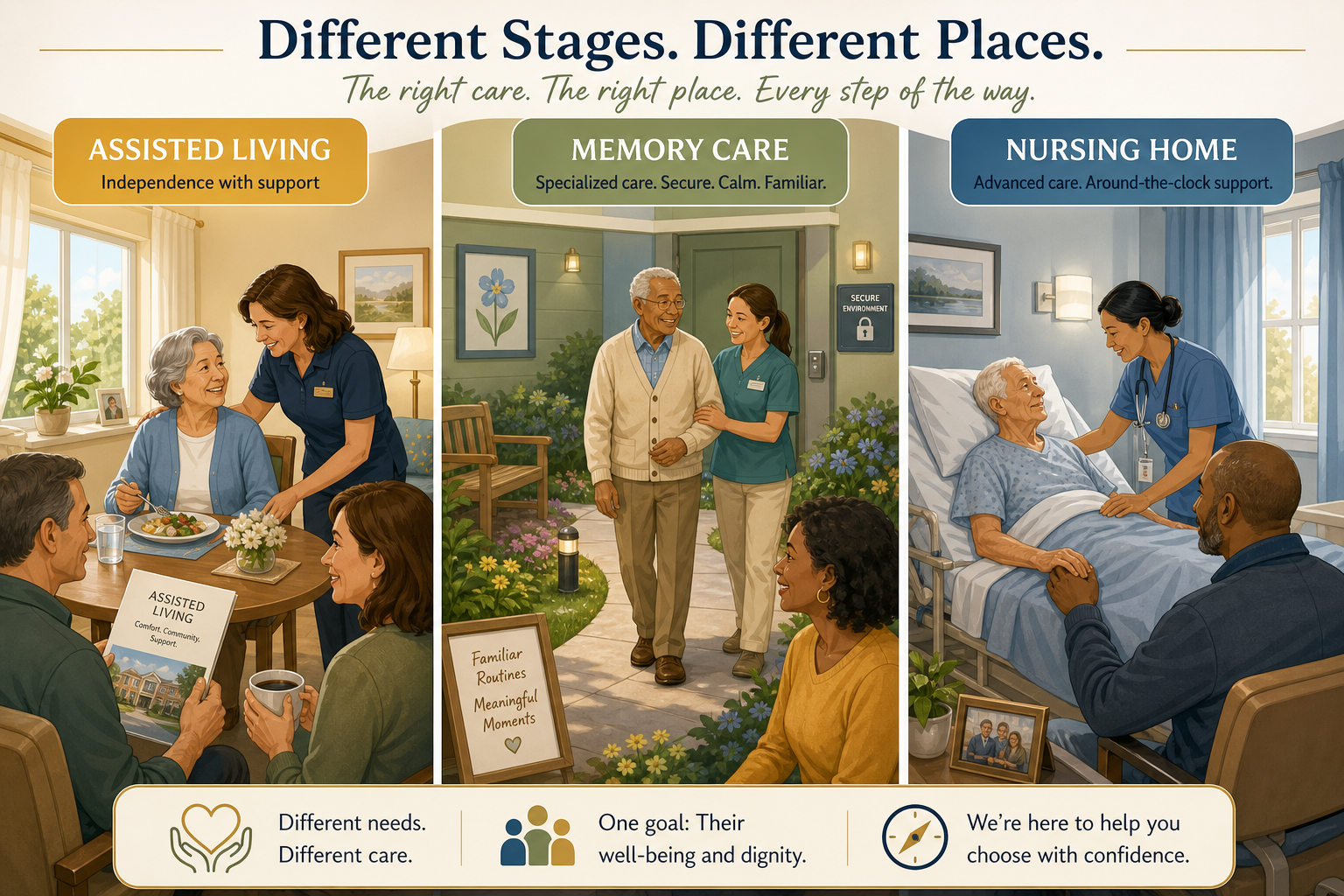 —
—Memory Care vs. Assisted Living vs. Nursing Home: How to Choose the Right Place for a Parent with Dementia
For adult children navigating a parent's dementia diagnosis, this guide compares memory care, assisted living, and nursing homes. It explains which facility type matches each stage of cognitive decline, the critical role of skilled nursing needs, and how to avoid costly mistakes by understanding what each setting can and cannot provide.
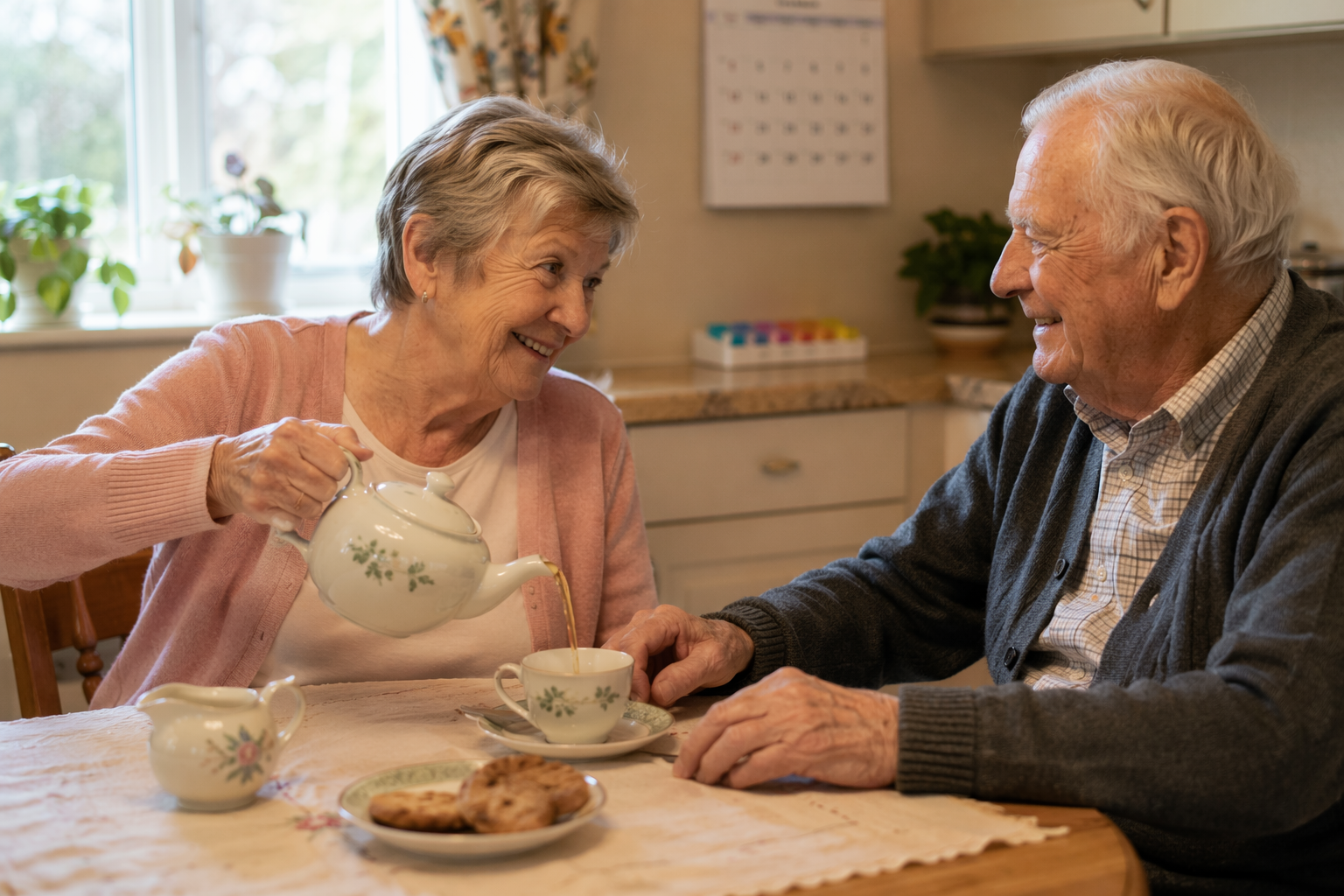 —
—Peer Support Programs for Seniors: What the Evidence Says About Senior-to-Senior Companionship
For family caregivers of older adults experiencing isolation or mild depression, peer support programs offer a unique intervention. This article reviews the evidence — from the federal Senior Companion Program to the counterintuitive PCORI trial findings — to help you understand what works, what doesn't, and how senior-to-senior companionship can benefit both the recipient and the volunteer.
 —
—What SORLA Protein Means for Alzheimer's Prevention in Seniors
Learn what the SORLA protein is, how it protects the aging brain against both amyloid and tau pathology, and why the most exciting 2026 discoveries — while groundbreaking in mice — have not yet translated into specific prevention steps for seniors.
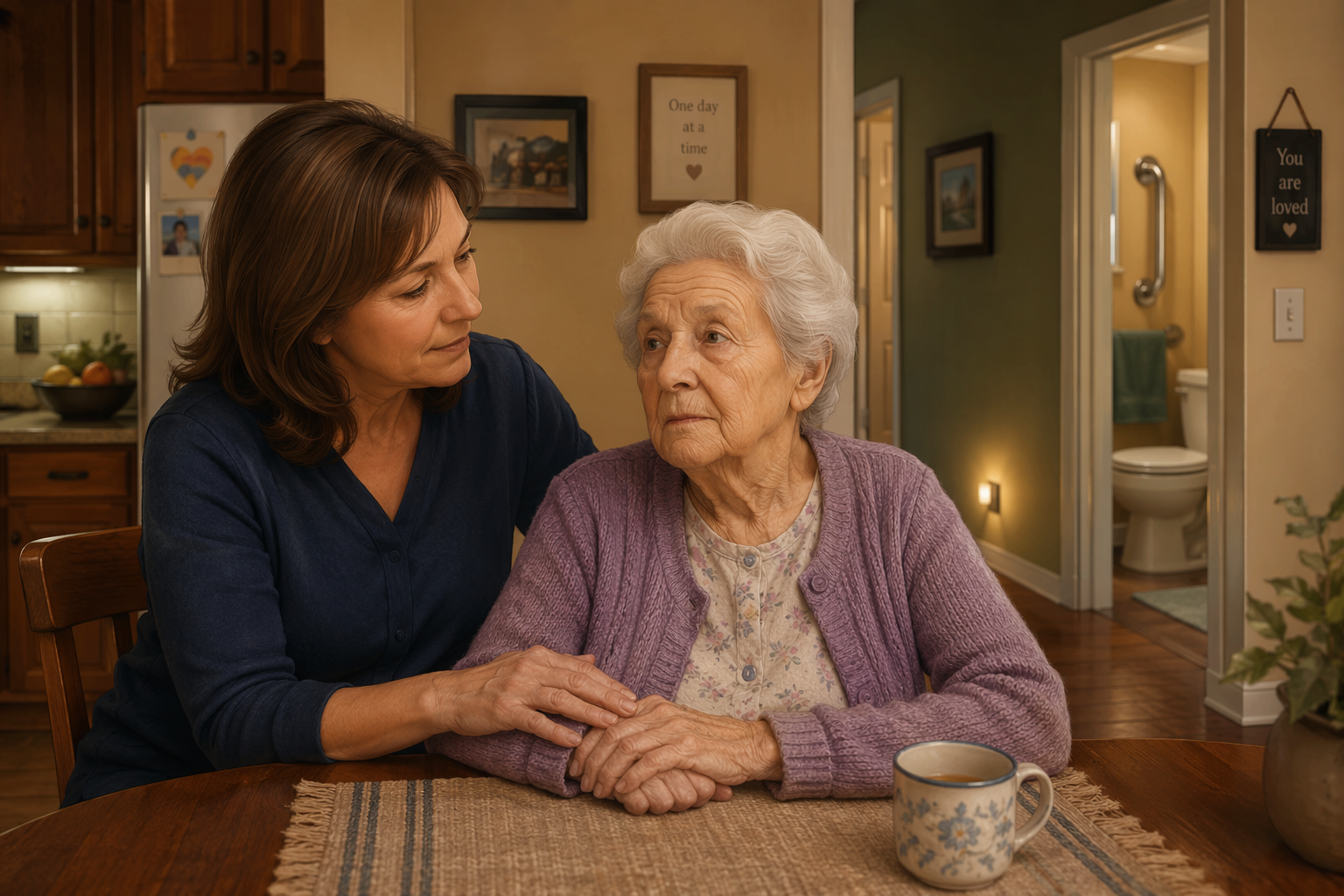 —
—Caring for a Senior with Dementia at Home: A Room-by-Room Safety and Daily Care Guide
This guide provides family caregivers with a unified system for caring for a loved one with moderate-stage dementia at home. It covers evidence-based room-by-room safety modifications, structured daily care routines for bathing, dressing, and eating, a behavior-response map for common dementia symptoms, and an embedded caregiver self-preservation plan.
 —
—Dementia Adult Day Care: What to Look For, What It Costs, and How It Helps
Many family caregivers assume a loved one with dementia won't qualify for adult day care, but specialized dementia-capable centers are the norm, not an exception. This guide explains what makes these centers different, what research says about their benefits, what they cost, and the key questions to ask when evaluating a program.
 —
—Help for Elderly and Disabled Adults: A Step-by-Step Roadmap Using Your Local Area Agency on Aging
This guide provides a clear, sequential roadmap for family caregivers who feel lost navigating the fragmented system of federal, state, and local benefits. It centers on contacting your local Area Agency on Aging (AAA) as the single most effective first step, then walks through a tool-based workflow using the Eldercare Locator, BenefitsCheckUp, and USA.gov Benefit Finder to systematically identify and access all available help.
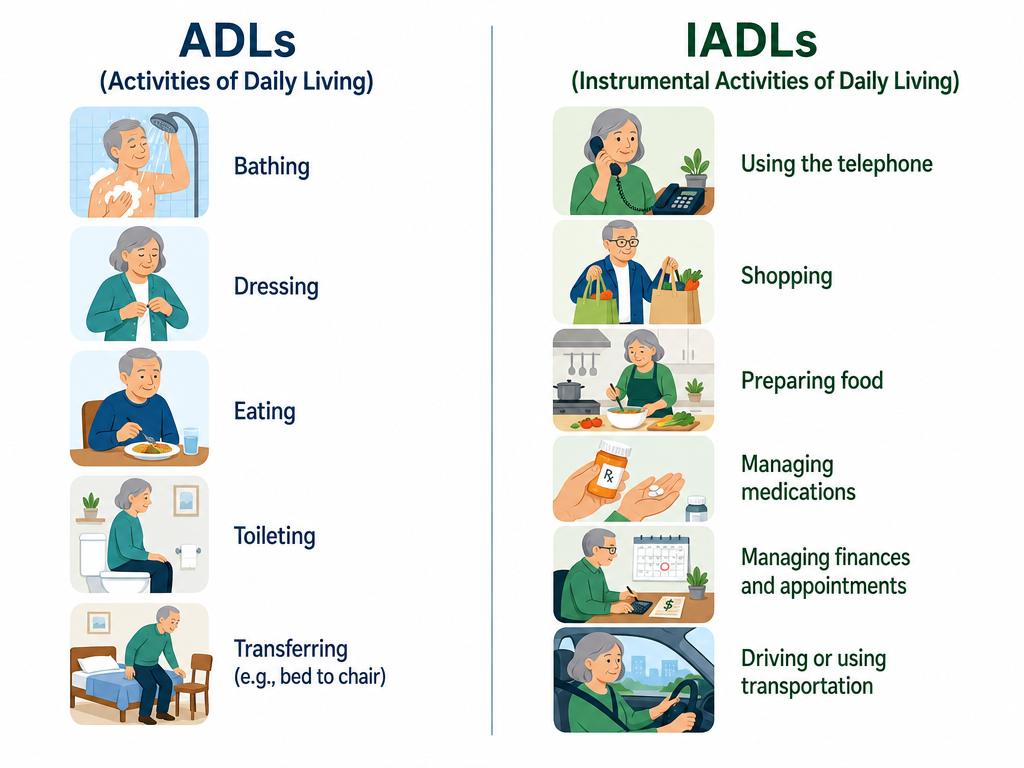 —
—Senior Care Options: A Complete Decision Framework Based on ADL and IADL Needs
This guide provides a step-by-step framework for adult children and family caregivers to match a senior's functional needs to the correct care level — from in-home care to skilled nursing — using ADL/IADL assessment, 2026 cost data, and a clear decision flowchart.
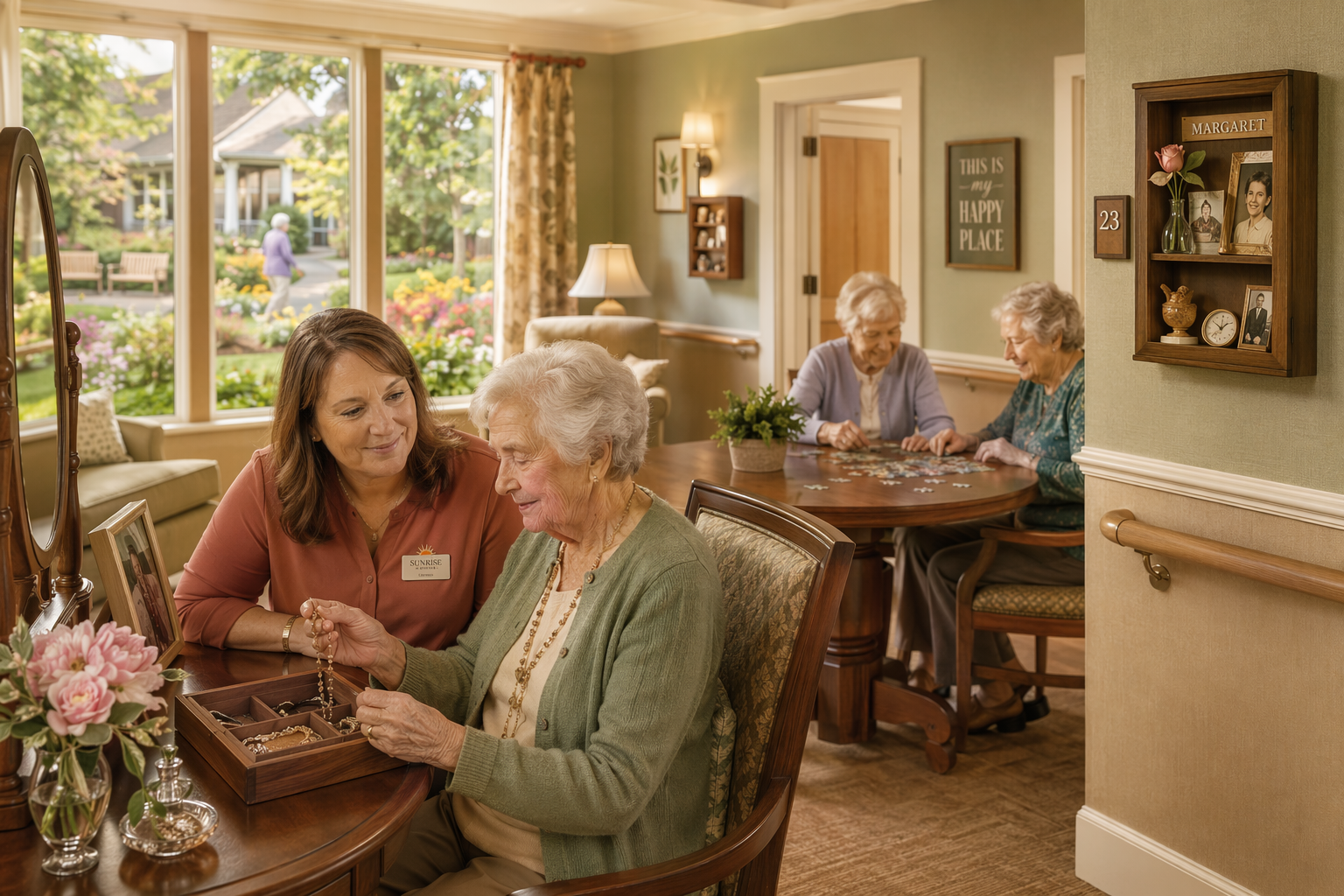 —
—Sunrise Senior Living Memory Care: What the Reminiscence Program Actually Offers Families
A practical deep-dive into Sunrise Senior Living's memory care programming for adult children whose parent has an Alzheimer's or dementia diagnosis. Explains what the Reminiscence program, Validation Method, Life Enrichment Managers, and two-tier system (Terrace Club vs. full Reminiscence) mean in daily practice — so families can evaluate whether Sunrise fits their parent's current and future needs.
 —
—The True Cost of Long-Term Care in 2026: What Families Need to Know Before a Crisis Hits
Long-term care costs have surged 39% since 2021 and now average $75,000 to $130,000 per year depending on care type and location. This guide explains today's real prices, why Medicare won't cover them, and what families can do before a health crisis forces a financially devastating decision.
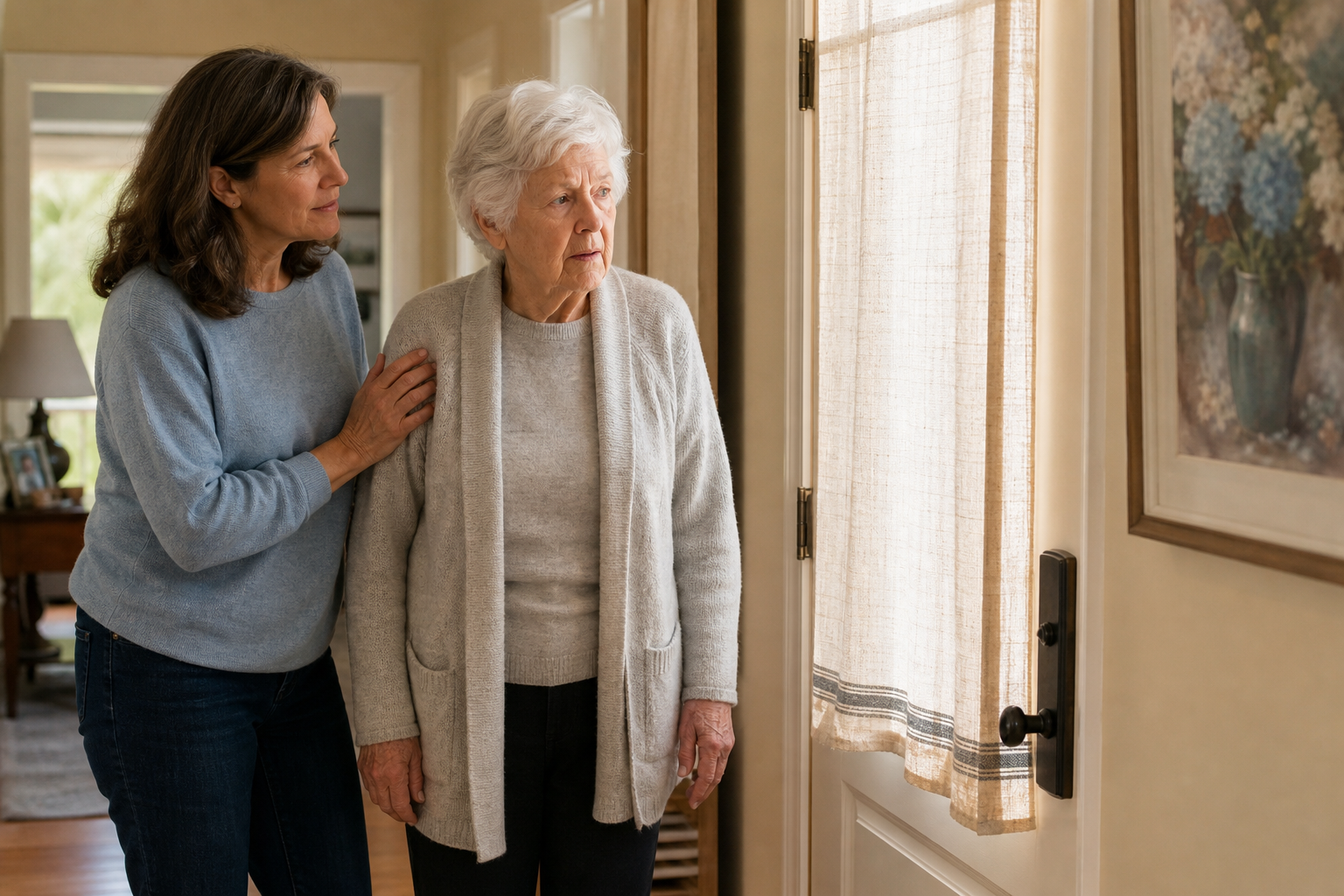 —
—Understanding Wandering in Dementia: Causes, Warning Signs, and a Caregiver Action Plan
Wandering affects 6 in 10 people with dementia and is one of the most dangerous — and misunderstood — caregiving challenges families face. This guide explains why wandering happens, how it changes across disease stages, and how to build a layered safety plan before a crisis occurs.