
Flagship section
Fall Prevention
The flagship section, built directly on the CDC STEADI screen-assess-intervene model. Contains the fall risk screening quiz, the post-fall decision tree for active crisis situations (conscious/responsive checks, when to call 911 vs. urgent care, what to watch for in the following 72 hours), risk-factor explainers (medication side effects, vision, balance), and numbered warning-sign guides. This is the only group that owns crisis-path content; modification and mobility groups link back here rather than duplicating triage guidance.
Plan ahead
other
 —
—When Is It Time for a Senior Citizen Home? A Stage-Based Guide for Dementia Caregivers
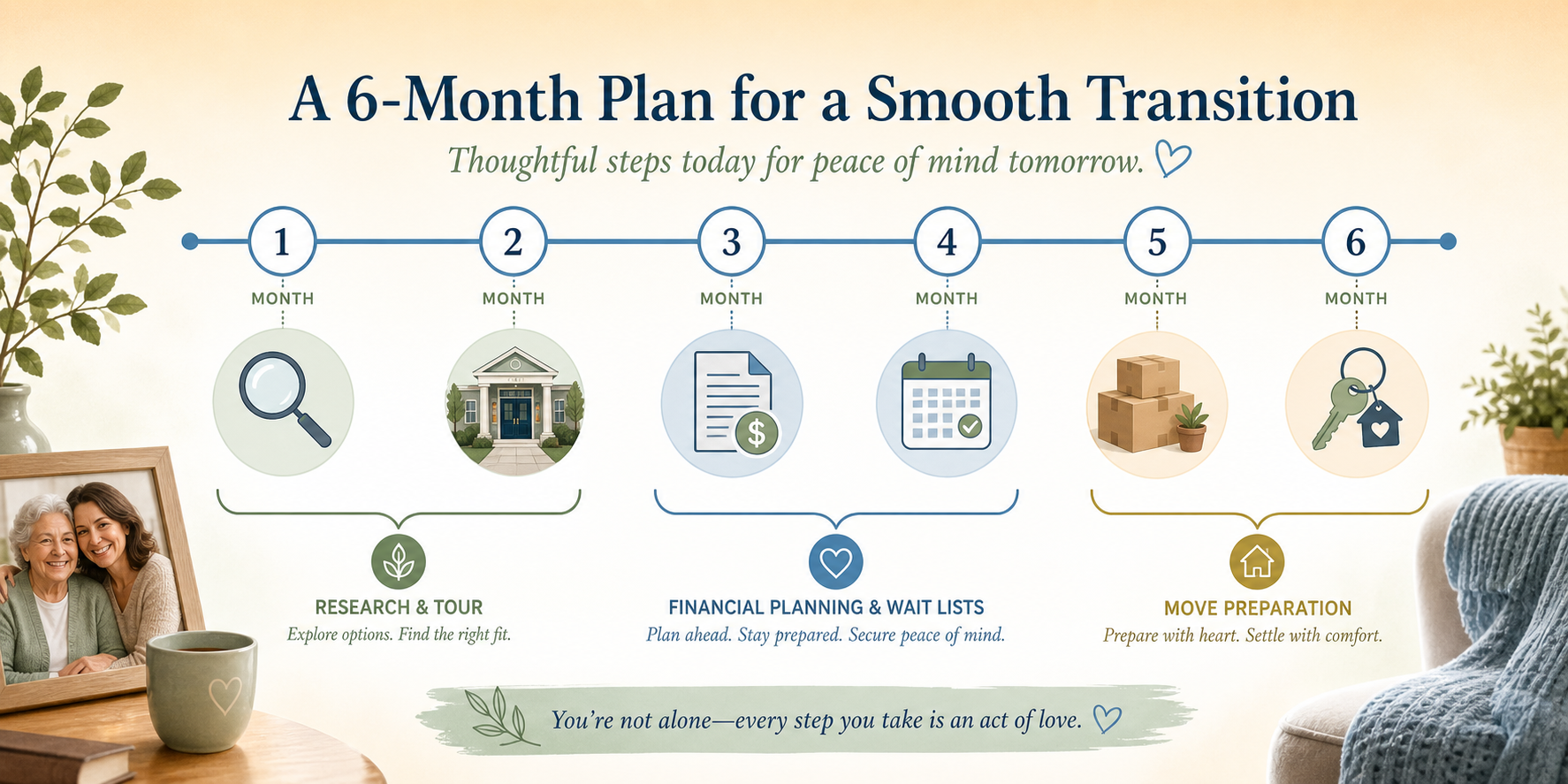
This guide helps spousal and adult-child caregivers of a loved one with dementia recognize concrete, stage-based signs that home care is no longer enough. It matches each dementia stage to the right facility type, provides a 6-month planning timeline, and offers a financial reality check to support a timely, informed transition.
 —
—10 Signs It’s Time for Memory Care: A Practical Transition Guide for Families
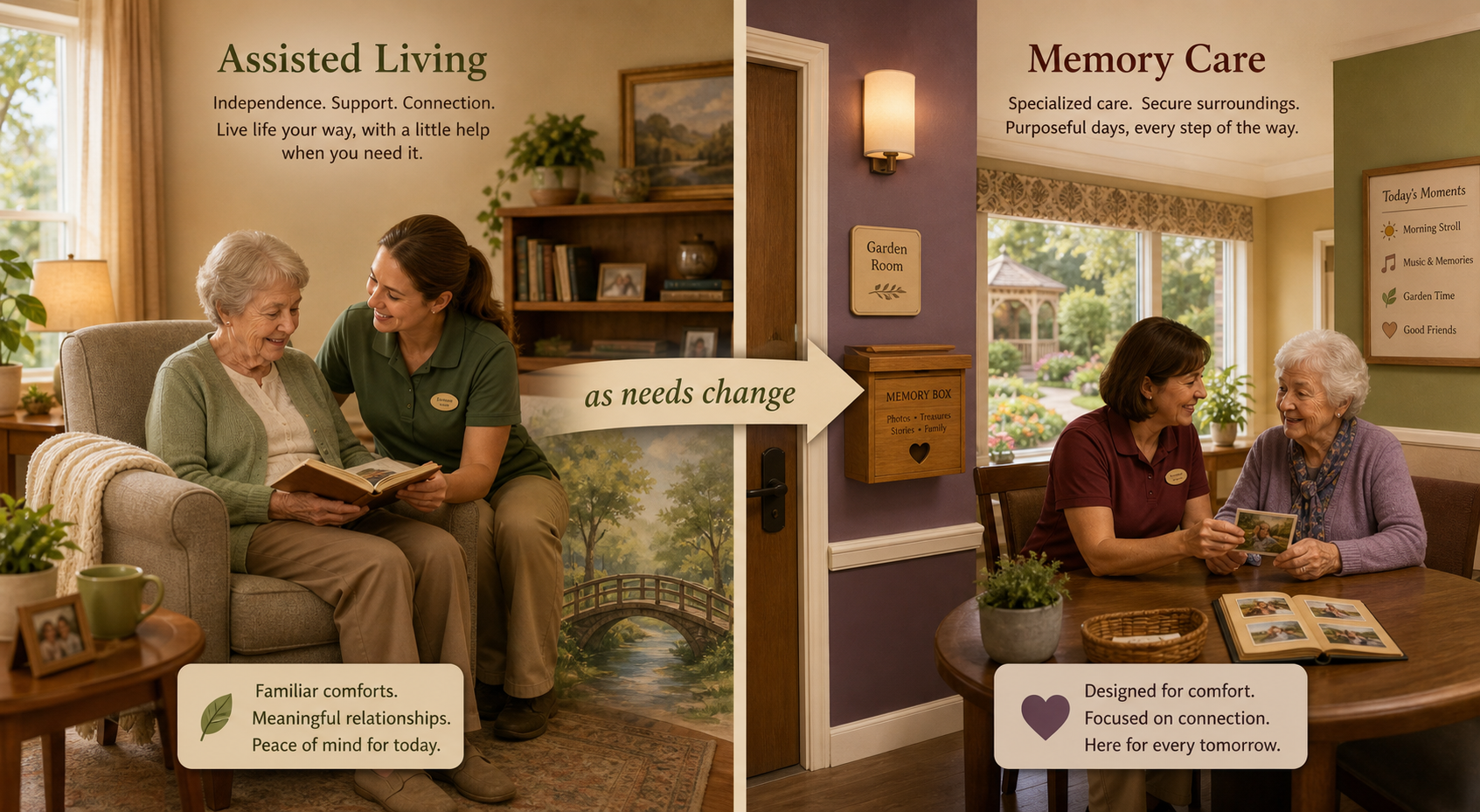
This guide helps adult children recognize the specific behavioral and safety markers that signal when a parent with dementia needs memory care, and provides a structured plan for making the transition with less guilt and trauma.
 —
—Home Care vs. Assisted Living vs. Memory Care: How to Match Care to Your Loved One's Needs
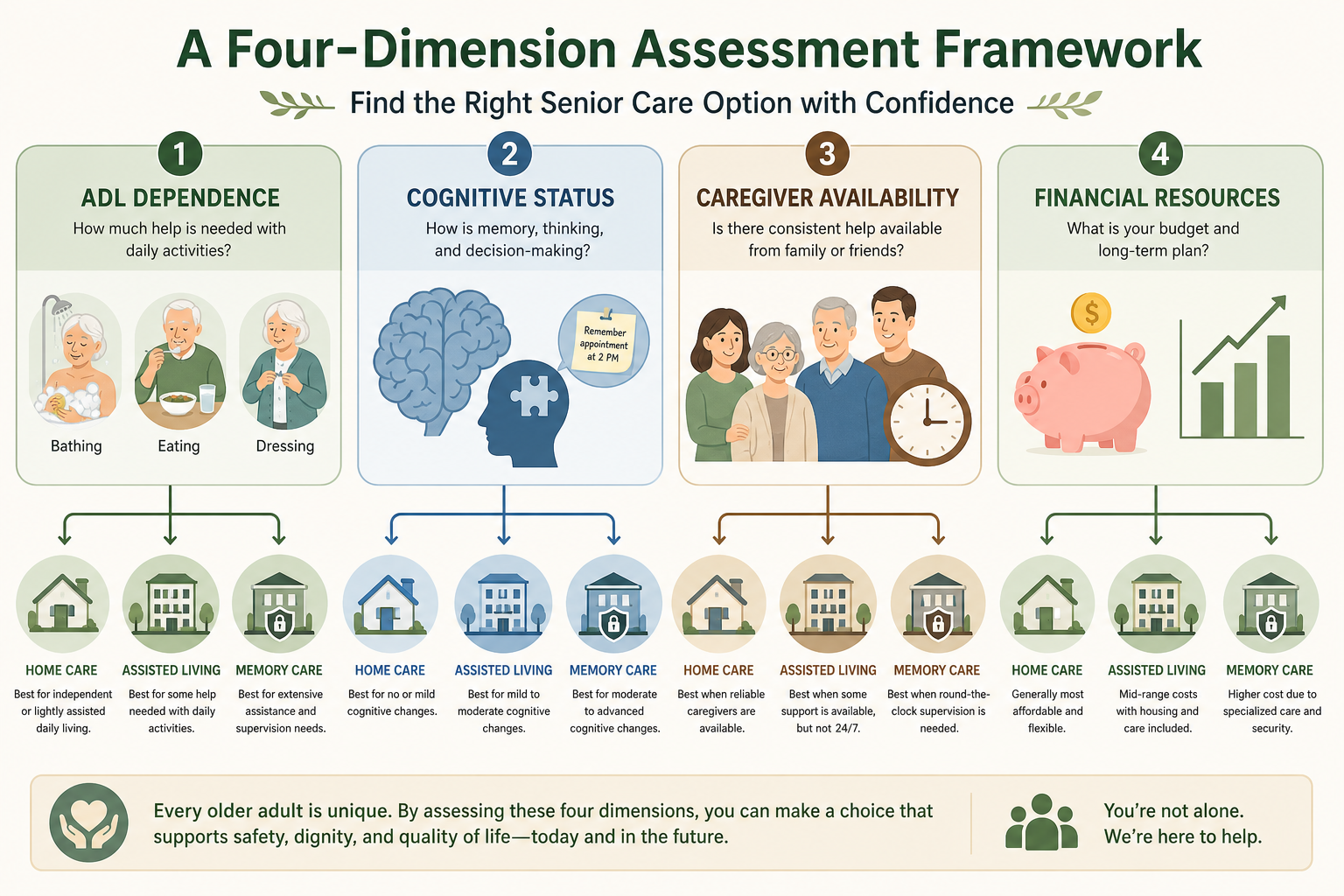
This guide helps adult children compare home care, assisted living, and memory care using a four-dimension framework: ADL dependence, cognitive status, caregiver availability, and financial resources. It includes a detailed comparison table, decision flowchart, and clear guidance on when each option works best.
 —
—Is It Time for a Senior Residential Home? A Decision Guide for Family Caregivers
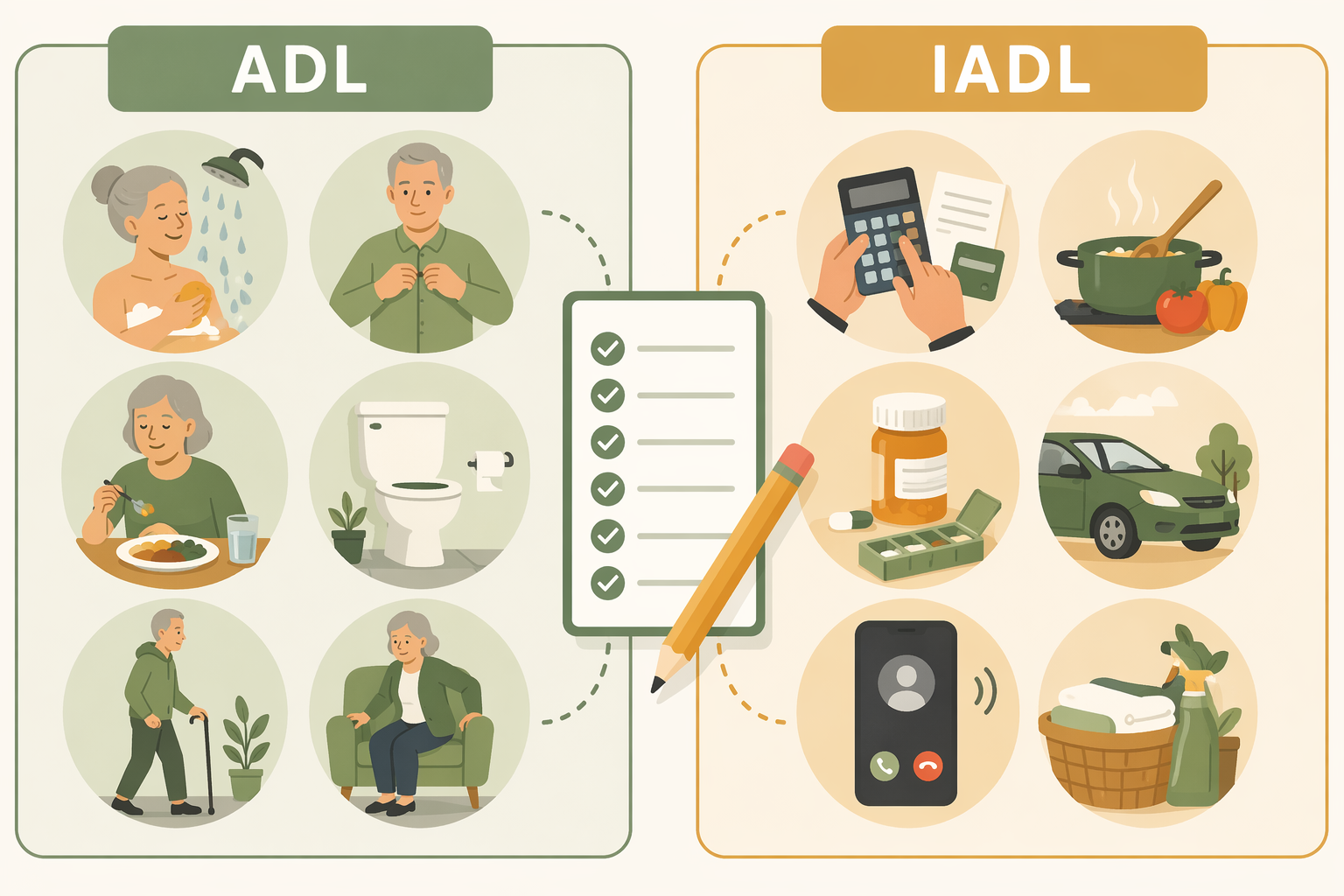
This guide helps family caregivers move past guilt and uncertainty by systematically evaluating two factors: the senior's functional decline using the ADL/IADL framework and the caregiver's own capacity. When either crosses a threshold, residential care becomes appropriate, not just necessary.
 —
—Sundowning in Dementia: Causes, Triggers, and How to Respond
This guide explains why late-day confusion and agitation happen in dementia — the neurobiology behind sundowning, common triggers, and evidence-based strategies caregivers can use to reduce episodes and respond calmly.
 —
—Understanding Lewy Body Dementia in Seniors
Lewy body dementia is frequently mistaken for Alzheimer's, yet the two conditions have distinct symptom profiles, progression patterns, and critically different medication safety rules. This guide helps caregivers recognize the key differences and advocate for an accurate diagnosis to keep their loved one safe.
 —
—Home Care vs. Memory Care: How to Know When It's Time to Transition
Learn to recognize the key safety, health, and caregiver-capacity signals that indicate home care may no longer be sufficient, and how to plan a memory care transition on your own timeline rather than in response to an emergency.
 —
—The Adult Child Caregiver’s First 30 Days: A Staged Action Plan When a Parent Needs Help
A week-by-week action plan for adult children (ages 40–55) who have recently realized their parent can no longer manage independently. This guide breaks the critical first month into four distinct stages — needs assessment, legal and financial triage, care team building, and self-care scaffolding — to help you move from crisis mode to a sustainable care rhythm.
 —
—Early-Stage Alzheimer’s Care Priorities and Daily Routine Guide for Family Caregivers
A step-by-step framework for adult children navigating the first year after a parent’s early-stage Alzheimer’s diagnosis. Learn how to build a collaborative care partnership, establish a structured daily routine, complete essential legal and financial planning, and protect your own wellbeing — all while preserving your loved one’s independence.
 —
—How to Pay for Elderly Home Care: A Practical Funding Guide for Family Caregivers
Most family caregivers are shocked to learn how little Medicare pays for long-term in-home care. This guide walks through the full funding landscape—Medicaid HCBS waivers, VA benefits, state paid leave, and tax breaks—so you can find the help you need without missing critical programs.
 —
—The Caregiving Crisis: What the 2025–2026 Data Reveals About Caring for Aging Parents
New national data shows 63 million Americans are now family caregivers — a 45% increase in a decade. This article uses the latest statistics to validate the experience of overwhelmed adult children and provides a data-backed framework for setting boundaries, managing burnout, and finding financial and practical support.
 —
—Taking Care of Elderly Parents: The Real Cost to Your Health, Career, and Finances — and What You Can Do About It
This article reveals the documented health, financial, and career impacts of caring for an aging parent — and offers evidence-based strategies to protect yourself before burnout and financial strain become crises.