
Clinical term
Healthy High-Protein Meals for Seniors on a Budget
Last verified 2026-07-31
Yes: seniors on a budget can build healthy meals with enough protein to matter. For many older adults, the working target is about 70–80 grams of protein a day, based on guidance of roughly 1.0–1.2 grams per kilogram of body weight daily.[1][2] The cheaper way to do that is not a tub of powder. It is to stop letting breakfast be almost all toast, lunch be mostly crackers, and dinner carry the whole load.
A useful pattern is 25–30 grams of quality protein at each meal, which gives the day a structure instead of a vague instruction to “eat better.” A sarcopenia review also notes that older adults with sarcopenia consume significantly less protein than peers, and discusses this 25–30 grams-per-meal distribution as an important target.[3] If you or your parent has kidney disease, has been told to limit protein, or follows a medical diet, this is a clinician or dietitian conversation before changing meals.[2]
The basic protein target, in plain grocery terms
Protein matters here because muscle loss is not an abstract aging topic when someone has trouble getting out of a chair, feels unsteady walking to the bathroom, or starts skipping meals because cooking feels like too much work. Sarcopenia is the age-related loss of muscle mass and strength; less muscle can mean less reserve when standing, turning, climbing steps, or catching yourself after a trip.
Protein is not a fall-prevention cure, and it should not be sold that way. It supports the muscle strength and steadiness that fall prevention depends on. It sits beside the other practical pieces: balance, safe movement, enough fluids, appropriate vitamin D and calcium intake when advised, medication review, vision care, and a home that is not full of loose rugs and bad lighting.
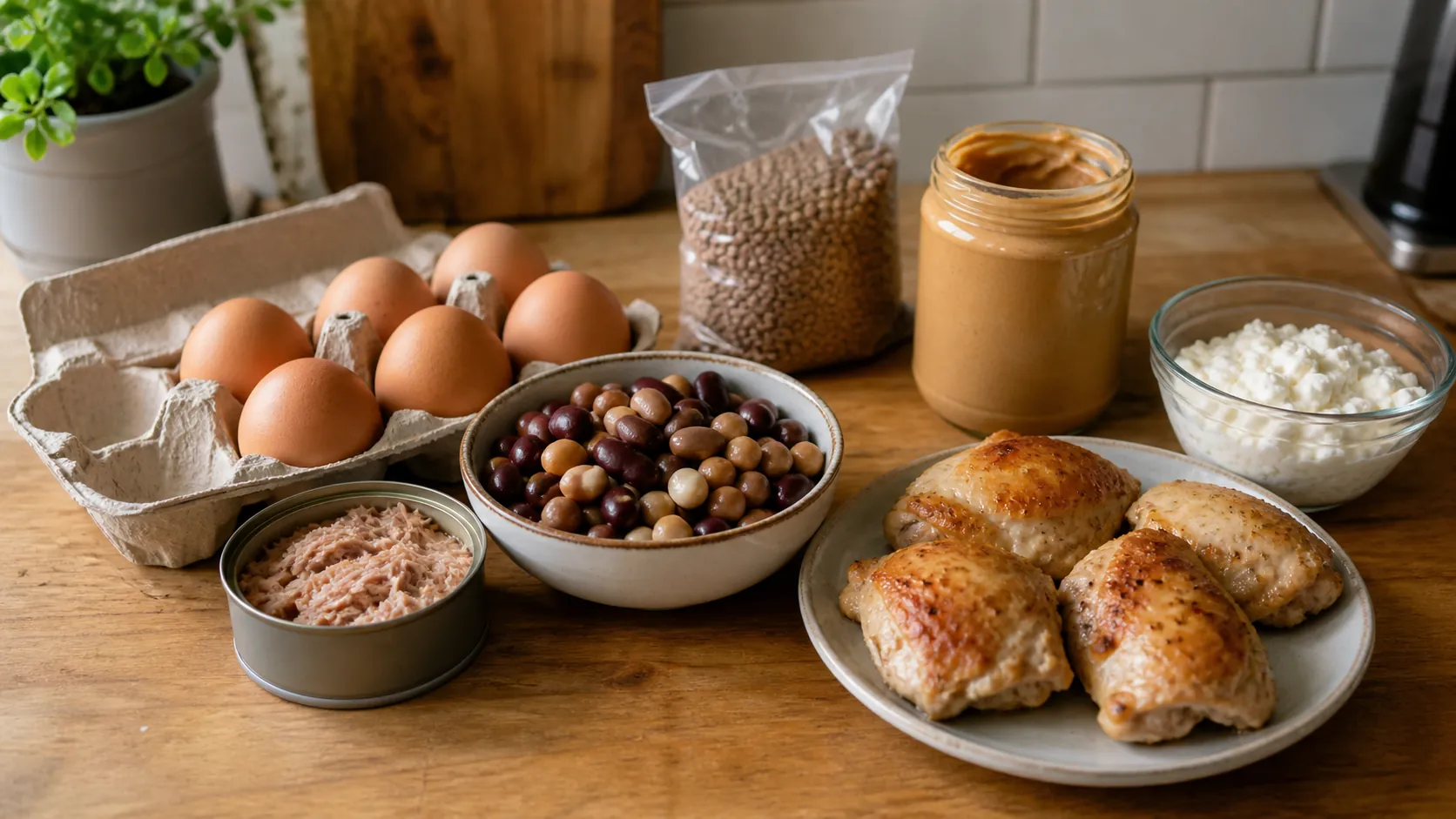
The budget part is real. Roughly 10–20% of older adults struggle to afford food, according to USDA data cited by Meals on Wheels Contra Costa.[4] That is why the plan has to work with ordinary staples: eggs, canned tuna or salmon or sardines, dried beans, lentils, chicken thighs, cottage cheese, Greek yogurt, and peanut butter. Dietitians and extension nutrition programs regularly point to these kinds of foods as practical low-cost protein options for older adults eating on fixed incomes.[5][6]
A low-cost high-protein day without specialty products
Use this as a meal pattern, not a prescription. Brands, portions, appetite, chewing ability, and medical diets all change the exact totals. The practical move is to check the Nutrition Facts label and build each meal toward the 25–30 gram range.
| Meal | Budget-friendly plate | How it does the protein job |
|---|---|---|
| Breakfast | Eggs with Greek yogurt or cottage cheese; toast with peanut butter if more food is needed | Breakfast stops being mostly starch. Eggs start the meal, dairy helps bring it closer to the 25–30 gram range. |
| Lunch | Tuna, salmon, or sardine sandwich; or beans with rice, tortillas, or soup; add cottage cheese if the meal looks light | Canned fish gives a concentrated protein anchor. Beans and lentils stretch the meal when meat is too expensive. |
| Dinner | Chicken thighs with lentil or bean soup; or a lentil stew with a side of Greek yogurt or cottage cheese | Dinner gets protein from more than one cheap source, so it does not depend on a large portion of meat. |

Breakfast: do not make coffee and toast do all the work
A low-protein breakfast creates a problem the rest of the day has to fix. If lunch is small and dinner is modest, the target gets missed quietly. Eggs are the obvious budget start because they cook quickly and fit into familiar meals. Add Greek yogurt or cottage cheese and breakfast becomes much more useful for muscle than toast alone.
For someone with a small appetite, the dairy may be easier than more chewing. For someone tired of eggs, Greek yogurt with peanut butter stirred in can be a simple backup. Peanut butter is useful, but it works better as an add-on than as the only protein source in the meal.
Lunch: canned fish and beans are doing exactly what budget food should do
Canned tuna, salmon, and sardines are not glamorous, which is partly the point. They sit in the pantry, do not spoil in three days, and can become a sandwich, salad, bowl, or quick plate with crackers and vegetables. If sodium is a concern, compare labels and choose the lower-sodium option when the price is still reasonable.
Beans and lentils are the other lunch workhorses. A pot of lentil soup, beans in a tortilla, or beans over rice will not feel like a medical diet. If the meal still does not reach the protein range, add cottage cheese, Greek yogurt, or leftover chicken rather than buying a specialty drink just because the label says “senior.”
Dinner: use meat, but do not make meat the whole plan
Chicken thighs are often a better budget fit than leaner cuts, and they hold up well in soups, rice dishes, stews, and leftovers. The cheaper trick is to pair them with lentils or beans so the meal has two protein sources instead of one expensive center of the plate.
A dinner of chicken thighs and lentil soup can also solve tomorrow’s lunch. That matters for an older adult who eats less when cooking feels like a full project. Leftovers are not just convenient; they are a way to keep the next meal from becoming tea and crackers.
Easy swaps when prices change
The cheapest protein changes by store, season, sales, and what someone can actually chew and cook. Keep the target steady and let the ingredients move.
- If chicken is expensive, make lentils or beans the main dish and use a smaller amount of meat for flavor.
- If fresh fish is out of reach, use canned tuna, salmon, or sardines.
- If chewing meat is hard, lean on Greek yogurt, cottage cheese, eggs, beans, lentils, and soft fish.
- If appetite is low, add protein to foods already being eaten: cottage cheese with fruit, Greek yogurt with peanut butter, egg in soup, or beans added to a familiar stew.
- If cooking every day is unrealistic, batch-cook lentils, beans, soup, or chicken thighs and use them across several meals.
- If sodium, diabetes, kidney disease, swallowing problems, or heart failure affects the diet, use the medical rules first and ask for help tailoring the protein plan.
Where supplements fit
Protein powders and ready-to-drink shakes are not forbidden. They can be useful when an older adult cannot chew well, has poor appetite, is recovering from illness, or has been advised by a clinician to use them. They are just not required for most people who can eat regular foods.
On a fixed income, the first grocery dollars usually belong to foods that can become meals: eggs, beans, lentils, canned fish, dairy, peanut butter, and chicken thighs. A powder that costs more but replaces food poorly is not automatically a better choice because it has a cleaner label or a louder promise.
A simple way to check the day
Instead of tracking every bite forever, check a few typical days. Write down breakfast, lunch, and dinner, then look at the protein on the food labels or a trusted nutrition source. If breakfast is very low, fix breakfast first. If lunch is often skipped, build a no-cook lunch around canned fish, cottage cheese, Greek yogurt, eggs, or beans. If dinner is the only strong meal, the day is too lopsided.
For someone also managing blood sugar, the order of foods at the meal can matter too; CareWise has a separate guide to meal order to prevent blood sugar spikes in seniors. If weakness or unsteadiness is already showing up, a quick balance screen may help decide whether the issue needs more attention.
The practical answer
Aim for roughly 70–80 grams of protein daily unless a clinician has given different advice. Spread it across breakfast, lunch, and dinner. Buy the inexpensive staples first. Use supplements only when regular food is not enough or a professional recommends them.
Protein will not remove every fall risk. It can, however, help protect the muscle foundation an older adult needs to stand, walk, and recover from small losses of balance. If the larger problem is money stretching across the whole house, CareWise also covers lowering electric bills without risking health. And because falls rarely have one cause, it is worth knowing how conditions like extreme heat can raise fall risk in older adults.
References
- How Much Protein Do Older Adults Need? — National Council on Aging
- Nutrition Needs for Older Adults: Protein — Administration for Community Living, 2020
- Protein Intake and Sarcopenia in Older Adults: A Systematic Review and Meta-Analysis — PMC/NIH, 2022
- Cheap Meal Recipes to Combat Senior Food Insecurity — Meals on Wheels Contra Costa
- Balanced Diets on Fixed Incomes: Possible with Planning, Community Support — Care Resources
- Healthy Eating on a Budget for Older Adults — Colorado State University Extension
Browse more in the Glossary.