
Clinical term
How to Prevent Falls in a Parent with Parkinson's
Last verified 2026-07-29
After a parent with Parkinson's falls, the house looks different. The rug that seemed harmless becomes a trap. The short walk from bed to bathroom becomes the part of the night everyone quietly worries about. And the usual advice for older adults — clear clutter, use a cane, be careful — starts to feel too thin for what is actually happening.
Falls in Parkinson's disease are not just ordinary aging with a diagnosis attached. Freezing of gait, shuffling steps, festinating gait, delayed balance reactions, blood pressure drops, visual-spatial trouble, and medication timing can all change how a person moves through the same hallway at different times of day. Some sources cite an annual fall risk around 60% for people with Parkinson's, with many falling more than once; reported rates vary, so it is better treated as a warning range than a prediction for any one parent.[1]
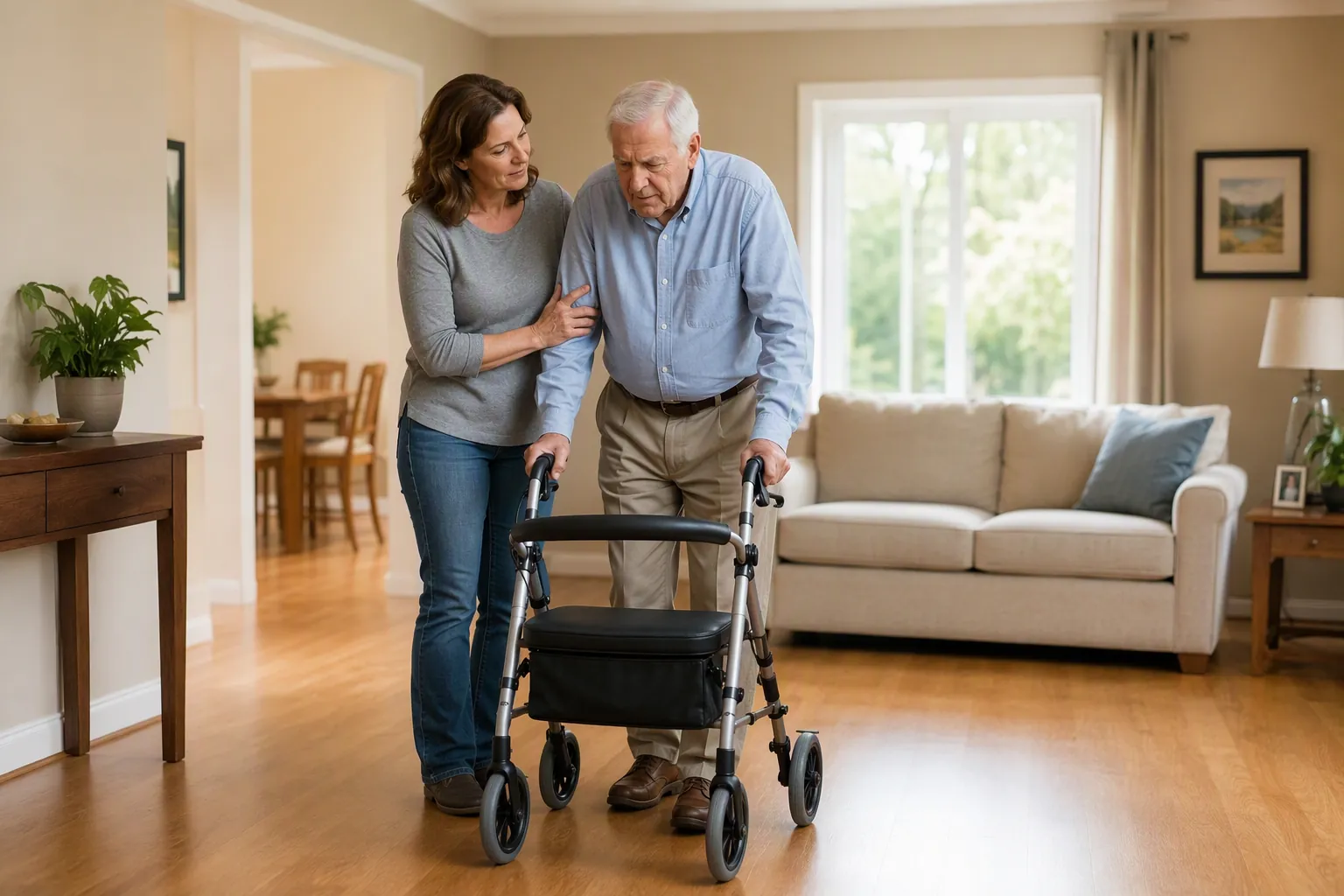
This guide is educational, not medical advice. If your parent has hit their head, has new weakness, confusion, chest pain, severe pain, trouble breathing, or cannot get up safely, treat that as urgent. For ongoing Parkinson's disease care for elderly parents, the home plan should sit beside the neurologist, physical therapist, occupational therapist, and primary care clinician — not replace them.
Why Parkinson's Falls Need Different Prevention
A general fall-prevention checklist usually assumes the person can respond normally once the hazard is removed. Parkinson's complicates that assumption. Your parent may see the bathroom doorway, intend to walk through it, and still freeze at the threshold. They may start with small steps that get faster and shorter until their body is chasing its own center of gravity. They may stand up too quickly, get lightheaded, and not have the balance reactions to recover.
| Parkinson's fall driver | What it can look like at home | What prevention changes |
|---|---|---|
| Freezing of gait | Feet feel stuck, often at doorways, turns, tight spaces, or when starting to walk | Use wider paths, fewer tight turns, verbal or auditory cueing, and sometimes laser cueing devices.[2] |
| Shuffling gait | Short steps do not clear rug edges, cords, thresholds, or uneven flooring | Remove throw rugs entirely, reduce thresholds, and keep floors visually simple. |
| Festinating gait | Steps get faster and smaller, especially when rushing | Create places to pause, avoid rushed transfers, and reduce long open paths without support. |
| Postural instability | Parent cannot recover after a bump, turn, reach, or backward step | Add properly installed grab bars and stable transfer supports; ask PT or OT to assess balance risk.[3] |
| Orthostatic hypotension | Dizziness or faintness after standing, especially at night or after meals | Build in seated pauses at the bed, toilet, and shower; report patterns to the medical team. |
| Medication timing | Movement worsens before the next dose or after a delayed dose | Schedule risky activities, showers, errands, and stairs around best 'on' times when possible. |
| Visual-spatial changes | Misjudges edges, patterned flooring, steps, or bathroom fixtures | Use good lighting, contrast where helpful, and avoid busy floor patterns. |
Freezing deserves special attention because it can make a parent appear stubborn, careless, or suddenly afraid when the problem is neurological. The Parkinson's Foundation describes freezing as a temporary inability to move the feet forward, and cueing strategies such as counting, stepping to a rhythm, or using a visual line may help some people restart movement.[2] That changes the home plan: the goal is not only fewer objects on the floor, but fewer places where the brain has to solve a complicated movement problem.
Balance problems can also change over the course of the disease. APDA notes that postural instability often appears later than tremor or stiffness and can become a major reason falls increase.[3] That is why a parent who managed well for years can suddenly need a different level of supervision, even if the diagnosis itself is not new.
What Should You Do Immediately After a Fall?
First, slow the room down. A parent with Parkinson's may be embarrassed and try to get up quickly. That can turn one fall into two. Check whether they hit their head, lost consciousness, have new confusion, severe pain, new weakness, bleeding, shortness of breath, or cannot bear weight. If any of those are present, call emergency help rather than trying to lift them.
If they seem uninjured, do not pull them up by the arms. Give them time. Use a rehearsed plan: roll to the side if they can, move to hands and knees, crawl to a sturdy chair, and rise in stages only if they are able. If there is any doubt, call for help. A fall is not automatically an emergency, but guessing wrong after a head injury or hip injury can have real consequences.
- Write down the time, location, activity, medication timing, footwear, lighting, and whether freezing, dizziness, rushing, or turning was involved.
- Take photos of the exact spot before anyone tidies it up.
- Tell the neurologist or primary care office about any fall with injury, repeated falls, fainting, or a clear change in walking.
- Ask whether a PT gait assessment or OT home safety evaluation is appropriate.
For a more detailed immediate-response sequence, use the time-based post-fall triage guide. If you are at the house now and need a fast scan before leaving, the 30-minute family safety walkthrough is the better next step.
What Should Be Removed Today?
Start with throw rugs. Not taped. Not flattened. Removed. A shuffling foot does not need much of an edge to catch, and a person with Parkinson's may not have the quick balance correction that saved them ten years ago. If a rug is there to absorb water, replace the situation with safer flooring, a properly backed bath mat used only when needed, or a different drying routine.
Then look for the things that create hesitation or divided attention: cords crossing a path, narrow furniture gaps, low ottomans, pet bowls in walking routes, stacks near favorite chairs, and decorative tables that force a tight turn. The point is not to make the home bare. The point is to make the next movement easier to start, continue, turn, and stop.
- Remove throw rugs and runners from walking paths.
- Move cords behind furniture or secure them away from routes.
- Widen routes between bed, bathroom, recliner, kitchen, and entry door.
- Clear space for wide turns rather than pivot turns.
- Keep frequently used items between waist and shoulder height to reduce reaching.
Room-by-Room Changes That Matter Most
The bathroom and the night path usually deserve attention before the guest room, garage shelves, or a perfect kitchen reorganization. Parkinson's falls often happen when a person is tired, rushing, half awake, wet, turning, or trying to manage clothing. That describes bathroom trips with uncomfortable accuracy.
Bathroom: Build for Wet Transfers, Not Just Slips
A towel bar is not a grab bar. A suction handle is not a reliable transfer support. For a parent with Parkinson's, bathroom safety depends on supports that can take body weight and are anchored correctly into studs or blocking. Home modification guidance for Parkinson's commonly includes grab bars, shower seating, handheld showerheads, raised toilet seats, and reducing tub or shower entry barriers.[4]
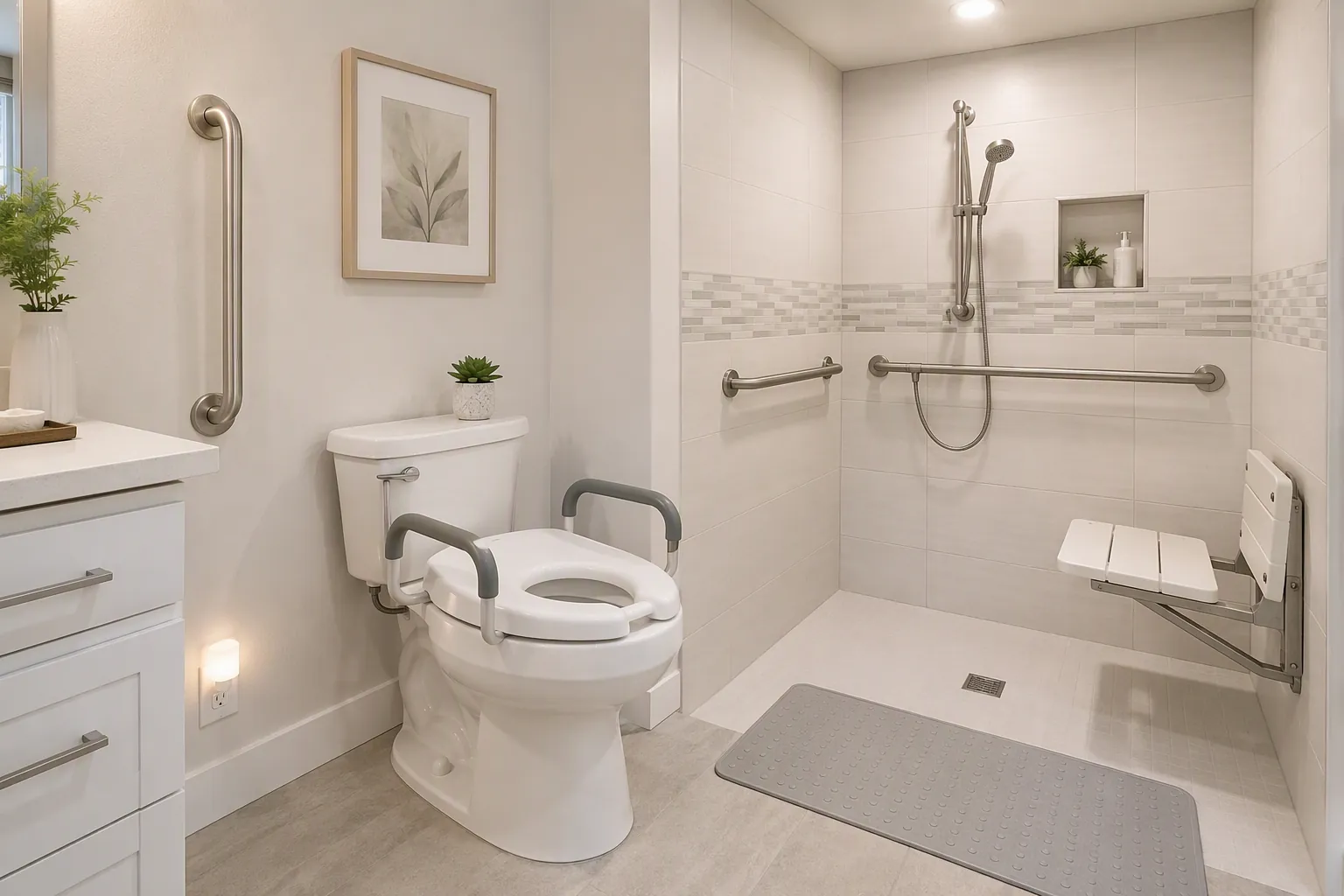
- Install load-rated grab bars by the toilet and in the shower, anchored into framing or proper blocking.
- Use a shower chair or built-in shower seat so bathing does not require standing through fatigue, dizziness, or tremor.
- Add a handheld showerhead so the person does not need to turn repeatedly under running water.
- Consider a raised toilet seat or toilet safety frame if sit-to-stand is slow or unstable.
- Reduce or ramp shower thresholds when possible; stepping over a tub wall is a high-demand movement.
- Use night lighting that reaches the toilet path, not just the hallway.
If your parent freezes at the bathroom doorway, do not solve only the wet-floor problem. Widen the entry path, remove visual clutter near the threshold, and ask a Parkinson's-informed PT whether cueing strategies should be practiced there. Doorways are not neutral spaces for many people with freezing.
Bedroom and Night Path: Assume 2 a.m. Is Different
A parent may look steady at noon and still be unsafe at 2 a.m. Night walking adds low light, sleep inertia, bladder urgency, possible medication wearing off, and sometimes dizziness on standing. The fix is not one nightlight in an outlet behind a chair. Light the actual route: bed edge, floor path, bathroom threshold, toilet, and return path.
- Place a lamp or motion light within reach before standing.
- Add a stable bed rail or transfer pole only after checking that it helps rather than traps or confuses the person.
- Keep shoes or nonslip footwear in the same position every night.
- Remove benches, baskets, rug edges, and bedding that falls into the walking path.
- Consider a bedside commode only when the bathroom route remains unsafe or urgency is driving falls.
If standing causes lightheadedness, build in a pause: sit at the bed edge, stand with support, pause again, then walk. Report that pattern to the clinician, especially if it is new or linked to medication changes.
Entryways, Thresholds, and Turning Spaces
Entryways often combine the worst variables: a step, a threshold, a door swing, weather, packages, visitors, and pressure to move quickly. A small threshold ramp can make more sense than asking a shuffling foot to clear the same lip every day. Parkinson's home-safety guidance commonly emphasizes clear pathways, good lighting, and removing trip hazards throughout the home.[5]
Turning space matters more than families expect. A tight pivot beside a sofa can trigger freezing or a loss of balance. Rearranging furniture so your parent can make a wider turn may look like a small design choice, but it changes the movement task. The same logic applies at the kitchen table, beside the bed, around the toilet, and near the favorite chair.
Kitchen: Reduce Standing Fatigue and Rushed Reaching
The kitchen does not always need a remodel. It often needs a seated workstation, fewer high reaches, and less need to carry hot or heavy items while turning. Weighted utensils, lever-style handles, accessible storage, and seated meal preparation can help some people with tremor, stiffness, or fatigue.[4]
If your parent insists on cooking, watch one ordinary meal from start to finish. Notice the reaches, turns, pauses, spills, and moments when they carry something while stepping backward. Those are the places to modify first. A safe kitchen is not the one with the most adaptive gadgets; it is the one that removes the riskiest movement combinations.
If cost or urgency forces choices, prioritize by fall risk rather than by what is easiest to buy. The aging-in-place modification checklist can help sort quick removals, low-cost fixes, and larger changes.
Which Mobility Aids Help — and Which Deserve Caution?
Do not buy a cane just because it is the symbol of needing help. For some people with Parkinson's, a cane adds another task for the brain to coordinate and can be unhelpful or unsafe, especially with freezing, shuffling, or poor balance. This is where a Parkinson's-informed physical therapist earns their place: they can watch gait, turning, freezing, posture, hand function, and medication-state differences before recommending a device.
Generic rollators also deserve caution. A rolling walker that moves too freely can get ahead of a person whose steps are shrinking or accelerating. That does not mean walkers are bad. It means the brake system, frame stability, cueing options, turning radius, and the user's ability to manage the device all matter.
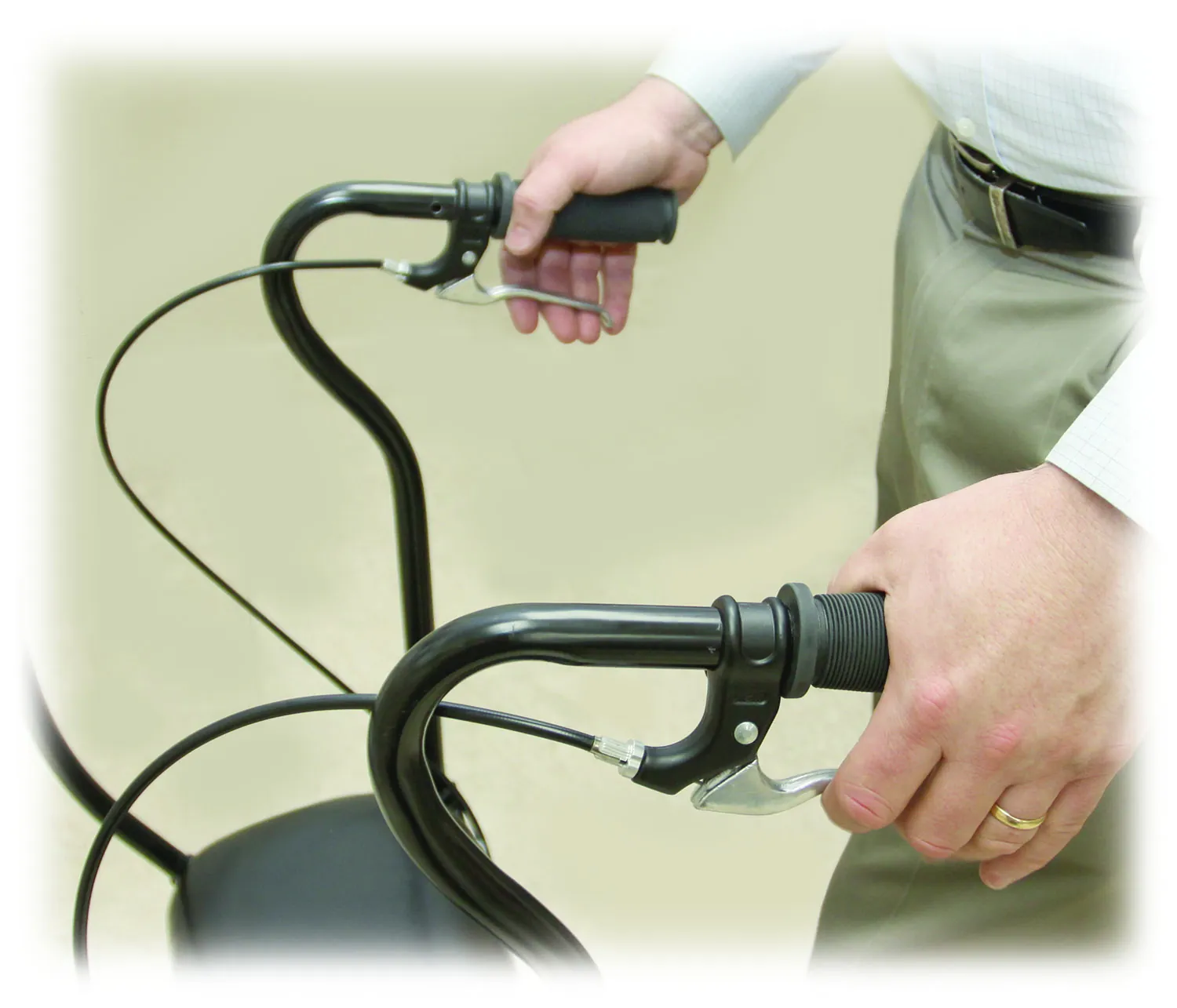
One Parkinson's-specific example is the U-Step style walker, known for a reverse braking system and optional cueing features. It should not be treated as a universal shopping recommendation. The useful question is whether your parent's actual problem is freezing, festination, poor balance recovery, hand weakness, or something else — and whether the device reduces that problem during real transfers and turns.
- Ask PT to evaluate the device during starts, stops, turns, doorways, bathroom entry, and backing up.
- Check whether brakes are intuitive when your parent is tired or anxious.
- Avoid devices that require your parent to rush to keep up with them.
- Practice cueing in the exact places where freezing happens.
- Reassess after medication changes, new falls, or visible decline.
How Medication Timing Changes Fall Risk
Parkinson's safety is partly a scheduling problem. A parent who walks reasonably well during an 'on' period may shuffle, freeze, or feel weaker when medication is wearing off. Even a short delay can matter for some people, especially when the delayed dose lines up with showering, stairs, leaving the house, or a nighttime bathroom trip.
The practical move is to track falls and near-falls against the medication schedule, not just against the room. Write down whether the fall happened before the next dose, after a missed or delayed dose, after standing up, after a meal, during a freezing episode, or during a hurried task. Bring that pattern to the neurologist instead of trying to solve it with another grab bar alone.
Do not adjust Parkinson's medication timing on your own. But do protect the schedule once the clinician has set it. Families sometimes treat a 20-minute delay as harmless because that would be true for many medicines. Parkinson's can be less forgiving.
When Should You Ask for an OT Home Safety Evaluation?
Ask earlier than pride wants you to. An occupational therapist looks at how the person actually transfers, bathes, dresses, cooks, reaches, turns, and moves through the home. That is different from a family member walking around with a shopping list. The OT can recommend where grab bars should go, whether a shower chair is enough, whether a bed rail is appropriate, and whether the layout is causing freezing or unsafe turns.
Home health services may be ordered when a clinician determines the person qualifies, and coverage rules depend on the situation. If you are trying to understand the difference between a medical referral, home health, outpatient therapy, and private home modification work, start with the guide to Medicare fall-prevention coverage.
- Ask for OT after any fall in the bathroom, bedroom, entryway, or stairs.
- Ask after two or more near-falls in the same location.
- Ask when your parent starts furniture-walking or abandoning a mobility aid.
- Ask when siblings disagree about whether changes are necessary; a professional assessment can move the conversation out of opinion.
- Ask when your parent's abilities change across the day and the family cannot tell which version of the home is actually safe.
What If Your Parent Refuses Changes?
Refusal is not always denial. Sometimes it is embarrassment, grief, cost anxiety, or the feeling that the house is being taken away one object at a time. Still, the person who will be called after the next fall has a right to be direct.
Use the fall pattern, not a general argument about aging. 'You froze at the bathroom doorway twice this week, so we need more space there' is harder to dismiss than 'you need to be safer.' 'The rug caught your left foot' is better than 'rugs are dangerous for seniors.' Parkinson's makes certain hazards specific, and specific evidence is less insulting than a lecture.
When possible, offer changes as trials. Remove the rug for two weeks. Move the table and see whether turns are easier. Try motion lighting for nighttime bathroom trips. Keep the conversation anchored to independence: fewer falls are what make staying home more realistic, not less.
When Home Safety Is No Longer Enough
There is a point where adding equipment becomes a way of avoiding the harder question. Repeat falls despite targeted changes, worsening judgment, missed medication timing, unsafe wandering, swallowing problems, and exhausted caregivers are not signs that the family failed. They are signs that the care plan may have outgrown home-only management.
The Family Caregiver Alliance describes Parkinson's caregiving as increasing over time as movement, communication, mood, thinking, swallowing, and daily function change.[6] Swallowing problems are especially important because dysphagia is common in Parkinson's and can increase the risk of pneumonia.[6] A home fall checklist will not solve choking risk, medication mismanagement, hallucinations, or a caregiver who no longer sleeps.
- Falls continue after rugs, lighting, bathroom supports, turning spaces, and mobility aids have been addressed.
- Your parent cannot remember or accept safety steps long enough for them to work.
- Medication timing repeatedly fails because no one can reliably manage the schedule.
- Swallowing, confusion, hallucinations, or nighttime behavior creates risks beyond falls.
- The primary caregiver is becoming unsafe, ill, resentful, or constantly on call.
Escalation can mean more than moving. It may mean a medication review, PT, OT, speech therapy for swallowing, home health, paid in-home care, adult day services, or a higher-supervision living setting. The fall-prevention services roadmap can help sort those options without pretending they are all the same level of support.
Start with the Parkinson's-specific changes that match the fall mechanism: remove throw rugs for shuffling, widen turns for freezing, add real grab bars for transfers, protect night lighting for bathroom trips, and evaluate mobility aids with someone who understands PD gait. If falls continue anyway, treat that pattern as information. The next step is not another gadget by default; it is a professional reassessment of what your parent now needs to move, pause, recover, and get help safely.
References
- In-Home Care for Parkinson's: Support and Safety Guide, A Place for Mom
- Fall Prevention in Parkinson's, Parkinson's Foundation
- Impaired Balance & Falls in People with Parkinson's, APDA
- Home Modifications for Parkinson's Disease, HealthCentral
- Creating a Safe Home Environment for Seniors with Parkinson's Disease, Visiting Angels
- Parkinson's Disease and Caregiving, Family Caregiver Alliance
Browse more in the Glossary.