
Glossary entry
Will Social Security Be Cut in 2027? What Seniors Should Know
Last verified 2026-07-27
This is not financial or legal advice. Medicare/Medicaid and benefits rules vary by state and change over time — verify current rules with your state Medicaid office or Area Agency on Aging.
Last verified: July 27, 2026. This article is for general benefits literacy and budgeting education, not personal financial, tax, or legal advice.
No across-the-board Social Security benefit cut is scheduled for 2027. If you are already receiving retirement benefits, the law does not currently say your monthly benefit will be reduced in 2027 because of the trust fund headlines.
That does not mean your 2027 deposit will be identical to your 2026 deposit. Three different issues are getting mixed together: a projected cost-of-living adjustment, a projected Medicare Part B premium increase that can reduce the amount deposited after deductions, and a longer-term Social Security trust fund problem now projected for Q4 2032. Those are not the same thing, and treating them as the same can lead people to make rushed claiming or spending decisions.

What Is Actually Expected To Change In 2027
The number most retirees will notice first is the 2027 COLA. As of the current estimates, the 2027 Social Security COLA is projected in a range of 2.8% to 3.8%, but it is not final until October 2026. AARP’s early look gives a useful example: if the COLA lands at 3.6%, the average retired worker benefit would rise from about $2,084 to about $2,159 per month before deductions.[1]
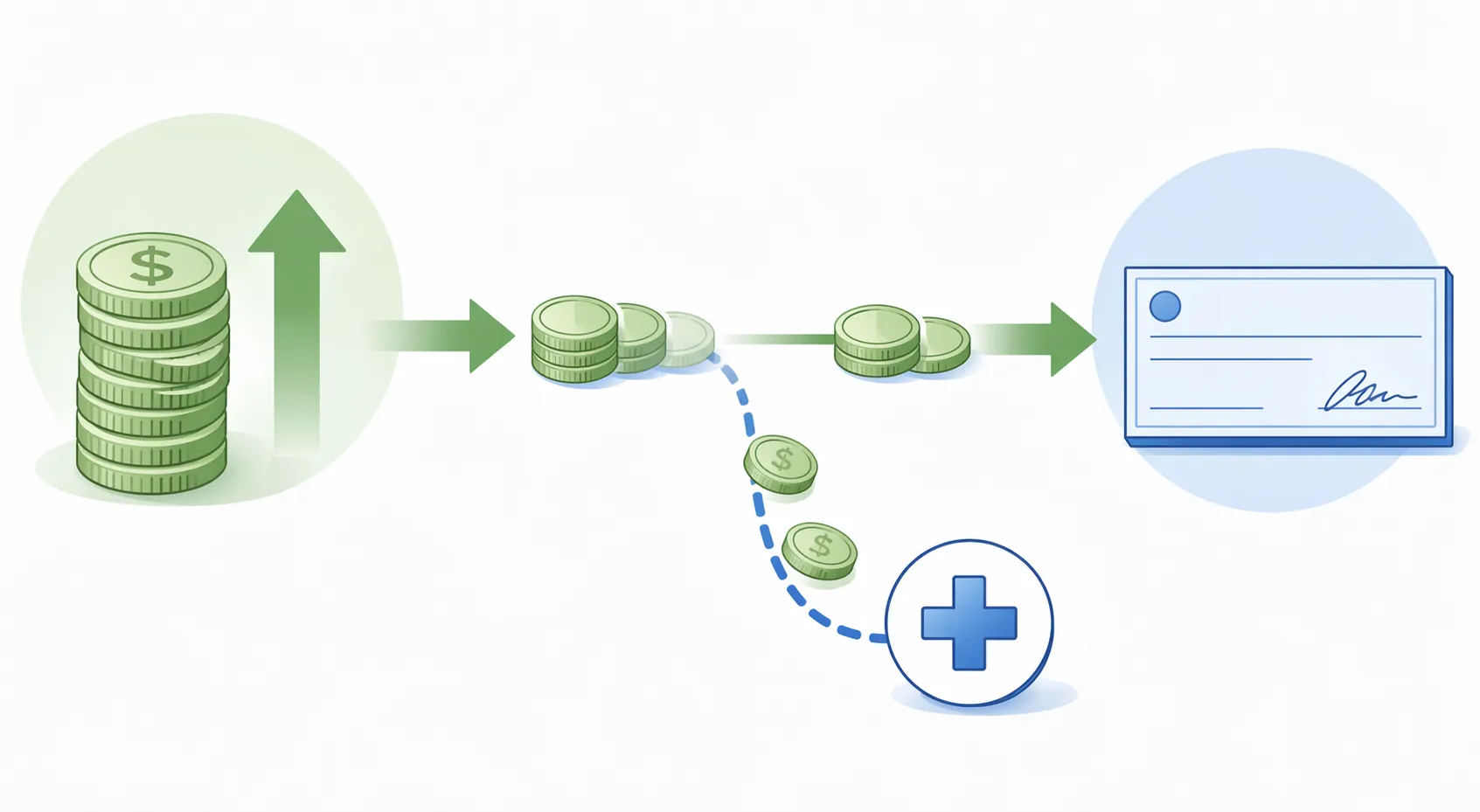
Before you build a grocery or rent budget around that gross increase, check whether Medicare Part B is being deducted from the benefit. The 2026 standard Part B premium is $202.90 per month, and 2027 projections range from $209.50 to $213.05 per month. Because that premium is usually taken out before the Social Security payment arrives, CNBC Select estimates that roughly 10% to 15% of the COLA increase could be absorbed before the beneficiary sees the deposit.[2]
| 2027 item | What it means for a senior household | What is still not final |
|---|---|---|
| Social Security COLA | Raises the gross monthly benefit if there is a positive COLA | The official 2027 COLA arrives in October 2026 |
| Medicare Part B premium | Can reduce the net deposit for people whose premium is deducted from Social Security | The official 2027 premium also arrives in October 2026 |
| Earnings test | Matters mainly for beneficiaries who work while under full retirement age | The annual limit applies; the special monthly limit is being eliminated |
| Full retirement age | Affects claiming decisions and reduction calculations for people not yet at FRA | FRA is now fully phased in at 67 for people born in 1960 or later |
For a deeper worked example of how COLA and Medicare deductions interact, see Social Security Increase 2027: What Seniors Need to Know. The important habit is simple: compare gross benefit, Medicare deduction, and net deposit separately. A higher benefit amount on paper does not always mean the checking-account deposit rises by the full COLA.
Why The 2032 Trust Fund Projection Is Not A 2027 Cut
The word “insolvency” is doing a lot of work in scary headlines. In the June 2026 Trustees Report, the Old-Age and Survivors Insurance trust fund is projected to deplete in Q4 2032, one quarter earlier than previously forecast. If that happened with no legislative change, ongoing payroll tax revenue would be enough to pay 78% of scheduled benefits, which implies an automatic 22% reduction affecting more than 62 million beneficiaries.[3]
That is a serious planning problem. It is not a scheduled 2027 across-the-board cut. The difference matters because a person deciding whether to claim at 62, delay retirement, pay down debt, or help a parent with household expenses needs the right year attached to the right risk.
The Committee for a Responsible Federal Budget gives one way to picture the possible household impact: a typical couple retiring just after insolvency would face an estimated $18,400 annual benefit cut if the automatic reduction occurred.[4] That estimate belongs in a 2032 stress test, not in a 2027 panic folder.
Trust fund dates can move. They depend on wages, employment, inflation, interest rates, demographics, and whether Congress changes the law. The 2032 date is the current Trustees projection, not a final notice mailed to beneficiaries.
The 2027 Earnings Test Change Matters Only For Some Workers
If you receive Social Security and are still working before full retirement age, the earnings test can affect how much is withheld. A reported 2027 rule change eliminates the special monthly earnings test limit, leaving only the annual limit going forward for working beneficiaries under full retirement age.[5]
This is not an across-the-board benefit cut either. It is a rule change for a narrower group: people collecting benefits while still under full retirement age and earning wages or self-employment income. Someone who is already past full retirement age generally is not in the same position as a 63-year-old who claimed early and continues working.
Full Retirement Age Is Now 67 For Later Birth Years
The full retirement age phase-in is also easy to mistake for a new yearly cut. Full retirement age is now fully phased in at 67 for anyone born in 1960 or later, and no further phase-ins are currently scheduled.[6] That affects claiming math, especially for people still deciding whether to claim before full retirement age.
If you are helping a parent or spouse sort through claiming choices, keep this separate from the 2027 COLA question. COLA applies to benefits. Full retirement age affects when a person receives an unreduced retirement benefit. For a plain-language timeline, see Every Senior’s Guide to Retirement Age Milestones.
Why The Headlines Feel Believable
Many seniors already feel squeezed before any trust fund date arrives. The Senior Citizens League reported that 57% of seniors believe their benefits are falling behind inflation, and 73% said they would struggle to pay monthly bills if an automatic benefit cut occurred.[7] That helps explain why a “2027 cuts” headline lands hard even when the year is wrong.
There is also a real demographic pressure behind the trust fund projection. PBS reported that from 2024 through 2027, more than 11,000 people per day are reaching retirement age, a wave that accelerates trust fund drawdown.[8] That context is worth knowing, but it still does not turn 2032 into 2027.
Confusing benefits messages are not limited to this issue. If you have seen emails or posts making broad claims about Social Security taxes, this related guide on misleading Social Security tax savings emails shows the same pattern: a real rule or proposal gets simplified until it becomes bad household advice.
Who Should Pay Closest Attention Before 2027
- People with Medicare Part B deducted from Social Security: check the official October 2026 COLA notice and the final Part B premium before assuming how much the bank deposit will rise.
- People working while under full retirement age: review the annual earnings test limit and do not rely on old explanations that mention the special monthly test.
- People deciding when to claim: separate the 2027 COLA from the permanent reduction that can come with claiming before full retirement age.
- Caregivers helping with household budgets: write down gross benefit, Medicare deduction, tax withholding if any, and actual deposit as four separate lines.
- Households with higher income: watch how Medicare income-related adjustments and retirement taxes fit into the whole budget; this guide to common retirement tax mistakes can help organize that review.
What To Do With The October 2026 Notices
The two numbers to wait for are the official 2027 COLA and the official 2027 Medicare Part B premium. Projections are useful for early budgeting, but they are not final notices. If a website, video, or email treats a summer estimate as a final benefit amount, slow down before changing a budget or claiming plan.
- Keep the Social Security COLA notice and Medicare premium notice together.
- Compare the 2026 gross benefit with the 2027 gross benefit.
- Compare the 2026 Medicare deduction with the 2027 Medicare deduction.
- Use the net deposit, not the gross benefit, for monthly bills.
- If you are still working, check whether the annual earnings test applies before estimating spendable income.
For a broader review, a mid-year financial checkup for seniors can help put Social Security, Medicare, taxes, prescriptions, housing, and emergency savings on one page.
Planning For 2032 Without Treating It Like A 2027 Notice
The 2032 projection deserves attention because the possible automatic reduction would be large if lawmakers do nothing. It should be handled as a planning risk: test whether rent, utilities, prescriptions, Medicare premiums, transportation, and food still work if Social Security is lower later in the decade.
That is different from cutting back today as if a 2027 reduction has already been ordered. A good stress test can show whether to build cash reserves, delay a discretionary purchase, adjust withdrawals, or talk with a qualified adviser. This guide on how to stress test your retirement plan for healthcare and housing costs is the more useful place for that exercise.
For 2027, the careful answer is still this: no across-the-board Social Security benefit cut is scheduled. Watch the final October numbers, read the net deposit line, check the earnings test if you work before full retirement age, and keep the 2032 trust fund risk in the planning column where it belongs.
References
- Social Security COLA 2027: An Early Look at How Much Payments Could Increase, AARP.
- How Much Will the Social Security 2027 COLA Be? Latest Estimates & Predictions, CNBC Select.
- Status of the Social Security and Medicare Programs: A Summary of the 2026 Annual Reports, Social Security Administration.
- As Social Security Turns 90, It's Racing Towards Insolvency, Committee for a Responsible Federal Budget.
- Key Social Security Changes in 2027: COLA, Medicare, and Earnings Limit, COLA Calculator.
- The Full Retirement Age, Bipartisan Policy Center.
- Social Security Doomsday Clock Ticks Closer to Midnight, The Senior Citizens League.
- Your Social Security benefits could be cut by a quarter in 2032, PBS.
Browse more in the Glossary.