
Product term
Best Winter Gifts for Elderly Men That Prevent Falls
Last verified 2026-07-24
The hard part about choosing the best winter gifts for elderly men is not finding something useful. It is finding something he will actually use without feeling as if the family has quietly voted him fragile. A better pair of boots may be welcome. A box of “fall prevention equipment” may sit untouched.
Winter makes that distinction matter. Ice on the front walk, slush tracked into the entry, smooth slippers on tile, a dark hallway at 2 a.m., and a driveway that still needs clearing before an appointment are ordinary seasonal problems. For an older man who values his routine, they are also the places where independence can be interrupted.
A good winter gift starts with the specific moment you are worried about. If he slips walking to the mailbox, think traction. If he gets up at night and reaches for the wall, think lighting. If he insists on shoveling after every storm, think snow removal. If he lives alone, think about what happens after a fall, not just what might prevent one.

That is the same practical logic behind broader fall-prevention planning: reduce the hazard before asking an older adult to compensate for it. Winter simply makes the hazards more visible and less forgiving.
Match the Gift to the Winter Failure Point
Most gift guides mix comfort, gadgets, novelty, and safety into one long list. That is fine for browsing, but it is not how winter risk works. A heated throw does not solve an icy driveway. A medical alert pendant does not make slippers grip better. A snow removal service does nothing for the dark trip from bed to bathroom.
The cleaner approach is to name the winter hazard first, then choose the gift that removes or softens that hazard.
| Winter concern | Gift that fits | What it actually changes |
|---|---|---|
| Ice, slush, wet outdoor surfaces | Non-skid winter boots | Improves traction during ordinary outdoor errands |
| Hardwood, tile, socks, loose slippers | Non-skid slippers with rubber soles | Reduces sliding indoors, especially in kitchens, bathrooms, and entryways |
| Long dark evenings and nighttime walking | Motion-activated night lights | Lights the path before he has to reach, shuffle, or guess |
| Snow shoveling and uncleared walkways | Prepaid snow removal service | Removes both the exertion of shoveling and the icy surface afterward |
| Falling alone at home | Medical alert device with automatic fall detection | Helps summon assistance after a fall; it does not prevent the fall |
| Cold rooms and unsafe improvised warmth | Heated throw or blanket with auto shut-off | Adds warmth while addressing burn and fire risk |
Boots for Icy Walks
If he still steps outside for the paper, the trash bins, the mailbox, church, coffee, the dog, or a short walk after lunch, footwear belongs near the top of the list. Winter boots are one of the easiest safety gifts to give without making the gift feel medical, because they already belong to the season.
The point is not to buy the heaviest, most technical boot on the market. The point is to replace the pair he actually wears when the sidewalk is wet or glazed. A boot that stays in the closet because it is hard to pull on, too stiff to drive in, or too obviously “special” has not reduced much risk.
Ohio State Wexner Medical Center frames gift-giving for older adults at risk of falling around practical items that make everyday movement safer, including footwear with good traction for outdoor conditions.[1] Medical Guardian also includes non-slip footwear among fall-prevention gift ideas, with the same basic reasoning: winter surfaces punish smooth soles.[2]
Look for a sole designed for grip, a heel that does not wobble, enough insulation for local weather, and a closure he can manage with cold hands. If his entryway is where snow melts into puddles, waterproofing matters too. The gift can be framed plainly: “Your old winter boots looked worn out, and these have better tread.” That sounds like equipment for a man who goes places, not equipment for a patient.
Slippers With Real Soles for Indoor Surfaces
Indoor falls are easy to underestimate in winter because the dangerous surface may be inside the house. Snow melts by the door. Socks slide on hardwood. Old slippers flatten until the sole is more polish than grip.
Non-skid slippers with rubber soles are a small gift with a very specific job. Ohio State Wexner Medical Center recommends slippers or shoes with rubber soles rather than walking in socks, and Medical Guardian similarly points to non-skid slippers as safer than regular slippers on indoor surfaces.[1][2]
This is one place where “cozy” should not outrank structure. The safest-looking slipper is not always the softest one in the gift display. A winter slipper for an older man should stay on the foot, grip the floor, and tolerate the short trips that actually happen: from recliner to kitchen, bedroom to bathroom, mudroom to garage.
There is also a dignity advantage here. A good slipper can be chosen like a house shoe, not like an assistive device. Dark colors, a normal shoe shape, and a sole that looks sturdy rather than therapeutic can make the difference between daily use and polite thanks.
Motion Lights for Long Winter Nights
Winter darkness changes the house. A hallway that is harmless at 4 p.m. can become a guessing path later in the evening. The risky moment is often before the light switch, when someone is feeling for a wall, stepping around a rug, or trying not to wake anyone.
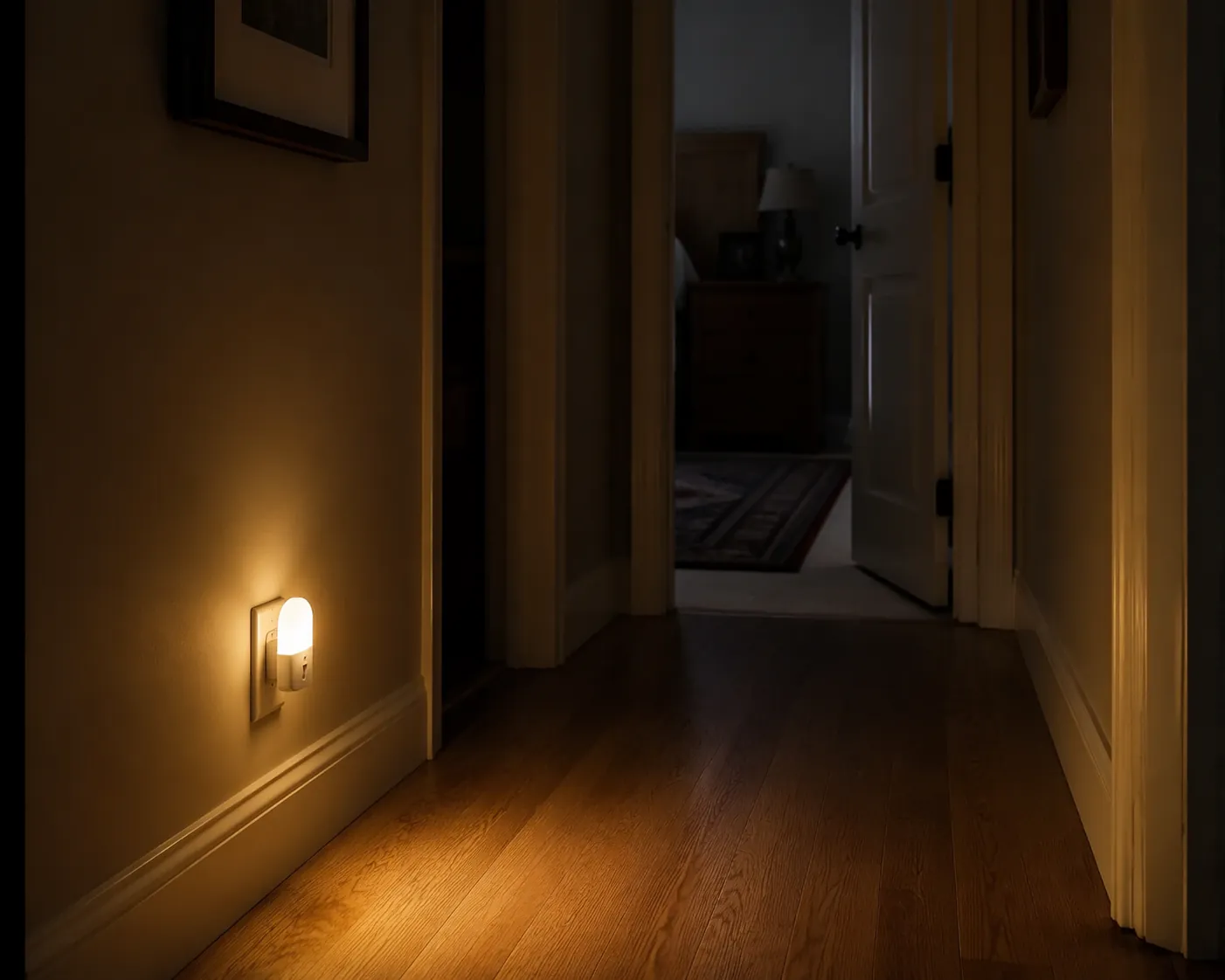
Ohio State Wexner Medical Center includes motion-sensor lighting among gift ideas for older adults at risk of falling, especially for nighttime navigation.[1] The practical value is simple: the path lights up before the older adult has to make a balancing decision in the dark.
The best placements are usually boring: the route from bed to bathroom, the hallway to the kitchen, the top and bottom of stairs, and the entry where shoes come off. Plug-in lights near the baseboard can work well where outlets are available. Battery lights may fit closets, stair landings, or older homes with inconvenient outlet placement.
This gift is easiest to overdo. A house that suddenly looks like an airport runway can feel like an intervention. Start where the winter problem actually happens, then see whether he likes it. A warm, low glare light is usually easier to live with than a bright beam that snaps on like a security lamp.
Snow Removal for Driveways and Walks
Snow removal can be the most emotionally loaded gift on the list. Many older men do not think of shoveling as a household hazard. They think of it as what a responsible homeowner does before the snow gets packed down.
But shoveling combines several winter risks at once: cold air, heavy exertion, twisting, lifting, slippery footing, and the pressure to get it done before leaving the house. Medical Guardian identifies snow shoveling as a winter safety concern and includes snow removal service among fall-prevention gift ideas.[2] Silverts also points to snow removal as a gift that can help reduce fall and injury risk in winter conditions.[3]
The cleanest version of this gift is not “I hired someone because you can’t handle it.” It is “I prepaid the first few storms so you don’t have to rush before breakfast.” Or, “I found someone reliable who can clear the walk when the city plow blocks the end of the driveway.” That keeps the focus on convenience and timing, where the winter hazard really lives.
If he lives in a senior community, the equivalent may be different: confirming who salts the entrance, arranging help after storms, or paying for someone to clear the car. For older adults aging in place, winter storm planning also belongs with broader severe-weather safety, especially when ice, outages, or blocked access can isolate someone quickly.
Medical Alerts After a Fall Alone
A medical alert device with automatic fall detection belongs in the conversation, but it should not be treated like boots, slippers, lights, or snow removal. Those gifts try to prevent the fall. A medical alert device helps after a fall has already happened.
Medical Guardian describes medical alert systems with fall detection as tools that can help older adults get assistance after a fall, including when they are alone.[2] That value is response and connection. It should not become a substitute for clearing ice, improving lighting, or replacing unsafe footwear.
This distinction matters for dignity too. Some men will accept a device if it is presented as a way to keep living alone with less family hovering. Others will reject anything that looks like a badge of decline. If he already lives alone, has had a recent fall, or worries about being unable to reach a phone, it may be worth discussing a Personal Emergency Response System as part of a larger living-alone safety plan.
Before buying, check whether the device depends on a landline, cellular coverage, Wi-Fi, charging routines, or a wearable he will actually keep on. Landline-dependent systems deserve extra scrutiny as telephone infrastructure changes; if that is part of the setup, compare it against current landline phase-out considerations before committing.
Warmth Gifts Need a Safety Check
Warmth matters in winter, especially for someone who spends long evenings in one chair or keeps the thermostat low out of habit. A heated throw can be a welcome gift, but it is not automatically a safe one.
Ohio State Wexner Medical Center recommends checking electric blankets and heated throws for automatic shut-off features to reduce burn and fire risk.[1] That is the part worth taking seriously. Warmth is comfort only if the product does not introduce a new hazard.
Brands and models change, and current availability should be verified before naming a specific heated throw as a “best” choice. In 2026, broad consumer gift roundups still include comfort items for older adults, but a safety-minded choice should look past softness and check auto shut-off, simple controls, washable construction, cord placement, and whether he can use it without tangling it around his feet.[4][5]
How to Give the Gift So It Gets Used
The same object can land two different ways depending on how it is given. “You need these so you don’t fall” can make even a sensible gift feel like surveillance. “Your old boots are worn smooth, and these are warmer” leaves him in the role he wants: a man choosing better winter gear.
Dignity is not decoration around the safety plan. It is part of whether the plan works. A gift that embarrasses him may disappear into a closet. A gift that fits the way he already sees himself may become part of the routine without argument.
- Frame boots as an upgrade to winter gear, not a fall-prevention device.
- Choose slippers that look like normal house shoes and have a real sole.
- Install one motion light in the problem hallway before lighting the whole house.
- Present snow removal as prepaid convenience, especially before early appointments or after heavy storms.
- Discuss a medical alert as a way to preserve independence if he lives alone, not as proof he should not be alone.
Fit matters as much as intent. If you are comparing products, use the same practical filter you would use for other home safety products for seniors: whether the item solves a real household problem, whether it is easy to use, and whether it will stay in use after the first week.
The Best Choice Depends on the Winter Moment You Worry About
There is no single best winter gift for every elderly man. The useful gift is the one that removes the most likely cold-weather failure point in his actual routine.
If the worry is stepping outside, choose better boots. If it is the kitchen floor or the bathroom at night, choose non-skid slippers or motion lighting. If it is the driveway after snow, arrange removal before the next storm. If the deeper worry is that he could fall alone and wait too long for help, consider a medical alert device while still treating ice, darkness, and footwear as separate problems.
The gift does not have to announce that winter has become dangerous. It only has to make one ordinary winter moment safer without taking away the ordinary life he is trying to keep.
References
- Gift ideas for older adults or loved ones at risk of falling — Ohio State Wexner Medical Center
- 5 Gifts for Seniors That Prevent Falls — Medical Guardian
- Fall Prevention: 8 Gifts for Seniors To Help Prevent Falls — Silverts
- The Best Gifts for Seniors in 2026 — TODAY Show
- 30 Best Gifts for Seniors Who Have Everything in 2026 — Good Housekeeping
Browse more in the Glossary.