
Aging in Place Alone: A Safety and Connection Guide for Older Adults Living Solo at Home
This guide addresses the unique safety and connection needs of older adults living alone. It covers fall detection strategies, home modifications for single-person households, technology tools, daily check-in routines, and emergency planning to help solo agers maintain independence safely.
The Solo Aging Reality: Why Living Alone Changes the Safety Equation
The numbers are striking: roughly 8 in 10 older adults currently live independently in their own homes, and a significant portion of them live alone. This is not a niche situation — it is the dominant living arrangement for millions of Americans over 65. The desire to remain at home is nearly universal, but the safety infrastructure required for someone living solo is fundamentally different from what works for a couple or a household with a live-in caregiver.
When you live alone, there is no one to hear a crash in the next room. No one to notice you have not come downstairs for breakfast. No one to hand you the phone after a fall. This does not mean aging in place alone is impossible — it means the planning has to be intentional, layered, and built around the reality that help will not arrive unless a system summons it.
This guide is written for older adults living solo and for the adult children who worry about them from across town or across the country. It covers the specific safety nets, home modifications, technology tools, connection routines, and emergency plans that make solo aging work — not as a compromise, but as a deliberate choice backed by preparation.
The Special Risk of Falling Alone: Understanding the 'Long Lie'
Every year, more than 1 in 4 older adults report falling. That is roughly 14 million people. In 2021, falls caused over 38,000 deaths among adults 65 and older, and emergency departments recorded nearly 3 million visits for older adult fall injuries. The age-adjusted fall death rate has risen sharply — increasing 21% from 2018 to 2024, according to the latest CDC data.
For someone living alone, the most dangerous consequence of a fall is not the injury itself — it is the delay in getting help. Emergency medicine researchers call this the "long lie": being stuck on the floor for an hour or more after a fall. The longer a person lies helpless, the higher the risk of dehydration, hypothermia, pressure injuries, muscle breakdown, and complications from the original injury. A fall that would be a minor event in a household with two people can become a medical crisis for someone living solo.
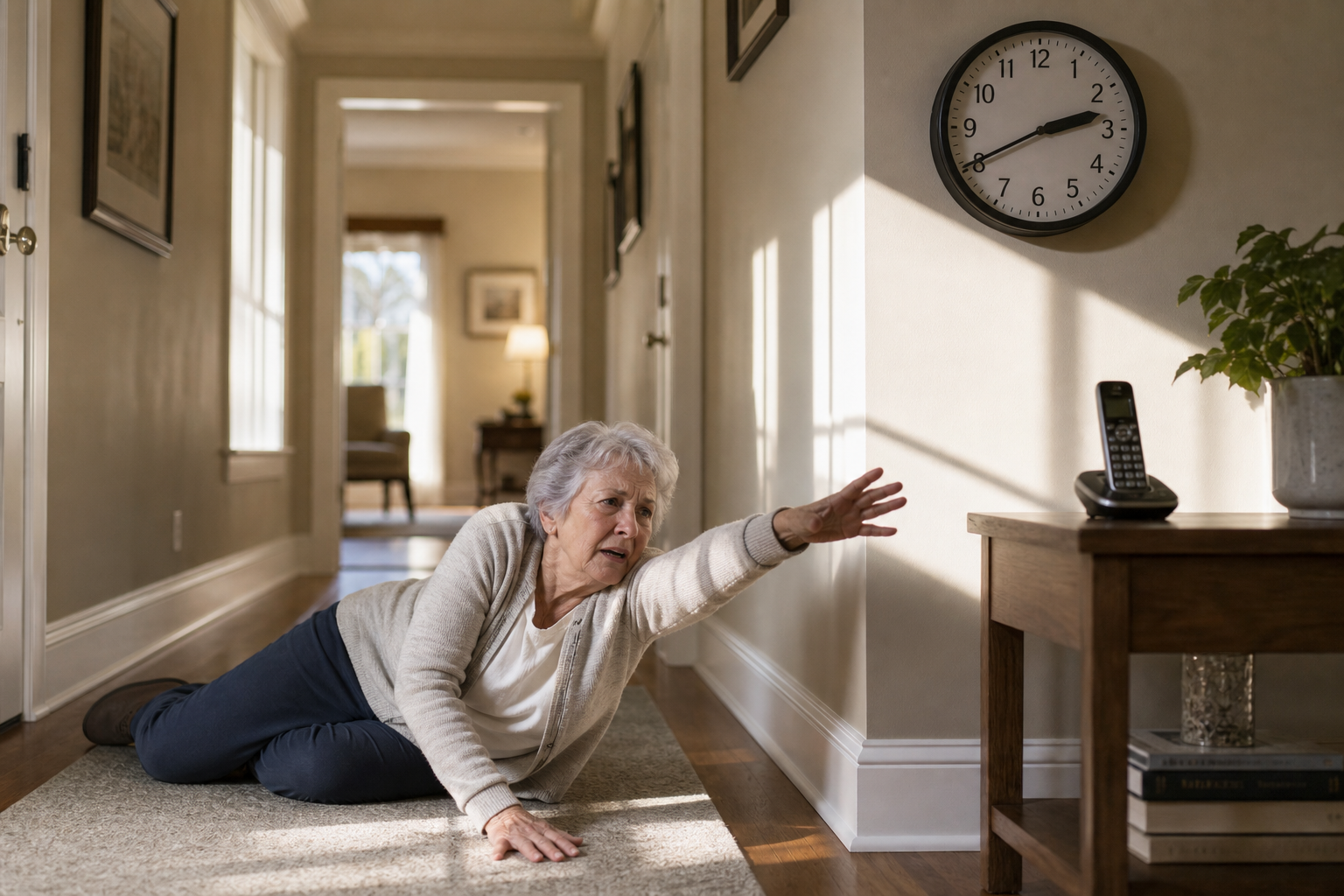
This is why a fall prevention strategy for a solo ager must include not just hazard removal, but also a reliable, automatic way to summon help when the person cannot press a button or reach a phone. The standard advice — "keep a phone nearby" — is not sufficient if the phone is across the room or the person is unconscious.
Home Modification Priorities for Single-Person Households
Home modifications take on a different urgency when you live alone. The goal is not just to prevent falls, but to ensure that if a fall does happen, you are not trapped in a location where no one will find you for hours. This shifts the priority list compared to a general home safety audit.
The most critical areas are the bathroom and the bedroom — the two places where a solo ager is most likely to fall and most likely to be alone for extended periods. According to the National Poll on Healthy Aging, 88% of older adults have a main-floor bathroom and 78% have a main-floor bedroom, which is a good start — but these rooms still need targeted modifications.
Priority Modifications for Solo Agers
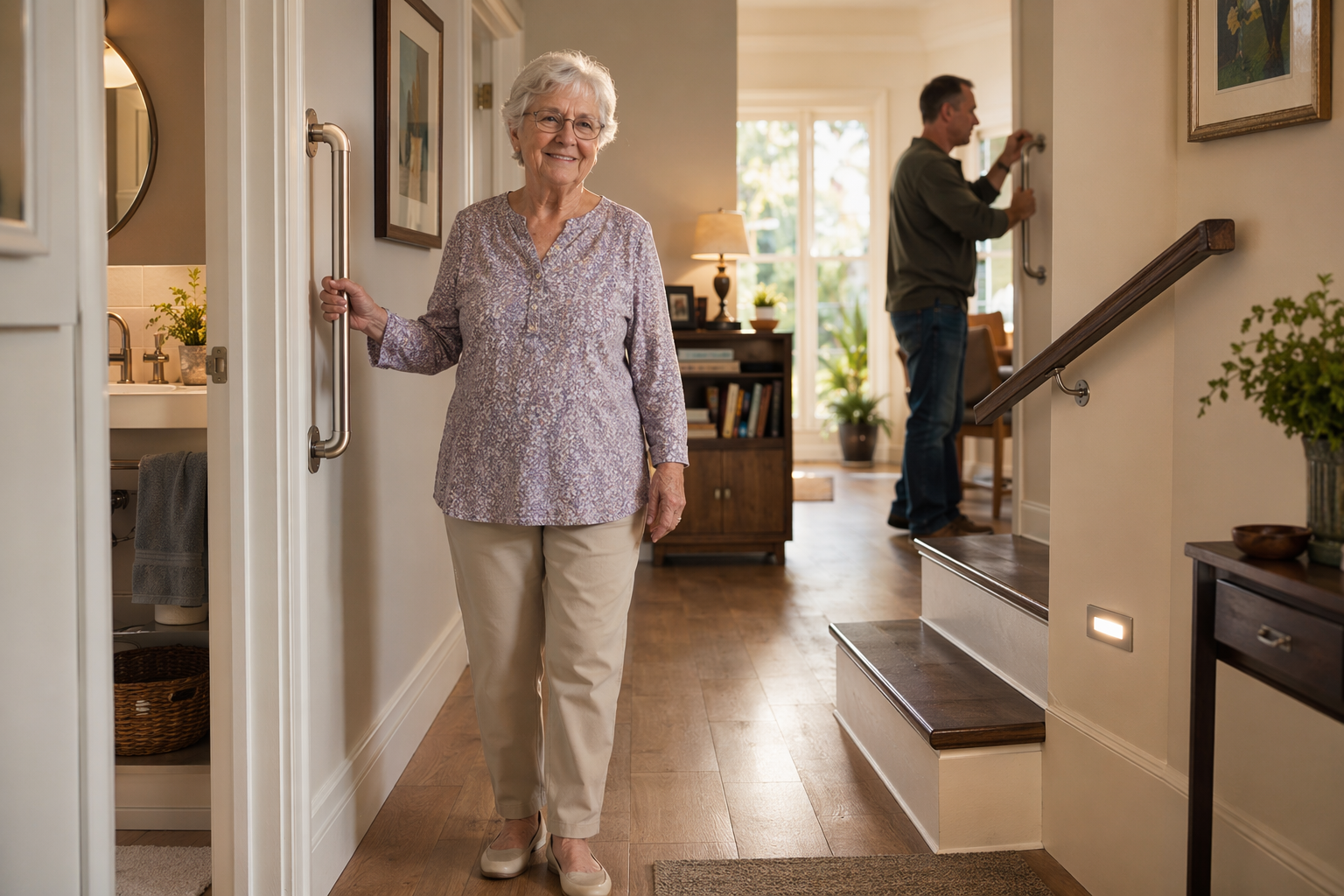
- Grab bars in the bathroom — not just near the toilet, but on both the inside and outside of the tub and shower. If you fall in the shower, you need a bar you can reach from the floor. The National Institute on Aging recommends mounting grab bars in these exact locations.
- A phone or alert device within arm's reach of every location where you spend time: the bed, the favorite armchair, the toilet, the kitchen counter. A corded landline phone that stays in one place is actually more reliable than a cordless phone that can be misplaced.
- Motion-activated night lights in the bathroom, hallway, and bedroom. These eliminate the need to fumble for a switch in the dark — a common fall trigger during nighttime bathroom trips.
- Non-slip flooring or no-slip strips on tile and wood floors. Throw rugs should be removed entirely or secured with double-sided tape. The NIA specifically warns against loose rugs as a fall hazard.
- A raised toilet seat and a shower chair or transfer bench. These reduce the need to lower yourself to a standard-height toilet or stand on a wet, slippery surface — two high-risk movements for solo agers.
- Handrails on both sides of any staircase, with good lighting at the top and bottom. Even if you rarely use the stairs, a fall on the staircase when you are home alone is a serious emergency.
The key principle for solo agers is this: every modification should reduce the chance of a long lie. If a fall happens in a modified bathroom with grab bars, non-slip flooring, and a phone within reach, the outcome is dramatically better than a fall in an unmodified bathroom where the phone is in the next room.
Technology as a Safety Net: Medical Alerts, Smart Speakers, and Fall Detection Wearables
For an older adult living alone, technology is not a luxury — it is the primary safety net. When there is no one else in the house, a device that can detect a fall and call for help automatically is the difference between a short lie and a long lie.
The landscape of monitoring technology has expanded well beyond the classic medical alert pendant. According to the National Poll on Healthy Aging, 49% of older adults now own at least one smart home device, including voice-controlled assistants (18%), smart thermostats (18%), and doorbell cameras (16%). These devices can be repurposed as part of a safety system.
Technology Options Compared
| Technology | How It Helps Solo Agers | Key Limitation |
|---|---|---|
| Medical alert pendant (PERS) | One-button call for help; some models include automatic fall detection | Requires wearing the device; no help if unconscious and fall detection fails |
| Fall-detection smartwatch | Automatic fall detection and GPS location sharing; can call emergency contacts | Must be worn and charged daily; battery life varies (1-3 days) |
| Voice assistant (smart speaker) | Hands-free calling via voice command; can be programmed for check-in reminders | Requires voice; may not hear a call from the floor if the speaker is in another room |
| Passive home sensors | Motion, door, and stove sensors that alert family if no activity is detected | Does not detect falls directly; requires a family member or monitoring service to respond |
| Automated lighting (motion-activated) | Lights turn on automatically when movement is detected, reducing fall risk at night | Does not summon help; purely preventive |
The most important distinction for solo agers is between devices that require the user to initiate a call (a "panic button") and devices that can detect a fall automatically and call for help without any action from the person. A standard medical alert pendant is only useful if you are conscious and able to press the button. For someone living alone, a wearable with automatic fall detection or a passive monitoring system that alerts a family member when no motion is detected provides a more robust safety net.
For adult children managing care from a distance, a combination of technologies often works best. A wearable fall-detection device on the parent, plus a set of passive motion sensors in key rooms, plus a voice assistant in the living area creates overlapping coverage. If one system fails, another may catch the event. For a deeper comparison of wearable vs. passive systems, see our guide on passive vs. wearable elderly monitoring trade-offs.
Daily Connection Strategies: Check-In Routines, Neighbor Networks, and Village Models
Safety technology handles emergencies, but daily connection handles everything else — the reassurance that someone will notice if you do not answer the phone, the social engagement that keeps isolation at bay, and the simple human knowledge that someone is thinking of you.
According to the National Poll on Healthy Aging, 77% of older adults living alone maintain weekly contact with family, friends, or neighbors. That is a strong baseline, but weekly contact leaves significant gaps. A fall on a Tuesday afternoon may not be noticed until a Saturday phone call. The goal for solo agers should be a daily check-in routine — ideally at a predictable time every day.
Building a Daily Connection System
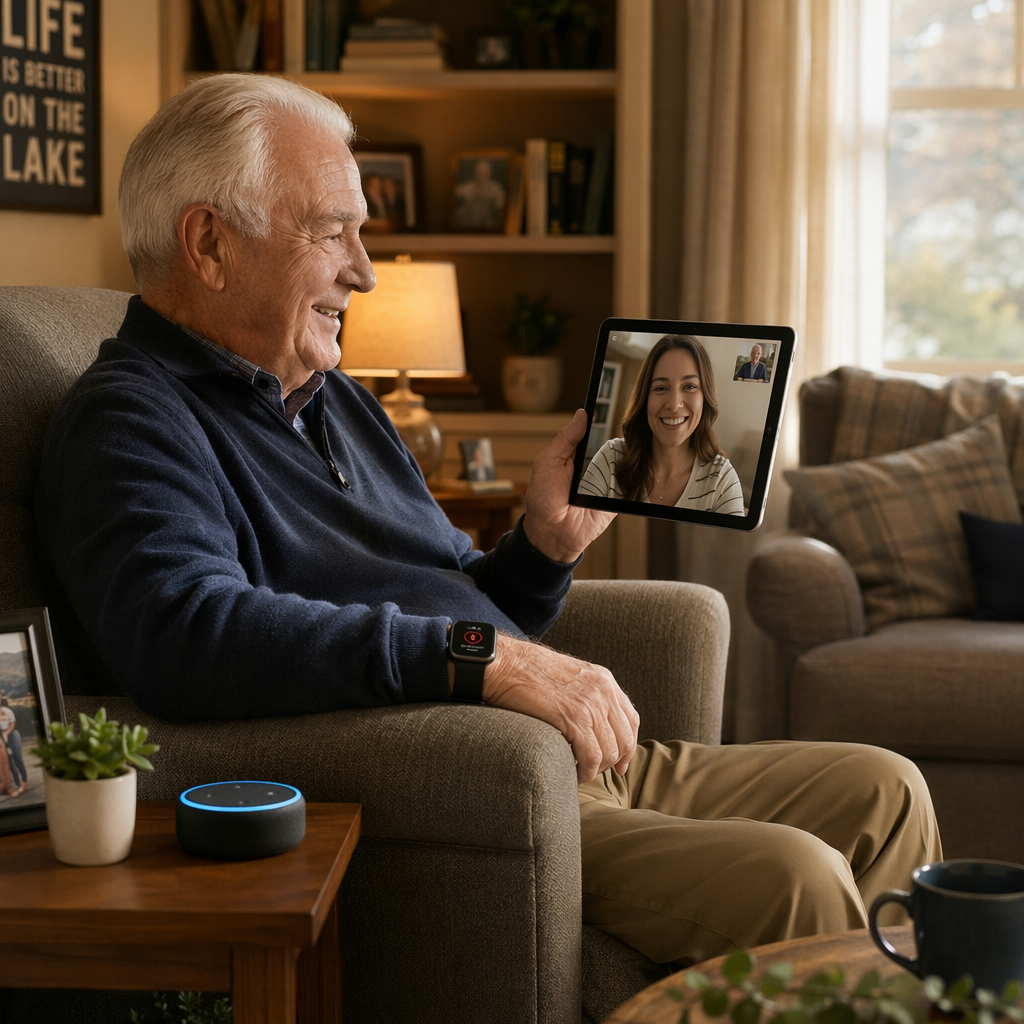
- Scheduled check-in calls or video chats at the same time each day. A 10-minute call at 9:00 AM establishes a routine. If the call is missed, the family member knows to check in further or contact a neighbor.
- A neighbor watch program where a nearby neighbor agrees to check for activity — a visible newspaper picked up, a light turned on, a car in the driveway. This can be informal or organized through a local village network.
- Village network models — member-driven organizations that provide transportation, social activities, and check-in services for older adults aging in place. These are growing rapidly across the U.S. and are often more affordable than home care agencies.
- Senior center engagement, either in-person or virtual. Many senior centers now offer online classes, discussion groups, and wellness programs that provide both social connection and a structured daily activity.
- A shared calendar or activity log that a family member can access remotely. Simple tools like a shared digital calendar or a daily email update can give long-distance caregivers visibility into whether their parent is maintaining normal routines.
The research on loneliness and social connection is clear: consistent, predictable contact matters more than the total number of contacts. A daily 10-minute call is more protective than a weekly two-hour visit. For a deeper look at the health impacts of loneliness and the evidence behind companion services, see our article on the health case for senior companionship.
Emergency Preparedness for One: Plans That Work When You're the Only One Home
An emergency plan for someone living alone must assume that the person may be unable to initiate the response. This is a fundamentally different design constraint than a plan for a couple, where one person can call for help while the other receives first aid.
Essential Elements of a Solo Emergency Plan
- A phone or alert device within reach of every room you use regularly. This is non-negotiable. A corded landline in the bedroom and a wearable alert pendant or smartwatch provide redundancy.
- ICE (In Case of Emergency) contacts clearly posted on the refrigerator and stored in your phone's lock screen. Include at least two contacts: a local neighbor and a family member who lives farther away.
- A smartwatch or wearable with automatic fall detection and cellular connectivity. Devices like the Apple Watch, Samsung Galaxy Watch, and several medical-grade wearables can detect a hard fall and call emergency services or a pre-set contact without any button press.
- A simple, written emergency plan shared with a neighbor or family member. The plan should include: where you keep a spare key, which doors are unlocked, your medical conditions and allergies, your doctor's name and phone number, and your preferred hospital.
- A daily check-in system that triggers an alert if you do not check in by a certain time. This can be as simple as a phone call, a text message, or a smart home routine that notifies a family member if no motion is detected by 10:00 AM.
The critical difference between a solo emergency plan and a multi-person household plan is that the solo plan must work without anyone else present to initiate it. Automatic fall detection, passive monitoring, and scheduled check-ins are not optional extras — they are the core of the plan.
Community Resources: Where to Find Support for Aging Alone
No one should have to build a solo aging plan from scratch. A network of community resources exists specifically to help older adults stay safe, connected, and independent at home. The challenge is knowing which resources exist and how to access them.
Key Resources for Solo Agers
- Area Agency on Aging (AAA) — Your local AAA is the single most important resource. Call the Eldercare Locator at 800-677-1116 to find your local office. AAAs provide information on home modification programs, meal delivery, transportation, caregiver support, and evidence-based fall prevention programs.
- NCOA BenefitsCheckUp — A free online tool from the National Council on Aging that helps older adults find and apply for benefits programs they may qualify for, including Medicare savings programs, food assistance, and home modification grants.
- Village network models — Member-driven, grassroots organizations that help older adults age in place by providing transportation, home maintenance, social activities, and check-in services. Search for "village model" and your city name to find a local chapter.
- Local senior centers — Many senior centers offer more than just social activities. They provide health screenings, exercise classes (including evidence-based fall prevention programs like A Matter of Balance), technology training, and referral services.
- CAPABLE program — As mentioned earlier, this evidence-based program provides in-home occupational therapy, nursing visits, and home repairs to help older adults age in place safely. Ask your local AAA if CAPABLE is available in your area.
For adult children who are just beginning to navigate the caregiving landscape after a parent's fall or health scare, our First 30 Days as a Caregiver roadmap provides a structured orientation to the first month of caregiving, including how to assess a parent's home, what conversations to have, and how to build a support team.
Aging in place alone is not a compromise. It is a choice that millions of older adults make every day, and with the right safety systems, technology tools, connection routines, and community resources, it is a choice that can work well. The key is to plan before you need the plan — to install the grab bars, set up the check-in routine, and test the fall detection system while you are still standing.
Related reading
Noticed something outdated or inaccurate on this page? Flag a correction. We review every report against CDC, NIA, and AARP HomeFit guidance before updating a page.
Part of the Fall Prevention section.