
Room checklist
Choosing Between a CAPS Specialist and a General Contractor for Aging-in-Place Modifications
Learn when a CAPS-certified contractor is worth the investment and when a general contractor will do, plus five key questions to ask before hiring for aging-in-place home modifications.
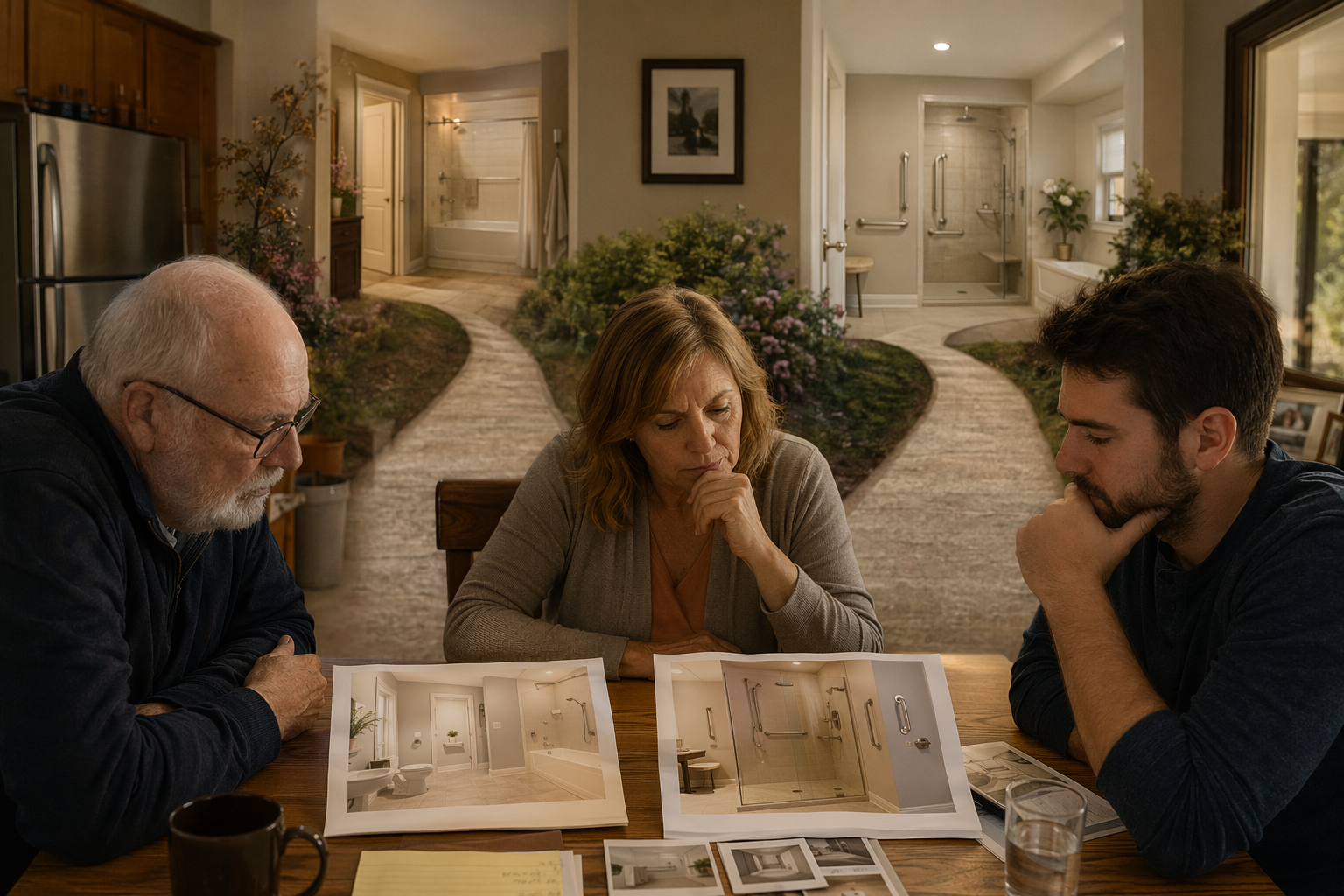
The hard moment is not when a parent says the bathtub feels unsafe. It is when two estimates are on the kitchen table, one from a general contractor and one from a Certified Aging-in-Place Specialist, and everyone wants the decision to be simpler than it is.
For a single grab bar, a small lighting upgrade, or a non-structural handrail, a qualified general contractor or licensed handyman may be perfectly reasonable. For a bathroom remodel, a post-discharge retrofit, doorway changes, transfer space, or work across several rooms, the cheaper bid can become expensive if the person designing the work does not understand how your parent actually moves through the house.
That distinction matters because most U.S. homes were not built for aging in place. One 2026 aging-in-place statistics report states that only about 10% of U.S. homes are aging-ready, citing Census Bureau data and Pew Research Center context on older adults living at home.[1] Ordinary remodeling experience should not be treated as automatic aging-in-place competence.
CAPS is not a magic stamp. The Certified Aging-in-Place Specialist credential is a nationally recognized NAHB credential created with AARP in 2001, and NAHB describes the coursework as covering marketing and communication strategies, design concepts, and details and solutions for livable homes and aging-in-place projects.[2][3] That is useful background. It is not enough by itself to sign a contract.
The better test is the interview. Ask the same five questions of both bidders, then listen for whether they are remodeling a room or planning for a body whose balance, strength, vision, or transfers may change.
| If the project is mainly this | A CAPS specialist is usually |
|---|---|
| One correctly mounted grab bar, a brighter fixture, a small threshold fix, or a simple handrail | Optional, assuming the contractor is qualified, insured, and understands basic placement and anchoring |
| Bathroom redesign, bathing safety, curbless shower, transfer space, doorway widening, or multiple rooms | Worth serious consideration |
| Work tied to hospital discharge notes, PT or OT recommendations, a recent fall, or progressive mobility loss | Often the safer hire, or at least someone to include in planning |
Question 1: “What’s your approach to fall prevention in this room?”
This is the question to ask before anyone starts talking about tile, finishes, or how quickly they can get a crew in. A weak answer sounds like: “We’ll put in grab bars and make sure everything is up to code.” Code matters, but code compliance is not the same thing as fall prevention for the person who will actually use the room.
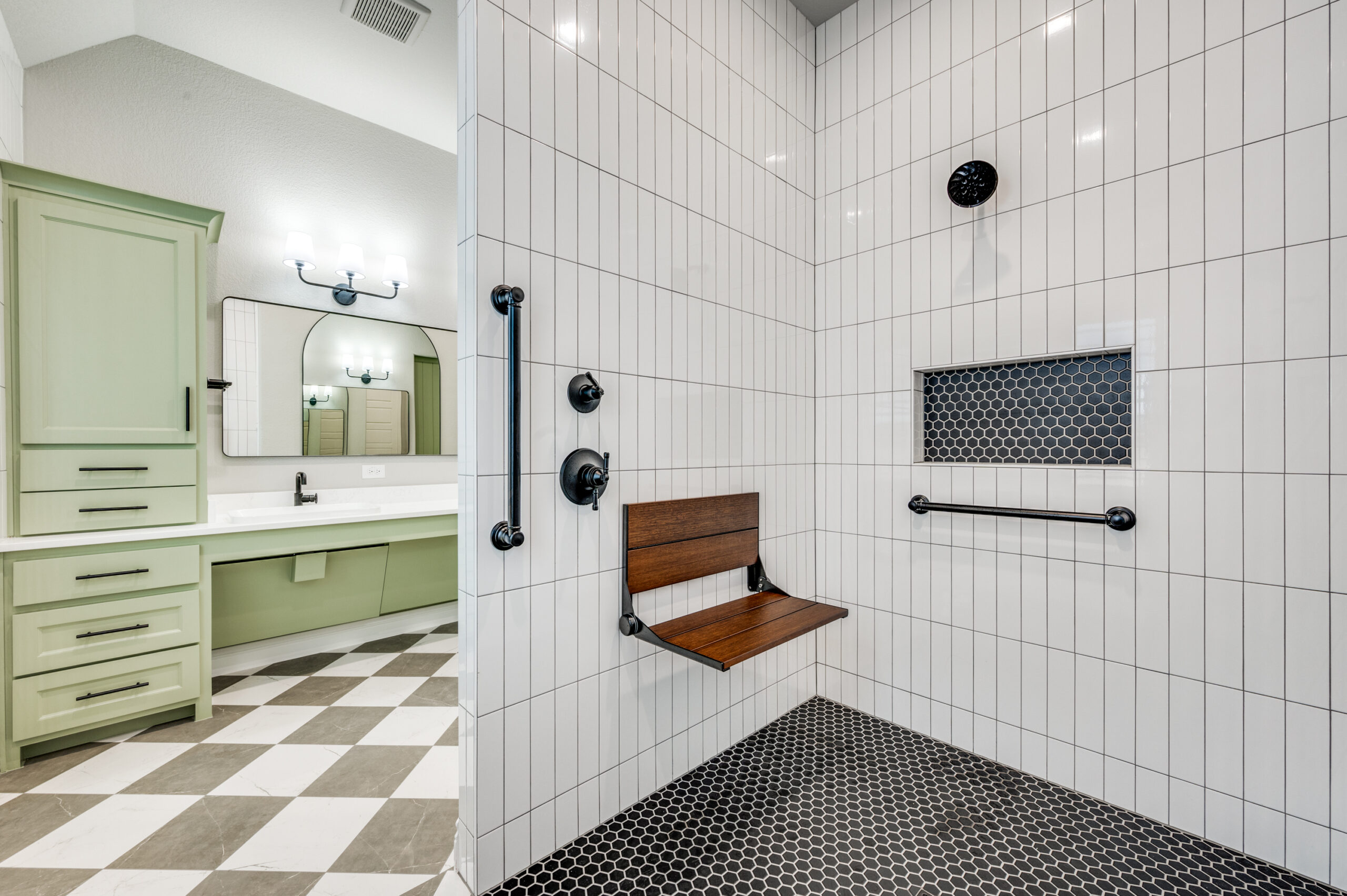
A stronger answer starts with use. The contractor asks how your parent enters the bathroom, whether they use a cane or walker, whether they steady themselves on towel bars, whether they sit to shower, whether they get dizzy standing, and who helps with bathing. In a bathroom, they should talk about the path from the doorway to the toilet and shower, floor transitions, lighting, reach zones, wet surfaces, transfer points, and whether a caregiver may need room to stand beside the parent.
CAPS training is meant to push beyond ordinary remodeling into aging-in-place design concepts and installation solutions, including universal design principles.[2][3] Forbes Health’s aging-in-place remodeling checklist also treats bathroom safety, lighting, flooring, accessibility, and mobility through the home as connected issues rather than isolated upgrades.[4] That is the level of thinking you are listening for.
Could a skilled general contractor answer this well without CAPS? Yes, especially if they have done substantial accessibility work and can explain their reasoning without waving away the details. But if the answer never moves past “grab bars,” “non-slip,” and “we meet code,” do not assume the design is safe just because the estimate looks tidy.
Question 2: “How do you coordinate with occupational therapists or physical therapists?”
This question separates the contractor who sees a construction job from the professional who understands that the discharge planner’s notes, the walker in the hallway, and the daughter cleaning up after a near fall are part of the same project.
A strong answer does not have to be fancy. It may sound like: “If there is an OT or PT involved, I want their recommendations before final layout. I’ll ask about transfers, reach, assistive devices, caregiver space, and whether the current need is expected to change.” Care.com notes that CAPS professionals may work with occupational therapists, physical therapists, and other allied professionals as part of aging-in-place planning.[5] Aging in Place Directory similarly describes CAPS work as often involving coordination with other professionals, not just construction decisions.[6]
A weak answer is irritation. If the contractor treats an OT’s input as a nuisance, or says, “Just tell me where you want the bars,” the family has been handed too much responsibility. You may not know whether a toilet transfer requires wall-side support, front approach space, or room for a helper. That is exactly why outside clinical input sometimes matters.
A general contractor can coordinate well if they are willing, humble, and organized. CAPS training simply makes this kind of collaboration more expected. For a post-discharge project, that expectation is worth money because the mistake may not show up until your parent is home, tired, and trying to move at night.
Question 3: “What universal design elements would you include that are not in the basic spec?”
The phrase “basic spec” is useful because many estimates only price what the family already thought to request. Families often ask for the visible item: a shower bench, a grab bar, a taller toilet, a ramp. The better contractor looks for the missing relationships between those items.
A strong answer may bring up blocking behind walls for future grab bars, a handheld shower that can be reached while seated, a shower entry that does not require a step over a curb, lever handles, better task lighting, a wider clear path, drawer storage instead of deep lower cabinets, or a vanity area that still works if seated use becomes necessary. The point is not to add every possible feature. The point is that the contractor can explain what should be built now because adding it later would mean reopening walls, changing plumbing, or redoing finished work.
NAHB describes CAPS education as focused on aging-in-place needs, including design concepts and installation solutions rather than general remodeling alone.[2][3] That is where a good CAPS specialist should be able to earn attention: by seeing future use before demolition starts.
A weak answer is either too thin or too sales-driven. “We can add anything you want” is not guidance. A long list of upgrades with no connection to your parent’s strength, balance, vision, budget, or likely mobility change is not guidance either. The right answer should have priorities.
A general contractor who has repeatedly done aging-in-place remodels may answer this well. Ask them to explain what they would do now, what can wait, and what would be expensive to retrofit later. If they cannot separate those categories, the lower bid may be hiding future rework.
Question 4: “Can you show me before-and-after photos of aging-in-place work you’ve done?”
This is the experience check, and it should be specific. Pretty bathrooms are not enough. Ask to see projects where the client needed safer bathing, easier transfers, wider access, lower thresholds, or caregiver room. If the contractor shows only standard remodels, ask what aging-in-place problem each project solved.
A strong answer includes photos, an explanation of the original problem, and a few tradeoffs. Maybe the family wanted a large vanity, but transfer space mattered more. Maybe a curbless shower required more floor work than expected. Maybe the cleanest-looking solution was not the safest one. Those details are more useful than a glossy portfolio.
A weak answer is, “We do bathrooms all the time.” That may be true, and it may still be the wrong experience. A bathroom designed for resale photography is not the same as one designed for a parent who is afraid to lift a foot over the tub wall.
Question 5: “What happens if my parent’s mobility changes after the renovation?”
This may be the most important question for families trying to avoid paying twice. A project can be beautifully installed and still fail if it is designed only for today’s version of your parent.
A strong answer names likely changes without pretending to predict the future perfectly. The contractor might say, “If your parent moves from a cane to a walker, this doorway and turn space still work,” or “If seated bathing becomes necessary, the controls, handheld shower, and bench placement still make sense,” or “If you eventually need a wheelchair approach, this part of the plan would need more work, so let’s decide whether to prepare for that now.”
A weak answer treats the renovation as finished the day the invoice is paid. “Call us if you need more later” is not a plan when later means a second disruption, a second set of labor costs, and a parent who may be less able to tolerate construction.
This is where CAPS can be especially useful on complex jobs. The credential’s value is not that it guarantees wisdom. It is that the training is explicitly aimed at aging-in-place conditions, design concepts, and installation solutions, so a good CAPS specialist should be prepared to discuss progression instead of treating future mobility as outside the scope.[2][3]
What to do with the answers
Do not score the interview by credential alone. Score the pattern.
- If the job is simple and the general contractor gives clear, safety-aware answers about anchoring, placement, lighting, surfaces, and cleanup, CAPS may not be necessary.
- If the job involves bathing, transfers, a recent fall, hospital discharge, multiple rooms, doorway changes, caregiver assistance, or likely mobility decline, give the CAPS bid serious consideration.
- If either bidder avoids questions about how your parent moves, whether needs may change, or whether OT/PT input matters, slow down before signing.
- If a contractor promises to “make it safe” but cannot explain what safe means for your parent’s actual routines, that promise is not enough.
Cost should be part of the decision, but not the whole decision. Care.com quotes one CAPS professional describing a home evaluation at about $500 with a written report and visuals; the same general market is often described with regional variation around $199 to $500 or more depending on scope.[5] That is a planning cost, not a universal rule. Full remodel costs vary too widely by room, structure, materials, labor market, and accessibility needs to make one range useful for this choice.
The more useful question is whether the project has a high downside if it is wrong. A misplaced accessory is one thing. A bathroom layout that does not allow safe transfer, a doorway that still will not work with a walker, or a shower that has to be redone after discharge is another.
Before you sign
If someone claims to be CAPS-certified, verify it. NAHB maintains a public credential directory for CAPS and other designations, and checking the credential should be a normal part of hiring, not an awkward favor.[2]
If you are still comparing bids generally, use a broader contractor-vetting guide such as “How to Choose an Aging-in-Place Contractor and Avoid Costly Mistakes.” If you have already decided the project needs CAPS, move to “How to Find and Vet a CAPS-Certified Contractor: 10 Questions to Ask Before Hiring.” If the family is not yet sure what work the home actually needs, start with “Aging in Place Home Modifications: A Room-by-Room Walk-Through Guide.”
For a small, well-defined fix, a capable general contractor may be enough. For a parent’s bathroom, transfer route, post-discharge setup, or multi-room plan, the interview should prove that the person you hire is designing for aging in place—not just installing what fits on the estimate.
References
- Aging in Place: Statistics + How to Prepare in 2026 — Choice Mutual
- Certified Aging-in-Place Specialist (CAPS) | NAHB — NAHB
- How to Earn Your CAPS | NAHB — NAHB
- Aging In Place Remodeling: A Checklist For Senior Homes — Forbes Health
- Aging in Place: The Role of a Certified Aging in Place Specialist — Care.com
- How To Find A Certified Aging In Place Specialist — Aging in Place Directory
Related reading
Need a professional assessment?
Find a CAPS-credentialed professional or local aging services through our outbound resource list — we never name or rank individual contractors.
Find Local HelpNoticed something outdated or inaccurate on this page? Flag a correction. We review every report against CDC, NIA, and AARP HomeFit guidance before updating a page.