
Room checklist
Aging in Place Home Modifications: A Complete Cost Breakdown and Planning Guide for Families
A practical, phased guide for adult children and older adults planning to age in place. Covers the full cost spectrum from $25 grab bars to $50,000+ renovations, with a step-by-step strategy to prioritize safety improvements on any budget.
Why Most Homes Aren't Ready for Aging in Place — and Why That Matters Now
The gap between what older adults want and what their homes can deliver is stark. Over 90% of adults 55 and older say aging in place is an important goal, yet only 10% of U.S. homes meet basic accessibility standards — a step-free entry, a bedroom and full bathroom on the main floor, and at least one bathroom safety feature. That disconnect has real consequences: one in three adults 65 and older falls each year, and roughly two-thirds of those falls happen in or around the home.
Despite the risks, only 18% of adults 50 and older have made any modifications to their homes. The most common reason isn't a lack of concern — it's uncertainty about where to start and how much it will cost. The good news is that a complete home safety retrofit doesn't require a six-figure budget or a single massive renovation. A deliberate, phased approach — starting with low-cost, high-impact changes and layering larger projects over time — is both financially sustainable and clinically effective.
The evidence backs this up. A 2025 systematic review of 20 studies found that home modifications reduced falls by 39% in a high-quality randomized controlled trial, with 80% of participants still using the modifications at follow-up. Another study showed that weekly care hours dropped by 42% after modifications were installed — informal care from family members decreased by 46%, and formal paid care dropped by 16%. The cost-effectiveness is equally compelling: one modeling study estimated the cost per quality-adjusted life year at roughly $3,400 USD, well below the threshold most health systems consider worthwhile.
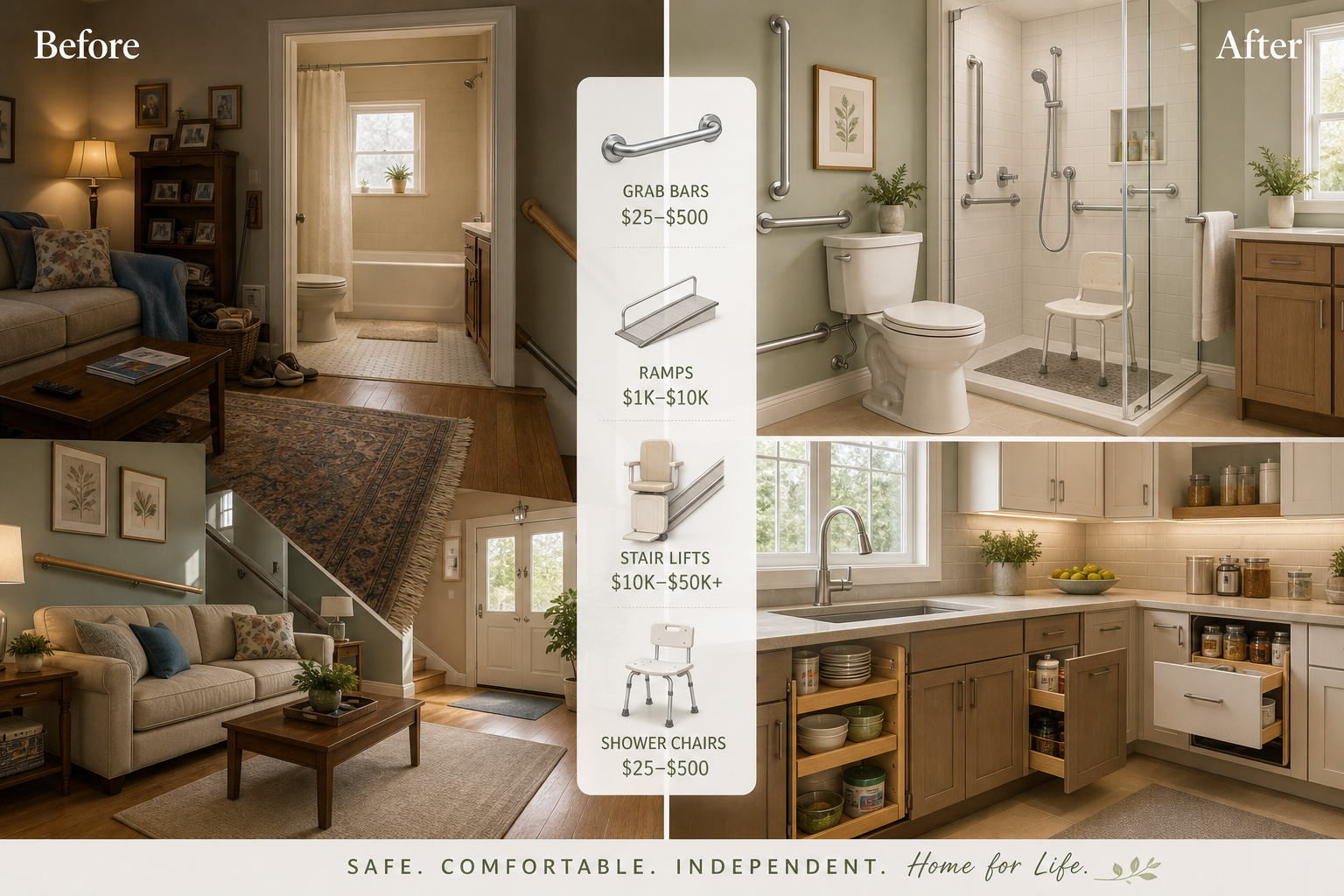
Low-Cost Upgrades ($25–$500): High-Impact Safety Improvements You Can Do This Month
The most effective modifications for preventing falls are also the least expensive. These are almost entirely DIY-friendly, require no contractor, and can be installed in an afternoon. They deliver the highest return on investment for fall risk reduction.
- Grab bars ($20–$150 each): A single grab bar near the toilet or inside the shower is the single most impactful modification you can make. One study found that people using grab bars in bathrooms were nearly 76% more likely to recover their balance than those without them. Install them at the toilet, inside and outside the shower or tub, and near the front door for balance while locking and unlocking.
- Lever-style door handles and faucets ($15–$60 each): Replacing round knobs with lever handles eliminates the need for grip strength. This is a simple swap that benefits anyone with arthritis, reduced hand strength, or limited dexterity.
- Handheld showerheads ($25–$80): A handheld showerhead on a slide bar allows bathing from a seated position, reducing the risk of falling while standing in a slippery tub. Paired with a shower chair, it transforms a high-risk activity into a safe one.
- Toilet seat risers ($30–$80): Standard toilets are often too low for older adults with hip or knee weakness. A riser adds 3–5 inches of height, making sitting and standing significantly easier and safer. The CDC reports that nearly 28% of bathroom injuries in adults 65 and older are toilet-related.
- Improved lighting ($10–$50 per fixture): Motion-sensor night-lights in bathrooms, hallways, and bedrooms eliminate the need to fumble for switches in the dark. Brighter, non-glare bulbs in existing fixtures reduce shadows and trip hazards. Light switches at both the top and bottom of stairs are essential.
- Non-slip mats and strips ($10–$40): Place non-slip mats or adhesive strips in the shower, tub, and on tile or hardwood floors in high-moisture areas. Remove loose throw rugs entirely — they are a leading cause of trips and falls.
Total cost for a full set of low-cost upgrades: roughly $200–$600 for an entire home. Most families can complete these in a single weekend. The National Institute on Aging recommends starting here — these changes address the most common fall hazards and require no professional help.
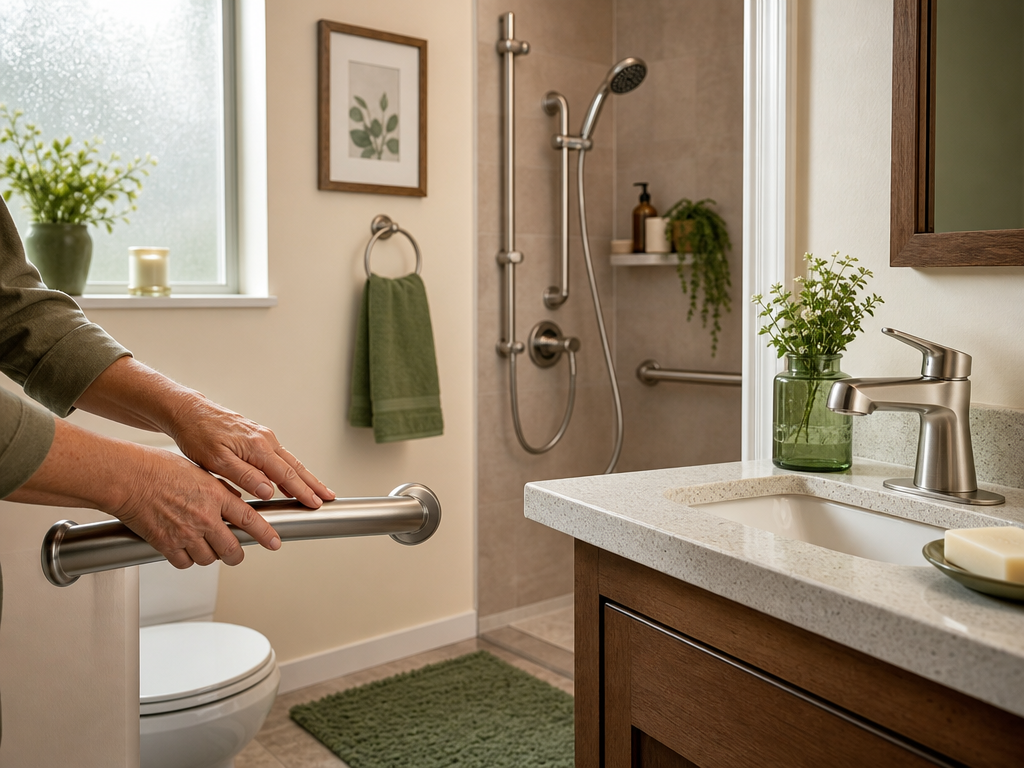
Mid-Range Projects ($1,000–$10,000): The Next Layer of Safety and Convenience
Once the low-cost safety net is in place, the next tier of modifications addresses mobility barriers that require a contractor. These projects typically take one to three days each and can be done one at a time, spreading the cost over months or years.
- Walk-in shower or curbless shower ($6,000–$12,000): Replacing a tub with a walk-in shower eliminates the need to step over a high threshold. A curbless design allows wheelchair or walker access. Combined with a built-in bench, grab bars, and a handheld showerhead, this is the single most impactful bathroom modification for long-term safety.
- Stair lift ($2,500–$8,000): For multi-story homes, a stair lift is often more practical and far less expensive than moving the primary bedroom to the first floor. Straight staircases cost less; curved or outdoor staircases require custom tracks and cost more. Installation typically takes one day.
- Modular ramp ($800–$3,000): A modular aluminum ramp provides step-free entry without the cost of a permanent concrete ramp. It can be installed in a few hours and removed if no longer needed. For homes with only one or two steps at the entry, a threshold ramp ($50–$200) may be sufficient.
- Comfort-height (ADA-height) toilet ($200–$600 plus installation): Standard toilets are 14–15 inches high. ADA-height toilets are 17–19 inches, matching the height of a standard chair. This reduces strain on knees and hips and makes transfers safer. Installation is straightforward for a plumber.
These mid-range projects address the most common mobility barriers that low-cost fixes cannot solve. The bathroom remains the highest-risk room in the house — occupational therapist Cheryl Hall told Wirecutter, "You're naked and wet. So it's definitely the most risky place." Prioritizing bathroom modifications is a consistent recommendation across all major sources.
High-Cost Structural Changes ($10,000–$50,000+): Planning for the Long Term
Major structural renovations are rarely urgent, but they become essential as mobility declines further. These projects require permits, professional contractors, and significant planning. The key is to plan them before a crisis forces a rushed, expensive decision.
- Doorway widening ($500–$2,000 per doorway): Standard interior doorways are 28–30 inches wide. Wheelchair and walker access requires at least 32 inches, with 36 inches preferred. Widening doorways is a structural job that may require moving electrical wiring or wall studs.
- First-floor bathroom addition ($15,000–$35,000): If the only full bathroom is upstairs, adding a first-floor bathroom is one of the most valuable modifications for aging in place. It eliminates the need to navigate stairs for bathing and toileting. This is a major renovation that requires plumbing, electrical, and sometimes foundation work.
- Kitchen renovation for accessibility ($8,000–$50,000): An accessible kitchen includes pull-out drawers instead of deep cabinets, lever-handle faucets, a side-by-side or drawer-style refrigerator, an induction cooktop (which stays cool to the touch), and countertops at multiple heights. The cost varies enormously based on the scope and quality of finishes.
- Residential elevator ($20,000–$50,000+): For homes where a stair lift is impractical or the user cannot transfer safely, a residential elevator provides full accessibility between floors. This is the most expensive single modification and requires significant structural work, but it can eliminate the need to move to a single-story home.
Home Modification Cost Comparison Table
The table below summarizes all modification types across cost tiers. Use it as a quick reference when discussing options with family members, occupational therapists, or contractors.
| Modification | Typical Cost Range | DIY or Contractor | Key Notes |
|---|---|---|---|
| Grab bars | $20–$150 each | DIY | Highest ROI for fall prevention; ~76% better balance recovery |
| Lever handles | $15–$60 each | DIY | Eliminates need for grip strength |
| Handheld showerhead | $25–$80 | DIY | Enables seated bathing |
| Toilet seat riser | $30–$80 | DIY | Reduces toilet-related injury risk (28% of bathroom injuries) |
| Motion-sensor night-lights | $10–$50 each | DIY | Prevents nighttime falls |
| Non-slip mats/strips | $10–$40 | DIY | Essential for wet surfaces |
| Comfort-height toilet | $200–$600 + install | Contractor | 17–19 inch seat height |
| Modular ramp | $800–$3,000 | Contractor | Step-free entry without permanent concrete |
| Stair lift (straight) | $2,500–$5,000 | Contractor | One-day installation |
| Stair lift (curved/outdoor) | $5,000–$8,000 | Contractor | Custom track required |
| Walk-in shower | $6,000–$12,000 | Contractor | Most impactful bathroom modification |
| Doorway widening | $500–$2,000 each | Contractor | Minimum 32 inches for wheelchair access |
| First-floor bathroom addition | $15,000–$35,000 | Contractor | Major renovation; eliminates stair use for bathing |
| Accessible kitchen renovation | $8,000–$50,000 | Contractor | Pull-out drawers, induction cooktop, lever faucets |
| Residential elevator | $20,000–$50,000+ | Contractor | Full multi-story accessibility |
A Phased Planning Strategy: Where to Start and How to Prioritize
The most common mistake families make is trying to do everything at once — or doing nothing because the full scope feels overwhelming. A phased strategy breaks the process into manageable steps that align with your budget and your parent's current needs.
- Start with a professional home assessment. An occupational therapist (OT) can evaluate your parent's home and identify the specific modifications that will have the greatest impact. Many health insurance plans cover OT home assessments. This is a critical first step before getting contractor quotes — it ensures you're spending money on the right changes, not just the most visible ones. For complex projects, a Certified Aging-in-Place Specialist (CAPS) can provide design and contractor guidance. See our comparison of OTs vs. CAPS specialists vs. general contractors to decide which professional fits your situation.
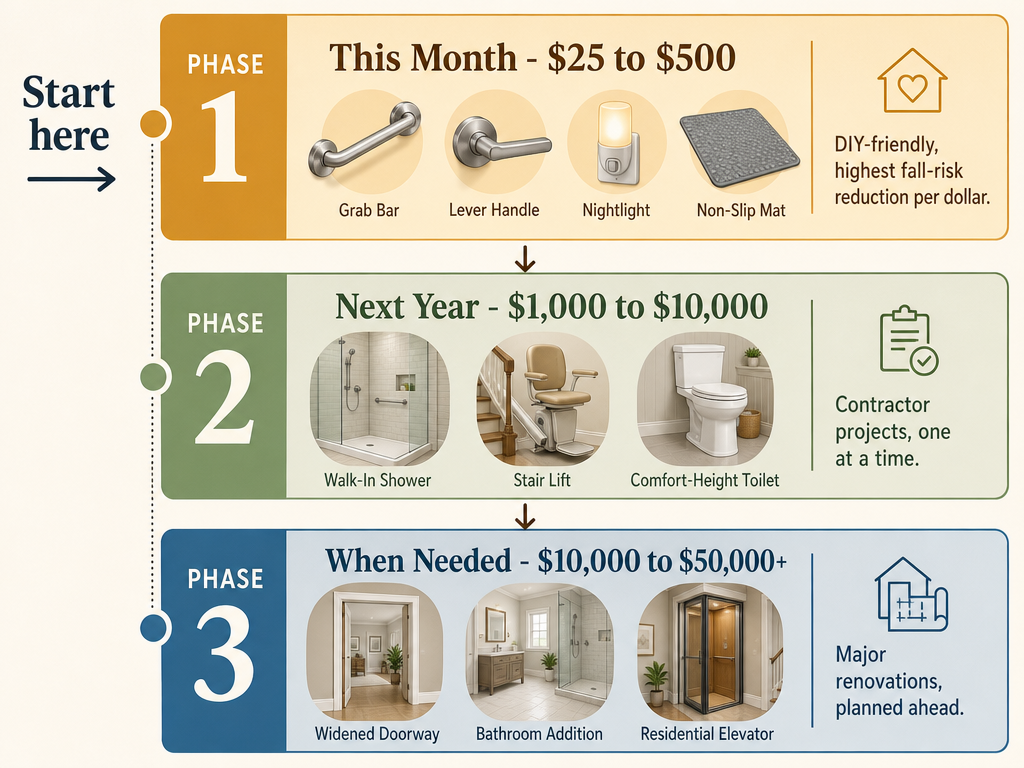
- Prioritize by fall risk. The bathroom is the most dangerous room in the house, followed by stairs and entryways. Address these areas first. Low-cost bathroom upgrades (grab bars, non-slip mats, handheld showerhead) can be done immediately. If a walk-in shower or stair lift is needed, plan it as the next priority.
- Budget incrementally by cost tier. Phase 1 (this month): spend $200–$600 on low-cost DIY upgrades. Phase 2 (next year): save for one mid-range project, such as a walk-in shower or stair lift. Phase 3 (when needed): plan major structural changes like a first-floor bathroom or doorway widening. This approach avoids the financial shock of a single large renovation.
- Reassess annually. Needs change as mobility, balance, and cognitive function evolve. A modification that isn't needed today may become essential next year. Schedule a yearly walk-through of the home using a room-by-room safety checklist. For a detailed timeline-based view, see our 10-Year Aging in Place Remodel Roadmap.
Funding Sources for Home Modifications: Grants, Loans, and Tax Deductions
Home modifications don't have to come entirely out of pocket. Several federal, state, and nonprofit programs provide grants, low-interest loans, or tax deductions for accessibility improvements. Eligibility varies by age, income, location, and disability status.
| Program | Maximum Amount | Best For |
|---|---|---|
| USDA Section 504 Home Repair Grant | Up to $10,000 | Low-income homeowners 62+ in rural areas; grants for safety repairs and modifications |
| USDA Section 504 Home Repair Loan | Up to $40,000 | Same eligibility as grant; 1% fixed interest, 20-year term |
| Medicaid Money Follows the Person (MFP) | Varies by state | Covers ramps, bathroom mods, stairlifts, doorway widening for those transitioning from institutions to home |
| HUD Title 1 Property Improvement Loan | Up to $25,000 (unsecured) or $60,000 (secured) | Homeowners for any property improvement, including accessibility modifications |
| VA Home Improvements and Structural Alterations (HISA) | Up to $2,000 (non-service-connected) or $6,800 (service-connected) | Veterans with disabilities; covers ramps, grab bars, bathroom modifications |
| VA Specially Adapted Housing (SAH) Grant | Varies (significant) | Veterans with severe service-connected disabilities; major home modifications |
| Rebuilding Together | Free (nonprofit) | Low-income seniors and veterans; free home repairs and modifications through local affiliates |
| Area Agencies on Aging (AAA) | Varies by state | Referrals to local programs; some offer direct grants or low-cost modification services |
| Tax deduction (IRS Publication 502) | Varies | Medical expenses including home modifications that accommodate a medical condition; must exceed 7.5% of AGI |
Start by contacting your local Area Agency on Aging — they can provide referrals to programs in your area and may offer direct assistance. For a detailed comparison of nonprofit versus government programs, see our guide on Habitat for Humanity vs. Government Home Repair Programs.
Your First Step: A Room-by-Room Safety Checklist
Before you buy a single grab bar or call a contractor, walk through the home with a structured safety checklist. The most effective first step is a room-by-room assessment that identifies the specific hazards in each area — loose rugs, poor lighting, missing handrails, slippery surfaces, and furniture that obstructs pathways.
Our Room-by-Room Fall Prevention Checklist covers every area of the home — bathroom, bedroom, stairs, kitchen, entryways, and outdoor spaces — and is aligned with the CDC STEADI model. It's designed to be printed and used as a working document. Start there, then use the cost tiers in this guide to prioritize and budget for the changes that will make the biggest difference.
Related reading
- The Caregiver's Guide to Home Modifications for Aging in Place: What Actually Works, What It Costs, and What to Do First
- The Evidence for Aging-in-Place Home Modifications: What Research Says About Fall Prevention, Independence, and Cost Savings
- What Home Modifications Does Habitat for Humanity Provide for Aging in Place? A Room-by-Room Guide
Need a professional assessment?
Find a CAPS-credentialed professional or local aging services through our outbound resource list — we never name or rank individual contractors.
Find Local HelpNoticed something outdated or inaccurate on this page? Flag a correction. We review every report against CDC, NIA, and AARP HomeFit guidance before updating a page.