
Room checklist
Why Seniors Are Choosing Home Modifications Over Downsizing
High mortgage rates make downsizing expensive for seniors who hold low-rate loans. This article explains why modifying the current home for safety often makes more financial sense, and how the lock-in effect shifts the calculus toward aging in place.
- Room
- bathroom
A senior can be sitting on valuable home equity, wanting fewer stairs and less upkeep, and still be unable to make downsizing pencil out. That is the awkward part of today’s housing market: the smaller home may have the smaller price tag, but the new mortgage can come with a much larger monthly payment.
As of June 18, 2026, Freddie Mac reported the average 30-year fixed mortgage rate at about 6.47%, a figure that should be checked again at publication because mortgage rates move weekly.[1] For an older homeowner carrying a mortgage below 4%, that gap is not an abstract market condition. It is the reason a move that looks sensible on paper can turn into a payment shock.
That is the practical impact of high mortgage rates on seniors downsizing: downsizing no longer automatically means lowering monthly costs. For many households, the first question is no longer “Can we sell this house?” It is “Can we afford to give up this mortgage?”
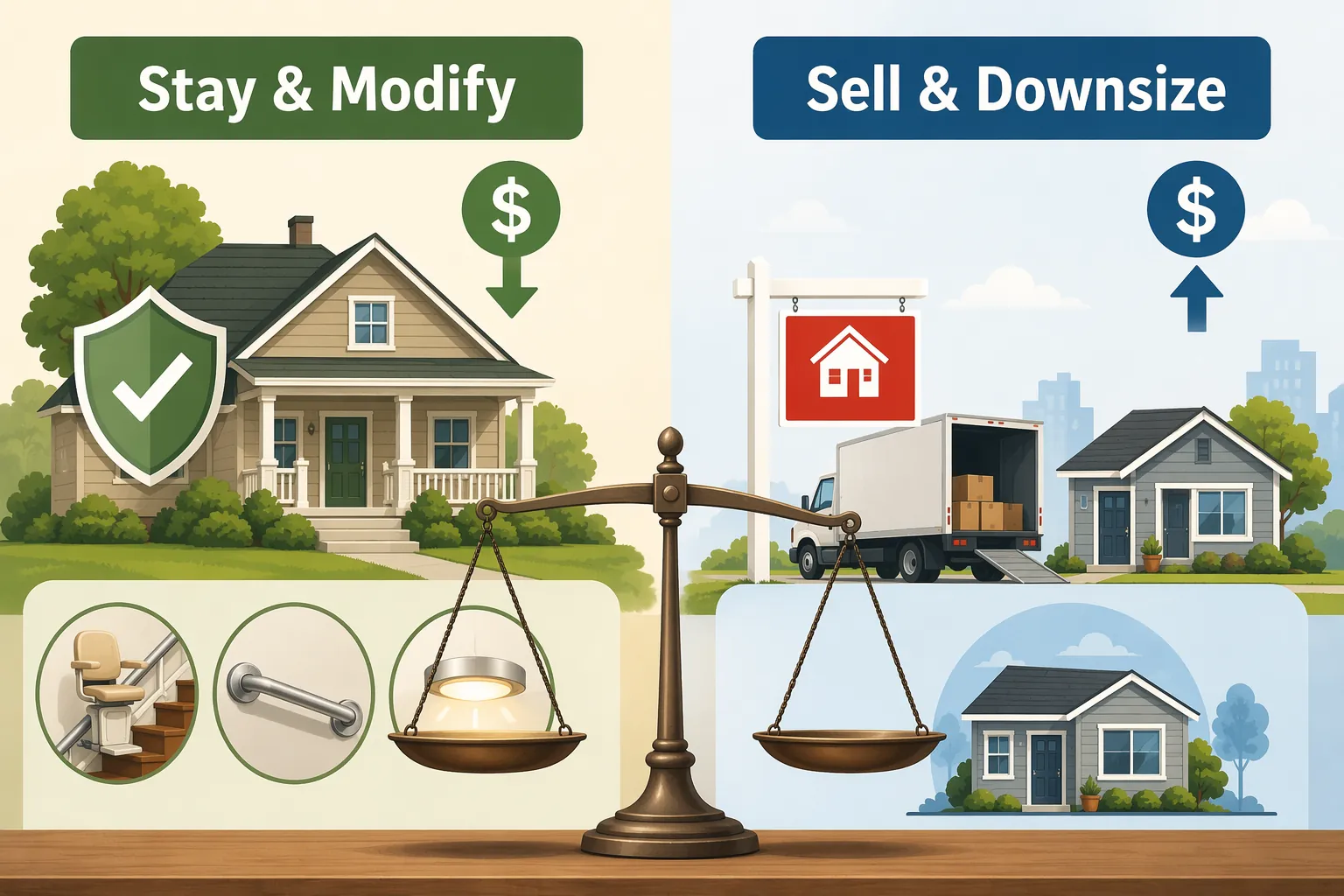
Why a Smaller Home Can Cost More Each Month
The lock-in problem is widespread enough that it cannot be treated as a personal budgeting oddity. Federal housing finance data show that 50.6% of outstanding mortgages are at 4% or lower, and 78% are at 6% or lower.[2] That means a large share of homeowners, including many older adults, are comparing a current loan that would be hard to replace with a new loan priced in a much higher rate environment.
The affordability pressure is showing up among boomers directly. A June 2025 Redfin/Ipsos survey found that 31% of baby boomer homeowners said they could not afford to buy a home like theirs today.[3] That does not mean every boomer should stay put. It does mean that “just sell and buy something smaller” skips the part where the replacement home has to be financed, taxed, insured, maintained, and lived in safely.
The monthly penalty can be large enough to swallow the expected savings from moving. Redfin and Realtor.com analyses put the payment penalty from giving up a low-rate mortgage in the range of about $511 to more than $1,000 per month, depending on the household and market assumptions.[4][5] That is not a rounding error. Over one year, even the lower end is more than $6,000; over several years, it can compete with the cost of serious safety work inside the existing home.
| Decision Item | What to Compare |
|---|---|
| Current mortgage | Remaining balance, interest rate, monthly principal and interest |
| Replacement home | New loan amount, current rate, taxes, insurance, HOA or condo fees |
| Move itself | Selling costs, moving expenses, temporary storage, repairs demanded by buyers |
| Current home safety | Stairs, bathroom access, lighting, entry steps, maintenance backlog |
| Modification plan | One-time safety upgrades versus the recurring payment increase from moving |
This is where families often talk past each other. One person is thinking about square footage. Another is thinking about the interest rate. Someone else is worrying about the bathroom floor or the stairs. The useful comparison puts all of those on the same page: monthly payment, one-time moving costs, one-time modification costs, and the consequences of waiting.
The Old House Is Not Free Just Because the Mortgage Is Cheap
A low-rate mortgage deserves respect, not worship. If the house has stairs the parent can barely manage, a tub they have to climb into, poor lighting, loose railings, and a roof problem everyone keeps postponing, the low rate is only one line in the decision. The house still has to function for the person living in it.
Maintenance is one reason downsizing remains attractive. Realtor.com, using Thumbtack data, reported average annual maintenance costs of $10,593 for a single-family home versus $3,258 for a condo.[5] That difference matters for an older homeowner who is paying for gutter cleaning, lawn care, snow removal, exterior repairs, and emergency fixes. A condo can trade some of that burden for monthly dues and association rules, which may be a fair trade or a bad one depending on the building.
Property taxes also complicate the math. State and local rules vary too much to generalize neatly. Some older homeowners have tax exemptions, assessment caps, or long-held homes with relatively favorable tax treatment. Others may be in homes where taxes have become part of the squeeze. A move can reset one cost while creating another, especially if the replacement home is in a different municipality or state.
So the honest version of the downsizing question is not whether the current home is emotionally meaningful. It is whether the current home can be made safe and manageable for less than the combined cost of a higher-rate purchase, moving, new fees, and the maintenance trade-offs that come with the next place.
Safety Modifications Are Now Part of the Mortgage Math
Home modifications used to get treated as a separate aging-in-place topic: grab bars over here, mortgage rates over there. That separation no longer works. If replacing a low-rate loan adds hundreds of dollars a month, then a one-time safety project becomes part of the financial comparison.
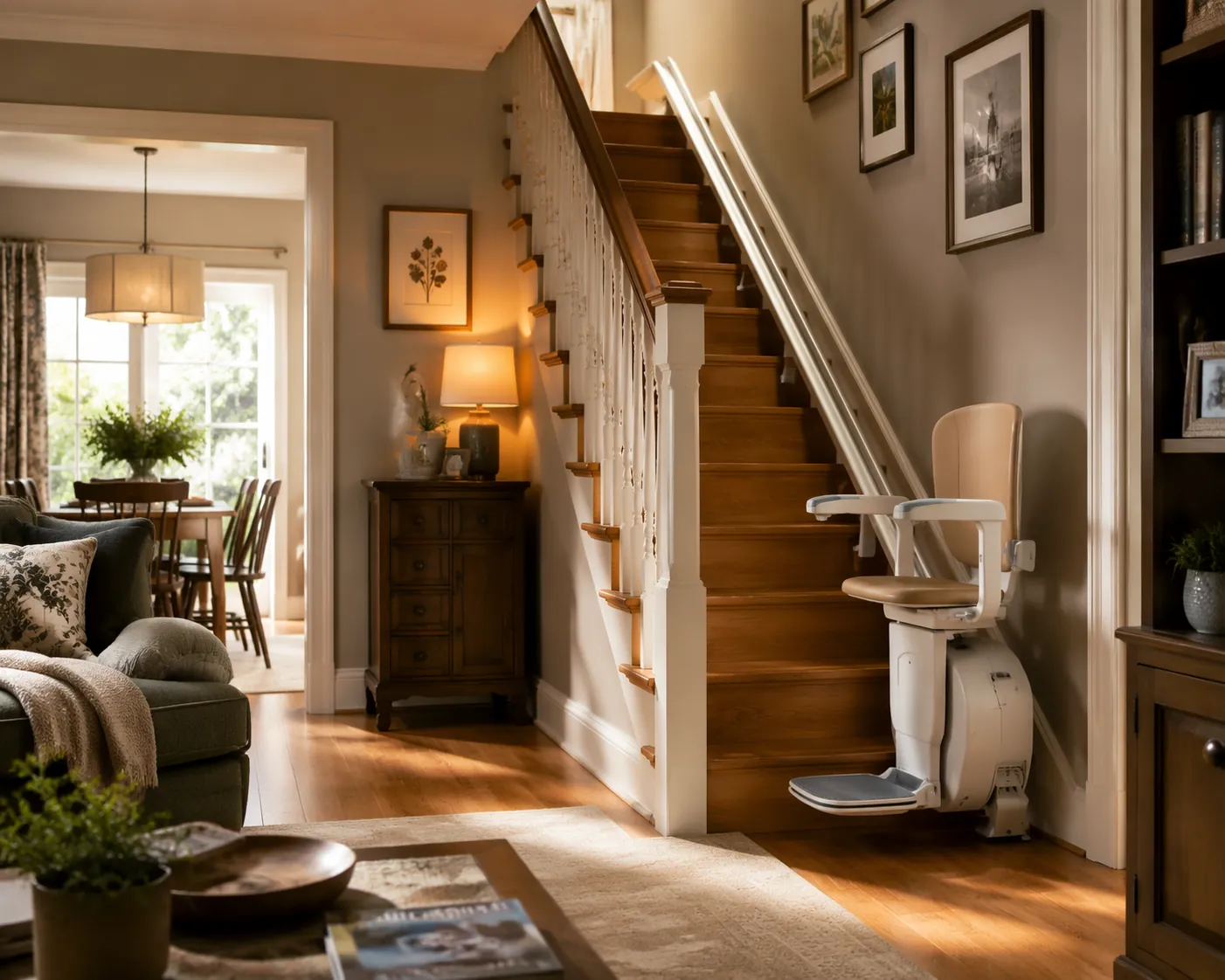
The numbers can be surprisingly concrete. Available cost estimates put typical stair lift costs at about $3,000 to $10,000 and bathroom grab bar work around $500 to $2,000, depending on scope and installation.[6] Those are not small checks. But they are one-time checks, and they should be compared with the recurring monthly cost of giving up a low mortgage rate.
A move has its own one-time costs as well. Average moving costs are about $17,000.[7] That figure can include more than the truck. Families often face decluttering help, packing, repairs before listing, temporary storage, overlapping housing costs, and new furnishings or accessibility changes in the next home. The smaller house is not automatically ready just because it is smaller.
A practical first pass looks like this: if the current home can be made safer with targeted work for less than the first year or two of the mortgage payment penalty, modifying first deserves serious consideration. That does not settle the question forever. It buys time without pretending that the stairs, bathroom, and lighting will somehow become less risky on their own.

The first modifications do not have to be glamorous. They usually start with the places where falls and daily strain are most likely: bathroom entry, shower stability, stair access, lighting, floor transitions, exterior steps, and the path from bedroom to bathroom at night. A CDC STEADI-based home fall prevention checklist is a useful starting point because it forces the discussion away from vague reassurance and toward specific hazards.
Equity Helps, but It Does Not Erase the Monthly Problem
Many older homeowners are not house-poor on paper. CoreLogic data put average tappable equity at about $212,000.[8] That equity can create options: paying for modifications, funding care, reducing a future loan amount, or making a move possible without as much borrowing.
But equity is not the same as monthly cash flow. A household can have substantial equity and still struggle with the payment on a replacement home if the new mortgage rate is much higher. Selling also turns hidden problems into closing-table problems. Deferred maintenance that was tolerable while living in the home may become a buyer discount, a repair credit, or a failed inspection issue.
That is why funding questions should come after the basic safety and housing comparison, not before it. If the home is basically suitable and the main issues are bathroom safety, stairs, lighting, and entry access, families can look at funding sources for home modifications. If the home requires a larger remodel, the better comparison may be an aging-in-place remodel cost versus assisted living decision guide, because at that point the question is no longer just mortgage rate versus grab bars.
Waiting Is Not Neutral
The most expensive family plan is often the one nobody calls a plan: wait until after the holidays, wait until spring, wait until the next fall, wait until the market improves. Sometimes waiting is reasonable. But waiting without doing minimum safety work shifts risk onto the person still carrying laundry on the stairs, stepping over the tub wall, changing lightbulbs, or walking across uneven flooring at night.
AARP’s July 2025 survey found that nearly 90% of older adults want to age in place.[9] That preference is understandable, and high mortgage rates may make it stronger. Still, preference is not a safety plan. Aging in place only works when the home is adjusted to the body that actually lives there now, not the body that bought the house decades ago.
Deferred maintenance also has a financial consequence. A January 2026 study from the Center for Retirement Research at Boston College found that 80-year-old sellers lose about $20,000 on sale because deferred maintenance catches up when the home is sold.[10] That is the part families tend to underestimate. Delaying repairs can make the home less safe while also reducing what the seller eventually gets.
The lesson is not to renovate everything immediately. It is to separate safety-critical work from cosmetic work. A dated kitchen can wait. A loose stair rail, a slippery shower, poor nighttime lighting, or exterior steps without a reliable handrail should not be parked in the same pile as “someday projects.”
What to Price Before Deciding to Sell
Before a senior gives up a low-rate mortgage, the family should price the real alternatives side by side. Not estimates shouted across a kitchen table. Actual numbers, even if some are rough at first.
- Current-home baseline: mortgage payment, property taxes, insurance, utilities, maintenance, and paid help for yardwork or household tasks.
- Move scenario: expected sale proceeds, selling costs, moving costs, new mortgage payment, taxes, insurance, HOA or condo fees, and any accessibility work needed in the new home.
- Modify-first scenario: stair access, bathroom safety, lighting, entry improvements, railings, floor transitions, and urgent maintenance that affects safety.
- Caregiver geography: who can respond after a fall, help after a procedure, check on repairs, or notice when the house is no longer manageable.
- Time horizon: whether the goal is to stay safely for one to five years, or whether the home must work for a much longer period.
This comparison changes the tone of the decision. Instead of arguing about whether Mom is “ready” or Dad is “stubborn,” the family can see whether a stair lift, bathroom work, better lighting, and paid maintenance would cost less than the first phase of selling and rebuying at a higher rate.
For scope and sequencing, it helps to separate professional roles. A Certified Aging-in-Place Specialist, occupational therapist, and general contractor do different things. A CAPS, OT, and contractor comparison guide can keep a family from hiring the wrong expert for the wrong question.
When Modifying First Makes the Most Sense
Modifying first is strongest when the home is basically workable, the mortgage is meaningfully below current rates, and the safety risks are specific enough to fix. That usually means the problem is not “this house can never work,” but “this bathroom, staircase, entry, lighting, and maintenance routine need attention now.”
It also makes sense when the senior has a realistic support network nearby and the house’s ongoing costs are still manageable. If a daughter lives 20 minutes away, the primary doctor is nearby, the neighborhood is familiar, and the unsafe features can be corrected, selling into a higher-rate market may solve fewer problems than it creates.
The work should be prioritized by consequence. Start with fall risk and access: bathroom stability, stair safety, entry steps, lighting, and flooring. Then look at maintenance that can turn into a safety issue, such as gutters, exterior walkways, railings, leaks, and electrical problems. Product choices can come later; the first job is identifying what actually reduces risk. A guide to home safety products for seniors is more useful after the hazards are named.
When Downsizing Still Deserves a Hard Look
There are cases where the rate lock should not win. A cheap mortgage does not make a fundamentally unsuitable house suitable. If every bedroom is upstairs, the only full bathroom is inaccessible, the driveway is dangerous in winter, or the home requires constant physical work the senior cannot manage, modification may only delay the inevitable.
Downsizing may also make sense when family support, medical care, or daily services are somewhere else. A safer home near the people who will actually show up can be worth a higher rate, especially if the current house is isolating the senior or forcing paid help to fill every gap.
The sale can also unlock a better care plan. If equity from the home can pay for a more appropriate setting, reduce caregiver strain, or prevent a series of emergency decisions, then the higher mortgage-rate environment is only one factor. It is a serious factor, but not the only one.
A Near-Term Decision Framework
For many seniors with low-rate mortgages, the disciplined near-term move is to modify first and re-evaluate downsizing later. That is especially true when the home can be made materially safer for less than the payment penalty and moving costs of selling now.
The decision does not have to be permanent. A family can do the minimum safety work now, document the remaining maintenance issues, watch mortgage and local housing conditions, and revisit the move decision in six to twelve months. That is different from doing nothing. It protects the person living in the house while preserving the option to sell later.
The cleanest test is this: if targeted modifications reduce immediate safety risk, preserve a low mortgage payment, and keep maintenance manageable for the next one to five years, staying and modifying is not avoidance. It is often the more careful first move. If the home cannot be made safe, the upkeep is already beyond reach, or the right care network is elsewhere, downsizing may still be the better plan despite the rate hit.
References
- Primary Mortgage Market Survey, Freddie Mac, June 18, 2026.
- National Mortgage Database Aggregate Statistics, Federal Housing Finance Agency.
- Nearly One-Third of Baby Boomer Homeowners Say They Couldn’t Afford to Buy Their Home Today, Redfin, June 2025.
- The Lock-In Effect Is Keeping Homeowners From Selling, Redfin.
- Housing Market Data and Research, Realtor.com.
- Aging-in-Place Home Modification Cost Data, HomeAdvisor.
- Average Moving Cost, moveBuddha.
- Homeowner Equity Insights, CoreLogic.
- 2025 Home and Community Preferences Survey, AARP, July 2025.
- The Effect of Aging on Home Sale Prices, Center for Retirement Research at Boston College, January 2026.
Related reading
Need a professional assessment?
Find a CAPS-credentialed professional or local aging services through our outbound resource list — we never name or rank individual contractors.
Find Local HelpNoticed something outdated or inaccurate on this page? Flag a correction. We review every report against CDC, NIA, and AARP HomeFit guidance before updating a page.