
Room checklist
Home Modifications for Aging in Place: What the Evidence Actually Says (And What It Doesn't)
A 2025 systematic review of 20 studies confirms home modifications reduce falls and improve independence — but not all changes are equally proven. This guide grades the evidence so families can prioritize what works and avoid marketing hype.
Why Evidence Matters for Home Modification Decisions
Walk into any home improvement store or scroll through senior care advertising, and you will see a parade of products promising to make a home safer: smart sensors that detect falls before they happen, voice-activated everything, bathtubs that open like car doors. The marketing is persuasive, and the emotional stakes are high. But when a family is facing a $10,000 bathroom renovation or a $5,000 stair lift, the question is not whether the product exists — it is whether the product actually works.
That is where the evidence comes in. A 2025 systematic review published in PMC, analyzing 20 studies using PRISMA 2020 methodology, provides the most comprehensive look yet at what home modifications actually deliver. The headline finding is encouraging: 13 of the 20 studies (65%) confirmed that home modifications are effective for reducing falls, improving functional independence, and generating cost savings. But the review also reveals a more nuanced picture — some interventions have rock-solid backing, while others, particularly smart home technologies, remain largely unproven despite aggressive marketing.
This article grades the evidence for the most common aging-in-place modifications. The goal is not to discourage investment in home safety — the data overwhelmingly supports it — but to help families prioritize their spending on changes with the strongest track record and approach less-proven options with appropriate caution.
What the Research Definitively Shows
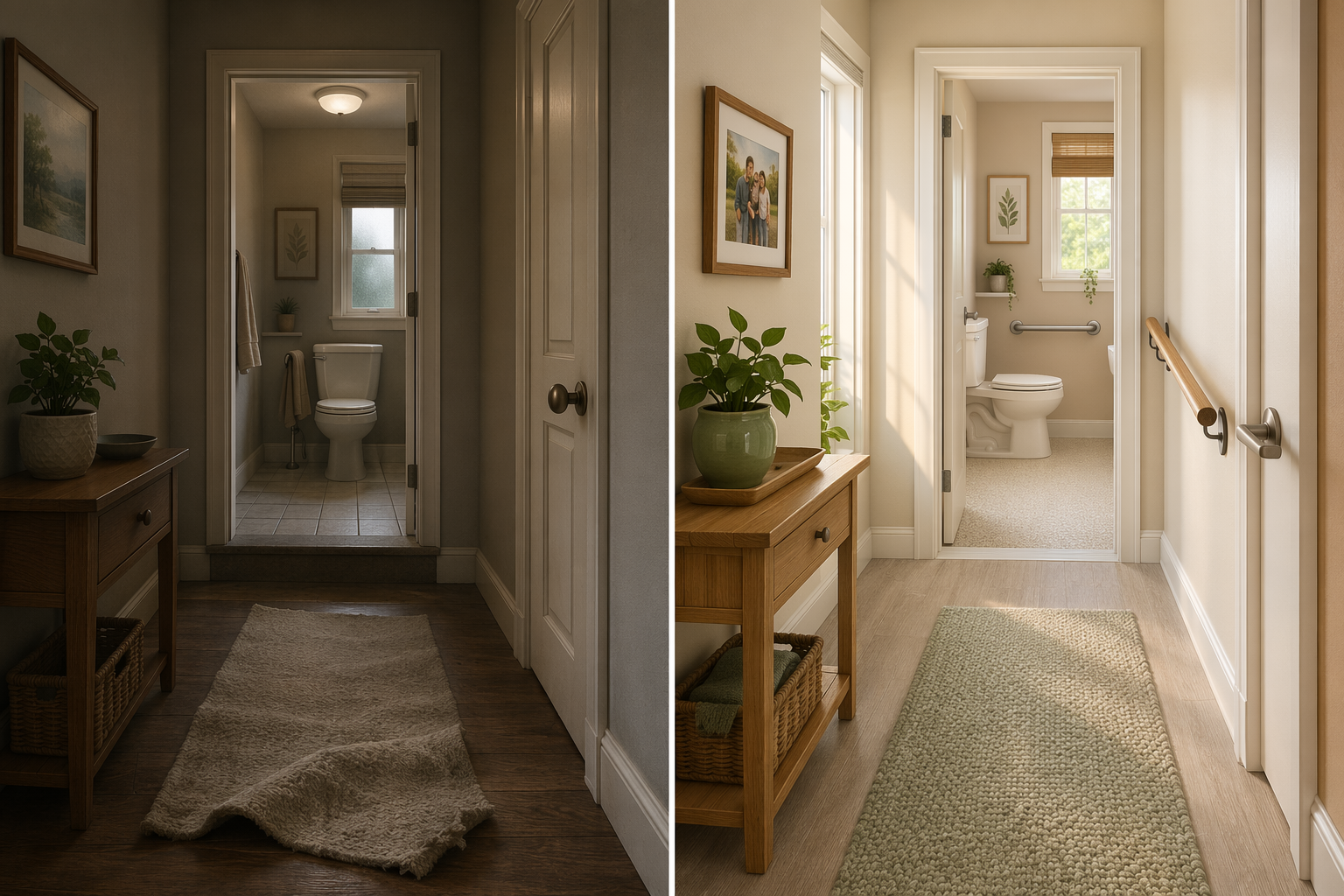
The 2025 review found that the strongest and most consistent evidence supports a specific set of modifications: bathroom grab bars, non-slip flooring, stair railings, and comprehensive bathroom modifications (such as walk-in showers and raised toilet seats). These interventions appear across multiple high-quality studies and show measurable, repeatable benefits.
Why do these particular modifications have such strong backing? Researchers point to several factors. They target high-risk activities — bathing, navigating stairs, and moving on wet or uneven surfaces — that account for a disproportionate share of falls. They are relatively simple to install and do not require the user to learn new technology or change established habits. And they address environmental hazards that are stable over time: a grab bar installed today will still be there and still function properly years from now.
The interventions with the strongest evidence base include:
- Bathroom grab bars and shower/tub seats: The most commonly added features, with 16.3% of older adults reporting grab bar installation in the 2006 Health and Retirement Study (HRS) module analyzed by HHS ASPE. Multiple studies in the 2025 review confirm their effectiveness for fall reduction.
- Stair railings and entrance railings: The second most common modification (14.4% of HRS respondents). The evidence consistently shows that secure, well-placed railings reduce fall risk on stairs and at entry points.
- Non-slip flooring and surface treatments: Particularly effective in bathrooms, kitchens, and entryways where water and weather create slick surfaces.
- Comprehensive bathroom modifications: Walk-in showers, raised toilet seats, and handheld showerheads — when installed together as part of a planned bathroom retrofit — show stronger outcomes than individual changes made in isolation.
These findings align with practical experience. The AARP aging-in-place checklist, for example, prioritizes the same interventions: walk-in showers, grab bars, non-slip strips, taller toilets, and sturdy stair railings. When the evidence and the practical guides agree, families can move forward with confidence.
Key Quantified Outcomes from High-Quality Studies
Beyond the general finding that modifications work, several individual studies within the 2025 review provide specific, quantified outcomes that help families understand what level of improvement to expect. These are not theoretical projections — they come from controlled trials, program evaluations, and national data sets.
| Study | Design | Key Finding | Sample Size | Quality Rating |
|---|---|---|---|---|
| Stark et al. (2017) | Randomized controlled trial | 39% reduction in falls for the home modification group vs. control | n = 300 | PEDro 9/10 (excellent) |
| Hawkins et al. (2024) | Program evaluation | 79% of participants reported no falls post-modification; falls per year dropped from 2.53 to 1.5 (p < 0.01) | Not specified in review | Program evaluation |
| Carnemolla et al. (2019) | Pre-post study | 42% reduction in weekly care hours (informal care ↓46%, formal care ↓16%) | n = 157 | Pre-post design |
| Hollinghurst et al. (2022) | National longitudinal data-linkage | 3% per quarter reduction in fall-related emergency admissions (OR = 0.97, p < 0.001) | n = 657,536 | Population-level study |
Related reading
- Home Modifications for Aging in Place: What the Evidence Actually Says About Fall Prevention and Independence
- The Evidence Behind Aging-in-Place Home Modifications: What the Research Says About Fall Reduction, Independence, and Cost-Effectiveness
- The Occupational Therapist’s Guide to Aging-in-Place Home Modifications: Evidence-Based Room-by-Room Safety Upgrades
Need a professional assessment?
Find a CAPS-credentialed professional or local aging services through our outbound resource list — we never name or rank individual contractors.
Find Local HelpNoticed something outdated or inaccurate on this page? Flag a correction. We review every report against CDC, NIA, and AARP HomeFit guidance before updating a page.