How to Pay for an Aging-in-Place Remodel: Grants, Loans, and Funding Sources
~$25–$50,000+ (national averages, varies by region)Reviewed: 2026-06-24
How to Pay for an Aging-in-Place Remodel: Grants, Loans, and Funding Sources
A comprehensive guide for family caregivers and older adults on fixed incomes, covering USDA grants, VA benefits, FHA loans, Medicaid waivers, tax deductions, and personal financing options to make home modifications affordable.
Estimated cost range: $25–$50,000+ (national averages, varies by region)
Potential funding: USDA Section 504, VA SAH/HISA grants, Medicaid HCBS waivers, FHA Title 1 loans, home equity/HELOC, reverse mortgages, tax deductions
Cost ranges are estimates. Verify eligibility directly with each program.
By Editorial Team
Most families assume an aging-in-place remodel costs $50,000 or more. Some projects do—a home elevator or a full first-floor addition can run that much. But the range is wider, and the numbers that matter most might be smaller than you think. I’ve seen too many articles promise easy government money without mentioning the waiting lists, income caps, or the fact that some grants are awarded by lottery. Let’s look at what each funding source actually demands, not just what it offers.
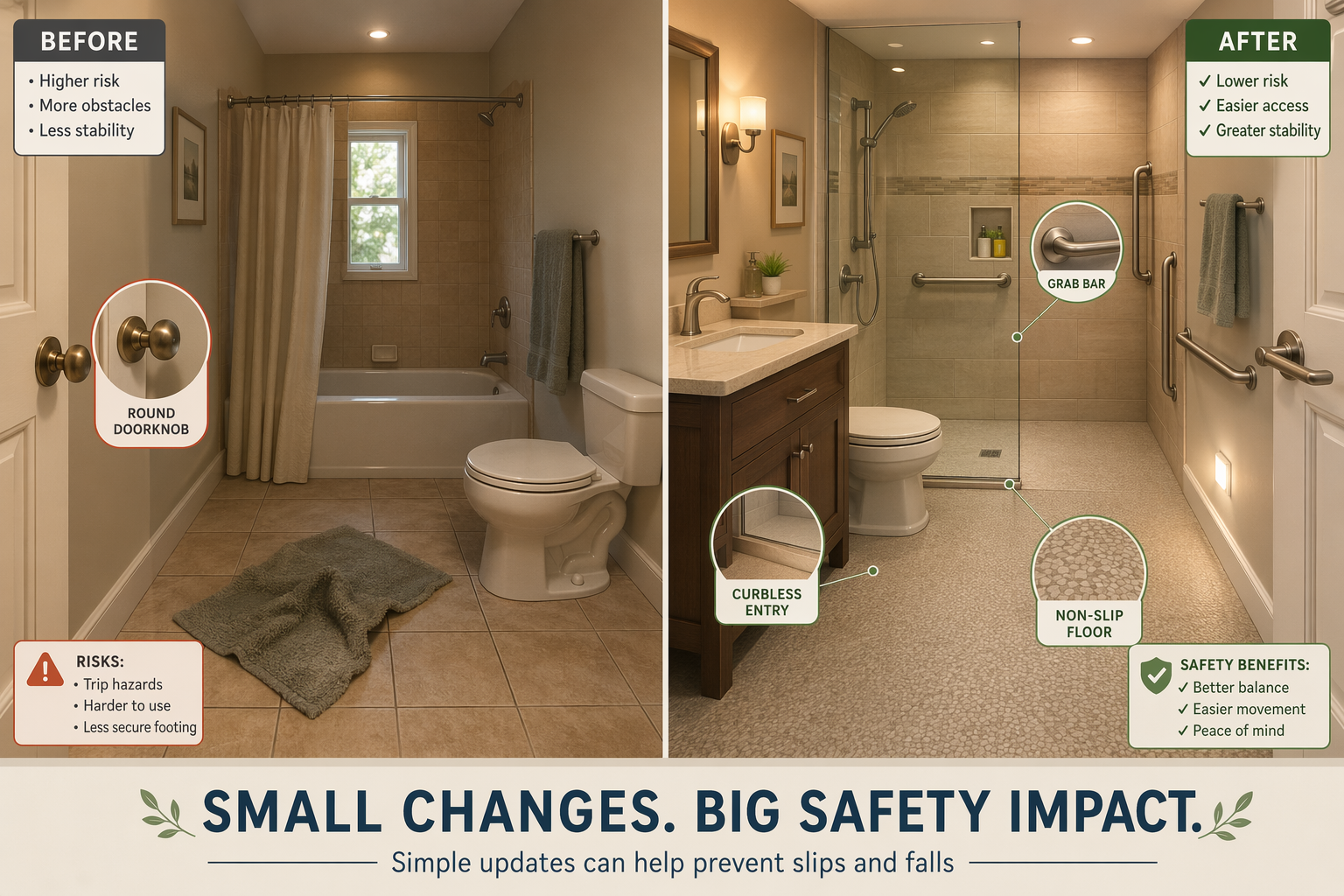
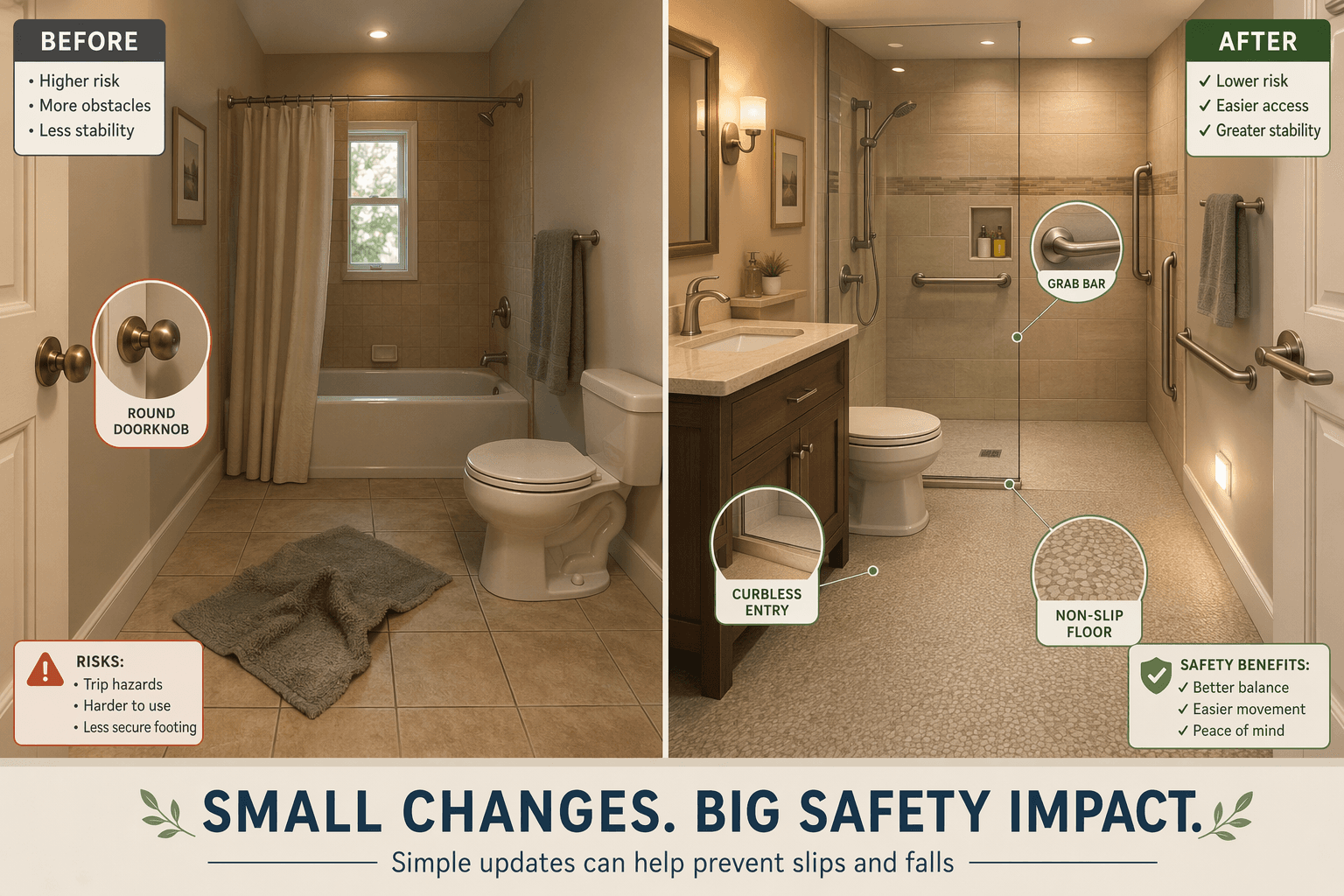
Low-cost upgrades like grab bars and improved lighting can dramatically reduce fall risk.
Start With the $25 Fixes (You Can Do This Week)
Before you worry about grants and loans, look at what you can change right now with very little money. None of these require a funding source—just a trip to the hardware store:
Grab bars in the shower and next to the toilet: $15–$80 each
Lever-style door handles (easier to operate than round knobs): $10–$40
Handheld showerhead: $20–$50
Motion‑sensor nightlights: $5–$20
Nonslip bath mats or adhesive strips: $5–$30
Decluttering high‑traffic areas: free
These upgrades fall into the $25–$500 range identified by ElderLife. They also align with what durable medical equipment—like ramps and lift chairs—can cover: the hardware itself might be partially reimbursed by insurance, but labor and installation typically are not. So start with what you can install yourself or with a handy neighbor. Do it this weekend.
Government Grants: Real Money, Real Restrictions
When people hear “government grant,” they imagine free money for anyone. The USDA Section 504 Home Repair program is real and generous, but it’s not for everyone.
According to the official USDA page, the program provides loans up to $40,000 to very‑low‑income homeowners for repairs and improvements, and grants up to $10,000 to elderly (age 62+) very‑low‑income homeowners to remove health and safety hazards. The interest rate on loans is fixed at 1% with a 20‑year term. Loans and grants can be combined for up to $50,000 in total assistance ($55,000 in presidentially declared disaster areas).
Here is the part many articles skip: the grant has a lifetime limit of $10,000 (or $15,000 in disaster areas). You cannot apply again next year for another $10,000. The income eligibility is very‑low‑income — you must meet the USDA definition, which varies by county but is often below 50% of the area median income. And you must live in a rural area. If you live in a suburb of a major city, you likely do not qualify.
I have seen older versions of this program quoted as a $7,500 grant and $20,000 loan. The official USDA page now lists the higher figures. If you come across older numbers, know that the authoritative source is the USDA's own site. Application can involve waiting lists — funds are not unlimited.
VA Specially Adapted Housing Grants: Not a Blank Check for All Veterans
The VA Specially Adapted Housing (SAH) grant can provide up to $81,080 for eligible veterans with service‑connected mobility disabilities. That number gets mentioned a lot. What often gets left out: it requires a service‑connected disability rating and approval based on medical need. Not all veterans qualify, and the application process requires documentation from your healthcare provider and a VA determination.
There is also the Home Improvements and Structural Alterations (HISA) grant. According to RetirementLiving, the HISA limit is $2,000 for veterans without a service‑connected disability and $6,800 for those with one. Both are far below the SAH grant but may be easier to access for some. Again, medical need approval is required. The $81,080 is not a starting line; it’s the finish line for a narrow group.
Medicaid HCBS Waivers: Your State May Help — or Not
Home and Community‑Based Services (HCBS) waivers under Medicaid can cover home modifications such as adaptive lighting, stair lifts, and accessible bathroom modifications. But the word “can” does a lot of work here. Coverage varies dramatically by state. Some states have waiting lists that run years. Others limit what they will pay for. There is no single national benefit you can count on.
The concrete action: call your state Medicaid office or your local Area Agency on Aging. Use the Eldercare Locator to find your area agency, then ask specifically about HCBS waivers that cover home modifications. Be ready to describe the needed changes and have income/asset figures handy. Don’t assume your state offers it until you’ve made that call.
Tax Deductions: The $500 Grab Bar Does Not Cut Your Tax Bill by $500
It is common to read that home modifications are tax deductible. The truth is more limited. Medical home modification expenses are deductible only if they qualify as a deductible medical expense, if total medical expenses exceed 7.5% of your adjusted gross income, and if you itemize deductions. Example: if your AGI is $40,000, the floor is $3,000. A $1,500 modification does not reduce your tax at all.
Also, if you receive a grant or loan that covers the same expense, that amount may affect what you can deduct. The rules are detailed; consult a tax professional or IRS Publication 502 before assuming a deduction.
Loans, Equity, and the Cautionary Fine Print
If grants and benefits don't cover the full cost, personal financing may fill the gap. The FHA Title 1 loan program allows single‑family homeowners to borrow up to $25,000 for home improvements, and loans under $7,500 often require no collateral. That is a straightforward option if your credit is decent.
Home equity loans and HELOCs are another common choice. Reverse mortgages can also fund modifications, but the fees and interest can be high, and tapping equity might reduce your eligibility for need‑based assistance programs. Combining a loan with a grant is possible, but be careful: using a grant may affect the deductibility of the same expense, and a loan could disqualify you from some need‑based grants. This is the kind of complexity a roundup usually flattens. You need to check with each program.
Building Your Realistic Funding Stack (and a Backup Plan)
After walking through the barriers, you may feel overwhelmed. That is fair. But here is the judgment I hope you reach: yes, it is achievable, but only with proactive work, realistic expectations, and a willingness to combine sources.
Do the low‑cost items first. Spend $200–$500 now on grab bars, lighting, and decluttering. This reduces fall risk immediately while you work on bigger funding.
Apply for grants and benefits simultaneously. USDA, VA, and Medicaid HCBS — each has its own timeline and eligibility. Apply to everything you might qualify for, but do not assume approval.
If approved, use that funding for high‑cost items (walk‑in shower, stair lift). If not, move to step 4.
Cover the remaining gap with an FHA Title 1 loan, home equity line, or personal savings. Keep the loan amount conservative.
Add a 10–15% contingency. CustomHome notes that aging‑in‑place remodels typically cost 10–25% more than a comparable standard remodel. Budget for surprises.
And consider working with a CAPS‑certified contractor (Certified Aging‑in‑Place Specialist). Good CAPS contractors understand the functional requirements of aging‑in‑place modifications and can help scope the work in a way that aligns with funding application requirements. They are not miracle workers, but they reduce the chance that your project fails a grant inspection.
A 2024 AARP survey found that 75% of adults 50 and older want to remain in their current homes as they age. Nearly half are already planning modifications. The funding to do it exists — but it is scattered across programs with different rules, income caps, and waiting lists. The barrier is not the lack of money; it is the work of finding and qualifying for it. That work is worth doing.
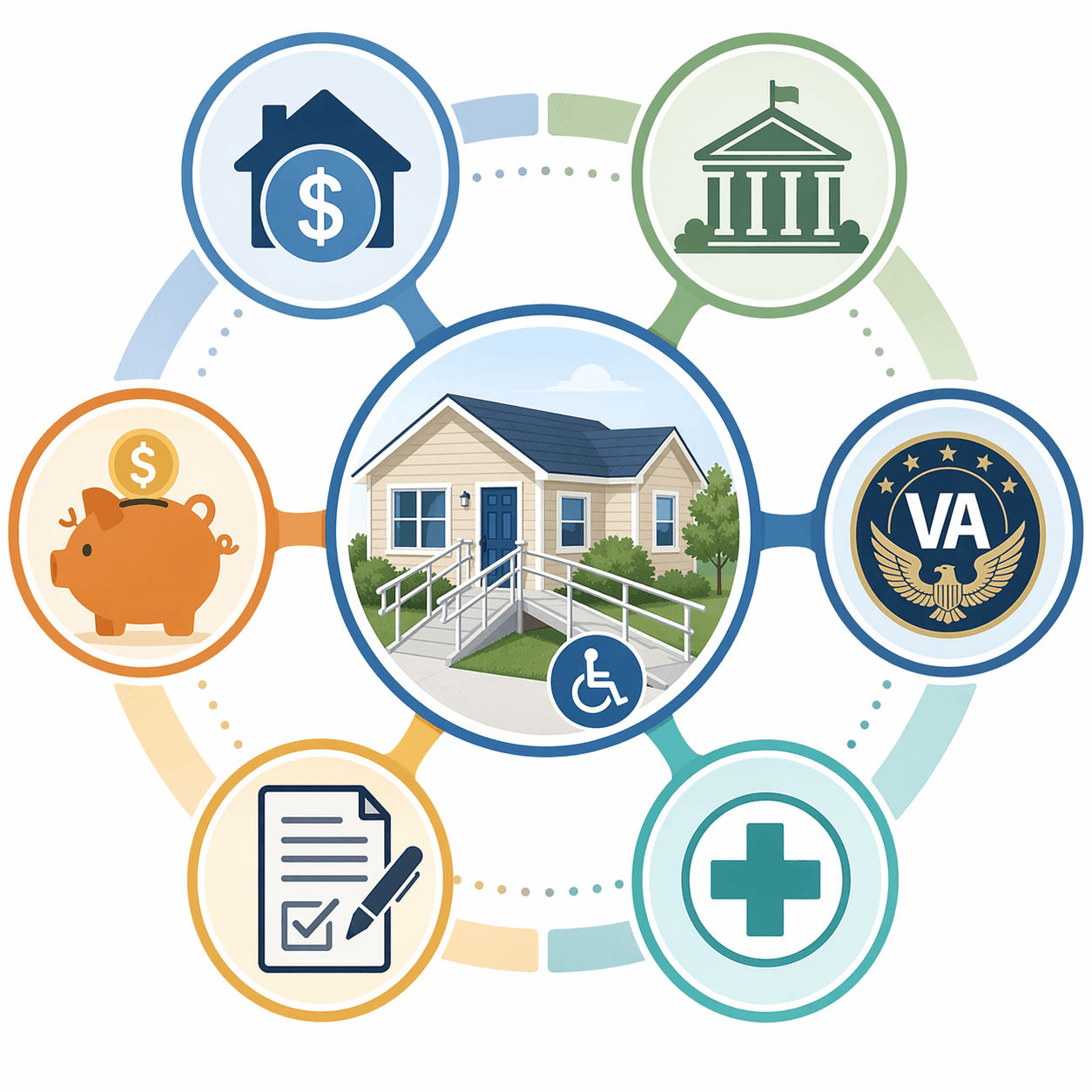
Funding sources for aging-in-place remodels vary widely; combining several is often the most realistic approach.

Comments
Join the discussion with an anonymous comment.