
Room checklist
Home Modifications That Withstand Hurricanes, Prevent Falls
Hurricane-hardening a senior's home works best when each retrofit — roof, openings, garage door, entry — also serves fall safety and mobility. A room-by-room priority guide with the dimensions, cost ranges, and state grant programs current as of 2026.
- Room
- entryway
- Modification type
- roof, thresholds, grab bars, lighting
- Install complexity
- structural retrofits typically need a CAPS-credentialed professional
- Reviewed by
- Editorial Team
Home modifications for seniors to withstand hurricanes work best when the house is treated as two projects at once: harden the building envelope, and keep the interior usable for someone who may be walking slower, using a walker, or relying on battery-backed devices after the storm. This is practical home-planning guidance, not medical, legal, or financial advice. The wrong order is easy to spot: a sealed roof does little for a parent who cannot reach the refuge room safely, and a new ramp is a bad trade if it creates a drainage or debris trap at the entry.
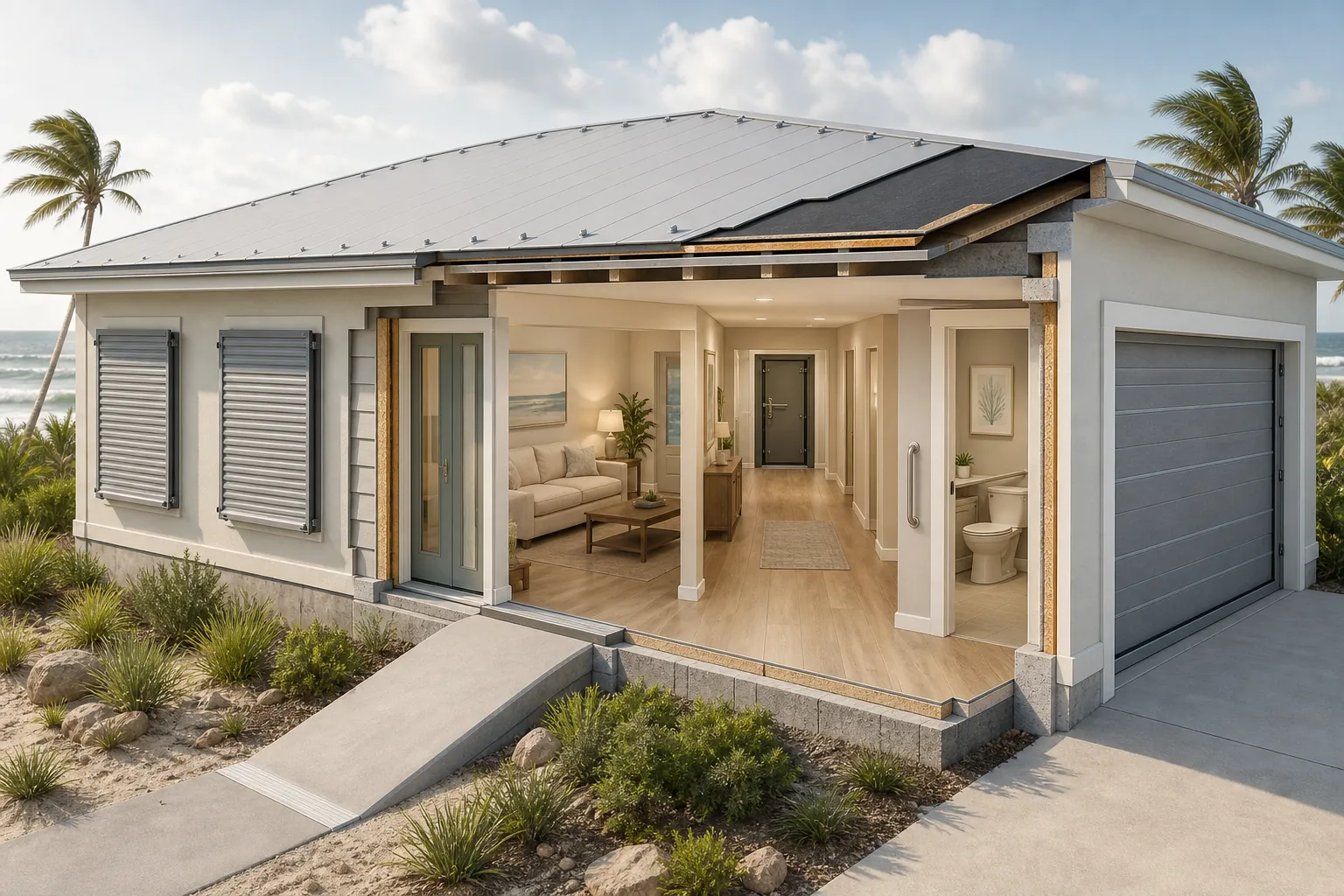
Start with the roof, because that is where the largest losses begin
The strongest quantified case in the current evidence is the roof. IBHS's Hurricane Sally study found that FORTIFIED homes had 55% to 74% lower loss frequency, 15% to 40% lower claim severity, and policyholder deductibles paid fell by more than 60% versus conventional construction [1].
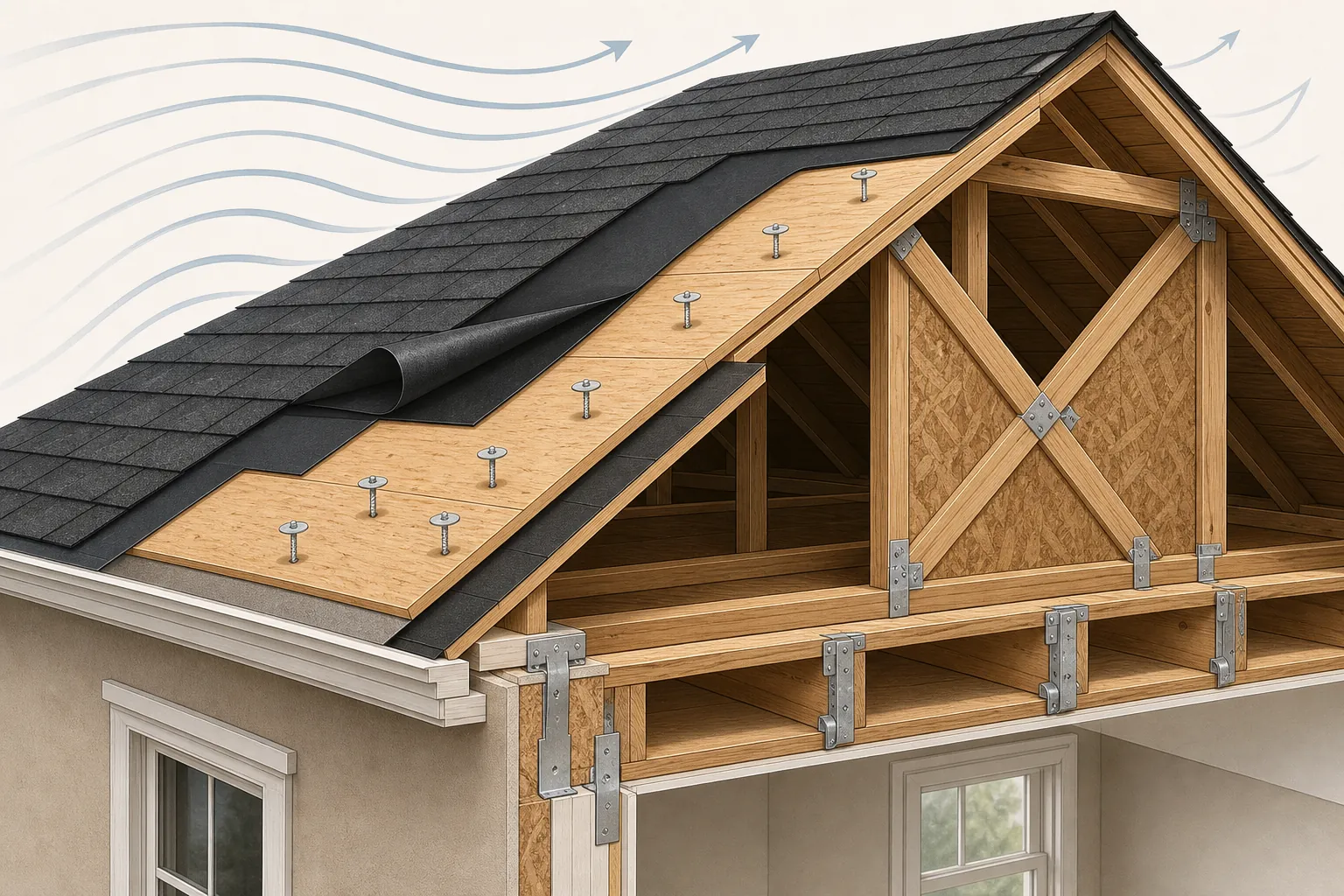
That is why the first spend is usually a wind-mitigation inspection, not new decor. IBHS post-storm analyses have repeatedly found roof damage in 70% to 90% of related claims, and the retrofit targets it keeps surfacing are the same ones contractors list first: roof deck attachment, roof-to-wall connections, gable-end bracing, and garage-door reinforcement [1][2].
- Verify the roof deck attachment and sealing before anything cosmetic.
- Check roof-to-wall connections and clips so the roof does not unzip at the edge.
- Brace gable ends if the house has them; older roofs often need this more than they need another finish upgrade.
- Reinforce the garage door, since one failure there can undermine the rest of the envelope.
- Choose details that do not make future maintenance depend on a ladder-heavy, one-person job.
Openings and the entry should be hardened without making the house harder to use
Openings are the next failure point, but they are also the place where many storm-ready fixes accidentally break daily mobility. AARP's hurricane guidance favors permanent shutters or 5/8-inch plywood for opening protection, and it makes sense for older-adult planning because the household has to be self-sufficient enough to handle a storm without a last-minute hardware-store scramble [4].
The aging-in-place numbers worth preserving are the ones that keep a front door, hallway, and bathroom passable even if debris, a walker, or darkness are in the way [3].
| Area | Keep it storm-hardened | Keep it usable for aging in place |
|---|---|---|
| Entry threshold | Bevel the exterior transition so water and debris do not collect at the door | Exterior threshold no higher than 1/2 inch; interior threshold no higher than 1/4 inch [3] |
| Doorways | Let storm hardware and protection panels work without jamming the route | At least 32 inches clear [3] |
| Ramp or step-free entry | Replace one risky step without creating a new hazard | Ramp no steeper than 1:12 [3] |
| Bathroom near the refuge area | Keep the grab-bar wall usable after the storm | Wall backing rated for 250–300 lbs [3] |
If the existing entry is already too steep or too narrow, the better fix is usually a no-step threshold or a properly built ramp, not a patched step that forces a sideways turn with a walker. The same applies to the garage door: once the panel fails, the rest of the envelope is much harder to protect, which is why NAHB's retrofit guidance puts garage-door bracing in the same conversation as roof connectors and gable-end bracing [2].
Build the path to refuge before the power goes out
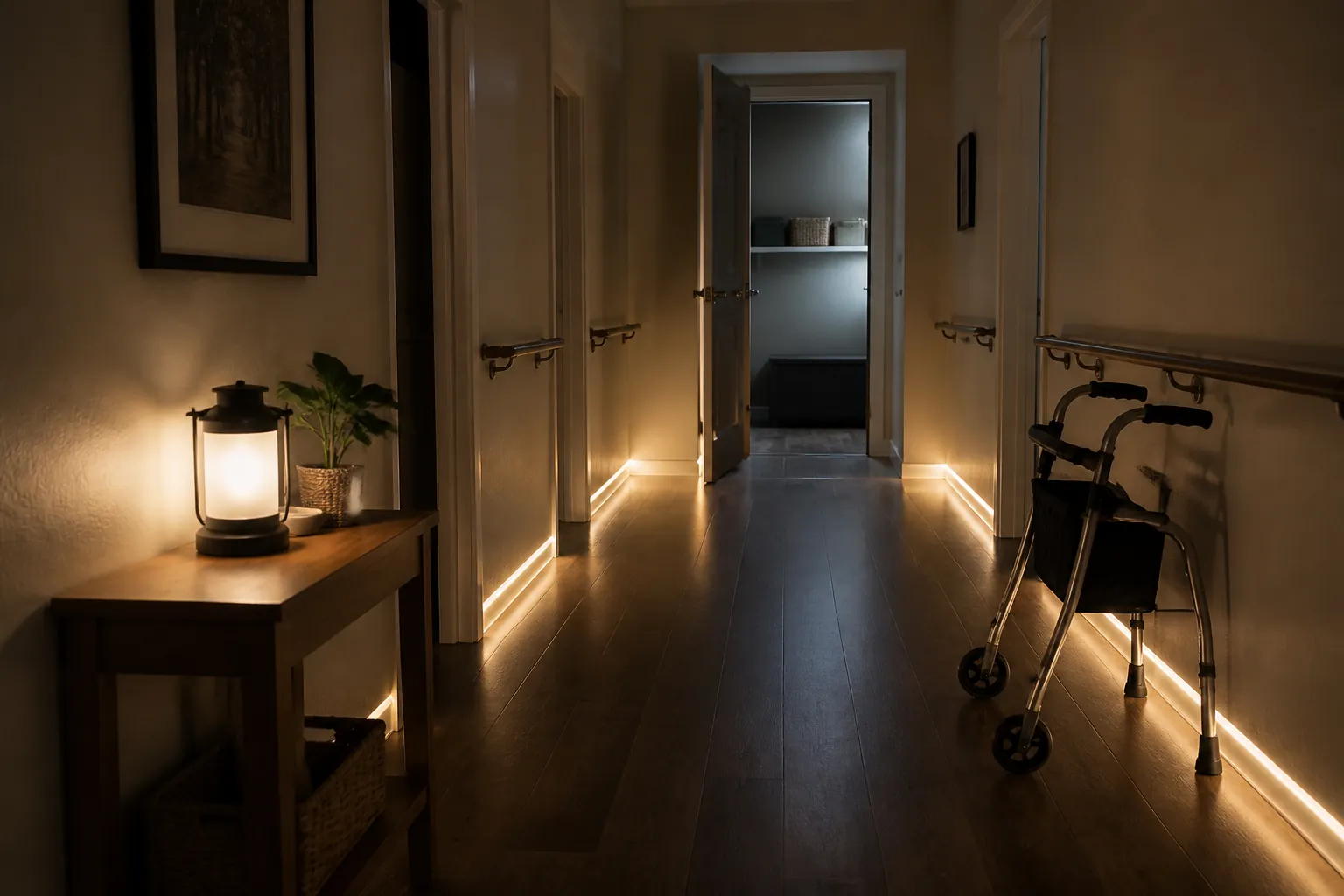
The interior route matters because storm survival is not only about the shell. FEMA's safe-room guidance is the right reference point for the refuge itself, while Ready.gov's older-adult guidance and CDC hurricane safety pages are the practical reminder to keep medications, contacts, chargers, and the route to the refuge reachable when the lights are out [7][8][9].
The house needs one clear path from the entry to the room where someone can wait safely with a walker or wheelchair, and it should not depend on daylight. Battery LED strips, rechargeable lanterns, and other low-glare backup light sources do double duty here: they reduce fall risk on ordinary nights and keep the route visible during outage conditions. The same logic applies to the bathroom nearest the refuge area, where a properly backed grab bar matters more than a decorative towel bar ever will [3].
- Keep the hallway, bedroom door, and bathroom approach clear enough for the walker to pass without turning sideways.
- Place a battery lantern, flashlight, and spare batteries where they can be reached without bending or climbing.
- Use reinforced backing for any grab bar that needs to support real body weight.
- Make sure the refuge room can be reached without relying on stairs if the home layout allows it.
If medical devices depend on power, the backup plan needs to be tested before hurricane season peaks, not discovered during it. The American Lung Association's outage guidance is a useful reminder that some households need a generator or battery backup plan matched to the devices actually in use, not a generic emergency kit [10].
Use the grants and inspections as sequencing tools, not as the plan itself
As of 2026-08-25, the programs that matter most are the ones that help you start with inspection and then fund the roof-layer work first. My Safe Florida Home offers a free wind-mitigation inspection and matching grants up to $10,000 [5]. SC Safe Home lists grants up to $7,500, but it is not currently accepting applications [6]. Alabama homeowners should also check Strengthen Alabama Homes directly, since state program terms can change and should not be assumed current from one season to the next.
| Program | Current 2026 note | What to use it for |
|---|---|---|
| My Safe Florida Home | Free wind-mitigation inspection; matching grants up to $10,000 [5] | Inspection and roof/opening hardening |
| SC Safe Home | Grants up to $7,500; not currently accepting applications [6] | Wind-mitigation improvements when the program reopens |
| Strengthen Alabama Homes | Check current availability and award terms directly | State-level wind-hardening support |
Insurance credits tied to wind mitigation or FORTIFIED documentation can help offset part of the spend, but they are usually a byproduct of the retrofit record, not a reason to choose the wrong project order. If you want a broader budgeting frame, the site's home modification costs and funding guide is the better companion than a generic storm-prep checklist. When the work reaches roof deck, connectors, shutters, or garage-door reinforcement, compare contractor scope in choosing between a CAPS specialist and a general contractor before signing.
The practical sequence is stubbornly unglamorous: inspect first, fix the roof and roof edges, protect openings and the garage, then confirm that the entry, hallway, bathroom, and refuge room still work for a slower body in the dark. That is the retrofit that matters because it survives storm season without making every ordinary day harder.
References
- Study Shows IBHS's FORTIFIED Program Reduced Hurricane Sally Damage — IBHS
- Retrofit Improvements — NAHB
- Aging-In-Place Remodeling Checklist — NAHB
- Hurricane Survival Preparedness Tips — AARP
- My Safe Florida Home — My Safe Florida Home
- SC Safe Home — South Carolina Department of Insurance
- Safe Rooms — FEMA
- Older Adults — Ready.gov
- Hurricanes: Safety — CDC
- Power Outage Preparation — American Lung Association
Related reading
This change typically needs a professional
Find a CAPS-credentialed professional or local aging services through our outbound resource list — we never name or rank individual contractors.
Find Local HelpNoticed something outdated or inaccurate on this page? Flag a correction. We review every report against CDC, NIA, and AARP HomeFit guidance before updating a page.