
Room checklist
Where to Start: A Prioritization Framework for Aging-in-Place Home Modifications
This guide helps overwhelmed families sort home modifications into a tiered plan: critical safety fixes done first, high-impact updates next, with a concrete 12-month timeline and real-world cost estimates for each phase.
A family usually does not search for aging in place home modifications because everything feels manageable. They search after seeing a parent grab the towel bar for balance, after a discharge planner says “make the home safer,” or after realizing the bedroom is upstairs, the bathroom is slick, and every plate is stored above shoulder height.
Then the checklist appears. Remove throw rugs. Add grab bars. Replace the tub. Widen doors. Install a stair lift. Change the flooring. Add lighting. Modify the kitchen. Suddenly a house looks like 50 separate emergencies.
That feeling is not a personal failure. The gap is real: Choice Mutual’s 2026 statistics page reports that 90% of U.S. homes lack adequate aging-in-place features, while citing National Poll on Healthy Aging findings that 85% of seniors who plan to stay home do not believe they need significant modifications and only 18% of adults 50 and older have made any home modifications.[1] The source is an insurance lead-generation site, so the numbers should be traced back to the original sources it cites, but the pattern is still useful: many families discover the danger late, and many older adults have not prepared the home before mobility changes arrive.
A master checklist is not enough at that point. What helps is a sequence: what to do today, what to do this month, what to price this quarter, and what belongs in a longer renovation plan.
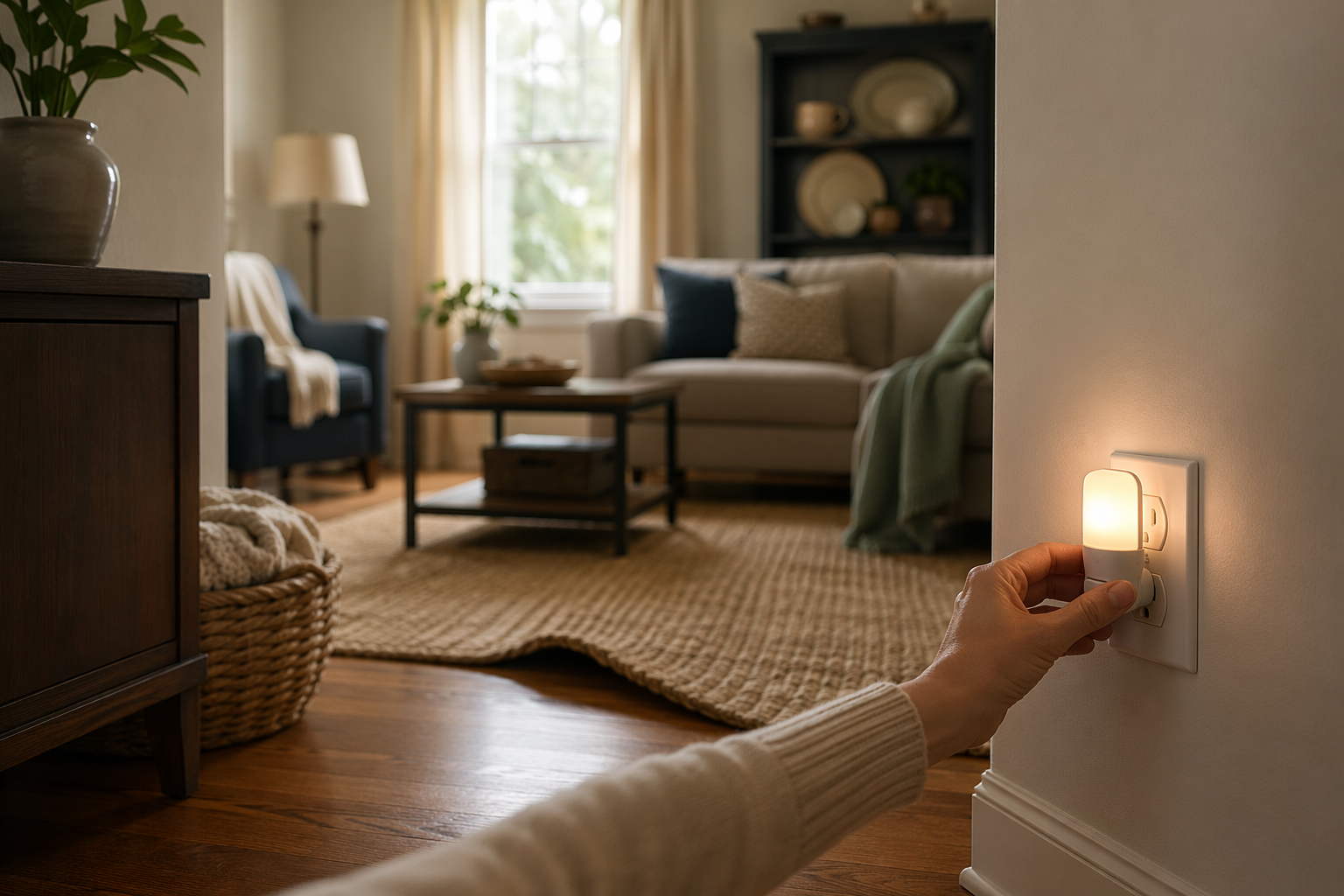
The four-tier way to decide what comes first
This framework is a practical synthesis, not a ranking handed down by one study. It uses the strongest injury-risk clues, the most common home barriers, and real-world planning ranges to separate urgent fixes from expensive structural work.
| Tier | When to act | Typical modifications | Planning range |
|---|---|---|---|
| Critical | Today to 2 weeks | Remove throw rugs, add night-lights, clear paths, lower daily-use items, install correctly placed grab bars and repair missing or loose handrails | $0–$500 per item |
| High | 2 weeks to 3 months | Toilet riser or comfort-height toilet, non-slip bath and flooring surfaces, improved stair and hallway lighting, second stair handrail where needed | $25–$1,500+ per item |
| Moderate | 3 to 9 months | Zero-step entry, walk-in shower conversion, targeted flooring replacement, lever handles, doorway and threshold improvements | $1,000–$10,000+ |
| Future structural | 6 to 12 months and beyond | Stair lift, major bathroom remodel, door widening throughout, first-floor bedroom or bathroom addition, full kitchen remodel | $10,000–$50,000+ |
The cost bands above are drawn from national home-modification cost discussions by ElderLife Financial and NerdWallet, which place low-cost safety fixes in the tens to hundreds of dollars, mid-range accessibility projects in the thousands, and major structural changes into five-figure territory.[5][6] Treat them as a yellow-pad budget, not a contractor’s promise.
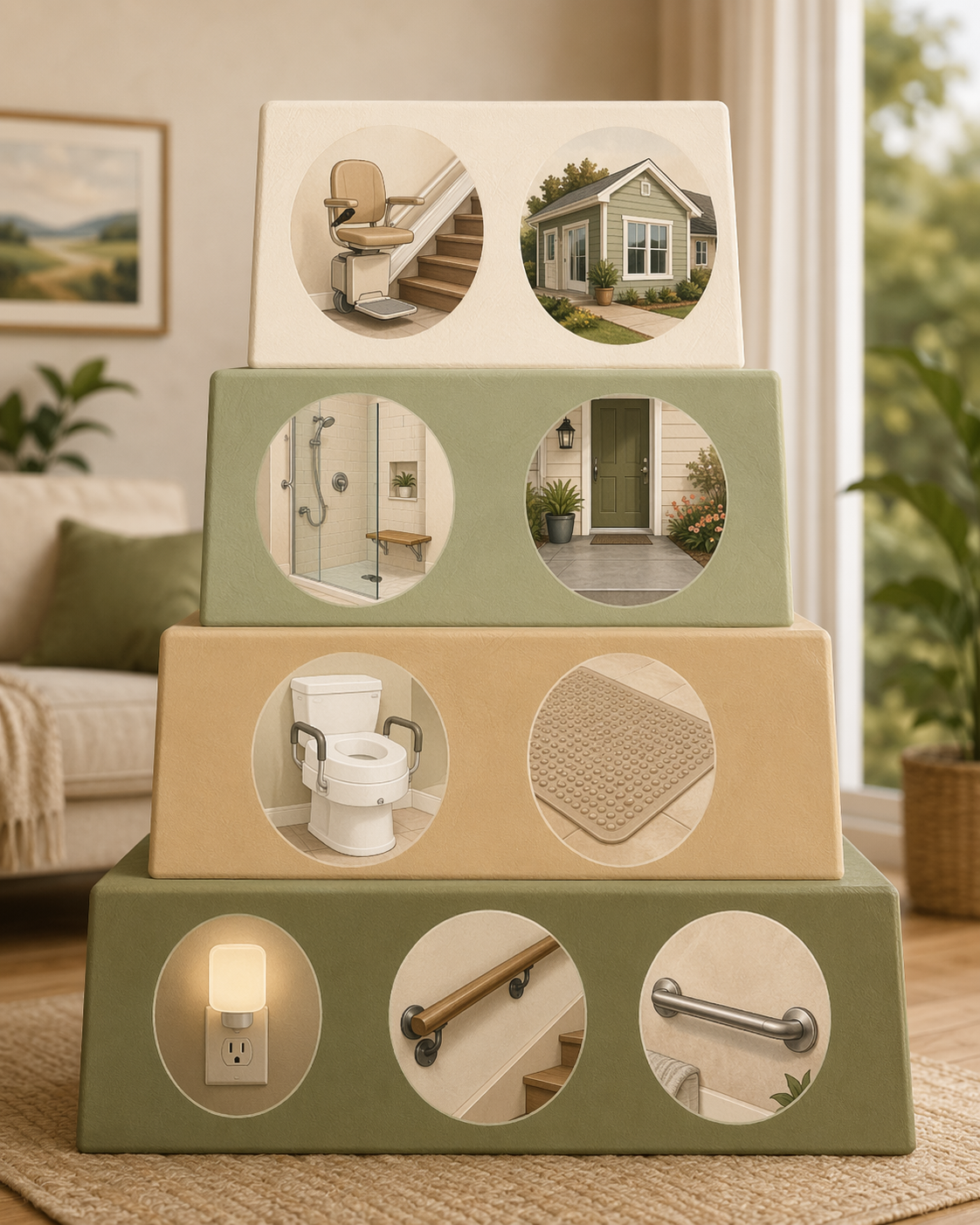
Critical tier: remove the hazards that can cause the next fall
The first tier is not glamorous. It is the work a tired daughter, spouse, neighbor, or handyman can often start before the renovation conversation has even begun: improve lighting, remove trip hazards, create stable handholds, and stop asking an older person to climb, reach, twist, or balance in predictable danger zones.
Start with the walking path used at night: bed to bathroom, bathroom to kitchen, favorite chair to front door. Add night-lights or motion-sensor lighting, remove or secure loose throw rugs, move cords, clear clutter from hallways, and make sure footwear is not becoming another hazard. These changes are usually inexpensive, and some cost nothing.
Then go straight to the bathroom. Wirecutter’s room-by-room aging-in-place guide cites research indicating that grab bars can improve balance recovery by 76%, and it also notes CDC findings that nearly 28% of bathroom injuries among people 65 and older are related to the toilet.[2] That is why a grab bar beside the toilet and properly placed bars in the tub or shower often outrank prettier projects.
Do not let the word “grab bar” mean “anything screwed somewhere near the shower.” Placement, wall backing, fasteners, height, and the user’s actual movement pattern matter. A decorative towel bar is not a safety device. If the person is already unsteady, pushing up from the toilet, or using the shower wall for balance, this is a correct-installation job, not a guessing job.
- Remove loose throw rugs or secure necessary rugs with appropriate non-slip backing.
- Add night-lights on the bedroom-to-bathroom route and in dim hallways.
- Install grab bars where the person actually transfers: toilet, shower entry, and bathing area.
- Repair loose railings and add a missing handrail on stairs used daily.
- Lower plates, cups, medications, toiletries, and frequently used cooking items to waist-to-shoulder height.
- Clear the main walking paths wide enough for the person’s current or likely mobility aid.
That last kitchen item sounds small until someone has watched a parent climb onto tiptoe for a coffee mug. Wirecutter quotes occupational therapist Matt Haase saying, “90% of homes I go to, plates and cups are stored up high.”[2] Moving dishes to a lower shelf is not a renovation. It is still a home modification, and it may be the one that gets done today.
If the family is arriving after a recent fall, the sequence may need to be even tighter. A post-fall home visit should focus first on the exact route, room, transfer, and time of day involved in the fall. For a crisis-oriented sequence, use the After a Fall: A Time-Based Triage Guide alongside this plan.
High-impact tier: make transfers and stairs safer this month
Once the obvious trip hazards and missing handholds are handled, the next question is where the person changes position: sitting to standing, stepping into a tub, climbing stairs, turning in a tight bathroom, or reaching across a counter. Falls often cluster around these ordinary movements because the home asks for strength and balance at the exact moment the person has the least margin.
The toilet deserves special attention here. HHS/ASPE’s most comprehensive national study on home modifications and functioning, based on the 2006 Health and Retirement Study wave, found that 1 in 4 near-elderly and older adults had a mobility limitation with an unmodified barrier in the home; the most common barrier was around the toilet area, at 20.3%.[3] The data is older, so it should not be treated as a perfect current prevalence estimate, but it still points to a pattern families recognize quickly: the bathroom is where independence can fail before anyone has planned for it.
A toilet riser, safety frame, or comfort-height toilet can reduce the depth of the transfer. The right answer depends on the person’s height, leg strength, cognition, bathroom layout, and whether they push, pull, or lean during transfer. A poorly chosen riser can wobble or make hygiene harder; a well-chosen setup can make the most repeated transfer in the house less risky.
Stairs come next if they are part of daily life. A sturdy handrail on one side is better than none; handrails on both sides may be better for someone with weakness, pain, poor balance, or a tendency to carry items. Good stair lighting matters because the edge of a step should not depend on memory. If the staircase is already avoided, feared, or negotiated sideways, do not solve that with a shopping cart full of small products. That is a sign to bring in a professional assessment.
| High-impact update | Why it moves up the list | Planning range |
|---|---|---|
| Toilet riser, safety frame, or comfort-height toilet | Addresses one of the most common transfer points and a documented barrier area | $25–$500+ for many add-ons; more for toilet replacement |
| Non-slip bath surface and bath mat replacement | Reduces slipping during bathing and shower entry | $25–$300+ |
| Additional stair handrail or handrail repair | Adds stable support on a repeated high-consequence route | $100–$500+ for many basic repairs or additions |
| Improved stair, hallway, and bathroom lighting | Makes edges, obstacles, and route changes visible | $25–$500+ depending on fixtures and wiring |
For readers who want the evidence discussion behind grab bars, handrails, and other fall-prevention choices, the companion Evidence-Based Home Modifications That Actually Prevent Falls goes deeper into why some changes deserve priority over more cosmetic projects.
Moderate tier: plan the bigger projects after the immediate hazards are controlled
By the time the first two tiers are underway, the house usually looks different. Not finished, but less chaotic. That is the right time to price projects that take more money, lead time, and coordination: a walk-in shower, a zero-step entry, flooring changes, threshold work, lever handles, or targeted doorway improvements.
AARP’s aging-in-place checklist says nearly 80% of older adults would need bathroom modifications, which helps explain why so many families eventually land on the shower or tub question.[4] The important word is “eventually.” If the person is unsafe bathing now, interim measures and supervision may be needed immediately. But a full shower conversion should still be planned carefully, because drainage, waterproofing, floor slope, entry width, seating, controls, and caregiver access all affect whether the finished project actually solves the problem.
Moderate projects often fall into the $1,000–$10,000+ planning range, with wide variation by region and by what the existing home allows.[5][6] A simple threshold adjustment is not the same project as rebuilding an entry. A shower conversion in a newer home is not the same as opening walls in an older house with plumbing surprises. Get three local bids when the work crosses into contractor territory, and ask each bidder to price the same scope so the comparison is not just three different guesses.
- If the project changes plumbing, drainage, electrical systems, stairs, exterior access, or wall structure, do not treat it as a weekend safety purchase.
- If the older adult uses a walker or wheelchair, measure turning space and approach space before choosing fixtures.
- If a spouse or aide helps with bathing, design for the helper’s body position too.
- If the family is unsure whether the person’s mobility is improving, stable, or declining, ask for occupational therapy input before locking in expensive work.
This is where a room-by-room assessment becomes useful. A printable walk-through can keep the family from spending the whole budget on the bathroom while missing the front step, laundry path, medication storage, or kitchen reach problem. Use the Aging in Place: Room-by-Room Walk-Through Guide as the slower pass after the urgent work is done.
Future structural tier: do not let five-figure projects crowd out the first $500
Stair lifts, first-floor additions, full bathroom remodels, door widening throughout the home, and major kitchen redesigns can be the right answer. They can also consume the family’s attention so completely that the loose rug and missing toilet grab bar remain in place for another month.
Large structural projects commonly move into the $10,000–$50,000+ planning range depending on scope, region, materials, and the age and condition of the home.[5][6] A stair lift is a different decision from building a first-floor bedroom and bathroom, but both change the long-term dependency plan. Before approving that level of work, the family should know whether the older adult can safely transfer, whether cognition affects safe equipment use, whether a caregiver can assist, and whether the home will still fit the person’s likely needs in a year.
A Certified Aging-in-Place Specialist designation or an occupational therapy evaluation can help here, but neither should be used as a reason to delay the obvious. Remove the rug now. Add the night-light now. Schedule the grab bar installation now. Bring in professional help when layout, mobility limits, structural changes, or five-figure spending make the risk of a wrong choice too high.
For that decision point, use When to Hire an Aging in Place Specialist before signing a large contract. If the blocker is money rather than scope, move to How to Pay for Aging in Place Home Modifications: A Complete Funding Navigator instead of trying to solve financing inside a contractor estimate.
A realistic 12-month plan
The calendar matters because families do not have unlimited attention. The first year should not be a vague promise to “make the house safer.” It should be a staged plan with spending decisions attached.
| Timeframe | Main job | What to complete | Budget posture |
|---|---|---|---|
| First 48 hours | Stop the most obvious fall hazards | Remove loose rugs, add temporary lighting, clear routes, stop unsafe reaching, identify bathroom transfer risks | $0–$100 for many homes |
| First 2 weeks | Create stable handholds and safer night movement | Install grab bars correctly, repair loose handrails, add night-lights or motion lights, reorganize kitchen and bathroom storage | $25–$500 per item |
| First 1–3 months | Improve repeated transfers | Address toilet height and support, add or improve stair handrails, upgrade high-risk lighting, add non-slip bathing surfaces | $25–$1,500+ depending on products and labor |
| Months 3–6 | Assess the whole home before bigger spending | Complete room-by-room review, gather measurements, consult OT or CAPS-informed professional if mobility or layout is complex | Assessment costs vary; contractor pricing begins here |
| Months 6–9 | Bid moderate projects | Price walk-in shower, zero-step entry, threshold work, targeted flooring, lever handles, or doorway changes | $1,000–$10,000+ planning range |
| Months 9–12 | Decide on structural renovations or service alternatives | Evaluate stair lift, first-floor living changes, major remodels, or added home support services | $10,000–$50,000+ for major construction or equipment |
One more routing question belongs in the first year: is the problem really construction, or is it support? A safer bathroom does not prepare meals, drive to appointments, supervise medication, or help someone shower. If the home is becoming unsafe because daily tasks are breaking down, the family may need services alongside modifications. The Aging in Place Services: The Complete Guide to Home Support Options is the better next stop for that branch.
When everything looks urgent, choose by consequence
A family with limited money should not start by asking which modification sounds most complete. Ask where a fall, failed transfer, or unsafe reach is most likely to happen next, and what is the smallest reliable change that lowers that risk.
That usually means the first dollars go toward lighting, paths, handrails, grab bars, toilet support, and everyday reach patterns. The larger projects still matter, but they belong after the immediate hazards are controlled and after the family understands whether the home’s layout can realistically support the person’s next stage.
For readers who prefer a non-calendar version of the same sorting process, the Risk-Based Priority Guide to Aging-in-Place Home Modifications can sit beside this 12-month plan.
Families do not stall because they lack a checklist. They stall because every item on the list looks equally urgent. Start with the cheap, high-return safety work. Put larger renovations on a schedule. Bring in professional help when the decision becomes structural, expensive, or tied to changing mobility. That is enough for the first year to become a plan instead of a panic.
References
- Aging in Place: Statistics + How to Prepare in 2026 — Choice Mutual
- Aging in Place Home Modifications Room-by-Room Tour — Wirecutter/NYT
- Home Modifications: Use, Cost, and Interactions — HHS/ASPE
- Your Home Checklist for Aging in Place — AARP
- How Much Do Home Modifications Cost? — ElderLife Financial
- Home Modification Grants — NerdWallet
Related reading
Need a professional assessment?
Find a CAPS-credentialed professional or local aging services through our outbound resource list — we never name or rank individual contractors.
Find Local HelpNoticed something outdated or inaccurate on this page? Flag a correction. We review every report against CDC, NIA, and AARP HomeFit guidance before updating a page.