
Room checklist
Bathroom Remodel for Elderly: Universal Design That Doesn't Look Institutional
A guide for older adults and their families who want a safe, accessible bathroom but worry about the 'hospital look' and resale value. Learn how modern decorative grab bars, curbless showers, and matte finishes make aging-in-place upgrades indistinguishable from high-end design.
The Outdated Perception: Why 'Accessible' Doesn't Have to Mean 'Institutional'
For decades, the phrase "bathroom remodel for elderly" conjured a specific image: white grab bars bolted into glossy tile, a plastic shower seat, and a clinical atmosphere that felt more like a hospital wing than a home. That perception has kept many older adults and their families from making necessary safety upgrades. The fear is not unfounded — it is rooted in a generation of design choices that prioritized function over form. But the landscape has shifted dramatically.
The core thesis of this guide is simple: modern universal design has eliminated the aesthetic tradeoff between safety and style. You no longer have to choose between a bathroom that prevents falls and one that looks like it belongs in a design magazine. In fact, the features that make a bathroom safer — curbless showers, decorative grab bars, matte flooring, and thoughtful lighting — are increasingly indistinguishable from the upgrades that high-end homeowners are already paying for. And according to a 2026 survey by Carex, 76% of remodelers nationwide have seen increased requests for aging-in-place features since 2020. The market is moving, and it is moving toward design that works for everyone.
Decorative Grab Bars: Safety Hardware That Looks Like Towel Bars
The single most visible symbol of an "institutional" bathroom is the standard white plastic or chrome grab bar. It screams "medical equipment" and often clashes with every other finish in the room. The solution is surprisingly simple: decorative grab bars.
Major manufacturers like Delta, Moen, and Kohler now produce grab bars that are rated for the same 250+ pound loads as standard bars but are designed to look like towel bars, robe hooks, or even sleek modern handrails. They come in finishes that match typical bathroom hardware — brushed nickel, matte black, oil-rubbed bronze, and polished chrome — and can be installed vertically, horizontally, or at an angle to suit the user's needs.
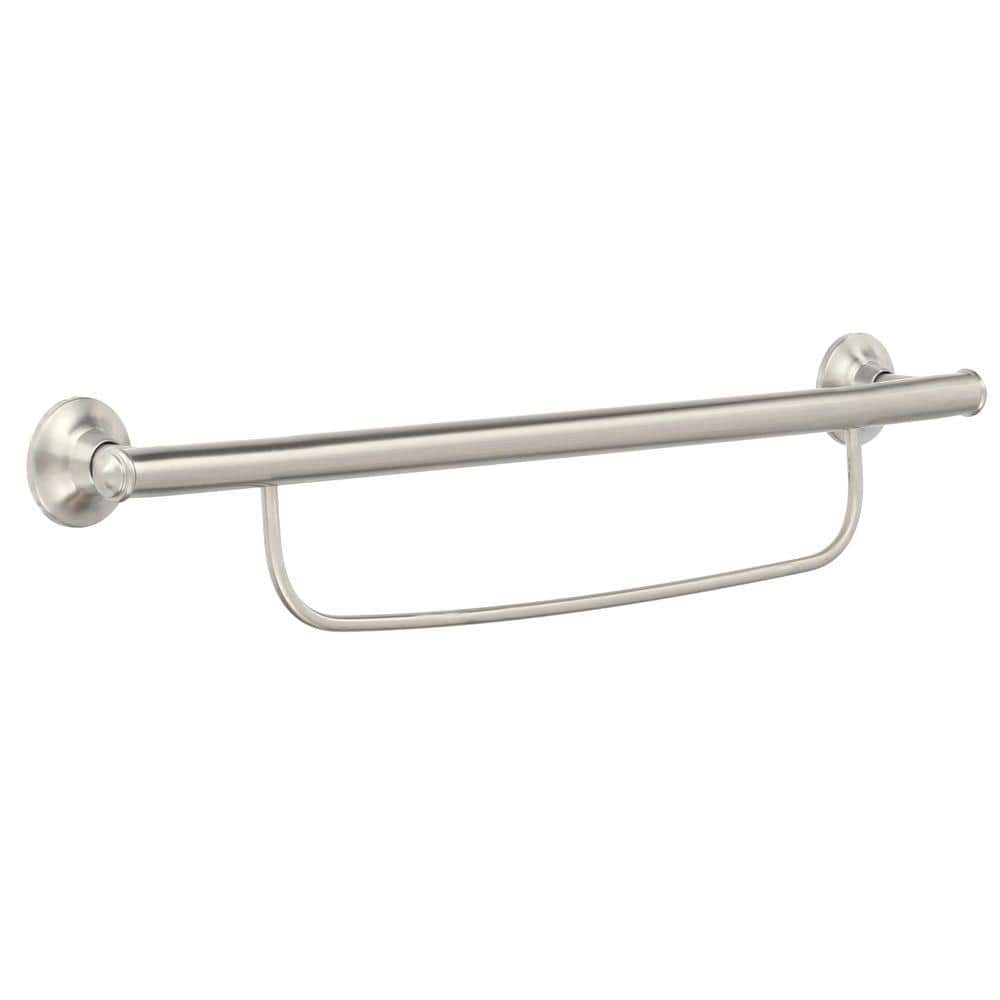
Here is what to look for when selecting decorative grab bars:
- Load rating: Ensure the bar is rated for at least 250 pounds. Most decorative models from reputable brands meet or exceed this standard.
- Finish: Choose a finish that matches your existing faucets, showerhead, and cabinet hardware. Brushed nickel and matte black are the most versatile and contemporary options.
- Length: Standard lengths range from 12 to 24 inches. A 24-inch bar placed horizontally near the shower entry or toilet provides the most utility without looking out of place.
- Installation: Decorative grab bars require the same wall blocking as standard bars. A CAPS-certified contractor can ensure proper installation behind the finished wall.
Curbless Showers: The Mainstream Design Preference That Also Prevents Falls
A curbless (or zero-threshold) shower is perhaps the single most impactful modification for bathroom safety. By eliminating the step-over barrier, it removes the primary fall risk during shower entry and exit. But here is the key insight: curbless showers are not just a safety feature. They have become a mainstream design preference among homeowners with no mobility concerns whatsoever.
The open, seamless look of a curbless shower with a linear drain is widely considered more modern and easier to clean than a traditional shower pan with a step-over curb. The absence of a curb means no grout lines to scrub, no corner to collect soap scum, and a visually expansive feel that makes even a small bathroom appear larger. According to the buildwithinspiration.com guide, curbless showers, comfort-height toilets, and grab bars "have become standard in new construction and are seen as upgrades by many buyers." This is not a niche accessibility feature — it is a design choice that is rapidly becoming the norm.
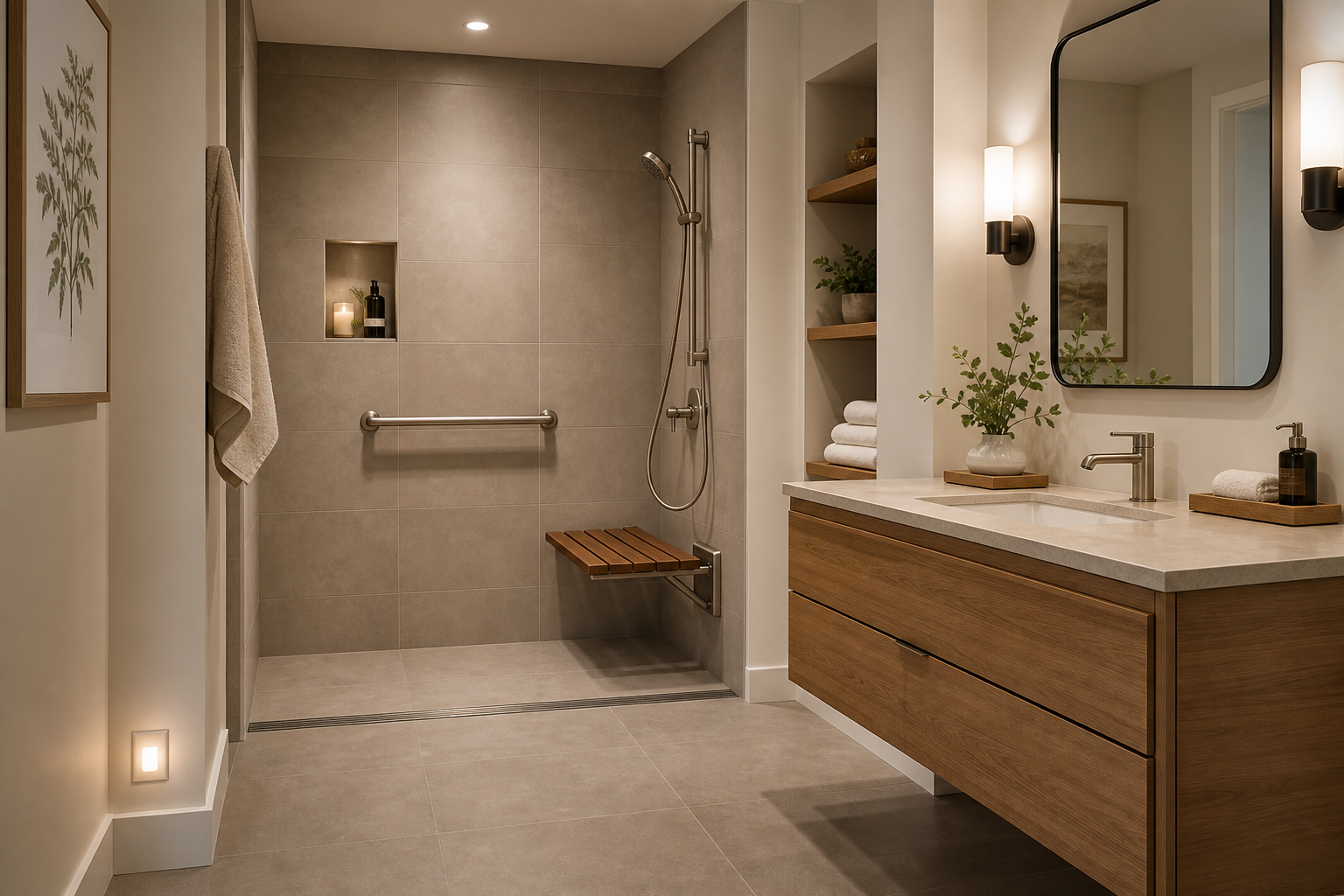
Key Design Considerations for a Curbless Shower
- Linear drain: A linear drain at the shower opening or along the back wall allows the floor to slope gently without a center drain, creating a clean, modern look.
- Minimum width: The NAHB CAPS checklist recommends a curbless shower minimum of 36 inches wide to accommodate a walker or wheelchair if needed.
- Fold-down seat: A wall-mounted, fold-down teak or solid-surface seat provides a place to sit while showering without taking up permanent floor space.
- Handheld showerhead: An adjustable handheld showerhead with a 6-foot hose allows for seated showering and makes cleaning the shower easier for everyone.
Matte vs. Glossy Tile: Safety Without Sacrificing Style
Flooring choice is one of the most critical decisions in a bathroom remodel for safety, and it is also one of the most visible design elements. The conventional wisdom has long been that slip-resistant tile looks utilitarian — think of the pebbled, institutional floors in a public pool locker room. But modern tile manufacturing has changed that entirely.
The key specification to look for is the Dynamic Coefficient of Friction (DCOF). The Americans with Disabilities Act (ADA) recommends a DCOF of 0.42 or higher for wet areas. Many contemporary matte-finish porcelain and ceramic tiles meet or exceed this standard while offering the same clean, sophisticated look that interior designers specify for high-end homes. Glossy tiles, while beautiful when dry, can become dangerously slippery when wet and are best avoided on bathroom floors.
| Tile Finish | Typical DCOF (Wet) | Safety Rating | Design Aesthetic |
|---|---|---|---|
| Matte porcelain | 0.42 – 0.55 | Excellent | Contemporary, high-end, spa-like |
| Textured ceramic | 0.45 – 0.60 | Excellent | Natural stone look, rustic or modern |
| Satin finish | 0.35 – 0.42 | Good (use with caution) | Subtle sheen, modern |
| Glossy ceramic/porcelain | 0.25 – 0.35 | Poor for wet areas | Traditional, reflective, high-shine |
Large-format matte tiles (12x24 inches or larger) have the added benefit of fewer grout lines, which means less maintenance and a cleaner, more modern appearance. They are a win-win: safer underfoot and more aligned with current design trends than the small, glossy tiles of the past.
Wall-Hung Vanities, Lever Handles, and Lighting for Aging Eyes
Three additional features that bridge the gap between safety and style are wall-hung vanities, lever-handled faucets, and intentional lighting. Each serves a functional purpose for aging users while contributing to a clean, contemporary design.
Wall-Hung Vanities
A wall-hung vanity is mounted to the wall with no visible legs or base, creating open knee space underneath. This allows a person using a walker or wheelchair to roll directly up to the sink. It also makes the bathroom feel larger and more open — a design principle that benefits everyone. The NAHB CAPS checklist specifically recommends wall-hung sinks with knee space as a universal design feature.
Lever Handles and Touchless Faucets
Round doorknobs and twist-style faucet handles require grip strength and fine motor control that can diminish with age or conditions like arthritis. Lever handles — on both faucets and doors — can be operated with a simple push or pull using the wrist or elbow. Touchless (motion-sensor) faucets take this a step further, reducing the need to touch surfaces at all. Both options are widely available in modern, attractive designs that look intentional rather than assistive.
Lighting for Aging Eyes
Lighting is often overlooked in bathroom remodels, but it is one of the most important safety and design elements. The National Institute on Aging (via Carex) reports that older adults need significantly more light to see clearly: 646 lumens for those aged 60+ and 968 lumens for those aged 80+. A standard bathroom vanity light often falls short of this.
The solution is layered lighting:
- Ambient lighting: Recessed ceiling lights or a flush-mount fixture provide general illumination. Aim for at least 4,000 lumens total in a standard bathroom.
- Task lighting: Sconces mounted on either side of the mirror (not above it) eliminate shadows on the face, which is critical for shaving, makeup application, and medication management.
- Night lighting: A wall-mounted nightlight near the baseboard or a dimmable fixture provides enough light for middle-of-the-night bathroom trips without the glare of a full overhead light.
These lighting choices look modern and intentional — they are the same strategies used by interior designers to create a warm, functional space. They are not "medical" additions.
Color Contrast Strategies That Improve Safety and Aesthetics
As we age, our eyes lose the ability to perceive depth and distinguish between similar colors. A white toilet on a white floor, or a clear glass shower door against a white wall, can become a hazard — the user cannot see where one surface ends and another begins. This is where color contrast becomes a safety feature.
The good news is that contrast is also a powerful design tool. Here are practical ways to use it:
- Toilet seat vs. floor: Choose a toilet seat color that contrasts with the floor. A dark seat on a light floor (or vice versa) makes the toilet easier to locate and use safely.
- Countertop edge: A darker countertop edge against a light vanity, or a light edge against a dark vanity, helps define the boundary of the sink area.
- Shower entry: Use a different tile color or a contrasting threshold strip at the shower entry to mark the transition from dry to wet floor.
- Grab bars: A grab bar in a finish that contrasts with the wall color (e.g., matte black on a light wall) is easier to see and grab quickly in an emergency.
These strategies add visual interest and depth to the bathroom design. A monochromatic all-white bathroom may look clean, but it is functionally less safe for aging eyes. A well-contrasted bathroom is both safer and more visually dynamic.
Resale Value: Why Accessible Features Are Now a Market Differentiator
One of the most persistent objections to aging-in-place modifications is the fear that they will hurt resale value. The data tells a different story. According to the U.S. Census Bureau, only 10% of U.S. homes are aging-ready. This means that a home with accessible features — curbless shower, comfort-height toilet, grab bars, widened doorways — stands out in a market where the vast majority of homes are not prepared for an aging population.
The buildwithinspiration.com guide confirms that curbless showers and comfort-height toilets are "seen as upgrades by many buyers." This is not a niche perspective. As the baby boomer generation ages and younger buyers increasingly look for homes that can accommodate aging parents or their own future needs, accessible features are becoming a competitive advantage. A bathroom that is both beautiful and functional for all ages is a selling point, not a liability.
Consider the financial comparison: a full accessible bathroom remodel (widening doors, installing a roll-in shower, adding grab bars) typically costs around $8,000, according to PayingForSeniorCare.com. Moving to a typical assisted living facility can cost upwards of $60,000 per year. The one-time investment in a beautiful, safe bathroom is not just a quality-of-life improvement — it is a sound financial decision that pays for itself many times over if it allows someone to remain at home.
Putting It All Together: A Design-First Approach to Your Bathroom Remodel
The key takeaway is this: start with the design you want, then integrate the safety features. Do not start with a list of grab bar placement rules and work backward. A design-first approach ensures that the final result looks intentional, cohesive, and beautiful — and that the safety features are seamlessly woven into the aesthetic.
Here are your next steps:
- Consult a CAPS-certified contractor: A Certified Aging-in-Place Specialist (CAPS) understands both the design and structural requirements of a safe bathroom. They can help you plan blocking for grab bars, select appropriate flooring, and ensure the shower slope is correct.
- Choose your finishes first: Select your tile, vanity, faucets, and lighting before you finalize the layout. This ensures the grab bars, shower seat, and other safety features match the overall design.
- Prioritize the curbless shower: If your budget allows only one major change, make it the curbless shower. It is the single most impactful safety upgrade and the one with the greatest design and resale value benefits.
- Plan for lighting: Work with your contractor or an electrician to add layered lighting — ambient, task, and night lighting — as part of the remodel, not as an afterthought.
- Think about the future: Universal design principles benefit everyone. A bathroom that works for an 80-year-old also works for a 30-year-old with a broken leg, a parent bathing a toddler, or a guest with a stroller.
For a broader view of how to approach your entire home, see our Aging in Place Home Modifications: A Room-by-Room Safety Checklist with Expert OT Guidance. And when you are ready to hire a professional, our Contractor's Guide to a Bathroom Remodel That Actually Prevents Falls will help you ask the right questions.
Related reading
Need a professional assessment?
Find a CAPS-credentialed professional or local aging services through our outbound resource list — we never name or rank individual contractors.
Find Local HelpNoticed something outdated or inaccurate on this page? Flag a correction. We review every report against CDC, NIA, and AARP HomeFit guidance before updating a page.