
Room checklist
Walk-In Shower vs. Walk-In Tub for Elderly Adults: An Evidence-Based Comparison for Aging in Place
A product-neutral, head-to-head comparison of curbless walk-in showers and walk-in tubs for seniors aging in place. This guide helps adult children evaluate safety, cost, accessibility, and long-term value to make an informed bathroom modification decision.
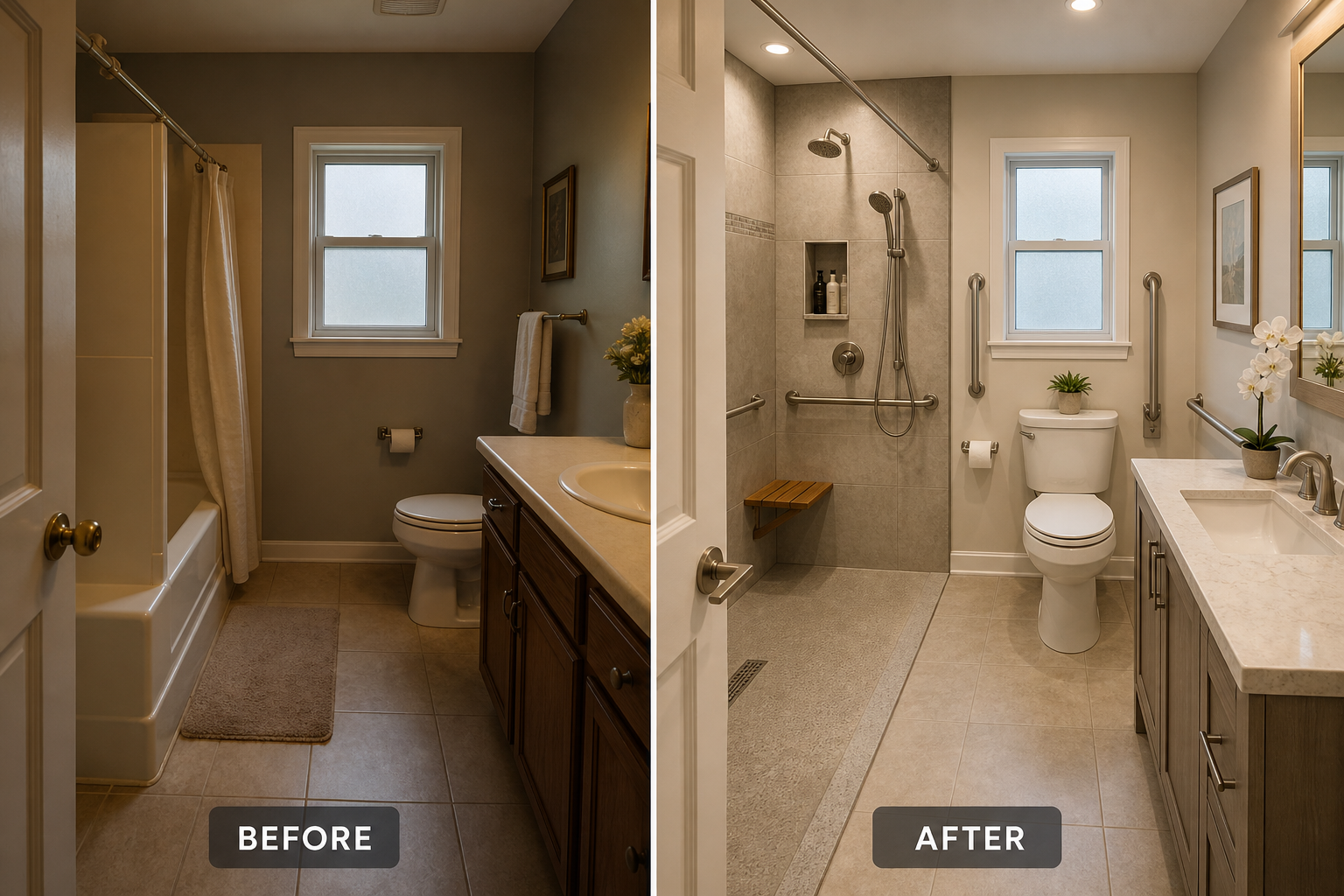
The Core Decision: Eliminating the Step-Over Hazard
Every time an older adult lifts a leg over a standard bathtub wall, they perform a high-risk maneuver that combines balance, strength, and flexibility — three capacities that decline with age. The data makes the stakes clear: approximately 235,000 Americans over age 65 visit emergency rooms each year for bathroom-related falls, according to CDC figures cited in the Porchlight at Home aging-in-place guide. The bathroom is the most dangerous room in the house for an older adult, and the tub wall is the primary culprit.
A 2025 systematic review published in PMC examined 20 studies on home modifications and found that 13 of 20 (65%) confirmed their effectiveness in fall prevention, functional independence, and cost savings. Bathroom modifications — specifically grab bars and shower modifications — were identified as the most impactful interventions. The same review cited a 2017 RCT by Stark et al. that found a 39% reduction in falls with a home hazard removal program, and a 2019 study by Carnemolla & Bridge that found home modifications reduced care hours by 42%.
This brings us to the central question: when you replace a standard tub, should you install a curbless walk-in shower or a walk-in tub? The answer depends on understanding one fundamental difference — the height of the barrier you step over to get in.
Head-to-Head Comparison: Walk-In Shower vs. Walk-In Tub
The table below summarizes the key differences between a curbless walk-in shower and a walk-in tub. Cost data comes from the Porchlight at Home guide and the AARP article on bathroom upgrades for aging in place. Note that the AARP article cites a higher range for curbless showers ($6,000–$10,000) than Porchlight ($3,000–$8,000), reflecting regional variation and project scope differences.
| Feature | Curbless Walk-In Shower | Walk-In Tub |
|---|---|---|
| Installed cost range | $3,000–$8,000 (Porchlight); $6,000–$10,000 (AARP) | $5,000–$15,000 (Porchlight); $2,000–$20,000+ (AARP) |
| Entry barrier height | Zero (flush with floor) | 3–7 inches (step-in required) |
| Wheelchair accessible | Yes (roll-in design with 30x60 inch minimum) | No (cannot accommodate wheelchair) |
| Time to use | Immediate (turn on water and enter) | 10–15 minutes to fill; 10–15 minutes to drain |
| Minimum space required | 30 inches deep x 60 inches wide (ADA standard) | 30 inches deep x 52 inches wide |
| Resale value impact | Positive (universal design feature) | Mixed (niche appeal, may deter buyers) |
| Best for | Most seniors, wheelchair users, those with balance issues | Soaking bath lovers, hydrotherapy needs |
Related reading
Need a professional assessment?
Find a CAPS-credentialed professional or local aging services through our outbound resource list — we never name or rank individual contractors.
Find Local HelpNoticed something outdated or inaccurate on this page? Flag a correction. We review every report against CDC, NIA, and AARP HomeFit guidance before updating a page.