
Room checklist
Walk-In Tub vs. Curbless Shower: Choosing the Right Aging-in-Place Bathroom
This article cuts through manufacturer marketing to help family caregivers decide between a walk-in tub and a curbless walk-in shower for an aging parent's bathroom remodel, comparing safety, cost, daily usability, and resale value based on evidence and expert guidance.
For most aging in place bathroom design projects, a curbless shower is the better default than a walk-in tub. It is easier to enter, easier to help with, easier to clean, and usually easier for the next buyer to understand. A walk-in tub can still make sense, but the case has to be narrower than the advertising suggests: a real need for seated soaking or hydrotherapy, enough time and warmth to fill and drain safely, enough budget for a dependable unit, and a bathroom layout that does not make caregiving harder.
That is not a style preference. It is a daily-use decision. The question is not whether a product looks “senior-friendly” in a showroom. It is what happens when someone is tired, wet, cold, unsteady, embarrassed, or being helped by a spouse who is not much stronger than they are.
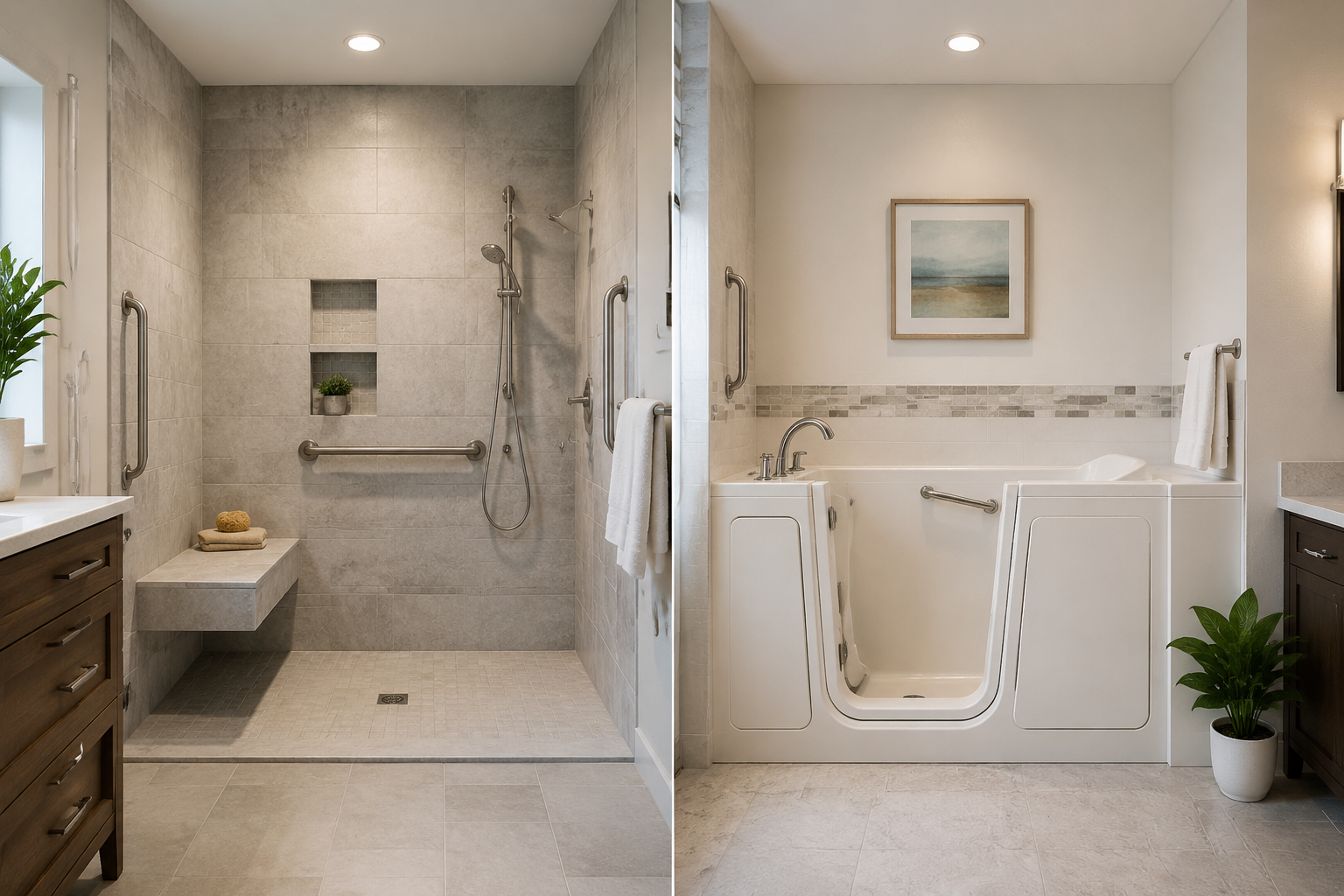
The Short Comparison
| Decision point | Curbless walk-in shower | Walk-in tub |
|---|---|---|
| Entry and exit | Level or near-level entry can reduce tripping and can work with a shower chair, walker, or wheelchair if the room is planned well. | Low step-in door helps compared with a traditional tub, but the user must enter before filling and stay inside until the water drains. |
| Daily bathing | Supports quick rinsing, seated showering, handheld shower use, and caregiver assistance. | Supports soaking, but the sequence is slower and less forgiving. |
| Caregiver help | Usually gives a helper better access, especially with a bench, handheld shower, and well-placed grab bars. | Can make transfers and emergency exits more awkward because the bather is enclosed inside the tub. |
| Typical cost | A tub-to-shower conversion is listed at $1,500–$9,000, while a full curbless remodel is listed at $6,000–$10,000 in national cost guidance.[1] | Installed walk-in tubs are listed at $2,000–$25,000+.[1] |
| Resale | Usually appeals to a wider group of buyers when it is designed cleanly and accessibly. | May narrow the buyer pool because many buyers do not want a specialized tub.[2] |
Those cost ranges are useful only as starting points. Local labor, plumbing changes, floor reframing, waterproofing, tile selection, permits, and the condition of the existing bathroom can move a bid sharply in either direction. A cheap-looking national range should not be treated as a promise, and a financing offer should not be treated as design advice.
Safety Is About the Whole Bathing Sequence
A walk-in tub solves one obvious problem: climbing over the side of a traditional bathtub. That matters. But it does not automatically solve bathing safety. The user still has to open the door, step in, turn, sit, wait while the tub fills, bathe, wait while it drains below the door, stand or transfer, step out, and dry off.
That waiting period is the part many sales conversations slide past. Occupational therapy guidance warns against walk-in tubs for many aging-in-place bathrooms because the bather may have to sit in a cold tub while it fills and cannot leave quickly while it drains.[3] For someone with poor circulation, pain, dizziness, urgency, cognitive changes, or anxiety, that is not a minor inconvenience. It is part of the safety profile.
A curbless shower changes the sequence. The person can enter without stepping over a high tub wall, sit on a bench or shower chair, use a handheld shower, and leave without waiting for a tub basin to empty. If a caregiver is helping, the helper can usually reach the person from outside or beside the shower instead of leaning over a tub wall or working around a door.
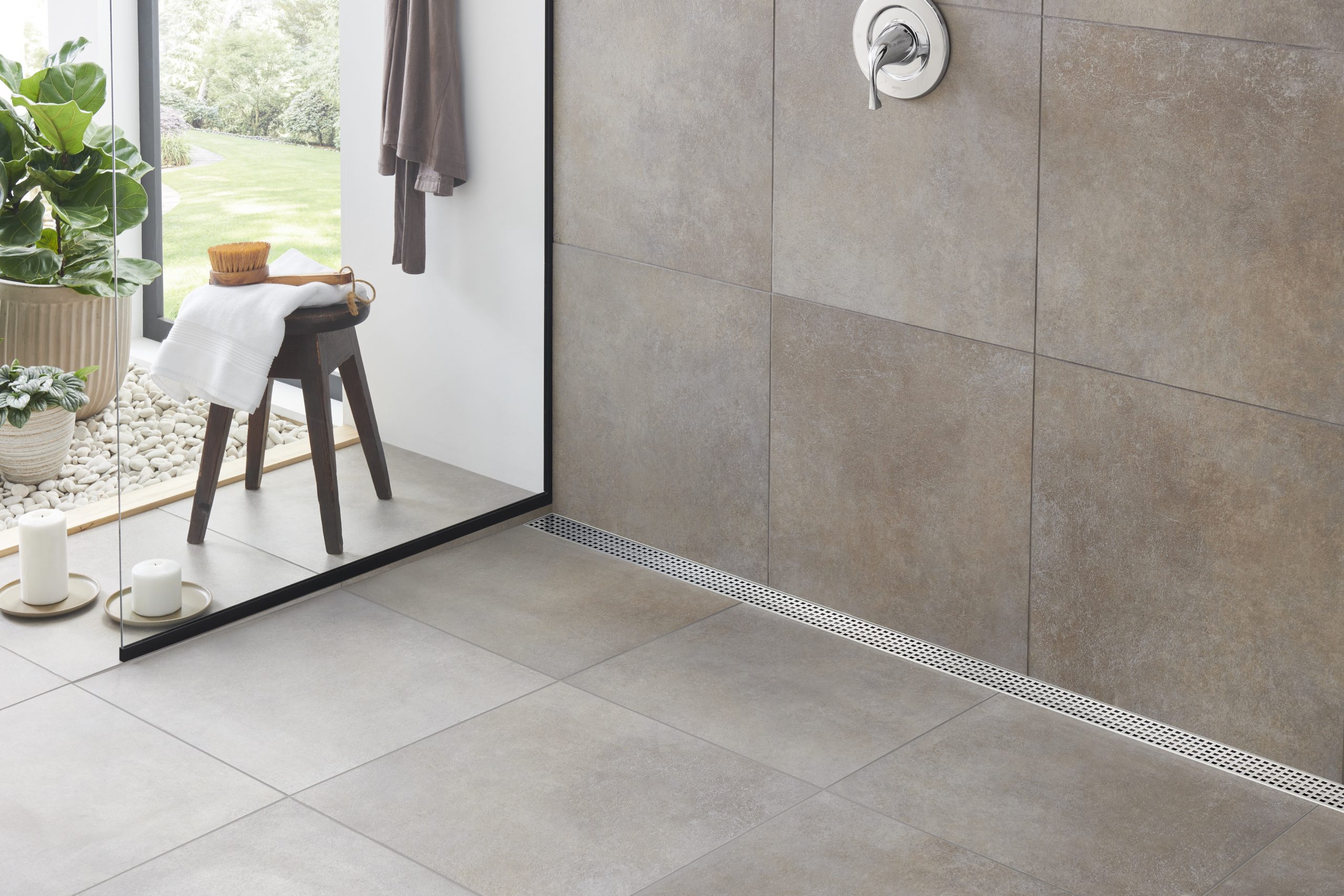
None of that makes a shower safe by itself. A slick tile floor, a badly sloped drain, a bench placed out of reach of the controls, or a grab bar screwed into weak backing can turn a beautiful remodel into a hazard. The advantage of the curbless shower is that its basic format stays flexible. It can support standing, seated bathing, assisted bathing, and future mobility equipment if the details are planned before the tile goes up.
Grab Bars Are Not Decoration
Grab bars deserve more respect than they usually get in remodel photos. ADA bathing-room guidance specifies that grab bars must withstand 250 pounds of force vertically and horizontally, with installation heights of 33 to 36 inches and 1.5 inches of wall clearance.[4] A family bathroom does not become ADA-compliant just because it borrows one detail from the standards, but those numbers are a useful reminder: the wall has to be built to hold a real person in a bad moment.
In a curbless shower, plan blocking for grab bars before waterproofing and tile. Think about the path from the bathroom door to the toilet, from the toilet to the shower, from the shower entry to the bench, and from the bench to the controls. The bar that looks symmetrical in a rendering may be useless if it is behind the person’s shoulder when they need to stand.
The Walk-In Tub’s Best Argument Is Also Its Limitation
A walk-in tub is strongest when the older adult truly values or needs tub bathing. Warm soaking may be emotionally important. It may help someone relax. A clinician may recommend hydrotherapy for a specific condition. Those reasons should not be dismissed as vanity or stubbornness.
The trouble starts when a tub is sold as the universal aging-in-place answer. It is not universal. It is a specialized fixture with a specialized routine. The bather has to tolerate the fill time, the drain time, the seated posture, the door seal, the controls, and the feeling of being inside the tub until enough water has left the basin. If a caregiver needs to help wash hair, steady a transfer, or respond quickly, the tub’s enclosure can work against them.
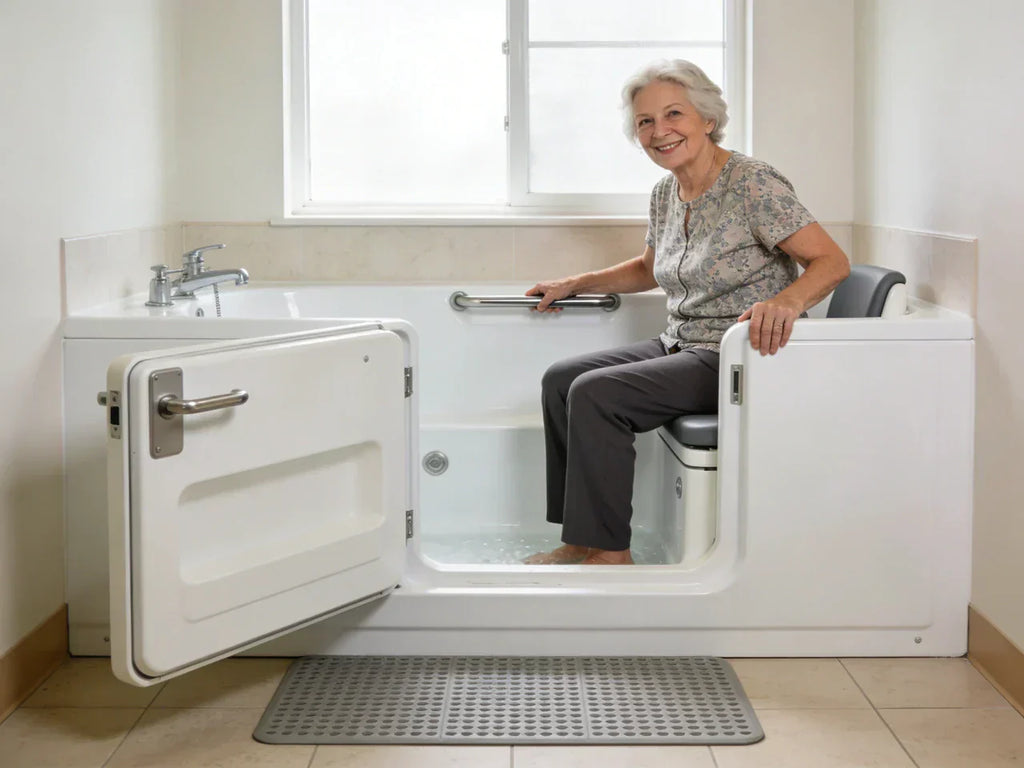
Quality also matters more than a brochure can show. Walk-in tub pricing spans from $2,000 to more than $25,000 installed in national cost guidance.[1] That spread should make a buyer slow down. A low upfront price may not include the electrical work, plumbing changes, wall repair, flooring repair, disposal, or service quality the household will need. A premium model may include features the parent will never use. Either way, the family is making a large, hard-to-reverse change to the most important safety room in the house.
Caregiver Access Changes the Answer
A bathroom remodel can look independent on paper and still leave a caregiver doing difficult work. The test is not whether the older adult can complete one ideal bath on a good day. The test is what happens after a medical appointment, during a flare-up, after a minor fall, or when balance has worsened six months later.
In a curbless shower, assistance can be designed into the room. A wider entry gives a helper room to stand. A handheld shower lets the bather stay seated. A bench can support rest, washing, and dressing tasks. Good drainage keeps water from spreading across the room. A caregiver can help without climbing, leaning deeply, or reaching across a tub wall.
With a walk-in tub, the caregiver often has less room to maneuver. The older adult may be seated behind the tub wall. The door cannot simply open while the tub is full. If the person becomes lightheaded, chilled, confused, or urgently needs to get out, the design that made entry easier may make exit slower.
This is where family discussions should get specific. Who helps with bathing now? Who might help next year? Can that person safely assist from the side of the fixture? Can they reach the controls? Can they help dry the floor? Can emergency help get into the bathroom if someone is on the floor? These questions are uncomfortable, but they are cheaper before demolition than after installation.
Cost: Compare the Whole Project, Not the Fixture
Aging-in-place bathroom costs get distorted when families compare a tub product against a shower remodel. The fixture is only one line. The real project may include demolition, drain relocation, subfloor changes, waterproofing, tile, glass, ventilation, lighting, blocking for grab bars, permits, and repair to adjacent walls or floors.
National cost guidance lists a tub-to-shower conversion at $1,500–$9,000 and a full curbless remodel at $6,000–$10,000.[1] Those figures can be reasonable for comparison, but they are not a substitute for local bids. A curbless shower may require lowering or recessing the shower floor, improving drainage slope, or waterproofing more of the room than expected. Those are not cosmetic upgrades; they are what keep the bathroom from leaking.
Walk-in tubs, meanwhile, are listed at $2,000–$25,000+ installed.[1] The wide range reflects major differences in size, door design, jets, pumps, heater features, installation complexity, and brand support. It also reflects a market where the product is often sold directly to older homeowners or adult children under time pressure. Get an itemized quote. Ask what happens if the door seal fails. Ask how long the tub takes to fill and drain in that specific house, not in a brochure.
The bigger financial question is whether the remodel helps the parent stay safely at home. One remodeling source frames the offset this way: a $7,000–$13,000 bathroom remodel that keeps a parent home five extra years can avoid $240,000–$480,000 in assisted living facility costs.[5] That is not a guarantee that any one remodel will delay a move. Health, caregiving capacity, stairs, cognition, and finances all matter. But it does put the bathroom budget in the right category: risk management, not just home improvement.
Resale Matters, But It Should Not Drive the Whole Decision
A clean curbless shower usually reads as a modern bathroom feature, not a medical accommodation. Buyers who do not need accessibility can still appreciate the open entry, larger showering area, and simple maintenance. Aging parents can use it now; future buyers can use it later.
Walk-in tubs can be different. Some buyers will see one as useful. Others will see it as something to remove, especially if it is the only bathing option in the home or if they have children, prefer quick showers, or worry about maintenance. Aging-in-place remodeling guidance warns that walk-in tubs can deter buyers who do not need them, while curbless showers tend to have broader appeal.[2]
Still, resale should stay in second place. If a walk-in tub is the only way a parent can bathe with comfort and dignity, a theoretical future buyer should not outrank the person using the room every day. The problem is treating resale claims as if they erase the daily drawbacks. They do not.
When a Wet Room Is Worth Discussing
Some families are not choosing between bathing and showering because the older adult wants both. A wet room can combine a curbless shower area with a freestanding tub, keeping the floor waterproofed as one bathing zone. The cited average cost is approximately $9,000 or more, and the design requires full waterproofing, more space, and careful drainage.
That makes a wet room a conditional answer, not a clever compromise for every house. It may work when the bathroom footprint is generous, the budget can absorb proper waterproofing, and the tub is not blocking caregiver access. It is less convincing in a small hall bath where the family is already fighting for turning space, storage, and a safe route to the toilet.
How to Make the Decision in the Actual House
Before signing a contract, walk through the parent’s bathing routine as it exists now. Do not start with the fixture. Start with the person.
- Can they stand for a full shower, or do they need seated bathing?
- Can they step safely over a threshold today, and what happens if that changes?
- Do they become cold, dizzy, anxious, or fatigued during bathing?
- Who helps now, and who would help after surgery, illness, or a fall?
- Is soaking medically recommended, emotionally important, or simply familiar?
- Can the bathroom layout support a bench, handheld shower, grab bars, non-slip flooring, and good drainage?
- Has the contractor explained waterproofing, floor slope, wall blocking, ventilation, and access for future repairs?
If the answers point toward flexible access, caregiver help, and changing mobility, choose the curbless shower. Add a bench or room for a shower chair. Put the controls where they can be reached from a seated position. Use a handheld shower. Build the walls for grab bars even if every bar is not installed on day one. Pay attention to drainage and floor texture, because a level entry that sends water across the bathroom is not a finished accessibility plan.
Choose the walk-in tub only when the case survives the practical questions. The parent strongly prefers or clinically needs soaking. They can tolerate the fill and drain routine. The room stays warm enough. The caregiver can assist without unsafe reaching. The budget can support a reliable unit and proper installation. The household understands that resale appeal may narrow.
The best aging-in-place bathroom is not the one with the most specialized equipment. It is the one that keeps working as the parent’s body, helpers, and routines change. In most homes, that points to a curbless shower. In a smaller number of homes, a walk-in tub is defensible. The difference is whether the fixture solves the parent’s real bathing problem, not the one a salesperson brought to the kitchen table.
References
- Cost of Aging in Place Remodeling, Fixr, https://www.fixr.com/costs/aging-in-place-remodeling
- Age in Place Shower Design Mistakes & How to Fix Them, Innovate Building Solutions, 2026-01-13, https://blog.innovatebuildingsolutions.com/2026/01/13/age-in-place-shower-design-mistakes-how-to-fix-them/
- Living in Place Bathroom Design, Jillian Lare, https://jillianlare.com/living-in-place-bathroom-design/
- Chapter 6: Bathing Rooms, U.S. Access Board, https://www.access-board.gov/ada/guides/chapter-6-bathing-rooms/
- Bathroom Remodel for Elderly, Inspiration Homes, https://buildwithinspiration.com/blog/bathroom-remodel-for-elderly/
Related reading
Need a professional assessment?
Find a CAPS-credentialed professional or local aging services through our outbound resource list — we never name or rank individual contractors.
Find Local HelpNoticed something outdated or inaccurate on this page? Flag a correction. We review every report against CDC, NIA, and AARP HomeFit guidance before updating a page.