
Room checklist
Walk-In Tub vs. Curbless Shower: Which Bathroom Remodel Is Safer for Your Aging Parent?
A neutral, evidence-based comparison for family caregivers deciding between a walk-in tub and a curbless shower during an aging-in-place bathroom remodel. Covers entry safety, caregiver access, cost ranges, and a decision framework based on mobility level and bathing needs.
The Core Trade-Off: Entry Safety vs. Therapeutic Bathing
When planning a bathroom remodel for an aging parent, the choice between a walk-in tub and a curbless shower often comes down to a single question: does the person need to soak, or do they need to step in safely? These two goals — therapeutic bathing and fall prevention — pull in opposite directions, and the wrong choice can turn a well-intentioned renovation into a daily hazard.
Curbless showers prioritize immediate fall prevention by eliminating the step-over barrier entirely. They allow a person using a wheelchair or walker to roll directly in, and they give a caregiver room to stand beside the person during bathing. Walk-in tubs, on the other hand, offer hydrotherapy benefits — warm water immersion and jet massage — that can relieve arthritis pain and joint stiffness. But they come with a built-in delay: the tub takes 10 to 15 minutes to fill and the same amount of time to drain, creating a period during which the bather is essentially trapped inside.
The decision framework that follows is organized around three factors: the older adult's mobility level (can they step over a low threshold, or do they use a wheelchair or walker?), their bathing preferences (do they value soaking for pain relief, or is a seated shower sufficient?), and the caregiving situation (will a family member need to assist with bathing?). Each path leads to a different recommendation.
Curbless Shower: Zero-Threshold Entry for Wheelchair and Walker Users
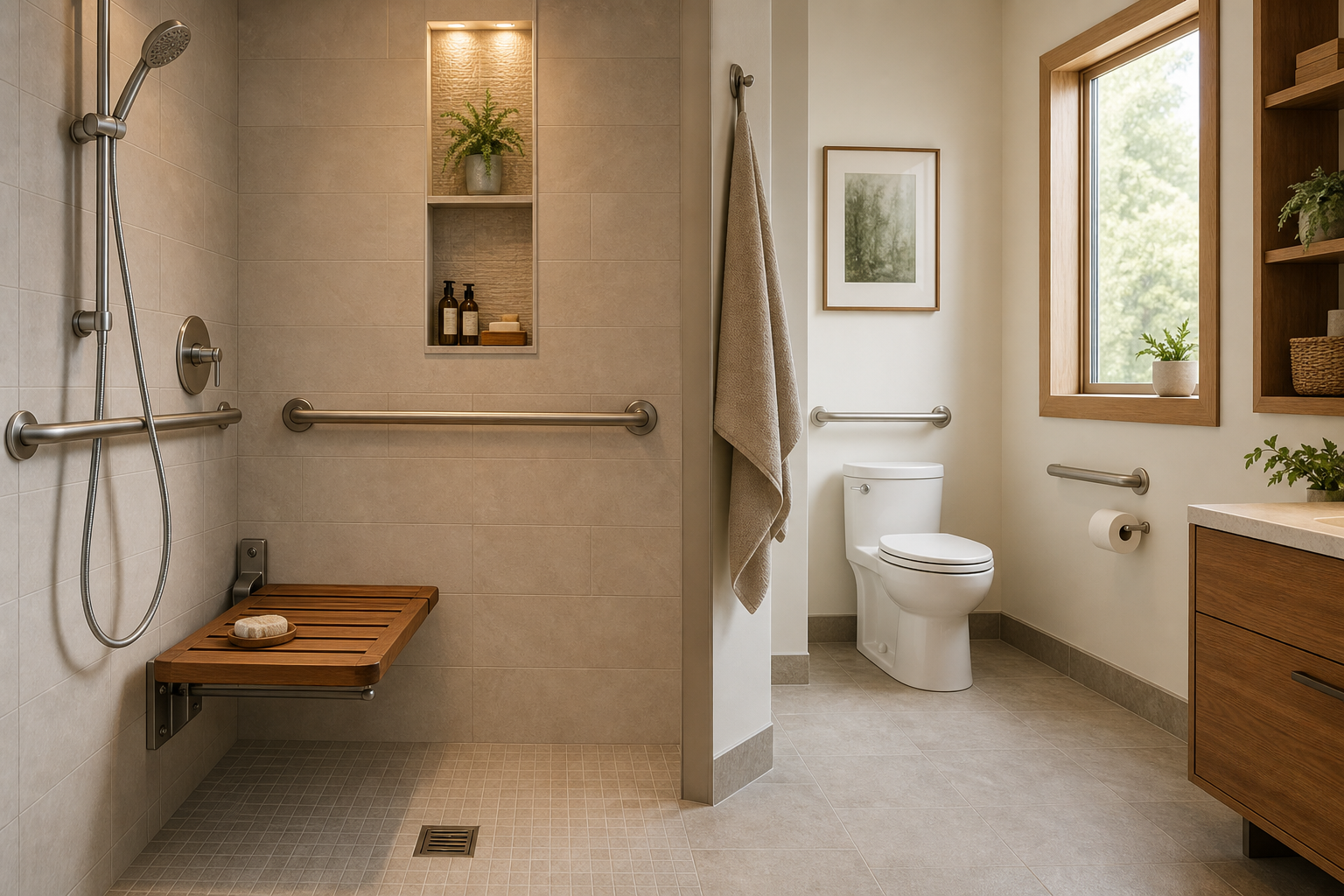
A curbless shower — also called a zero-threshold or roll-in shower — has no raised lip or step to cross. The floor of the shower is level with the bathroom floor, which means a person using a wheelchair can roll directly over the threshold, and a person using a walker does not have to lift their feet over a barrier. This single design choice eliminates what is arguably the most dangerous moment in bathroom use: the transition into and out of the shower.
The CDC reports that roughly 1 in 4 older adults falls every year, and approximately 80% of falls that occur at home take place in the bathroom. Stepping over a tub wall or shower curb is a primary trigger. A curbless shower removes that trigger entirely.
Key Features of a Safe Curbless Shower
- Zero-threshold entry: The shower floor meets the bathroom floor at the same level. For wheelchair access, the minimum interior dimension should be 60 inches by 30 inches. For a transfer shower (where the person sits on a bench and swings their legs in), 36 inches by 36 inches is the recommended minimum.
- Fold-down or fixed bench: A built-in seat allows the person to sit during bathing, reducing fatigue and fall risk. A fold-down bench saves space when not in use.
- Handheld showerhead on a sliding bar: A handheld unit with a 60-inch hose allows the bather to direct water where needed and makes it easy for a caregiver to assist without reaching across the person.
- Grab bars on at least two walls: Bars must be installed into wall studs or blocking and rated to support 250 pounds or more. Expect to pay $150 to $400 per bar installed.
- Non-slip flooring with DCOF ≥ 0.60: The Dynamic Coefficient of Friction (DCOF) rating measures slip resistance. A rating of 0.60 or higher is the industry standard for wet commercial and residential showers.
A curbless shower conversion typically costs between $3,000 and $15,000, depending on the extent of the work — whether the existing shower pan needs to be removed, the floor sloped, and the drain relocated. A full bathroom remodel that includes a curbless shower, comfort-height toilet, and grab bars runs $6,600 to $28,000 nationally, with an average of around $11,200.
Walk-In Tub: Low-Threshold Soaking with Hydrotherapy Benefits
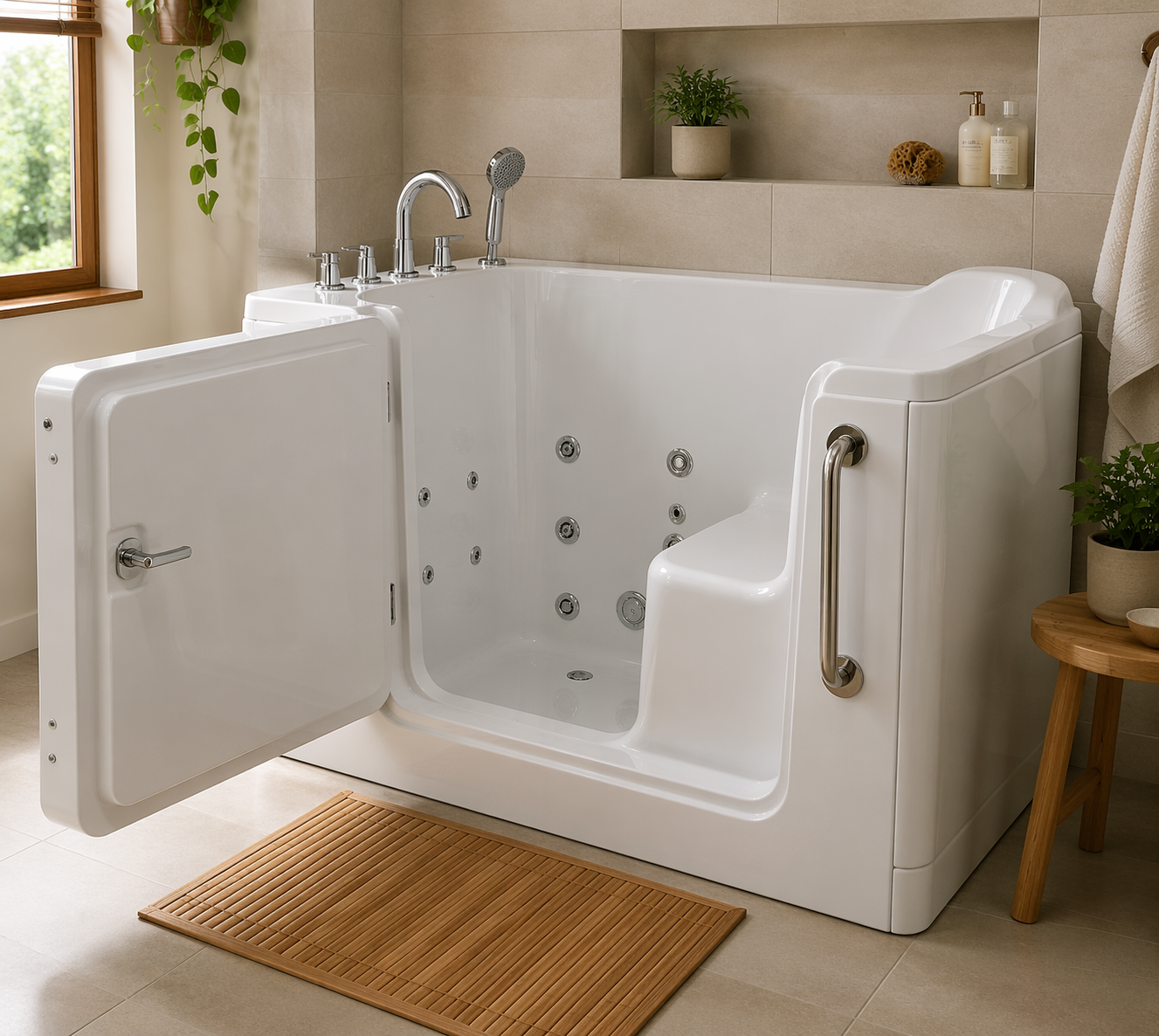
Walk-in tubs are designed for people who cannot safely step over a standard bathtub wall but still want the experience of soaking in warm water. The door opens outward at a low threshold — typically 3 to 7 inches — allowing the person to step in or sit on the built-in contoured seat and swing their legs over. Once the door is sealed, the tub fills with water, and hydrotherapy jets provide massage for arthritis, joint pain, and muscle stiffness.
For an older adult with osteoarthritis or chronic lower-back pain, the therapeutic value of warm-water immersion is real. The buoyancy reduces joint load, the heat increases blood flow, and the jet massage can ease muscle tension. For someone who values this experience and has the patience to wait through the fill and drain cycle, a walk-in tub can improve quality of life.
The Safety Concern That Changes Everything
The most frequently cited safety concern with walk-in tubs is the time required to fill and drain. A standard walk-in tub takes 10 to 15 minutes to fill and the same amount of time to drain. During the drain cycle, the bather cannot open the door until the water level drops below the door threshold. For a cognitively intact person who understands the mechanism and is willing to wait, this is manageable. For a person with dementia, urgency, or a tendency to become impatient or confused, it creates a genuine entrapment risk.
Walk-in tub installation costs range from $2,000 to $20,000, with a national average of $5,000 to $7,000 for a whirlpool model including installation. The wide range reflects differences in tub size, jet configuration, and whether the installation requires plumbing relocation or structural reinforcement.
Walk-In Tub vs. Curbless Shower: Side-by-Side Comparison
| Dimension | Curbless Shower | Walk-In Tub |
|---|---|---|
| Entry height | Zero threshold (level with floor) | 3–7 inch threshold (low step or swing-over) |
| Wheelchair access | Yes — roll-in design (60" x 30" minimum) | No — requires transfer from wheelchair to seat |
| Walker access | Yes — no step to cross | Partial — low step, but walker must be set aside |
| Caregiver access | Full — caregiver can stand beside the person | Limited — caregiver reaches over tub wall |
| Fill time | Instant (on-demand water) | 10–15 minutes |
| Drain time | Instant | 10–15 minutes (door cannot open until water drains) |
| Hydrotherapy | No (seated shower only) | Yes — warm-water immersion and jet massage |
| Best for | Fall-risk seniors, wheelchair/walker users, dementia | Arthritis pain relief, joint stiffness, those who value soaking |
| Cost range (installation) | $3,000 – $15,000 | $2,000 – $20,000 |
| Primary safety concern | Slip risk on wet floor (mitigated by DCOF ≥ 0.60 flooring) | Entrapment during fill/drain cycle for cognitively impaired |
How to Choose: A Decision Framework Based on Mobility and Caregiving Needs
The following framework is designed to help you match the bathroom modification to the older adult's specific situation. Work through the questions in order.
Step 1: Assess Mobility and Fall History
- Does the person use a wheelchair or walker? If yes, a curbless shower is the only safe option. Walk-in tubs cannot accommodate a wheelchair, and the transfer from wheelchair to tub seat introduces a fall risk.
- Has the person fallen in the bathroom before? A history of falls — especially during shower entry or exit — strongly favors a curbless shower. Research shows that among Medicare beneficiaries aged 65 and older who have experienced a fall, only 55.5% had any bathroom modifications. Among those with repeated falls, approximately 40% had no modifications at all. Do not let your parent become part of that statistic.
- Can the person safely step over a 3–7 inch threshold? If balance is compromised, even a low threshold is a risk. A curbless shower eliminates the step entirely.
Step 2: Evaluate Cognitive Status and Patience
- Does the person have dementia, Alzheimer's, or any cognitive impairment? If yes, a walk-in tub is not recommended. The 10–15 minute drain cycle creates an entrapment risk. A curbless shower with a handheld showerhead and bench is the safer choice.
- Does the person have urgency (frequent, sudden need to use the bathroom)? Being trapped in a draining tub while needing to use the toilet is distressing and dangerous. Choose a curbless shower.
- Is the person willing and able to sit in warm water for 20–30 minutes? If the person values soaking and has the patience to wait, a walk-in tub may be appropriate — provided the answers to the two questions above are both no.
Step 3: Consider Caregiver Involvement
- Will a family member assist with bathing? Curbless showers allow a caregiver to stand beside the person, reach them easily, and assist with washing without straining their own back. Walk-in tubs require the caregiver to lean over the tub wall, which is ergonomically difficult and increases the risk of caregiver injury.
- Is the caregiver elderly themselves?
Step 4: Match the Decision to the Situation
| Situation | Recommended Choice | Rationale |
|---|---|---|
| Wheelchair or walker user | Curbless shower | Roll-in access; no transfer needed |
| Fall history, good cognition | Curbless shower | Eliminates step-over hazard; no entrapment risk |
| Arthritis pain, no dementia, no urgency | Walk-in tub | Hydrotherapy benefits; patient can wait through drain cycle |
| Dementia or cognitive impairment | Curbless shower | Entrapment risk with walk-in tub is unacceptable |
| Caregiver assists with bathing | Curbless shower | Caregiver can stand beside the person; no reaching over tub wall |
| Small bathroom (under 5' x 7') | Curbless shower | Walk-in tub requires more floor space for door swing and access |
Key Specifications and Safety Standards to Demand from Your Contractor
Whichever option you choose, certain technical specifications are non-negotiable for safety. These should be written into your contract before work begins.
- Non-slip flooring with DCOF ≥ 0.60: The Dynamic Coefficient of Friction rating is the industry standard for wet-area slip resistance. Do not accept tile with a lower rating, regardless of appearance. Professional installation of non-slip flooring costs $6,400 to $11,000.
- Thermostatic shower valve: Older adults have reduced temperature sensation and are at higher risk of scalding. A thermostatic valve maintains water temperature at a set point regardless of pressure changes from flushing toilets or running appliances. This is not optional.
- Grab bars rated for 250+ pounds, installed into studs or blocking: Suction-cup grab bars are not safe. Bars must be anchored to wall studs or plywood blocking installed between studs during construction. Expect to pay $150 to $400 per bar installed.
- ADA-recommended shower dimensions: While ADA standards are not legally required in private homes, they are the gold standard for accessibility. For a roll-in shower, the minimum interior dimension is 60 inches by 30 inches. For a transfer shower, 36 inches by 36 inches with a built-in or folding seat.
- Comfort-height toilet (17–19 inches from floor to seat): Standard toilets are 14–15 inches high, which makes sitting down and standing up more difficult for people with limited hip and knee strength. A comfort-height toilet reduces fall risk during transfers. Replacement cost: $300 to $1,200.
- Doorway clear width of at least 32 inches (36 inches ideal): If the bathroom doorway is narrower than 32 inches, a wheelchair or walker cannot pass through. Widening a door costs $200 to $7,000 depending on whether the wall structure needs modification.
Funding Sources and Cost Considerations
Bathroom remodels are expensive, but several funding programs can offset the cost for eligible seniors. The key is to research eligibility before you start planning, because some programs require pre-approval.
- VA Specially Adapted Housing (SAH) Grant: For veterans with severe service-connected disabilities. The maximum grant for 2026 is $117,014, adjusted annually. Can be used to construct, buy, or modify an accessible home.
- VA Home Improvements and Structural Alterations (HISA) Grant: For service-related and non-service-related disabilities. Funding caps range from $2,000 to over $6,800 depending on the disability classification.
- USDA Section 504 Home Repair Program: For very-low-income homeowners aged 62 and older in eligible rural areas. Provides grants up to $10,000 and loans up to $40,000 at a fixed 1% interest rate over 20 years. Loans and grants can be combined for up to $50,000.
- Medicaid waivers (Money Follows the Person): Some state Medicaid programs fund home modifications as part of transitioning individuals from institutional care back to community living. Availability and coverage vary by state.
- Rebuilding Together: A national nonprofit that provides free home repairs and modifications for eligible seniors and people with disabilities. Local affiliates set their own eligibility criteria.
When evaluating cost, consider the long-term financial picture. A $25,000 bathroom renovation that enables a parent to remain safely at home for five additional years offsets an estimated $240,000 to $480,000 in assisted living or skilled nursing facility costs. Even if you pay entirely out of pocket, the return on investment — measured in years of independence and quality of life — is substantial.
Related reading
Need a professional assessment?
Find a CAPS-credentialed professional or local aging services through our outbound resource list — we never name or rank individual contractors.
Find Local HelpNoticed something outdated or inaccurate on this page? Flag a correction. We review every report against CDC, NIA, and AARP HomeFit guidance before updating a page.