
Room checklist
How to Pay for Aging in Place Home Modifications: A Complete Guide to Grants, Loans, Tax Deductions, and Insurance Coverage
A comprehensive guide for family caregivers and older adults on navigating the full landscape of funding sources for home modifications, including federal grants, state programs, VA benefits, tax deductions, and private financing options.
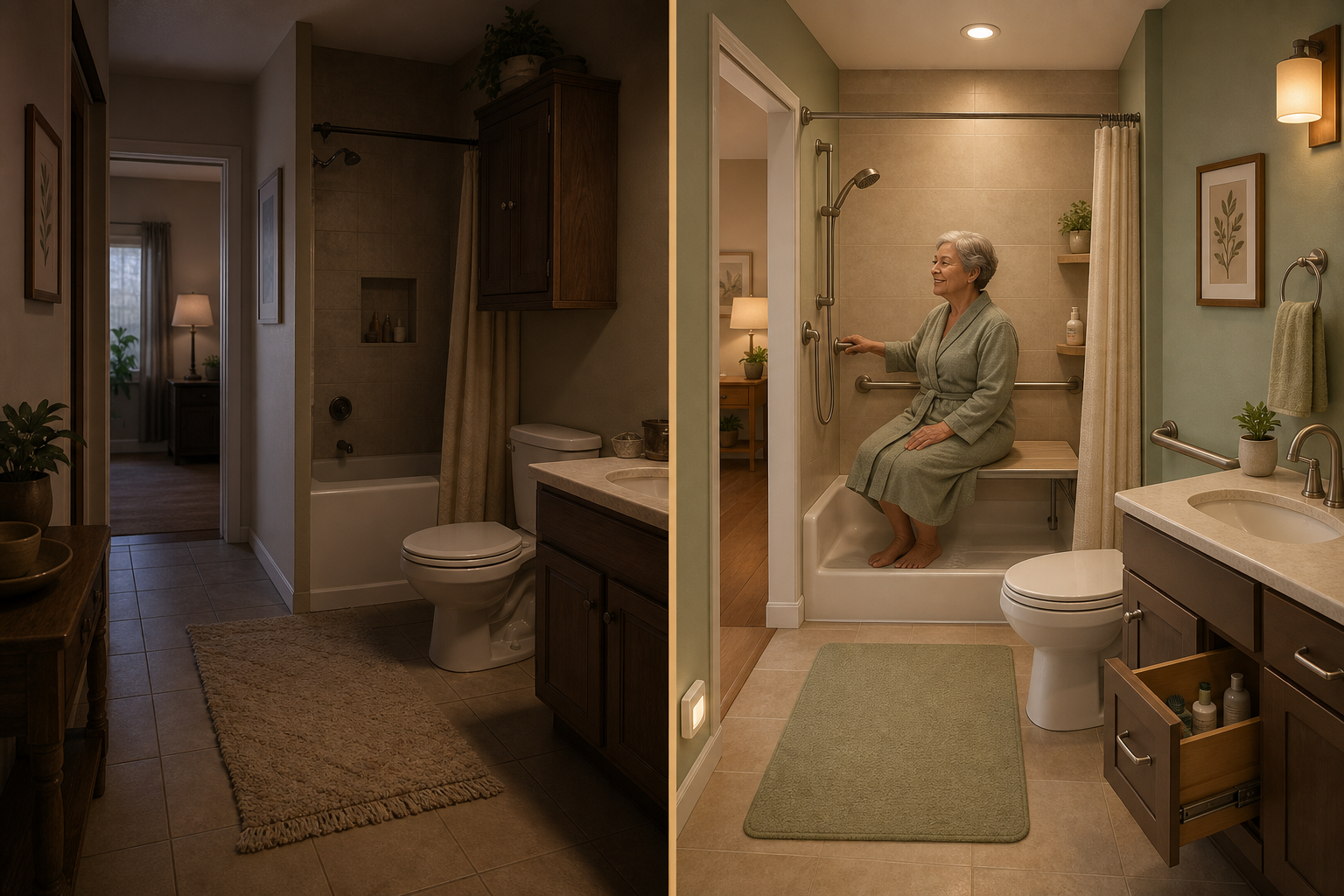
The Funding Gap: Why Most Families Pay Out of Pocket for Home Modifications
If you are an adult child managing a parent's finances or an older adult on a fixed income, the first question that comes to mind when considering a grab bar, a stair lift, or a walk-in shower is almost always the same: "How am I going to pay for this?" The honest answer, for most families, is that they end up paying out of pocket. A 2024 analysis of the 2019 American Housing Survey by Kim and colleagues found that 77% of home modifications are self-funded. Only about 6% of seniors report that insurance or government programs covered any portion of the cost, according to a 2008 ASPE report analyzing 2006 Health and Retirement Study data.
This funding gap exists not because help is unavailable, but because the landscape of grants, loans, tax deductions, and insurance benefits is fragmented and poorly understood. The good news is that several underutilized programs can substantially reduce the financial burden. This guide catalogs every major funding pathway — federal, state, veteran-specific, tax-based, and private — and provides a step-by-step action plan to help you navigate the application process.
Federal Programs: HUD Grants, USDA Loans, and Medicare Advantage
Federal funding is the largest and most structured source of financial assistance for home modifications, but each program targets a specific population and has its own application process. Understanding which ones apply to your situation is the first step.
HUD's Older Adult Home Modification Program (OAHMP)
In 2024, HUD's Office of Lead Hazard Control and Healthy Homes announced $30 million in grants through the Older Adult Home Modification Program (OAHMP). Individual awards ranged from $1 million to $2 million each, with an expected 15 awards going to organizations that serve low-income seniors. These grants fund low-cost, high-impact modifications such as grab bars, ramps, stair lifts, widened doorways, enhanced lighting, and non-slip flooring.
USDA Section 504 Home Repair Program
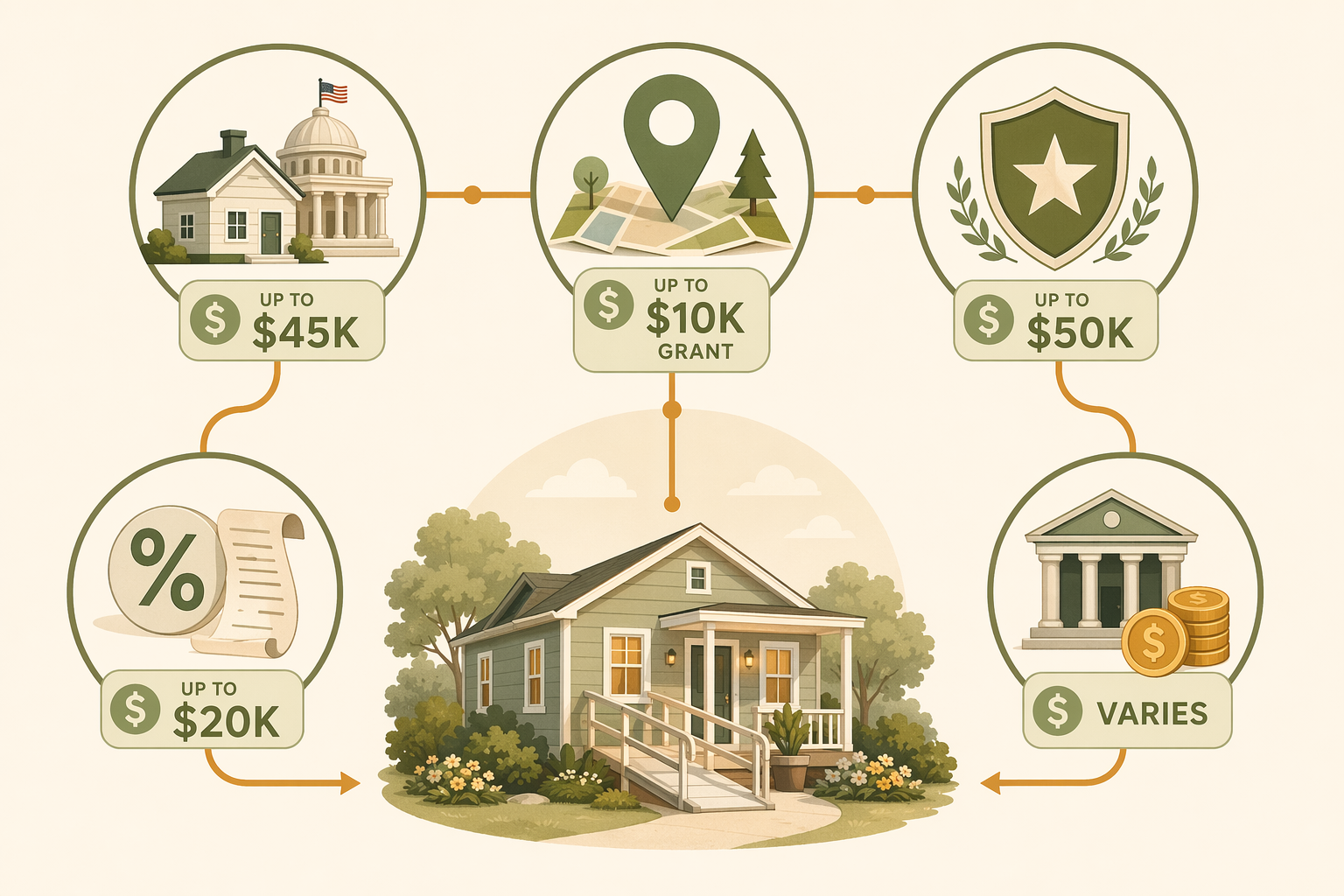
For older adults living in rural areas, the USDA Section 504 program offers a powerful combination of grants and low-interest loans. Eligible homeowners aged 62 and older can receive grants up to $10,000 and loans up to $40,000 at a 1% interest rate. The funds must be used to remove health and safety hazards, which includes many common home modifications like ramp installation, bathroom grab bars, and stair lifts.
Medicaid Home and Community Based Services (HCBS) Waivers and Money Follows the Person
Medicaid HCBS waivers are state-specific programs that allow individuals who would otherwise need nursing home care to receive services at home. Many states include home modifications as a covered service under these waivers. The Money Follows the Person (MFP) program is particularly notable: it provides up to $45,000 for home modifications for individuals transitioning from nursing homes back to community living. Modifications can include widening doorways, lowering cabinets, and adding wheelchair ramps.
Medicare Advantage Supplemental Benefits
Original Medicare does not cover home modifications. However, some Medicare Advantage Plans (Part C) have begun offering supplemental benefits that include home safety improvements. These can include walk-in showers, grab bars, and medical alert systems. Coverage varies by plan and by year, so it is essential to review the specific benefits of any Medicare Advantage plan during open enrollment.
| Program | Maximum Funding | Target Population | Key Limitation |
|---|---|---|---|
| HUD OAHMP | $1M–$2M per grant (to organizations) | Low-income seniors | Must find a local grantee organization |
| USDA Section 504 | Grant up to $10,000; Loan up to $40,000 at 1% | Rural homeowners aged 62+ | Limited to USDA-eligible rural areas |
| Medicaid MFP | Up to $45,000 | Individuals transitioning from nursing homes | State-specific; requires nursing home stay first |
| Medicare Advantage | Varies by plan | Medicare Advantage enrollees | Coverage varies; not all plans include it |
State and Local Resources: Area Agencies on Aging and State-Specific Programs
Beyond federal programs, state and local governments offer a patchwork of funding sources that can be just as valuable — but they require more legwork to find. The single most important starting point is your local Area Agency on Aging (AAA). AAAs are federally mandated organizations that serve as the primary entry point for older adults seeking local services, including home modification assistance.
What you can find through an AAA includes:
- State-funded home modification grant programs that may cover grab bars, ramps, and bathroom safety equipment
- Local housing rehabilitation loans with low or zero interest rates
- Information on nonprofit organizations in your area that provide free or low-cost modifications
- Referrals to CAPS-certified contractors who understand the funding landscape
To find your local AAA, call the Eldercare Locator at 1-800-677-1116 or visit the Eldercare Locator website. Some states also have dedicated home modification programs — for example, California's Home Safe Program and New York's Access to Home Program. A quick search for "[your state] home modification grant" can uncover programs that do not exist at the federal level.
Veterans Benefits: VD-HCBS, Aid & Attendance, and Other VA Programs
Veterans and their surviving spouses have access to some of the most generous funding pathways for home modifications, yet these benefits remain significantly underutilized. The Department of Veterans Affairs offers several programs that can cover the cost of making a home more accessible.
Veterans-Directed Home and Community Based Services (VD-HCBS)
The VD-HCBS program gives veterans a flexible budget to purchase services and supports that help them live independently at home. This budget can be used for home modifications or environmental accessibility adaptations. The veteran, not the VA, decides how to allocate the funds, which makes this program particularly valuable for those who need a customized set of modifications.
Aid & Attendance Pension
The Aid & Attendance benefit is an additional monthly payment added to a VA pension for veterans who need the aid of another person to perform daily activities. While the benefit is primarily intended for in-home care, the funds can be used flexibly, including for home modifications that enable the veteran to remain at home safely. Eligibility requires meeting both service and medical criteria.
| VA Program | Type of Benefit | What It Covers | Eligibility Note |
|---|---|---|---|
| VD-HCBS | Flexible budget | Home modifications, environmental adaptations | Veteran must be enrolled in VA health care |
| Aid & Attendance | Monthly pension supplement | In-home care and related costs, including modifications | Requires medical need for aid from another person |
| Specially Adapted Housing (SAH) Grant | One-time grant | Significant structural modifications for service-connected disabilities | For veterans with specific service-connected disabilities |
Tax Strategies: Deducting Home Modifications as Medical Expenses
One of the most overlooked ways to reduce the net cost of home modifications is the IRS medical expense deduction. According to IRS Publication 502, the cost of home modifications that are medically necessary for an individual with a disability can be deducted as a medical expense. This includes the full cost of installing ramps, grab bars, widened doorways, stair lifts, and other structural changes that serve a medical purpose.
Key rules to keep in mind:
- The modification must be primarily for medical care, not general home improvement. A walk-in tub installed for arthritis qualifies; a kitchen remodel for aesthetics does not.
- You can only deduct the amount that exceeds 7.5% of your adjusted gross income (AGI). For example, if your AGI is $50,000, only expenses over $3,750 are deductible.
- Keep detailed receipts, contractor invoices, and a letter of medical necessity from a physician. The IRS may request documentation.
- The cost of the modification is deductible in the year it is paid, not when the work is completed.
Private Options: Reverse Mortgages, Home Equity Loans, and Low-Interest State Rehab Loans
When grants and government programs are not enough or do not apply, private financing options can fill the gap. These options require careful consideration because they involve borrowing against the home or taking on new debt.
Home Equity Conversion Mortgage (HECM) — Reverse Mortgage
A reverse mortgage allows homeowners aged 62 and older to convert a portion of their home equity into cash without selling the home or making monthly mortgage payments. The funds can be used for any purpose, including home modifications. The loan is repaid when the homeowner moves out, sells the home, or passes away. This option is best for older adults who have significant equity and plan to stay in the home long-term.
Home Equity Loans and Lines of Credit (HELOCs)
For homeowners who prefer not to use a reverse mortgage, a home equity loan or HELOC provides a lump sum or revolving line of credit at a fixed or variable interest rate. These require monthly payments and a good credit score. They are suitable for families who have equity and can manage the additional monthly expense.
Low-Interest State Housing Rehabilitation Loans
Many states and local housing authorities offer low-interest loans specifically for home rehabilitation, including accessibility modifications. These loans often have interest rates well below market rates and may have deferred payment options for low-income homeowners. Contact your state's housing finance agency or local community development office to learn about available programs.
| Option | Best For | Key Risk | Monthly Payment Required? |
|---|---|---|---|
| Reverse Mortgage (HECM) | Older adults with significant equity who plan to stay in the home | Reduces equity; fees can be high | No (repaid when home is sold) |
| Home Equity Loan / HELOC | Homeowners with good credit who can manage monthly payments | Risk of foreclosure if payments are missed | Yes |
| State Rehab Loan | Low-income homeowners needing affordable financing | Limited availability; may have long waitlists | Varies (some are deferred) |
Step-by-Step Action Plan: How to Apply for Funding
Navigating the funding landscape can feel overwhelming, but breaking it down into sequential steps makes the process manageable. Use this action plan as a checklist.
- Assess needs and get a professional evaluation. Before applying for any funding, know exactly what modifications are needed. A CAPS-certified contractor or an occupational therapist can provide a detailed assessment that will strengthen your funding applications.
- Document medical necessity. For tax deductions, VA benefits, and Medicaid waivers, you will need a letter from a physician stating that the modifications are medically necessary. Get this before you start applying.
- Research all applicable programs. Start with federal programs (HUD OAHMP, USDA Section 504, Medicaid MFP), then check state and local resources through your Area Agency on Aging, and finally explore VA benefits if applicable.
- Gather required documentation. Common requirements include proof of income, proof of homeownership, medical necessity letters, contractor estimates, and identification. Having these ready will speed up every application.
- Submit applications with attention to deadlines. Many grant programs have specific application windows. Mark deadlines on your calendar and submit well in advance. For VA benefits, contact a Veterans Service Officer for assistance.
- After modifications are complete, explore tax deductions. Keep all receipts and contractor invoices. Work with a tax professional to determine if your expenses qualify for the IRS medical expense deduction.
Related reading
- How to Pay for Aging in Place Home Modifications: A Complete Funding Navigator for Family Caregivers
- The Complete Cost Guide to Aging-in-Place Remodeling: What Every Modification Actually Costs and How to Pay for It
- Aging in Place Home Modifications: A Complete Cost Breakdown and Planning Guide for Families
Need a professional assessment?
Find a CAPS-credentialed professional or local aging services through our outbound resource list — we never name or rank individual contractors.
Find Local HelpNoticed something outdated or inaccurate on this page? Flag a correction. We review every report against CDC, NIA, and AARP HomeFit guidance before updating a page.