
Silver Alert and Dementia: A Prevention Plan for Caregivers
Understand the Silver Alert system for missing seniors with dementia and build a layered prevention plan that reduces wandering risk. From daily routines and home modifications to GPS trackers and emergency documentation, this guide helps caregivers act before an alert is needed.
The useful distinction is simple: a Silver Alert is what you use after the person is gone; prevention is the system that keeps the door from becoming the crisis. About 6 in 10 people with dementia will wander at least once, so wandering has to be treated as a recurring safety problem, not an unusual event.[1]
Silver Alert programs grew out of individual cases and state responses rather than a single national rule. The system is often traced to Mattie Moore in Georgia in 2004, Mary Zelter in Florida in 2008, and Oklahoma's first formal Silver Alert in 2006.[4] Eligibility still varies. California, for example, requires age 65 or older or cognitive impairment plus a law-enforcement determination that the person is at risk.[8]
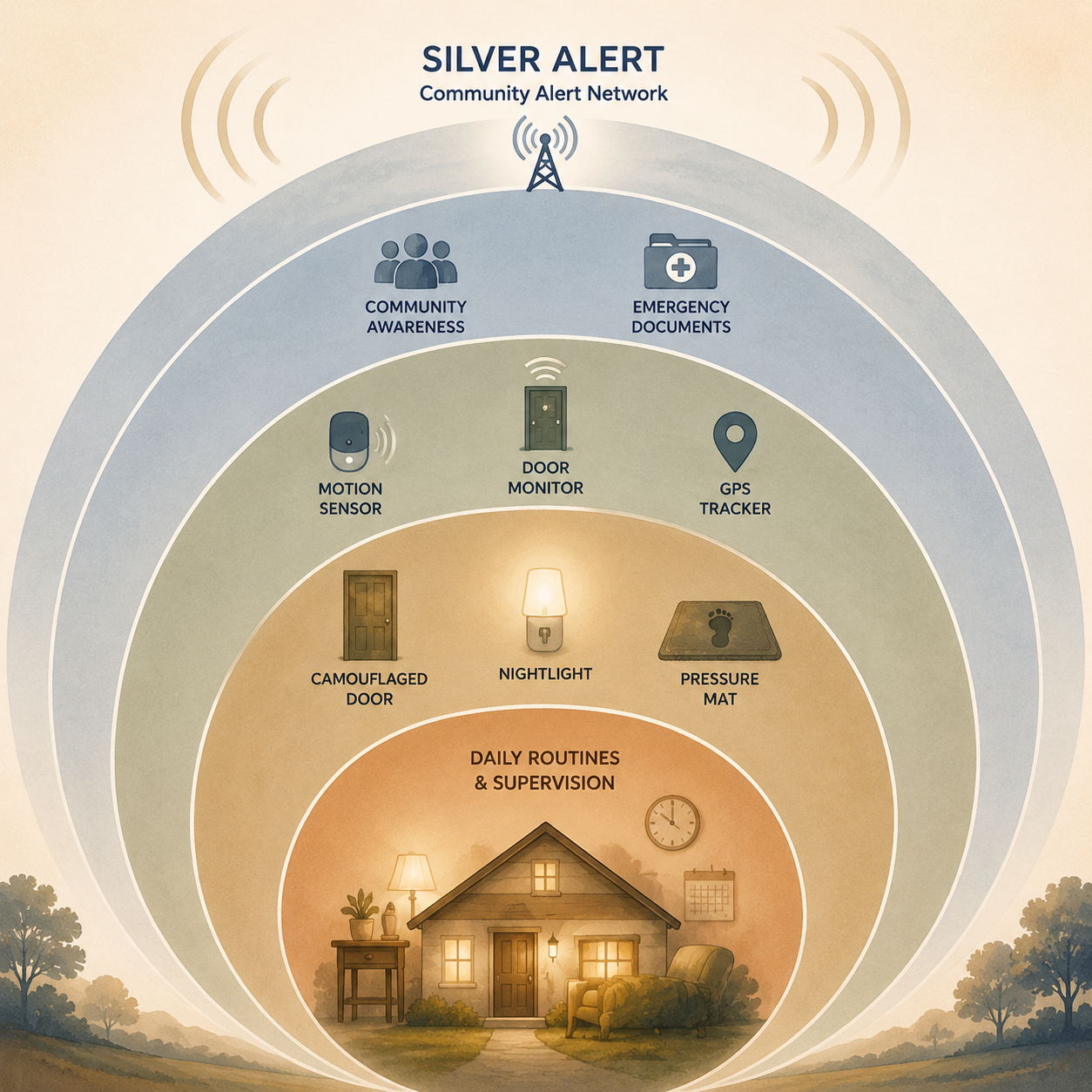
Build the layers before anyone goes missing
The NCCDP frames wandering and elopement as a set of action steps, which is the right mental model here: reduce the triggers, make exits less readable, add detection, and keep the response materials close enough that a tired caregiver can still use them.[3] A single measure rarely holds up at 7:30 p.m. when everyone is distracted. Layers do.
Start with the daily routine layer. Predictable meals, bathroom breaks, walks, and bedtime cues can reduce the kinds of restlessness that often send someone toward the door. If your parent gets most unsettled at a certain time of day, build the schedule around that pattern instead of assuming willpower will carry it.
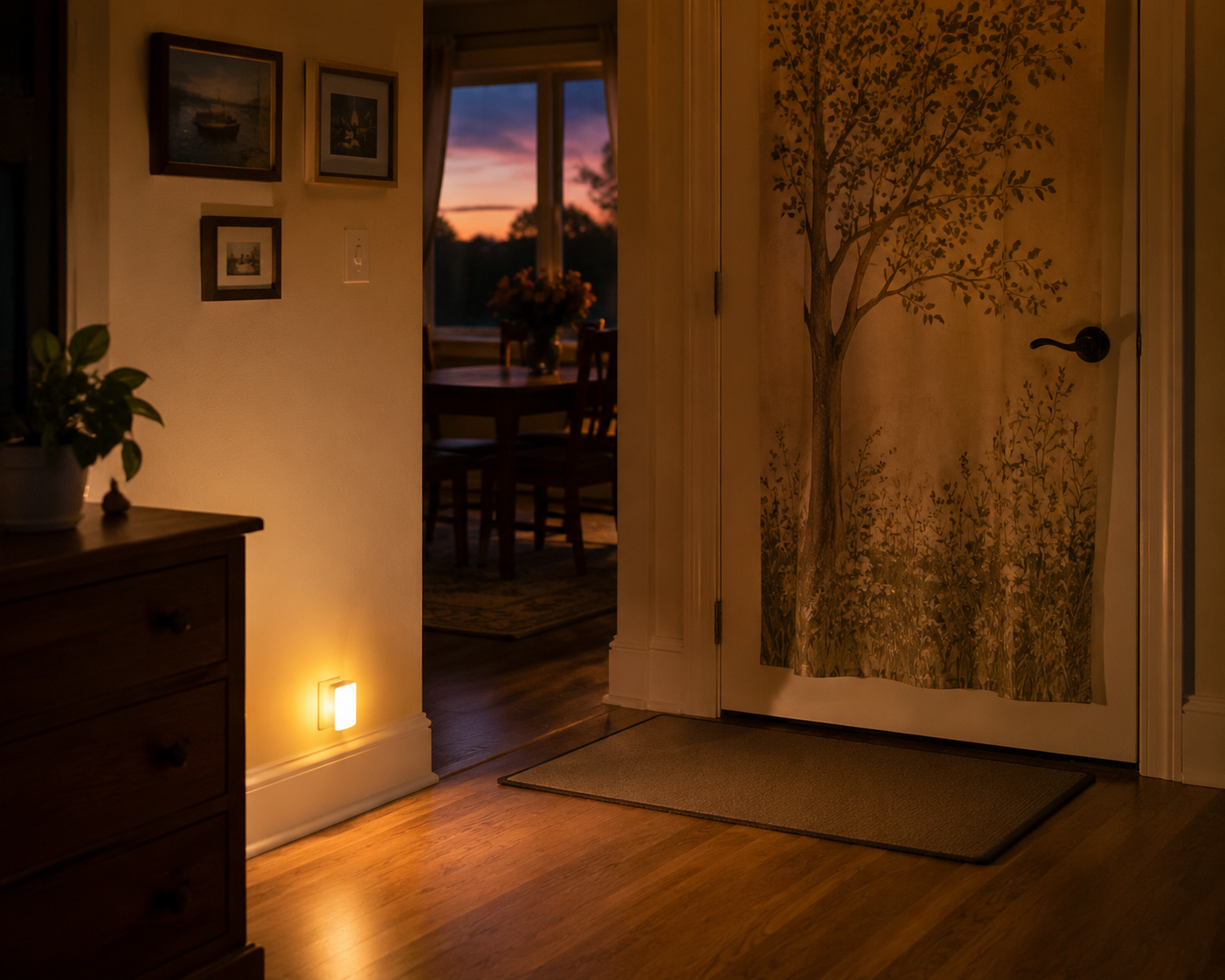
Then change the room, not just the reminder. Keep deadbolts out of sight, camouflage the door so it looks like part of the wall, and use pressure-sensitive mats, night lights, and other visual barriers so an exit attempt is easier to notice before it becomes a missing-person call.[1] If you want a deeper room-by-room walkthrough, use the site's Dementia-Friendly Home Modifications: A Stage-by-Stage Guide for the details that belong in the house itself.
Technology works best as a second detector, not a replacement for supervision. The Alzheimer's Association's safety guidance points to GPS trackers, motion sensors, and door monitors as tools that can add location or alerting when the person moves unexpectedly.[7] For some families, a medical ID or enrollment in MedicAlert's Safe & Found service can help emergency responders identify the person and contact family faster.[6] For a product-neutral comparison, the site's Dementia Monitoring Systems: What Works for Wandering, Nighttime Agitation, and Daily Routine Changes goes deeper.
The next layer is less visible but just as useful: neighbors who know who lives there, a current photo, a recent clothing description, height, weight, medication list, and a note on favorite walking routes or places the person tries to reach. Those details are what let the first call move quickly instead of turning into a search for basic facts.[3]
If the person is missing
If your loved one with dementia is not where they should be, do not wait for a Silver Alert to make the case. Cleveland Clinic advises calling 911 within 15 minutes, because the first hour matters more than the paperwork.[2] That warning lines up with the Alzheimer's Association's 24-hour risk guidance: if a person with dementia is not found within 24 hours, the chance of serious injury or death rises sharply.[1]
The first search is usually narrower than families expect. The Alzheimer's Association notes that many wandering cases end within about 1.5 miles of the last known location, and searchers are often told to think in the direction that matches the person's dominant hand.[1] Those details do not replace law enforcement; they just keep the first minutes from being wasted.
Silver Alerts still matter, and the state-level data are encouraging. Georgia's Mattie's Call program recovered 70 of 71 people in its first three years, and a Florida review reported 367 safe recoveries out of 377 alerts.[5] That is a reason to know your state's process, not to treat the alert as a prevention plan.
Because criteria and activation rules differ, check your state and local law enforcement process now, while the person is safe. Keep the current photo, identifying details, and emergency contacts ready. If the person is missing, call 911 quickly; that is how the Silver Alert stays a recovery backstop instead of the first response.
References
- Wandering - Alzheimer's Association
- When Someone With Alzheimer's Disease Wanders - Cleveland Clinic
- White Paper on Wandering and Elopement - NCCDP
- Silver Alert - Wikipedia
- For Whom the Bell Tolls - Journal of the American Academy of Psychiatry and the Law, 2013
- Medical IDs for Alzheimer's - MedicAlert Foundation
- Technology Safety for Older Adults - Alzheimer's Association
- Silver Alert - California Highway Patrol
Related reading
Noticed something outdated or inaccurate on this page? Flag a correction. We review every report against CDC, NIA, and AARP HomeFit guidance before updating a page.
Part of the Fall Prevention section.