Technology for Dementia Caregivers: Using the CARES Framework to Reduce Burden at Every Stage
stage guideearly, middle, late stagewandering, sleep disturbances, agitationReviewed: 2026-06-20
Technology for Dementia Caregivers: Using the CARES Framework to Reduce Burden at Every Stage
By Editorial Team
dementia communication
safety planning
early-stage Alzheimer's
middle-stage Alzheimer's
late-stage Alzheimer's
wandering
sleep disturbances
BPSD
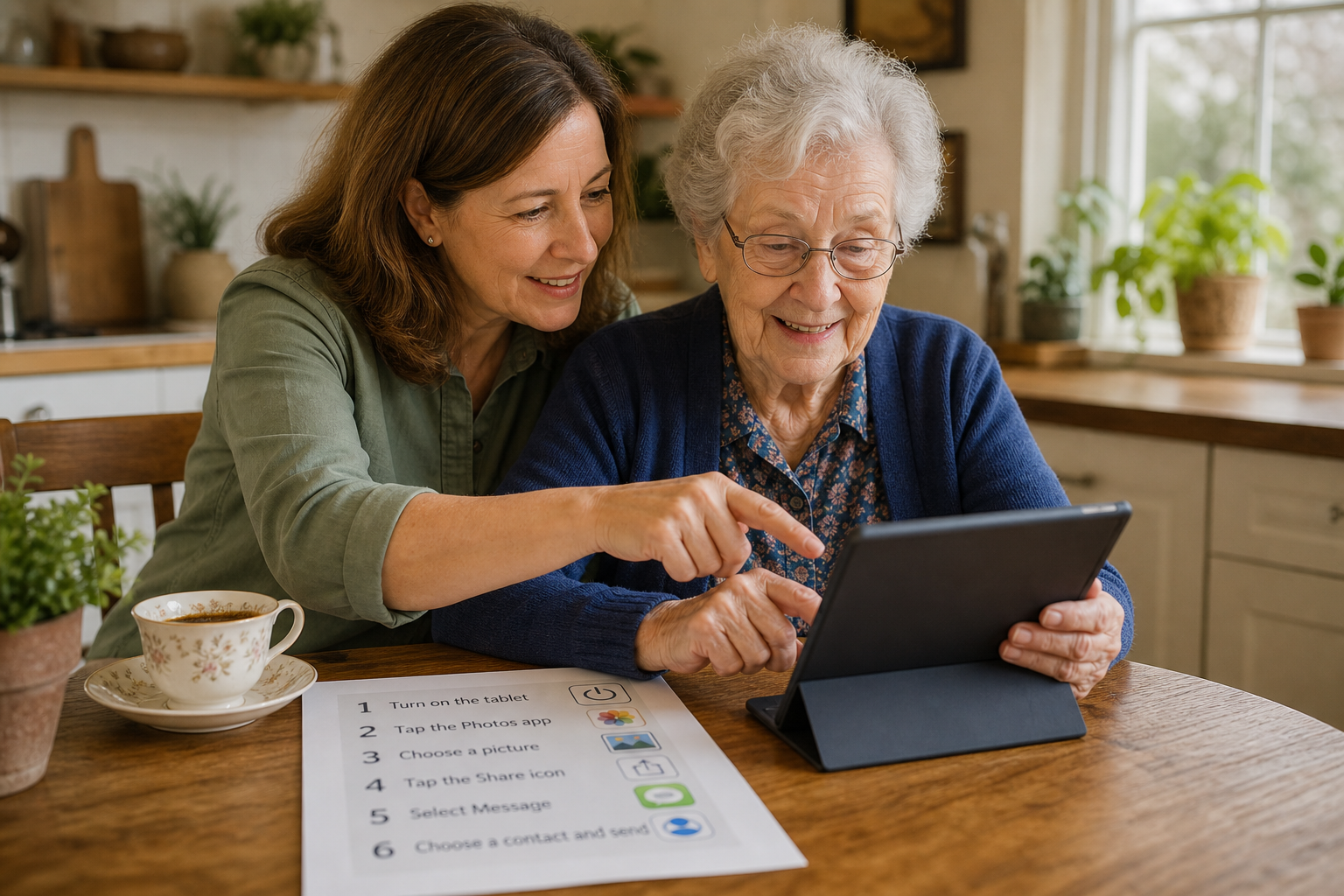
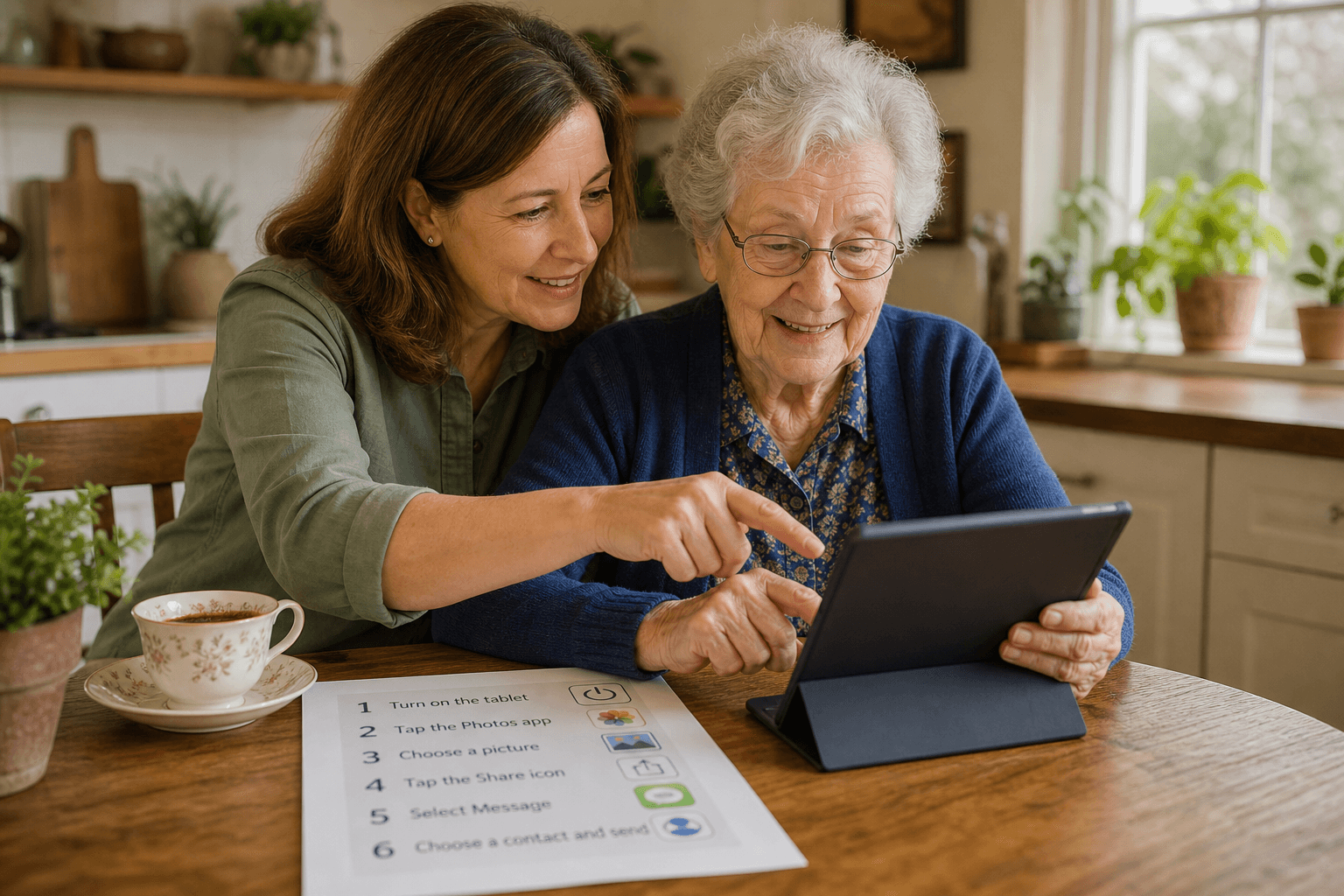
Shared success with technology requires patience, training, and a match between the device and the person's current abilities.
The Hidden Burden of Dementia Caregiving — and Why Technology Alone Isn't the Answer
Family caregivers are the invisible backbone of dementia care. According to data cited in the 2024 CARES framework paper by Kiselica and colleagues, family members are involved in 90% of dementia cases, contributing an estimated $339.5 billion per year in unpaid care. The average caregiver spends nearly 36 hours each weekproviding care, and 59% report significant emotional distress. This is not a small problem — it is a public health crisis playing out in millions of homes.
One of the most exhausting aspects of dementia caregiving is what researchers call the double to-do list: you are managing not only your own responsibilities but also the tasks the person with dementia can no longer handle alone — medication schedules, appointment reminders, safety checks, communication with family, and financial oversight. Technology seems like an obvious solution. But the evidence demands caution.
This is where the CARES framework comes in. Developed by researchers at the University of Georgia, Baylor University, and UT Austin, and published in Alzheimer's & Dementia in 2024, the framework provides a structured way to think about which technologies help at which stage of the disease — and why.
Introducing the CARES Framework: Five Pathways to Reduce Caregiver Burden
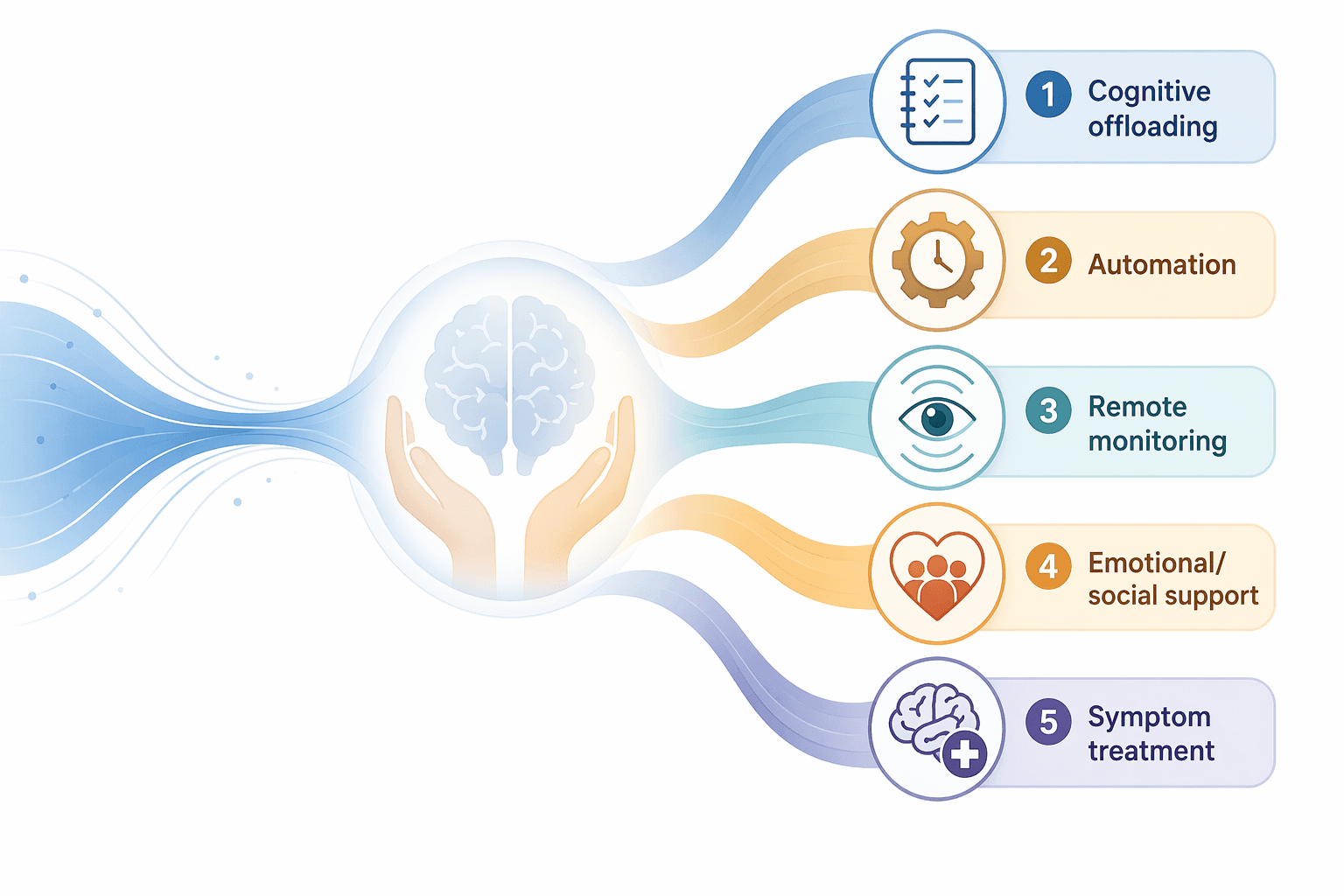
The CARES framework organizes technology into five evidence-based pathways that address specific types of caregiver strain.
The CARES framework (Kiselica et al., 2024) is an evidence-informed conceptual taxonomy — not a proven intervention, but a practical way to organize thinking about technology choices. It identifies five distinct pathways through which everyday technology can reduce caregiver burden:
Cognitive offloading: Using technology to compensate for memory and executive function decline — digital calendars, reminder apps, voice assistants that answer repeated questions.
Automation: Reducing the need for manual intervention — smart lighting that turns on at dusk, automatic stove shut-offs, programmable medication dispensers.
Remote monitoring: Allowing caregivers to check on safety from a distance — motion sensors, bed alerts, GPS trackers, door monitors.
Emotional and social support: Reducing isolation for both the person with dementia and the caregiver — simplified video calling, social robots, online caregiver communities.
Symptom treatment: Directly addressing behavioral and psychological symptoms of dementia — therapeutic robots for agitation, light therapy for sleep disturbances.
Each pathway addresses a different kind of strain. Cognitive offloading reduces the mental load of constant reminding. Automation removes the need for the caregiver to be physically present for every routine task. Remote monitoring provides peace of mind without constant vigilance. Emotional support addresses the loneliness that both parties feel. Symptom treatment targets the behaviors that are often the most distressing part of caregiving.
Technology for Preclinical and Early-Stage Dementia: Cognitive Offloading and Automation
In the earliest stages, the person with dementia retains significant independence. Memory lapses are frustrating but not yet dangerous. The goal of technology at this stage is to extend independence by offloading the cognitive tasks that are becoming unreliable — without making the person feel surveilled or incapable.
Simple solutions often outperform complex ones here. A basic voice assistant like Amazon Alexa or Google Assistant can answer repeated questions about the day, date, or weather — reducing the caregiver's need to respond to the same query ten times. A digital calendar shared between caregiver and care recipient can manage appointment reminders. Medication reminder apps can reduce missed doses.
Early-stage technology options focus on cognitive offloading and simple automation.

Comments
Join the discussion with an anonymous comment.