D'Youville Senior Care Memory Care: A Practical Evaluation Guide for Families
This guide helps adult children in Massachusetts and southern New Hampshire evaluate D'Youville Senior Care's Dementia Special Care Unit. It provides a data-driven analysis of the facility's therapeutic programming, quality metrics, staffing ratios, inspection history, and costs — framed as a transferable evaluation template for any memory care tour.
By Editorial Team
memory care evaluation
D'Youville Senior Care
dementia special care unit
nursing home quality metrics
Lowell memory care
Who This Guide Is For and How to Use It
If you are an adult child in Massachusetts or southern New Hampshire whose parent has recently received an Alzheimer's or dementia diagnosis, you are likely facing a decision that feels both urgent and overwhelming: is it time to move them into a memory care facility, and if so, which one? This guide is written for you. It uses D'Youville Senior Care in Lowell as a concrete case study — not because we recommend it over any other facility, but because its publicly available data reveals a genuine tension that every family should learn to evaluate.
D'Youville's 84-bed Dementia Special Care Unit posts some of the strongest therapeutic outcome metrics in the state — exceptionally low antipsychotic medication use and depression rates — while simultaneously reporting total nursing staffing levels that fall below both the Massachusetts and national averages. That tension is the heart of this article. We will walk you through the facility's programming, its quality data, its inspection history, its nonprofit governance structure, and its costs, and then give you a transferable checklist you can use to evaluate any memory care unit you tour.
Before you begin evaluating specific facilities, you may find it helpful to read our broader guide on when home care is no longer sufficient to confirm that a transition to memory care is the right step at this stage of your parent's disease.
D'Youville Senior Care: An Overview of the Lowell Campus
D'Youville Life & Wellness Community is a nonprofit continuing care retirement community located in Lowell, Massachusetts, serving over 1,000 seniors annually, primarily from the Greater Lowell area. It offers a full continuum of care under one umbrella: independent living (Bruyère Gardens), assisted living (the Saab Residence), skilled nursing, adult day health, and a dedicated Dementia Special Care Unit. This means a resident could theoretically age in place across multiple levels of care without leaving the campus — a significant advantage for families who want stability and continuity.
The campus is Medicare and Medicaid certified and accredited by The Joint Commission (JCAHO). It is important to distinguish between the different residences, because the memory care evaluation we are about to do applies specifically to the 84-bed Dementia Special Care Unit within the skilled nursing facility, not to the Saab Residence's 15-unit memory care wing for early-stage residents. If you are unsure which level of care your parent needs, our assisted living vs. memory care decision framework can help clarify the distinction.
Total licensed nursing facility beds: 208
Dementia Special Care Unit beds: 84
Assisted living (Saab Residence): 45 supportive units + 15 early-stage memory care units
Independent living (Bruyère Gardens): 63 units
Additional services: Adult day health, hospice care, respite care, subacute rehabilitation
For families whose loved one may need care following a fall or hospitalization, D'Youville also offers short-term rehabilitation and skilled nursing. Our guide on senior care options after a fall provides context for matching care levels to recovery needs.
Inside the 84-Bed Dementia Special Care Unit
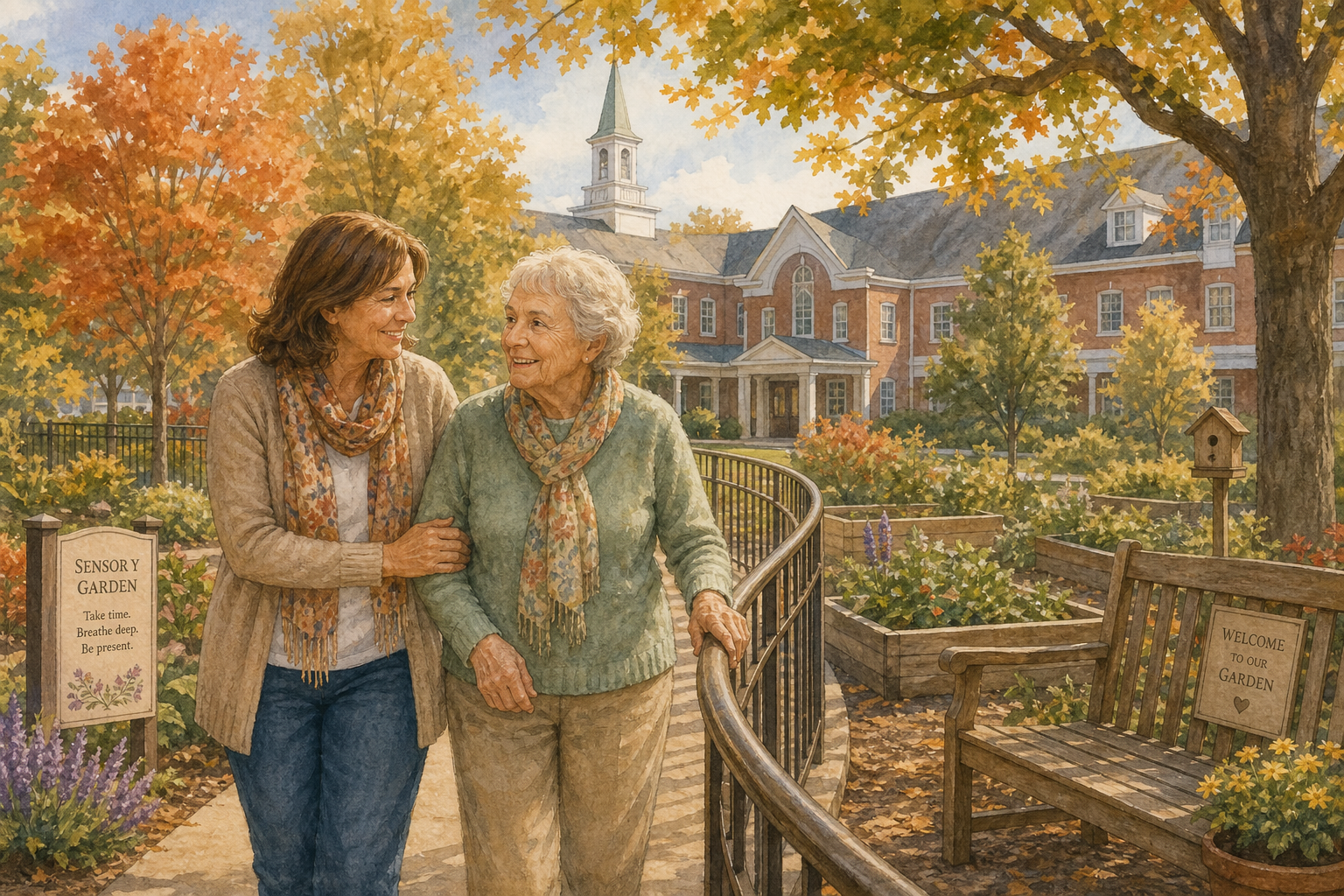
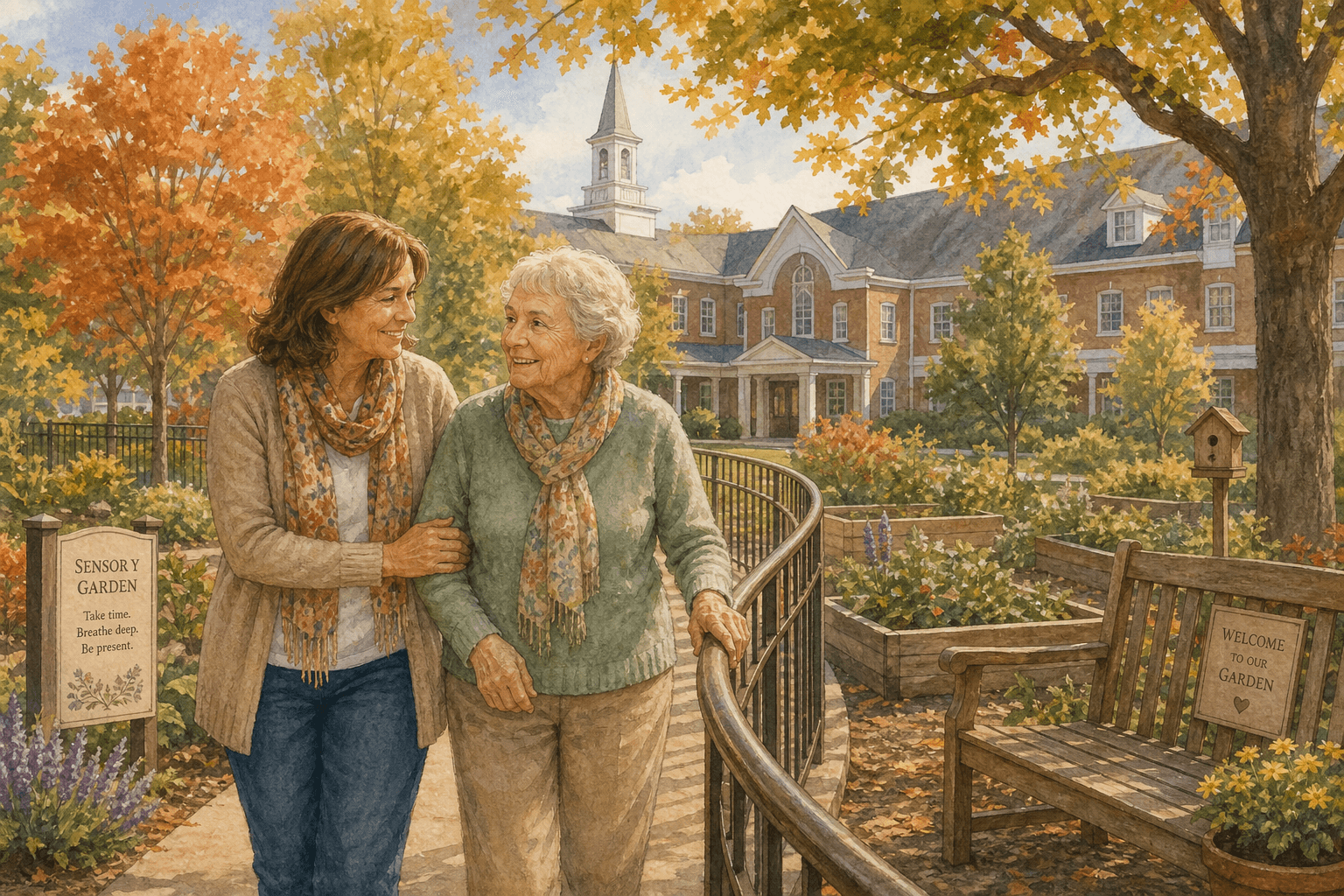
D'Youville's secured outdoor space and sensory garden are designed to provide a calm, home-like environment for residents with dementia.
The Dementia Special Care Unit at D'Youville is one of the larger dedicated memory care units in the region. Its 84-bed capacity allows the facility to offer specialized programming that smaller units cannot sustain. The unit is designed for residents in the middle and late stages of dementia, and the programming reflects an interdisciplinary approach involving specialists, nurses, social workers, and activities staff.
Key features of the unit include:
A secured outdoor space described by the facility as 'unique among most facilities,' designed to allow residents safe access to fresh air and nature without risk of wandering
A sensory room specifically designed to stimulate the mind and soothe agitation — a non-pharmacological intervention that aligns with best practices in dementia care
Animal-assisted therapy visits, which research has shown can reduce agitation and improve social engagement in people with dementia
Music therapy and opportunities for creative and artistic expression
Religious services including Mass and Rosary, reflecting the facility's faith-based heritage
Family support groups to help caregivers navigate the emotional challenges of placement
The facility also employs two full-time chaplains and integrates spiritual care into daily life, operating on the principle that 'the spiritual self is permanently entwined with the physical self.' For families whose loved one finds comfort in faith, this can be a meaningful differentiator.
To understand how this programming aligns with your parent's specific disease stage, our stage-aware decision guide for dementia caregivers provides a framework for matching care interventions to the progression of the disease.
The most reliable way to evaluate a nursing home's performance is through CMS Care Compare data, which is collected through regular health inspections and resident assessments. For D'Youville, the data from U.S. News (which draws on CMS sources) reveals a facility with genuinely impressive therapeutic outcomes in some areas and concerning staffing levels in others.
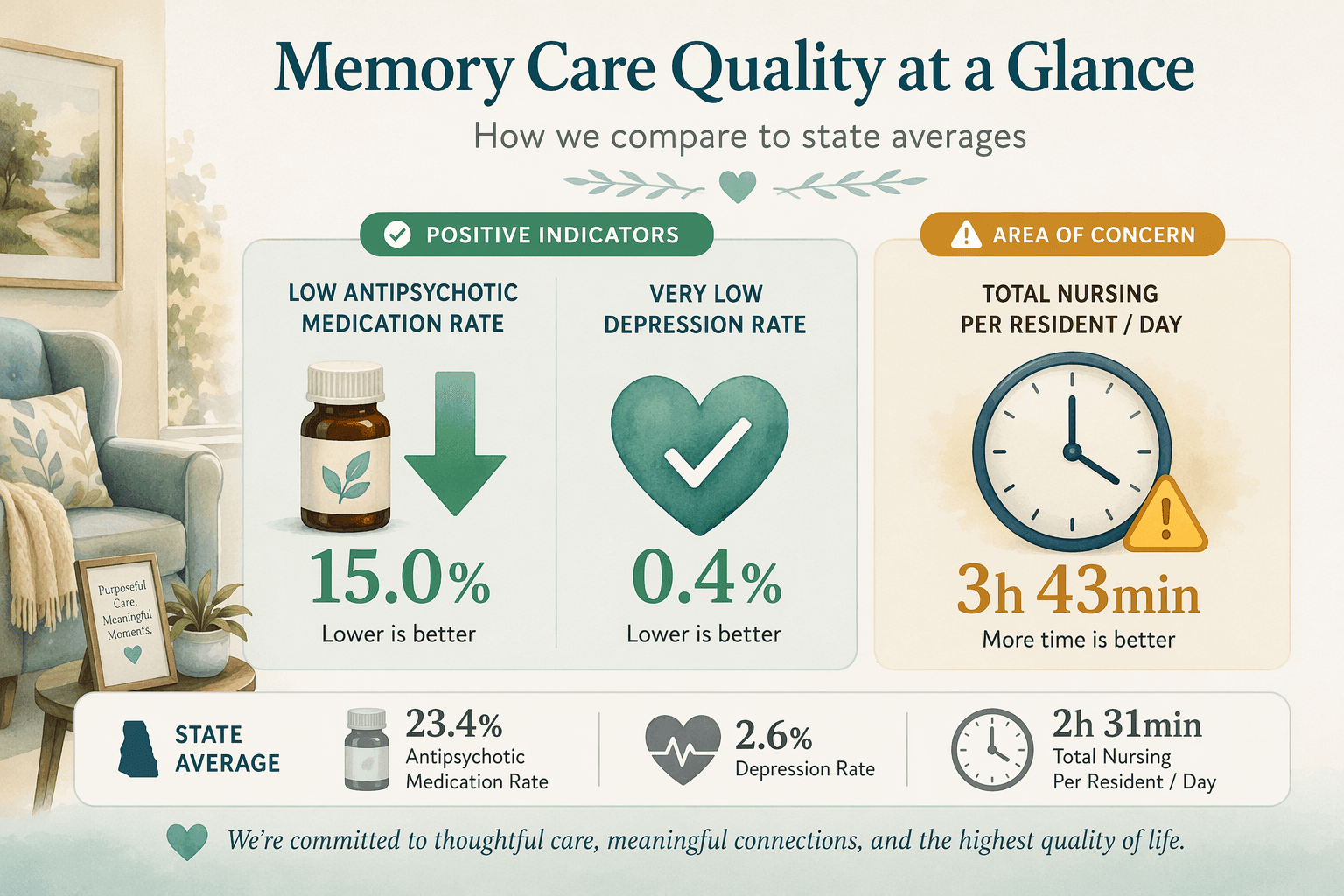
Key quality metrics for D'Youville Senior Care compared to state and national benchmarks. Data from U.S. News / CMS Care Compare.
Metric
D'Youville
Massachusetts Average
National Average
Total nurse staffing per resident/day
3h 43min
3h 52min
3h 50min
Registered Nurse staffing per resident/day
20 min
39 min
39 min
Antipsychotic medication use
15.0%
24.7%
20.5%
Depression rate among residents
0.4%
9.5%
10.3%
U.S. News Overall Rating
3 / 5
N/A
N/A
The most striking finding is the antipsychotic medication rate of 15.0%, which is nearly 10 percentage points below the Massachusetts average of 24.7% and well below the national average of 20.5%. This suggests that D'Youville's care team emphasizes non-pharmacological behavioral interventions — the sensory room, music therapy, animal visits, and outdoor access — before turning to antipsychotic drugs, which carry significant risks for older adults with dementia, including increased mortality.
Equally notable is the depression rate of 0.4%, compared to 9.5% statewide and 10.3% nationally. While depression is notoriously underdiagnosed in nursing home settings, a rate this far below the norm — even accounting for potential reporting differences — is unusual and may reflect the facility's activity-rich, spiritually integrated care model.
The U.S. News overall rating of 3 out of 5 places D'Youville in the middle tier nationally. The health inspection deficiencies are rated 'Above Average' for both short-term and long-term care, which is a positive signal. However, the RN staffing level of 20 minutes per resident per day — roughly half the state and national averages — is a legitimate concern that warrants direct questioning during a tour.
What the April 2025 Inspection Record Reveals
CMS conducts health inspections of nursing homes at least once every 15 months. D'Youville's most recent standard health inspection took place in April 2025. The findings are instructive for what they reveal — and what they do not.
The April 2025 survey identified 9 citations, all classified as low-severity and affecting few residents. The facility corrected all deficiencies by May 2025. This pattern — a modest number of low-severity citations followed by prompt correction — is consistent with a facility that has generally sound systems but, like most nursing homes, has occasional gaps in documentation or process compliance.
Over the past three years, D'Youville has paid 4 fines totaling $79,671. While any fine is concerning, the context matters: the fines are spread across multiple years, and the total is modest relative to the facility's size and operating budget. For comparison, large nursing home chains routinely face fines in the hundreds of thousands or millions of dollars.
Families should also be aware that D'Youville operates a Wanderguard system for resident safety — a common technology in memory care units that alerts staff if a resident with wandering risk attempts to leave a secured area. This is a standard safety measure, but it is worth asking about during a tour: how quickly does the system alert staff, and what is the protocol when an alert is triggered?
The Nonprofit Difference: Mission, Governance, and Care Quality
D'Youville is a 501(c)(3) nonprofit organization founded in 1960 by the Sisters of Charity of Ottawa, a division of the Grey Nuns. It is governed by a volunteer community board with roots throughout the Greater Lowell community. This governance structure has practical implications for care quality that families should understand.
A landmark 2009 systematic review and meta-analysis published in the BMJ, examining 82 studies spanning nearly four decades (1965–2003), found that not-for-profit nursing homes deliver higher quality care on average than for-profit homes. The meta-analysis showed that nonprofit facilities had more or higher quality staffing (ratio of effect 1.11, P<0.001) and lower pressure ulcer prevalence (odds ratio 0.91, P=0.02). The authors estimated that if all U.S. nursing homes were nonprofit, residents would receive 500,000 more hours of nursing care per day, and 7,000 residents with pressure ulcers would not have them.
For D'Youville specifically, the nonprofit structure means that any operating surpluses are reinvested into the facility and its programs rather than distributed to shareholders or private owners. This is reflected in the facility's investment in specialized programming — the sensory room, animal-assisted therapy, two full-time chaplains, and the secured outdoor garden — which may be harder to justify in a for-profit model focused on margin optimization.
The faith-based heritage also shapes the facility's approach to care. The Sisters of Charity's mission emphasizes compassionate service to vulnerable populations, and D'Youville's stated philosophy — that 'the spiritual self is permanently entwined with the physical self' — informs its integration of pastoral care into daily life. For families who value this holistic approach, it can be a meaningful factor in the decision.
Your Tour Checklist: What to Look For and Ask
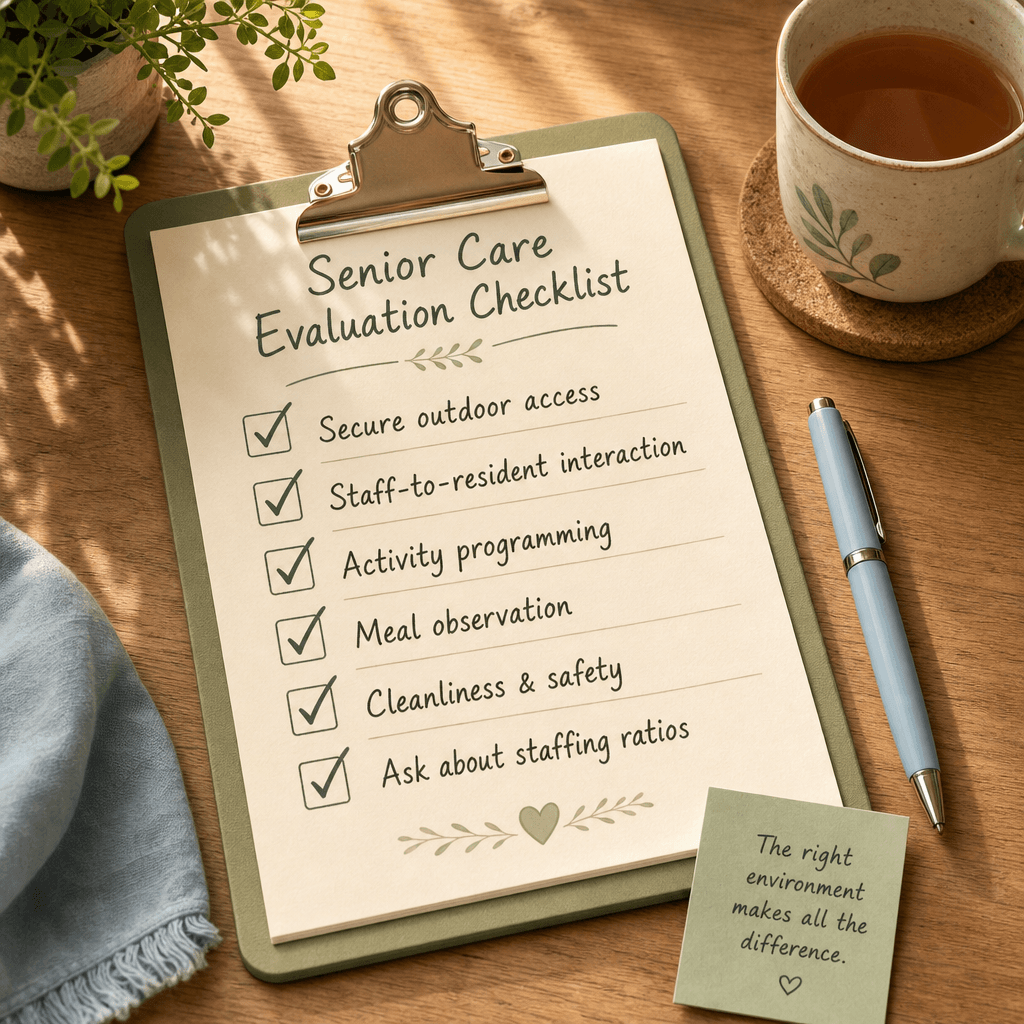
Use this checklist during any memory care tour to ensure you cover the most important evaluation criteria.
The following checklist is adapted from resources provided by the Alzheimer's Foundation of America (AFA) and Mass.gov. It is designed to be used at any memory care facility, not just D'Youville. Print it out, bring it on your tour, and take notes.
Before the Tour
Request current staffing data: Ask for the total nursing hours per resident per day and the RN hours per resident per day for the memory care unit specifically (not the facility as a whole). Compare these to the state and national averages.
Review the most recent state inspection report: CMS inspection reports are public. Read the full report, not just the summary. Look for patterns across multiple inspection cycles.
Check the facility's antipsychotic medication rate: This is published on CMS Care Compare. A rate significantly above the state average warrants questions about the facility's approach to behavioral interventions.
During the Tour
Observe staff-resident interaction: Do staff address residents by name? Do they make eye contact? Do they seem rushed or patient? The quality of these interactions is one of the strongest predictors of resident well-being.
Check the secured outdoor access: Is it genuinely accessible, or is it locked and unused? Are there places to sit? Is it shaded? Is it designed to be calming and engaging?
Ask about staff-to-resident ratios on each shift: The AFA notes that a common ratio is one caregiver to five or six residents, but this varies by shift. Ratios are often lower on night shifts and weekends.
Review the activity schedule: Is there a structured daily program? Are activities offered at different times of day to accommodate residents who are more alert in the morning vs. the afternoon? Is there programming on weekends?
Eat a meal: The AFA specifically recommends this. Is the food appealing? Is assistance available for residents who need help eating? Is the dining environment calm and pleasant?
Talk to families: If possible, speak with family members of current residents. Ask about their experience with communication from staff, responsiveness to concerns, and the quality of life they observe in their loved one.
Ask about antipsychotic use policies: What is the facility's protocol before prescribing antipsychotic medications? How does the team attempt non-pharmacological interventions first? How are families involved in these decisions?
Use your senses: Mass.gov advises using sight, hearing, smell, and touch. Does the unit smell clean without being overpowered by disinfectant? Do you hear sounds of engagement or silence? Are common areas clean and well-maintained?
After the Tour
Compare notes across multiple facilities: Tour at least two or three facilities before making a decision. Use the same checklist for each so you can make apples-to-apples comparisons.
Visit at a different time of day: If your first tour was at 10 a.m., go back at 6 p.m. or on a weekend. Staffing levels and the overall atmosphere can change dramatically.
Revisit our staged decision guide to confirm that memory care — rather than assisted living or enhanced home care — is the appropriate level of care at this stage of your loved one's dementia.
Cost, Payment, and Financial Considerations
The monthly cost of nursing home care at D'Youville Senior Care ranges from approximately $1,970 to $12,395, according to ElderLife Financial, a third-party aggregator. This wide range reflects the difference between semi-private and private rooms, as well as the level of care required. D'Youville publishes a 2026 room rate sheet on its website, which families should request directly for the most current pricing.
Payment options at D'Youville include:
Private pay: Out-of-pocket payment, typically required for at least the first months or years of residency
Medicare: Covers short-term skilled nursing or rehabilitation stays (up to 100 days), but does not cover long-term custodial care in a memory care unit
MassHealth (Medicaid): The state's Medicaid program covers long-term nursing home care for eligible residents. D'Youville is MassHealth certified, but families should verify current acceptance and any waiting lists
Long-term care insurance: Policies vary widely in what they cover. Review your parent's policy carefully to understand memory care benefits, elimination periods, and daily benefit caps
Managed care benefits: Some Medicare Advantage plans offer additional coverage for nursing home care
How D'Youville Compares to Other Lowell-Area Memory Care Options
D'Youville's 84-bed dedicated Dementia Special Care Unit is one of the larger memory care units in the Greater Lowell area. Size matters in memory care because it determines the range of programming a facility can sustain. A larger unit can justify dedicated staff for music therapy, animal-assisted therapy, and sensory room programming in a way that a 15- or 20-bed unit cannot. D'Youville's size also allows it to offer a full continuum of care on one campus, which can be a significant advantage for families who want to avoid multiple transitions.
However, size is not the only factor. Families should evaluate each facility using the same criteria: CMS quality metrics, staffing ratios, inspection history, therapeutic programming, cost, and the intangible feel of the environment. A smaller unit with higher staffing ratios and equally strong therapeutic outcomes may be a better fit for some residents, particularly those who become overstimulated in larger settings.
We do not rank or compare specific facilities by name — that would be inconsistent with our product-neutral editorial stance. Instead, we encourage you to use the evaluation framework and checklist in this guide to assess every facility you tour. If you are new to the process of selecting senior care, our step-by-step guide for first-time family caregivers provides a broader orientation to the decision-making process.
The core tension we identified at the outset — strong therapeutic outcomes paired with below-average staffing — is not unique to D'Youville. It reflects a broader challenge in the nursing home industry, where facilities must balance the cost of labor against investments in programming and environment. The question every family must answer is which trade-offs are acceptable for their loved one. By using the data, the inspection record, and the tour checklist in this guide, you can make that determination with confidence.

Comments
Join the discussion with an anonymous comment.