
Caregiver decision guide
When Aging in Place Is No Longer Viable: A Decision Framework Based on Functional Decline Markers, Not Emotions
A structured framework for adult children and spousal caregivers to determine whether a parent or spouse can safely remain at home — using measurable functional decline markers, home safety audit costs, and a cost breakeven analysis instead of guilt or crisis-driven reactions.
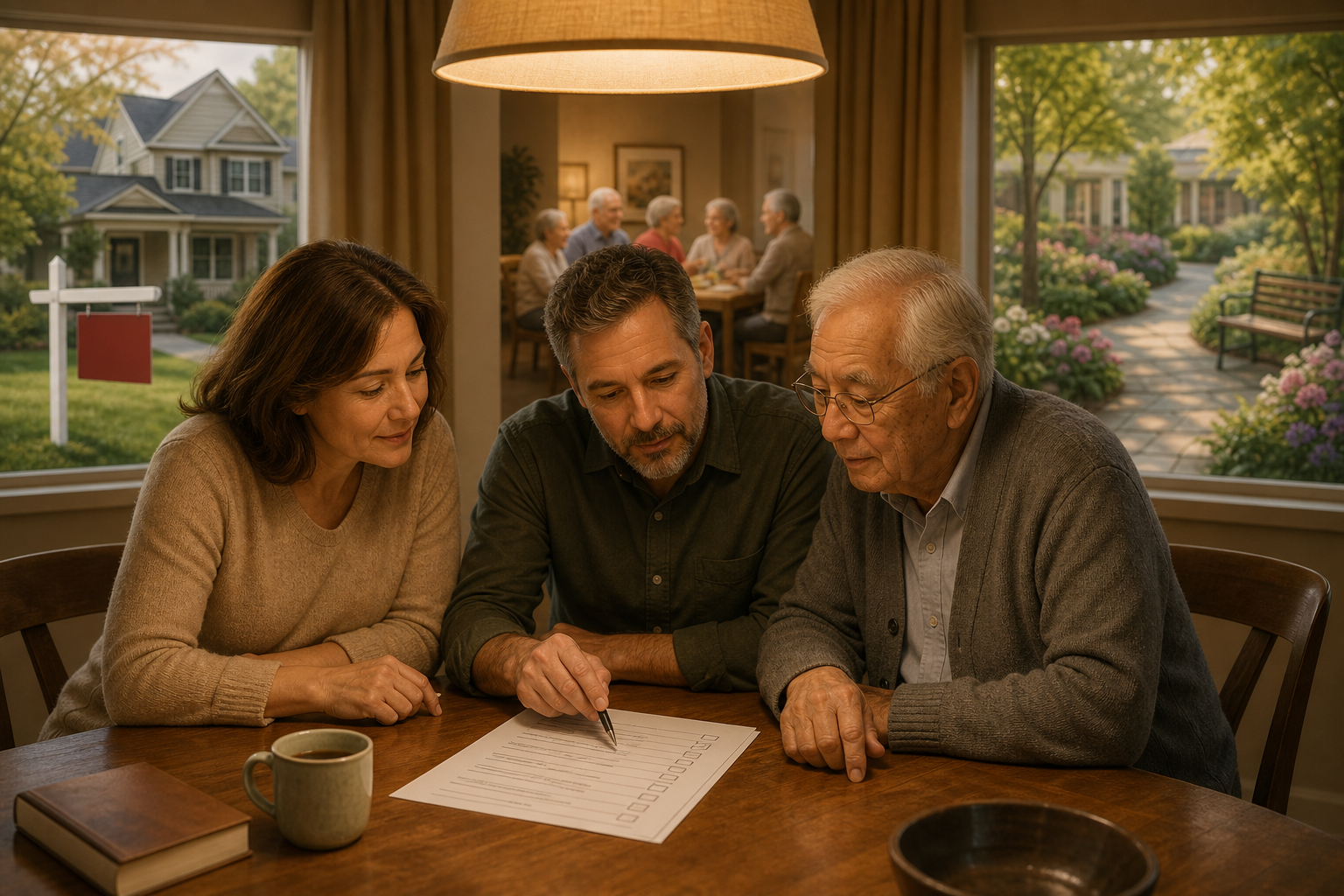
The Emotional Weight of the Decision: Why Guilt Drives Bad Choices
The numbers paint a clear picture of preference versus reality. According to an AARP 2021 Home and Community Preferences Survey, 77% of seniors want to remain at home for the long term. Yet the same data that captures this deep desire also reveals a hard truth: approximately 70% of older adults will need some form of long-term care during retirement, according to SeniorLiving.org statistics. This gap between what families want and what they may eventually need creates a breeding ground for guilt, denial, and crisis-driven decisions.
When an adult child promises a parent they will never have to leave home, or a spousal caregiver vows to manage everything alone, they are making an emotional commitment that often ignores the physical and financial realities of aging. The result is predictable: a fall, a medication error, or a moment of caregiver exhaustion triggers a rushed move to the nearest available facility — a decision made under duress rather than deliberate planning.
This article focuses specifically on the aging-in-place viability decision using functional decline markers and cost analysis. For a broader overview of long-term care options, see our guide When Is It Time for Long-Term Care? A Decision Framework for Families.
The 5 Functional Markers That Determine Viability
Rather than asking "Is Mom safe?" — a question that invites subjective answers — this framework asks five specific, measurable questions. Each marker has a threshold that signals when the risk of staying home begins to outweigh the benefits. These markers are drawn from standard geriatric assessment tools, including the Katz Index of Independence in Activities of Daily Living (ADLs) and the Lawton Instrumental Activities of Daily Living (IADL) scale.

Marker 1: ADL Dependencies — How Many and Which Ones
The Katz ADL framework identifies six core activities: bathing, dressing, toileting, transferring (moving from bed to chair), continence, and feeding. A person who needs help with one or two ADLs is typically a candidate for home care or minimal assistance. When dependencies reach three or more — particularly if they include toileting or transferring — the daily care burden becomes significant. Assisted living is designed for residents who need help with two or fewer ADLs, according to the LTCFEDS federal program. Beyond that threshold, the level of care required often exceeds what a standard assisted living facility provides, pointing toward skilled nursing.
Marker 2: Fall Frequency — Single vs. Recurrent
Falls are the leading cause of fatal injury among adults aged 65 and older. A single fall is not necessarily a signal that aging in place has failed — but it is a clinical signal that requires investigation. When a second fall occurs within six months, the pattern shifts from accident to systemic risk. Recurrent falls often indicate underlying issues — muscle weakness, medication side effects, or environmental hazards — that home modifications alone cannot fully address.
Marker 3: Medication Management Errors
Missed doses, double-dosing, or confusion about a complex medication regimen are early warning signs that cognitive or physical decline is affecting the ability to manage health independently. When a senior cannot reliably manage their own medications — even with a pill organizer — the risk of hospitalization rises sharply. This marker is particularly important because it is often the first observable sign of cognitive decline that the senior themselves can hide most effectively.
Marker 4: Cognitive Decline Stage
Mild cognitive impairment may be manageable at home with supervision and structured routines. Moderate dementia — characterized by wandering, sundowning, or difficulty recognizing familiar people — introduces safety risks that home environments are rarely equipped to handle. Severe dementia requires 24/7 supervision and specialized care. The National Institute on Aging notes that 42% of assisted living residents have Alzheimer's or another form of dementia, but memory care units (which cost 20–40% more than standard assisted living) are often necessary once behavioral symptoms emerge.
Marker 5: Caregiver Capacity — Physical, Emotional, and Financial Limits
This is the marker most families overlook. Caregiver burnout affects an estimated 40–70% of family caregivers and is the most common hidden driver of preventable nursing home placements. A caregiver who is physically exhausted, emotionally depleted, or financially strained cannot provide safe care — regardless of how devoted they are. If the primary caregiver reports sleep disruption, irritability, or declining health, that is a functional marker of an unsustainable situation.
| Functional Marker | Green Zone (Safe) | Yellow Zone (Monitor) | Red Zone (High Risk) |
|---|---|---|---|
| ADL Dependencies | 0–1 ADLs | 2 ADLs | 3+ ADLs or any toileting/transferring dependency |
| Fall Frequency | 0 falls in 12 months | 1 fall in 6–12 months | 2+ falls in 6 months |
| Medication Management | Manages independently | Needs occasional reminders | Misses doses or makes errors weekly |
| Cognitive Decline | Mild forgetfulness | Moderate impairment, no wandering | Wandering, sundowning, or unable to recognize caregivers |
| Caregiver Capacity | Caregiver reports good health | Caregiver reports fatigue or stress | Caregiver reports exhaustion, sleep loss, or declining health |
The Home Safety Audit: What Modifications Cost and When They Don't Make Sense
Before concluding that aging in place is impossible, families should conduct a thorough home safety audit. Many homes can be made safer with targeted modifications. According to Consumer Affairs data cited by Vi Living, home modification costs range from $10,000 to $100,000 depending on the scope of work. This broad range spans everything from a simple grab bar installation ($200) to a full accessible bathroom remodel ($8,000–$25,000) to a wheelchair lift ($5,000).
The key question is not whether modifications are possible — it is whether they are financially rational given the senior's trajectory. A useful breakeven concept: if the cost of necessary home modifications exceeds 18 months of assisted living, the financial math shifts. For example, a full home retrofit costing $60,000 equals roughly 11 months of assisted living at the national median of $5,419/month. If the senior also needs 20 hours per week of home care at $34/hour ($2,944/month), the combined monthly cost of staying home with modifications and care quickly exceeds assisted living.
| Modification | Typical Cost Range | Equivalent Months of Assisted Living ($5,419/mo) |
|---|---|---|
| Grab bars (bathroom) | $150–$300 | < 1 month |
| Raised toilet seat | $50–$150 | < 1 month |
| Non-slip flooring (1 room) | $500–$2,000 | < 1 month |
| Custom-built ramp | Up to $3,000 | < 1 month |
| Wheelchair lift | Up to $5,000 | ~1 month |
| Full bathroom remodel | $8,000–$25,000 | 1.5–4.6 months |
| Stair lift | $3,000–$10,000 | 0.5–1.8 months |
| Major home retrofit (multiple rooms) | $50,000–$100,000 | 9–18 months |
For a detailed breakdown of specific modifications and their costs, see our guide Aging in Place Home Modifications: A Complete Cost Breakdown and Planning Guide for Families. If you are considering hiring a professional, our guide on How to Hire a CAPS-Certified Aging-in-Place Specialist explains what these specialists do and how to find one.
Cost Comparison: Home Care Plus Modifications vs. Assisted Living
The financial comparison between staying home and moving to senior living is not as simple as comparing a monthly rent to zero. Staying home safely often requires a combination of home care services and physical modifications. The table below uses 2026 national median data to illustrate the breakeven point.

| Cost Category | Monthly Cost (National Median) | Annual Cost |
|---|---|---|
| Home care (20 hrs/week at $34/hr) | $2,944 | $35,328 |
| Home care (40 hrs/week at $34/hr) | $5,888 | $70,656 |
| Home modifications (one-time, amortized over 5 years) | $167–$1,667 | $2,000–$20,000 |
| Total — home care 20 hrs + modifications amortized | $3,111–$4,611 | $37,328–$55,328 |
| Assisted living (all-inclusive base rate) | $5,419 | $65,028 |
| Assisted living with hidden costs (+20–50%) | $6,503–$8,129 | $78,036–$97,548 |
| Memory care (20–40% above assisted living) | $6,503–$7,587 | $78,036–$91,044 |
| Nursing home (semi-private) | $9,555 | $114,660 |
| Nursing home (private) | $10,965 | $131,580 |
The breakeven point becomes clear: at 20 hours per week of home care, the monthly cost of staying home ($3,111–$4,611 including amortized modifications) is lower than assisted living ($5,419). But at 40 hours per week of home care, the monthly cost ($5,888) exceeds assisted living before modifications are even added. This is why the number of ADL dependencies — which directly determines how many care hours are needed — is the single most important financial variable.
Another critical data point: the median length of stay in assisted living is 22 months, according to A Place for Mom. After that, most residents transition to a higher level of care — either memory care or skilled nursing. This means that families who delay the decision until a crisis occurs may skip assisted living entirely and go straight to nursing home care, which costs $9,555–$10,965 per month. Proactive planning allows families to choose the right level of care at the right time, rather than accepting whatever is available in an emergency.
For families exploring affordable modification options, see our comparison of Habitat for Humanity Aging in Place vs. Government Home Repair Programs.
Red-Line Markers: When Staying Home Is No Longer Safe
Some conditions make aging in place unsafe regardless of the senior's preference or the family's willingness to provide care. These red-line markers are non-negotiable signals that a transition to a higher level of care is medically necessary.
- Wandering behavior: A person with dementia who wanders is at risk of injury, exposure, or death. Standard home environments cannot provide the secure perimeter and 24/7 supervision that memory care facilities are designed to deliver.
- Incontinence requiring 24/7 management: When incontinence becomes frequent or unpredictable, the care burden on a single family caregiver becomes unsustainable. Assisted living and skilled nursing facilities have staff trained to manage this with dignity and efficiency.
- Significant weight loss from inability to prepare food: Unintentional weight loss of 5% or more in one month — or 10% in six months — indicates that the senior cannot meet their nutritional needs independently. This is a medical emergency, not a preference issue.
- Caregiver exhaustion documented by PHQ-9 scores: The Patient Health Questionnaire-9 is a standard depression screening tool. A score of 10 or higher indicates moderate depression. When a caregiver reaches this threshold, their ability to provide safe care is compromised.
- Recurrent falls (2+ in 6 months): As noted earlier, falls are the leading cause of fatal injury in adults 65+. Two or more falls in six months indicates a systemic risk that home modifications alone cannot eliminate.
Staging the Transition: From Crisis-Reactive to Proactive Planning
The decision to transition from home to senior living does not have to be binary — stay home forever or move immediately. Many families benefit from a staged approach that combines home care, modifications, and eventual transition planning.
Step 1: Assess and Address the Yellow Zone
If the functional markers fall primarily in the yellow zone, the priority is to address the specific risks. Install grab bars in the bathroom. Arrange for a medication management service. Hire a home care aide for the hours when the family caregiver needs rest. These interventions can extend safe aging in place by months or even years.
Step 2: Tour Facilities Before a Crisis
The single best predictor of a successful transition is touring facilities before a crisis forces the decision. Visit three to five communities in your area. Ask about their fee structures, care-level tiers, and waitlists. The median assisted living stay is only 22 months, so the facility you choose matters — and choosing under pressure almost always leads to a worse outcome.
Step 3: Set Financial Triggers
Agree as a family on the financial threshold that will trigger a transition. For example: "If home care costs exceed $5,000 per month for three consecutive months, we will begin the move process." This removes the emotional negotiation from the moment of decision and replaces it with a pre-agreed plan.
Step 4: Involve the Senior in the Process
Whenever possible, include the senior in facility tours and financial discussions. Seniors who participate in the decision-making process have better emotional outcomes after the move than those who are moved without input. Even if the senior is resistant, explaining the functional markers and red-line conditions in concrete terms can help them understand why the transition is necessary.
Printable Decision Worksheet: Assess Your Situation Objectively
The following worksheet is designed to help families assess their specific situation using the five functional markers, home safety audit results, and caregiver capacity. It is a tool for assessing current viability — not for forcing an immediate move. A printable version of this worksheet is available for download.
| Assessment Area | Your Score (1–5) | Notes and Observations |
|---|---|---|
| ADL Dependencies (1 = independent, 5 = needs help with 3+ ADLs) | ||
| Fall Frequency (1 = no falls, 5 = 2+ falls in 6 months) | ||
| Medication Management (1 = fully independent, 5 = weekly errors) | ||
| Cognitive Decline (1 = mild, 5 = severe with wandering) | ||
| Caregiver Capacity (1 = healthy, 5 = exhausted or declining health) | ||
| Home Safety Audit (1 = minimal changes needed, 5 = major retrofit required) | ||
| Financial Viability (1 = home care + modifications affordable, 5 = costs exceed assisted living) |
This worksheet is not a clinical assessment tool. It is a structured conversation starter for families. Share the results with the senior's primary care provider, a geriatric care manager, or an occupational therapist who can provide professional guidance tailored to your specific situation.
Questions to bring to a clinician or OT
This is not medical, legal, or a family's final decision — only a framework. Bring these questions to a clinician, occupational therapist, or your local Area Agency on Aging.
Find Local HelpRelated reading
- Is Companion Care Enough? A Decision Framework for Choosing Between Companion Care, Personal Care, and a Home Health Aide
- Home Care vs. Home Health Care: A Decision Framework for Seniors With Chronic Conditions in 2026
- Short-Term Care vs. Long-Term Care for Seniors: A Family Caregiver's Decision Framework
Noticed something outdated or inaccurate on this page? Flag a correction. We review every report against CDC, NIA, and AARP HomeFit guidance before updating a page.