
Clinical term
When Is It Time for Long-Term Care? A Decision Framework for Families
Why Most Families Wait Until a Crisis
The decision to move a parent into long-term care is rarely a calm, calculated choice. More often, it arrives in the aftermath of something acute — a hip fracture from a fall, a hospitalization for dehydration, a call from the police after a wandering episode. The family scrambles, visits three facilities in two days, and makes a six-figure commitment under duress. This pattern is so common that it has become the default path for millions of families.
Why do so many families wait? The most powerful barrier is psychological. Adult children often describe the prospect of moving a parent to a facility as a form of abandonment — a betrayal of the parent who raised them. This feeling is so uncomfortable that the brain actively avoids the decision, even as evidence of decline accumulates. The gradual nature of aging makes it worse: a parent who loses five pounds over six months, misses two medication doses a week, and stops bathing regularly does not trigger the same alarm as a sudden heart attack. The decline is real, but it happens in increments too small to force action.
The cost of this delay is measurable. Families who plan ahead have time to research options, tour facilities during normal hours (not weekends), compare pricing structures, and — most importantly — include their loved one in the conversation. Crisis-mode decisions, by contrast, are driven by bed availability, not fit. A 2026 AARP report found that long-term care costs have risen nearly 50% since 2019, with home care inflation running at 7.9% annually — nearly double the overall inflation rate. Waiting does not make the problem cheaper or easier.

The Five Signal Domains: A Structured Way to Assess Changing Needs
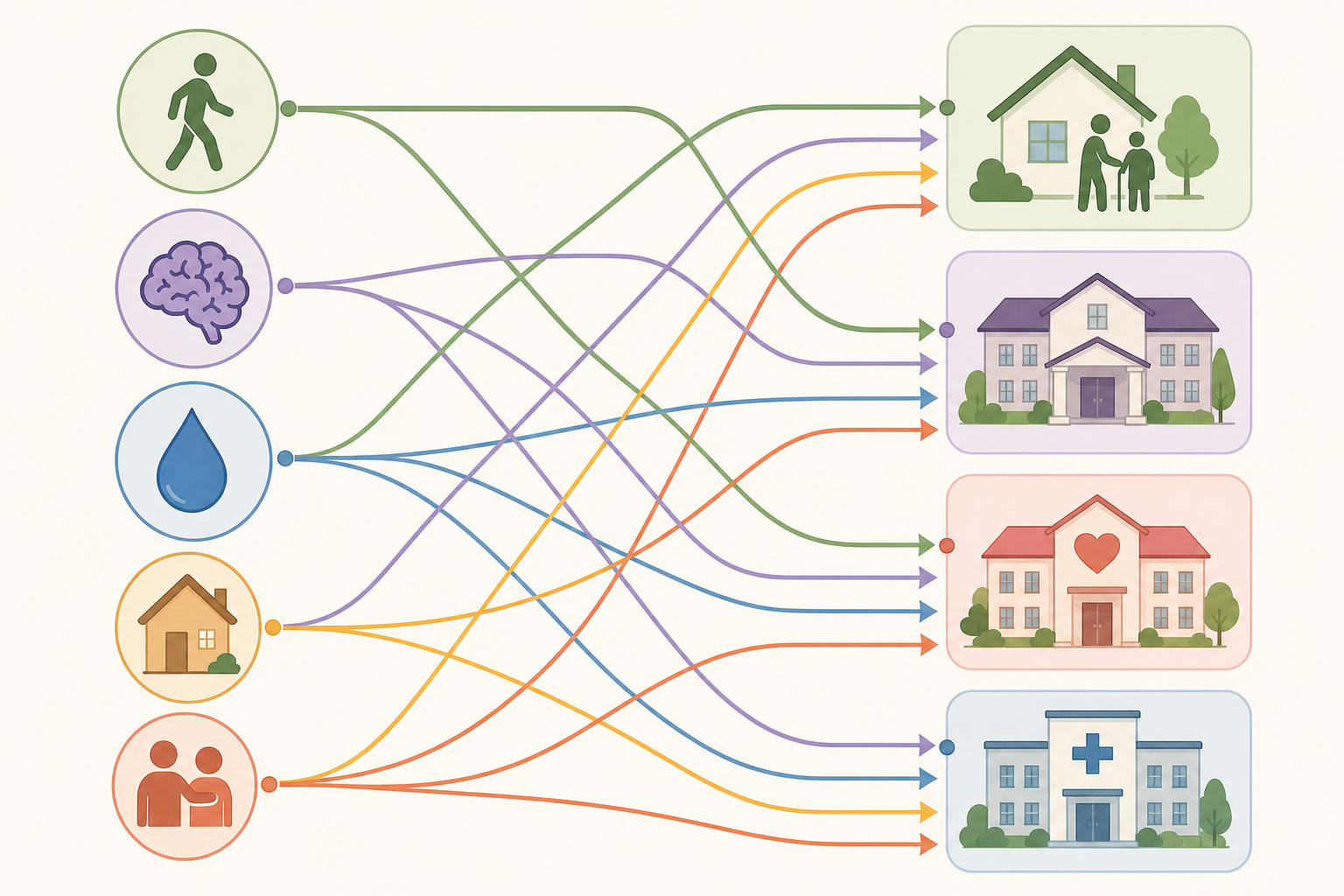
Rather than waiting for a single catastrophic event, families can use a structured assessment across five domains to recognize when an older adult's needs have shifted beyond what informal care can manage. These domains are designed to be observable — things you can notice during a weekly phone call or a Sunday visit — not clinical measurements that require a doctor's assessment.
| Domain | What to Look For | Example Signals |
|---|---|---|
| Physical | Changes in strength, balance, mobility, and energy that increase fall risk or make daily tasks difficult | Bruises from unreported falls; difficulty rising from a chair; unsteady gait; significant weight loss or gain; fatigue that limits activity |
| Mental | Declines in memory, judgment, or decision-making that affect safety or daily function | Missed medication doses; confusion about time or place; unpaid bills or unusual financial decisions; difficulty following conversations; getting lost in familiar areas |
| Hygiene & Personal Care | Declining ability to manage basic activities of daily living (ADLs) independently | Unwashed clothes or body; unchanged bedding; strong urine odor in the home; skipped bathing or dental care; wearing the same clothes repeatedly |
| Lifestyle & Home Environment | Changes in the home environment or daily routines that signal declining capacity | Unusually messy or cluttered home; spoiled food in the refrigerator; unopened mail piling up; stopped hobbies or social activities; noticeable social isolation |
| Caregiver Capacity | The caregiver's own physical, emotional, and practical ability to continue providing care | Caregiver exhaustion or burnout; missed work days; strain on the caregiver's marriage or health; inability to provide the level of care now needed |
A single signal — a missed medication dose, a messy kitchen — is not a crisis. But when signals appear across multiple domains, the pattern becomes meaningful. An older adult who has lost weight (physical), stopped bathing (hygiene), and whose home is cluttered and unkempt (lifestyle) is not having a bad week. They are showing a pattern of decline that informal care alone cannot reverse.
Matching Signals to Care Settings: A Decision Framework
Once you have identified the signal pattern, the next question is which care setting matches the level of need. The framework below maps common signal combinations to the four most common care settings. The goal is not to diagnose a specific facility type but to narrow the range of options so your research is focused.
| Signal Pattern | Likely Appropriate Setting | Key Consideration |
|---|---|---|
| Difficulty with ADLs (bathing, dressing, meals) but no major medical needs; caregiver is managing but stretched | Home-based services (home health aide, personal care, meal delivery) | Most affordable option if the home is safe and the older adult prefers to stay; costs average $80,080/year for 44 hours/week of non-medical care |
| Multiple ADL difficulties; medication errors; minor falls; social isolation; caregiver burnout | Assisted living | Designed for daily support and safety, not medical complexity; costs average $74,400/year; regulations vary significantly by state |
| Wandering; sundowning; inability to recognize family; unsafe use of appliances; behavioral symptoms | Memory care (specialized dementia unit) | Not a federally regulated category — quality varies enormously; typically a locked or secured unit within assisted living or a nursing home |
| Pattern of hospitalizations; medical needs requiring licensed nursing care; unmanaged chronic conditions; significant weight loss; physical dependence requiring multiple people for transfers | Skilled nursing facility (nursing home) | Most clinically intensive setting; 24-hour nursing care; private room costs average $129,575/year; semi-private $114,975/year |
The most common mistake families make is jumping to the most intensive setting — a nursing home — when a less intensive option would suffice. Assisted living exists precisely for the middle ground: the person needs help with daily activities and supervision for safety, but does not need 24-hour skilled nursing. If your parent can transfer from bed to chair with one person assisting, can eat independently, and does not have complex medical needs, assisted living is likely the right starting point.
For readers who have already decided that a transition is needed and are weighing home care against assisted living, the Home Care vs. Assisted Living decision guide provides a detailed comparison of those two specific settings. For a deeper dive into the characteristics of each facility type — including CCRCs, board and care homes, and memory care units — the Senior Citizen Home Types Guide offers a comprehensive overview.
The Financial Reality: What Medicare Covers (and What It Doesn't)
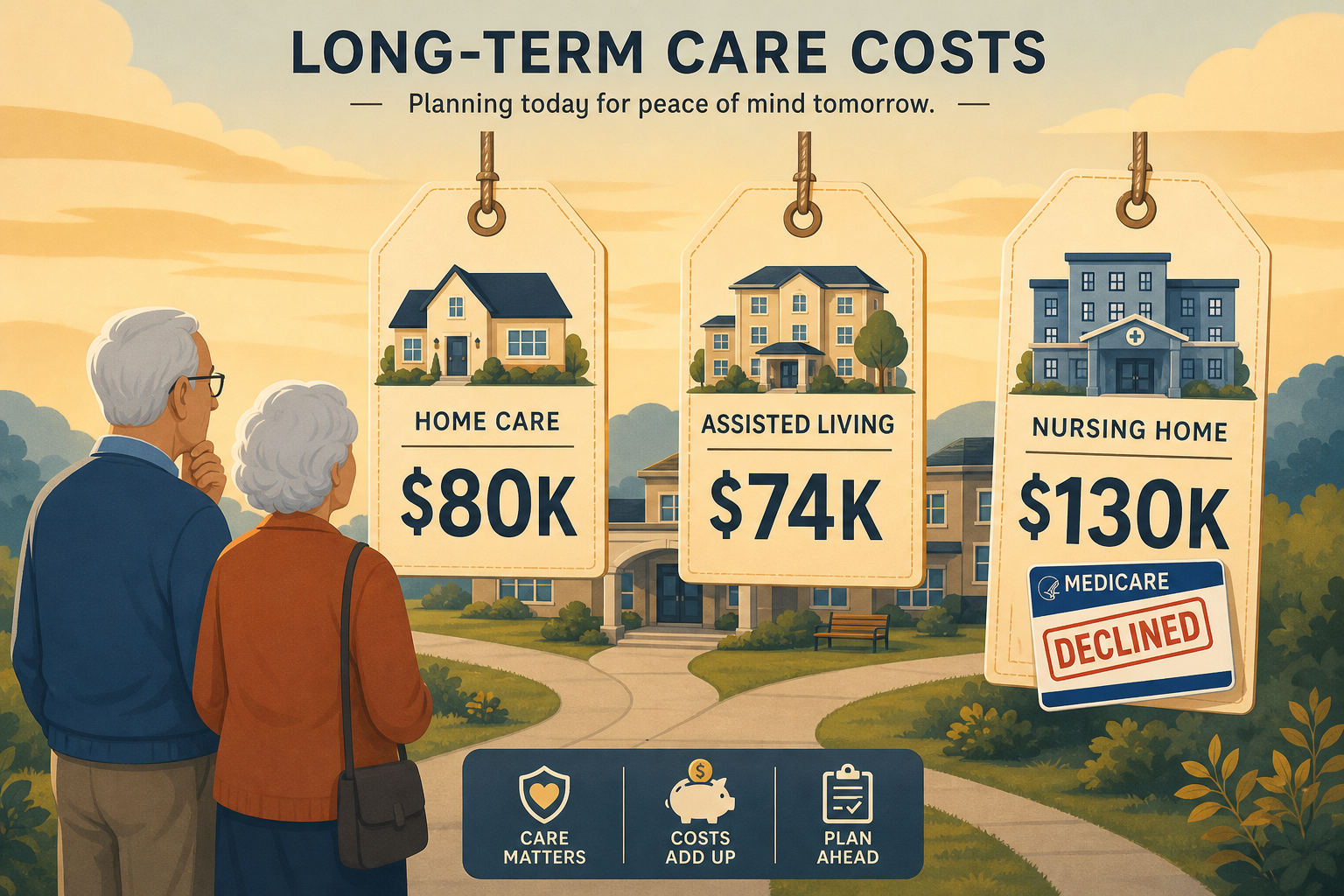
The single most damaging misunderstanding in long-term care planning is the belief that Medicare will pay for it. It will not. Medicare covers short-term skilled nursing care after a hospital stay — 100% for the first 20 days, then roughly 80% for days 21 through 100 — but it explicitly does not cover long-term custodial care, which is the type of care most older adults need: help with bathing, dressing, eating, and medication management.
The financial numbers are sobering. According to CareScout's 2025 Cost of Care Survey, the national median annual costs are:
| Care Type | Annual Cost (National Median) | Source |
|---|---|---|
| Non-medical home care (44 hrs/week) | $80,080 | CareScout 2025 |
| Assisted living | $74,400 | CareScout 2025 |
| Nursing home, semi-private room | $114,975 | CareScout 2025 |
| Nursing home, private room | $129,575 | CareScout 2025 |
These costs have been rising faster than general inflation. AARP's June 2026 report found that home care costs alone rose 39% since 2021, and the median annual cost of 30 hours per week of home care ($51,480) is now more than twice the average annual Social Security benefit of approximately $23,700. For most families, paying out of pocket for extended care is simply not sustainable.
For those who qualify, Medicaid is the primary public payer for long-term care, but the eligibility requirements are strict. To qualify for nursing home Medicaid in most states, an individual must have assets of $2,000 or less and a monthly income below $2,982 (as of 2026). This often requires a process called "spend-down" — depleting assets to the threshold — which is why consulting an elder law attorney is essential before applying. State rules vary significantly, and some states offer Medicaid waiver programs that can cover home- and community-based services as an alternative to institutional care.
Long-term care insurance is another option, but it is not accessible to everyone. Amplify Life reports that more than 47% of applicants aged 70 and older are denied long-term care insurance due to health conditions. For those who do qualify, annual premiums range from $900 to $7,225 depending on age, benefit amount, and health status. Waiting just 10 years — from age 55 to 65 — increases premiums by an average of 49.9%.
The broader picture is stark: the U.S. Department of Health and Human Services estimates that 56% of adults turning 65 between 2021 and 2025 will need long-term services and supports (LTSS) at some point. Roughly 1 in 5 Americans turning 65 will face more than $200,000 in lifetime long-term care costs. Families currently pay approximately one-third of these costs out of pocket, and 14% spend more than $100,000 out of pocket.
How to Start the Conversation Before Crisis
The most effective long-term care conversations happen before a crisis, when the older adult can still participate as an equal partner. But starting that conversation is often the hardest part. Here are principles that reduce defensiveness and keep the dialogue productive.
- Start early and start small. Do not lead with "We need to talk about nursing homes." Instead, begin with a general observation: "I've noticed you seem more tired lately. I was wondering how you're feeling about things at home." The goal is to open a door, not to force a decision.
- Be a partner, not a decision-maker. Frame the conversation as a shared problem: "We need to figure out together what would make life easier and safer for you." Avoid language that sounds like you have already decided. The older adult's sense of autonomy is the most important asset you have.
- Use "I" statements. Instead of "You are not safe at home," try "I worry about you when I'm not here to help." "I" statements express concern without assigning blame or making the other person defensive.
- Allow time for processing. Do not expect a decision in one conversation. The older adult may need weeks or months to absorb the idea. Plant the seed, let it sit, and return to the topic gently. The Bassett Healthcare Network recommends allowing time for processing and showing empathy throughout.
- Bring a third party if needed. A geriatric care manager, social worker, or trusted family doctor can provide an objective perspective that reduces tension. Sometimes a parent will accept advice from a professional that they would resist from a child.
If the conversation stalls or becomes emotionally charged, it is okay to pause and revisit it later. The goal is not to win an argument but to build shared understanding over time. Families who start these conversations early — before a fall, before a hospitalization, before caregiver burnout — have the luxury of time. They can visit facilities at their own pace, compare costs without pressure, and make a decision that everyone can live with.
Action Checklist: What to Do This Week
If you are reading this and suspect that your parent's needs may be changing, here is a concrete set of actions you can take this week. These steps are designed to move you from worry to a plan without requiring an immediate decision about a specific care setting.
- Observe and document signals across the five domains. Keep a simple log for one week: note any falls, missed medications, changes in appearance or behavior, and your own stress level as a caregiver. Patterns will emerge that are invisible without documentation.
- Gather financial documents. Locate your parent's Social Security statements, pension information, bank accounts, investment accounts, long-term care insurance policy (if any), and Medicare card. You cannot make a financial plan without knowing what resources exist.
- Research local care options. Even if you are not ready to move, visit the websites of three assisted living communities and three home care agencies in your parent's area. Note their pricing, services, and admission criteria. Knowledge reduces panic later.
- Schedule a conversation with siblings. If you share caregiving responsibilities with siblings, get everyone on the same page about what you are observing. A unified family approach is far more effective than one person carrying the entire burden.
- Consult a professional. A geriatric care manager can conduct a comprehensive assessment and recommend appropriate care settings. An elder law attorney can advise on Medicaid planning, asset protection, and powers of attorney. The cost of a consultation is small compared to the cost of a wrong decision.
- Read the funding sources guide. For a comprehensive list of funding sources for home-based care — including VA benefits, Medicaid waivers, and state programs — see How to Pay for In-Home Senior Care: 9 Funding Sources Every Family Should Know.
Browse more in the Glossary.