
Caregiver decision guide
The Aging-in-Place Preparedness Gap: Why 90% of Homes Aren't Ready and How to Fix It — A Room-by-Room Action Plan
Most older adults want to stay home, but 90% of homes lack the necessary features. This room-by-room guide, based on occupational therapy expertise, helps adult children identify hazards, plan modifications, and understand costs — from low-cost fixes to major renovations.
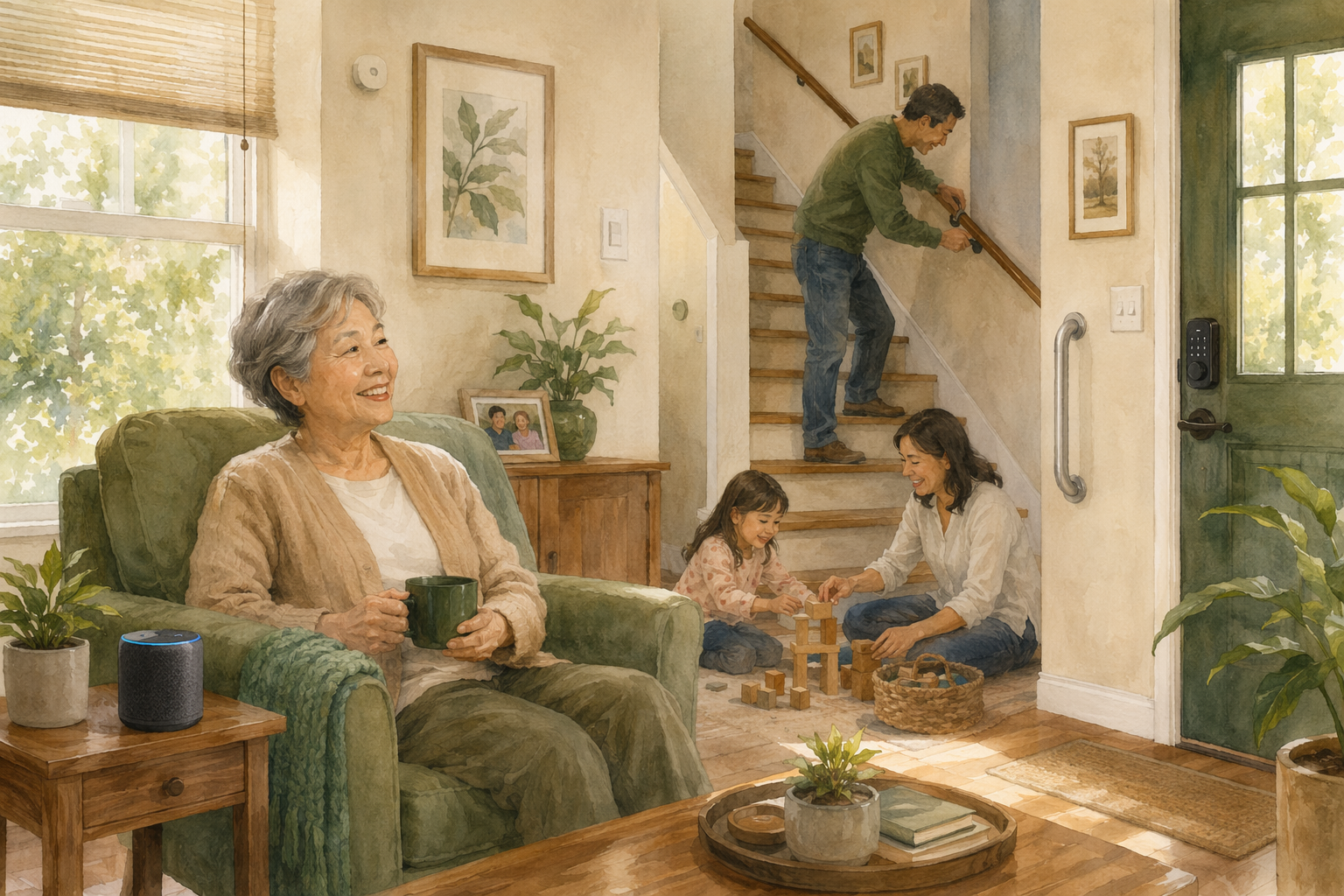
The Desire vs. Readiness Gap: What the Numbers Tell Us
The vast majority of older adults want to remain in their own homes. A 2026 Pew Research Center survey found that 93% of U.S. adults 65 and older live in their own home or apartment, and among those living independently, 60% said they would prefer to stay in their home with care rather than move to assisted living if they could no longer manage on their own. Only 18% would choose a facility.
Yet the physical reality of most American homes tells a different story. According to Census Bureau data cited in a 2026 analysis by Choice Mutual, 9 in 10 U.S. homes lack the features needed to safely accommodate an aging adult. The National Poll on Healthy Aging found that only 34% of adults age 50 to 80 say their home definitely has the right features to allow them to age in place. That leaves two-thirds of older adults — and their families — facing a significant preparedness gap.
The gap between desire and readiness is not just a statistic. It has real consequences. More than 1 in 4 people age 65 and older fall each year, according to the National Institute on Aging. Falls are the leading cause of fatal and non-fatal injuries among older adults, and the majority of these falls happen at home. The bathroom alone accounts for a disproportionate share of injuries: CDC data shows that nearly 28% of bathroom injuries in adults 65 and older are toilet-related.
The good news is that most of these injuries are preventable. The gap between wanting to age in place and being able to do so safely is not a matter of luck — it is a matter of planning. And that planning starts with a single, structured walk through the home.
How to Use This Room-by-Room Guide
This guide is organized around the room-by-room framework developed by occupational therapists who specialize in home safety and aging in place. The framework was featured in a 2026 Wirecutter guide based on interviews with experts including Matt Haase, Chandler Roegge, and Cheryl Hall. Each room section below covers three tiers of modification:
- Low-cost fixes: Changes you can make this weekend for under $50 — rearranging furniture, adding lighting, removing trip hazards.
- Mid-range upgrades: Professional installations or equipment purchases in the $50 to $2,000 range — grab bars, shower chairs, stair treads, smart home devices.
- Renovation projects: Structural changes costing $2,000 to $20,000 or more — stair lifts, walk-in tubs, curbless showers, widened doorways.
If you are reading this after a recent fall or hospital discharge, start with the bathroom — it is the highest-risk room in the house. If you are planning ahead, work through the rooms in order. Either way, the goal is the same: move from anxiety to a concrete list of actions you can take this week, this month, and this year.
Exterior and Entry: Making the First Step Safe
The journey through a safe home begins before the front door opens. Uneven walkways, steps without handrails, poor lighting, and doorways that are difficult to navigate are common hazards that can turn a simple trip to the mailbox into a fall risk.
The entry is also where many older adults first encounter difficulty carrying groceries, managing keys, or opening the door while using a walker or cane. These small daily frustrations are early warning signs that the home is not yet adapted to changing needs.
| Modification | Tier | Typical Cost | What It Addresses |
|---|---|---|---|
| Motion-sensor outdoor lights | Low-cost | $15–$50 | Poor visibility at night, keyhole fumbling |
| Keypad door lock | Low-cost | $30–$150 | Difficulty handling keys with arthritis or reduced dexterity |
| Raised garden beds | Low-cost | $50–$200 | Bending and kneeling for gardening, a fall risk activity |
| Grab bar by entry door | Mid-range | $50–$200 installed | Balance support while unlocking door or stepping over threshold |
| Ramp installation | Mid-range | $1,100 average (NCOA) | Steps at entry that are impossible with a walker or wheelchair |
| Wider doorway (36 inches) | Renovation | $500–$2,000 | Standard 30–32 inch doors are too narrow for wheelchairs and walkers |
Questions to bring to a clinician or OT
This is not medical, legal, or a family's final decision — only a framework. Bring these questions to a clinician, occupational therapist, or your local Area Agency on Aging.
Find Local HelpRelated reading
Noticed something outdated or inaccurate on this page? Flag a correction. We review every report against CDC, NIA, and AARP HomeFit guidance before updating a page.