
When a Senior Refuses to Bathe: Understanding the Why and What to Do About It
Bathing refusal in older adults is rarely about stubbornness. This guide helps family caregivers identify the root cause — from fear of falling and sensory changes to dementia-related distortions and loss of dignity — and provides targeted, non-coercive strategies to make bathing safer, more comfortable, and more manageable.
- Device / Aid Type
- bathing aids
- Functional Need Addressed
- bathing assistance
- Professional Assessment
- An occupational therapist or physical therapist is recommended for individual device selection and fitting.
- Last Reviewed
- 2026-06-19
- bathing assistance
- ADLs
- personal hygiene
- dementia care
- caregiver strategies
Why This Is a Common Caregiver Struggle (Not a Failure)
If you are reading this, you have likely experienced the cycle: you suggest a bath, your parent or spouse refuses, you feel frustrated, they feel pressured, and the tension lingers for the rest of the day. This scenario plays out in countless homes, and the first thing to understand is that it is not a sign of a difficult person or a failing caregiver. Bathing refusal is a symptom — a signal that something beneath the surface is wrong.
The instinct is often to push harder, to explain why bathing matters, or to treat the refusal as a battle of wills. But coercion rarely works and frequently damages trust. The more effective path is to treat the refusal as a problem to be solved together, not a behavior to be overcome. This guide walks through the most common underlying causes — from fear of falling to sensory changes to dementia-related distortions — and offers targeted, non-coercive strategies that address the root of the resistance rather than the symptom.
The Real Reasons Seniors Refuse to Bathe
Bathing refusal is rarely about a single cause. More often, it is a convergence of physical, sensory, emotional, and cognitive barriers. Identifying which combination is at play in your situation is the first step toward a solution that actually works.
Fear of Falling
This is the most common and most rational reason. More than one out of four older adults falls each year, and bathrooms are the most frequent indoor location for fall-related injuries, according to the CDC. The CDC's analysis of bathroom injuries found that falls caused 81.1% of all bathroom injuries treated in emergency departments. For adults aged 85 and older, the injury rate in bathrooms was 515.3 per 100,000 — nearly nine times higher than for adults aged 15–24. Stepping over a tub edge, standing on a wet surface, or lowering onto a slippery toilet seat are genuinely dangerous maneuvers. A senior who has fallen before, or who knows someone who has, is not being difficult — they are being cautious.
Sensory Changes and Diminished Awareness
Aging changes how the body perceives the need to bathe. A diminished sense of smell means many older adults simply do not notice body odor the way they once did. As gerontologist Sam Cradduck of Aging Untold explains, seniors might skip showers because they have not been active enough to feel they need one, or because the sensory cues that once prompted bathing have faded. What looks like neglect to a caregiver may simply be a different sensory reality.
Dementia-Related Perceptual Distortions
For a person with Alzheimer's or another dementia, the bathroom can become a disorienting and even frightening place. The Alzheimer's Association notes that depth perception problems can make stepping into a tub or shower feel like stepping into a void. The sensation of water hitting the skin may be perceived as stinging or threatening. A person with dementia may also lose the ability to sequence the steps involved in bathing — undressing, turning on the water, adjusting temperature, washing, rinsing, drying — and the confusion this creates can trigger anxiety and resistance.
Loss of Dignity and Privacy
Bathing requires undressing, being vulnerable, and accepting help with intimate body parts. For an adult who has been independent for decades, this can feel like a profound loss of dignity. The Family Caregiver Alliance identifies loss of dignity and feeling vulnerable in the coldness of a bathroom as primary drivers of bathing resistance. This is especially acute when the caregiver is an adult child — the role reversal can be deeply uncomfortable for both parties.
Cold Discomfort and Physical Unpleasantness
A cold bathroom, cold water, and the sensation of being wet and exposed are genuinely unpleasant for anyone. For an older adult with thinner skin, reduced circulation, and a slower ability to regulate body temperature, the discomfort is magnified. The Family Caregiver Alliance advises making sure the bathroom is warm and using a towel warmer. This is not a luxury — it is a practical intervention that removes a significant barrier.
Depression and Apathy
Depression in older adults often presents as apathy, withdrawal, and a loss of interest in self-care. Bathing requires energy, motivation, and a sense that it matters — all of which are depleted by depression. If a senior has stopped bathing along with other activities they used to enjoy, depression may be the underlying cause, and addressing the mood disorder is the path to improving hygiene.
| Root Cause | Key Signal | Primary Intervention |
|---|---|---|
| Fear of falling | Verbalizes fear, grips surfaces, avoids standing | Grab bars, shower chair, non-slip mat, handheld showerhead |
| Sensory decline | Does not notice odor or dirt | Gentle reminders, scheduled routine, no-rinse products |
| Dementia distortion | Seems confused or frightened by water | Step-by-step instructions, fill tub after seated, same-gender caregiver |
| Dignity loss | Expresses embarrassment, resists help from family | Privacy covers, allow self-care where possible, professional aide |
| Cold discomfort | Shivers, rushes, avoids undressing | Warm room, towel warmer, soft lighting, pre-warmed towels |
| Depression | Withdrawal from multiple activities, low energy | Medical evaluation, gentle routine, lower expectations on frequency |
How to Talk About Bathing Without Starting a Fight
How you frame the conversation around bathing can determine whether the senior cooperates or resists. The goal is to reduce the sense of being controlled and to preserve the senior's autonomy wherever possible.
- Give choices instead of commands. Instead of "It's time for your bath," try "Do you want to bathe now or in 15 minutes?" or "Do you want a bath or a shower?" The National Institute on Aging recommends this approach because it gives the person a sense of control within a structure you set.
- Use matter-of-fact language. Say "It's time for a bath now" in the same tone you would use for any routine activity. Avoid apologizing, negotiating, or over-explaining, which can signal that the activity is optional or unpleasant.
- Frame it as a shared task. "Let's wash up" or "Let's get you freshened up" sounds collaborative rather than directive. This is especially effective when the senior is resistant to being cared for but will accept doing something together.
- Use therapeutic fibbing when appropriate. If a senior with dementia refuses a bath because they "just had one" (even though they did not), it is often kinder to agree and redirect than to argue. "You're right, let's just do a quick rinse" can work without triggering confusion or distress.
- Prepare them for what is coming. Aging expert Amy O'Rourke suggests that caregivers can help prepare older adults for what to expect. A simple heads-up — "In about 10 minutes, we'll head to the bathroom" — reduces the startle factor and gives the person time to mentally adjust.
Simple Environmental Changes That Make Bathing Less Scary
Many of the barriers to bathing are physical and can be addressed with relatively simple, low-cost modifications. The goal is to make the bathroom feel safe, warm, and predictable.
- Warm the room first. Turn on a space heater or run hot water for a few minutes before the person enters. A warm room reduces the shock of undressing and makes the entire experience less aversive.
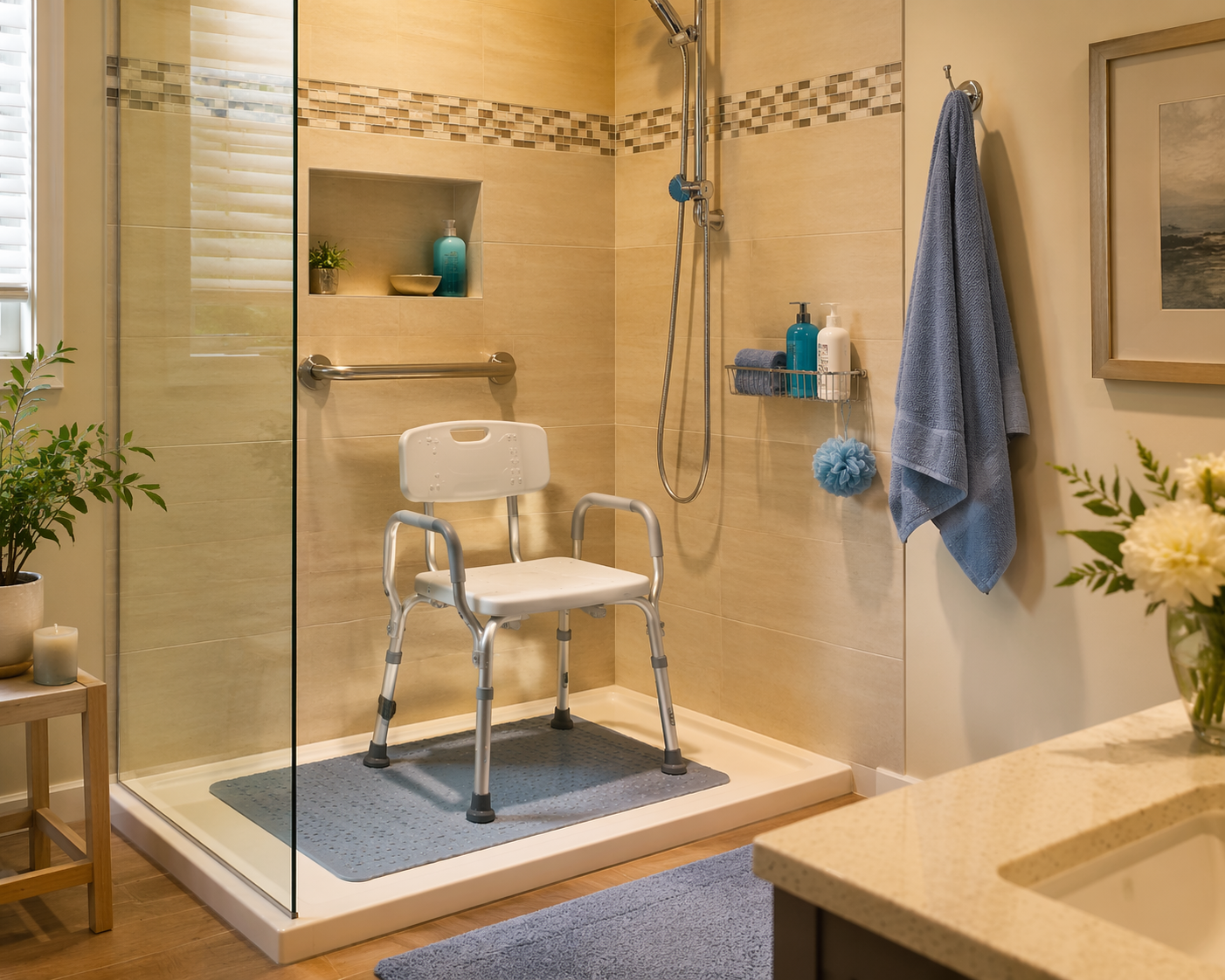
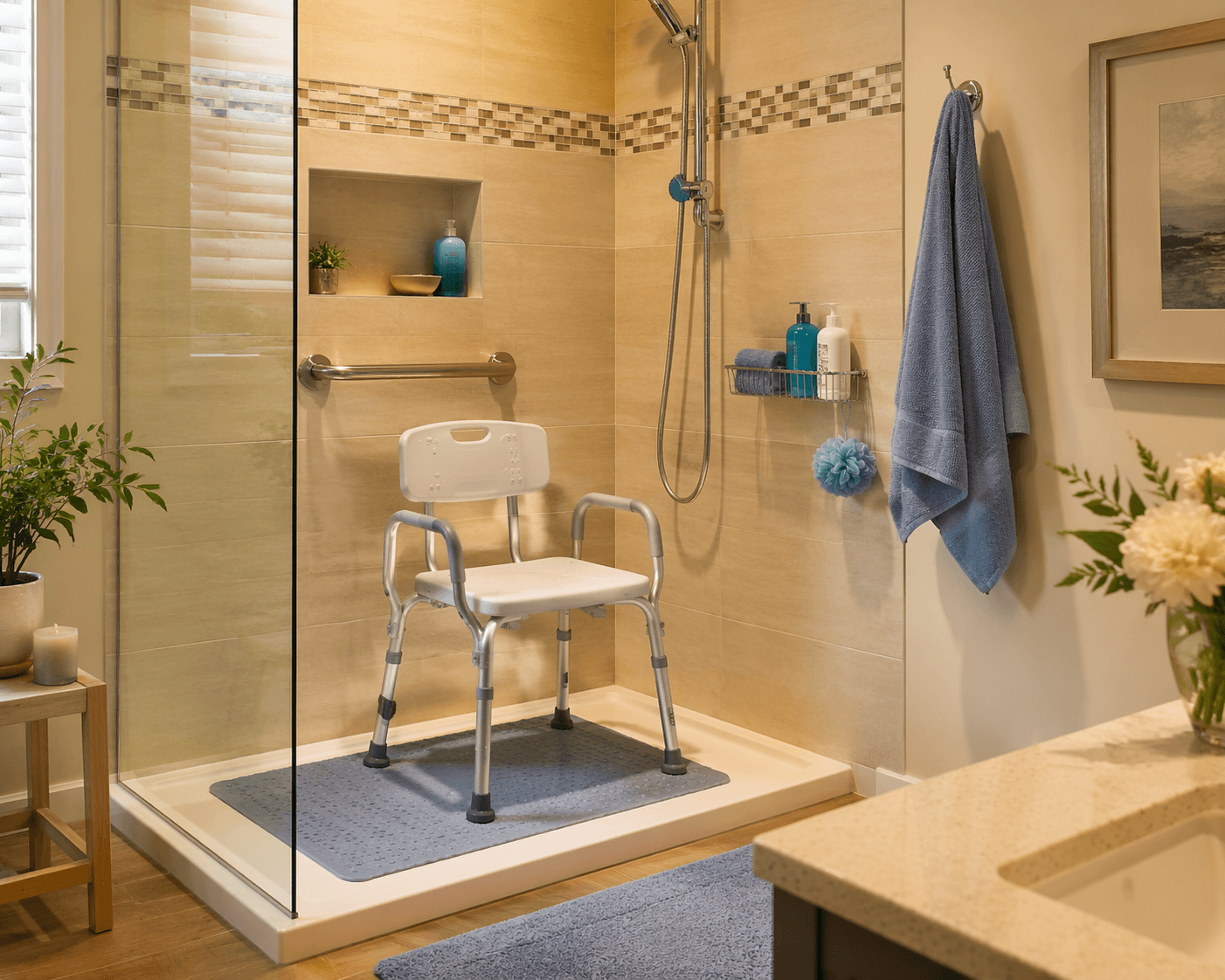
- Install a shower chair or transfer bench. This eliminates the need to stand on a wet surface or step over a tub edge. A sturdy chair with non-slip feet and armrests allows the person to sit for the entire bath. For detailed guidance on selecting the right seat, see our shower chair and bath seat selection guide.
- Use a handheld showerhead. A fixed overhead shower can feel overwhelming, especially for someone with dementia who may perceive the water as threatening. A handheld showerhead on a sliding bar allows you to control the direction and pressure, and it makes rinsing a seated person much easier.
- Add grab bars near the toilet and shower. The CDC recommends installing grab bars inside and outside the tub or shower and next to toilets. For adults aged 85 and older, 36.9% of bathroom injuries occur when getting on or off the toilet — not in the tub itself. Toilet-adjacent grab bars are just as critical as tub safety.
- Use non-slip mats inside and outside the shower or tub. A simple rubber mat with suction cups can prevent the most common type of bathroom fall.
- Adjust lighting and reduce glare. Bright, shadow-free lighting helps with depth perception. Soft, warm light is less clinical and more calming than harsh overhead fluorescents.
How Often Does an Older Adult Really Need a Bath?
One of the most common sources of tension is a mismatch between the caregiver's expectations and what is actually necessary. Many adult children assume that daily bathing is the standard, but the evidence says otherwise.
The National Institute on Aging advises caregivers to try to give the person a bath or shower two or three times a week but to be open to a more flexible schedule. The Family Caregiver Alliance is even more direct: unless someone is incontinent, daily bathing is not necessary. Once or twice a week may be sufficient. This is not a compromise — it is evidence-based guidance that respects the senior's comfort and reduces unnecessary stress for both parties.
Dementia-Specific Techniques for Bathing Resistance
When bathing resistance is driven by dementia, standard communication strategies may not be enough. The cognitive changes that accompany Alzheimer's and other dementias require specific techniques that work with the person's altered perception of reality, not against it.
- Use step-by-step instructions. The Alzheimer's Association recommends using simple, concrete phrases: "Put your feet in the tub," "Sit down," "Here's the soap," "Wash your arm." Break the task into single steps and give one instruction at a time.
- Try the 'watch-me' technique. Demonstrate the action first — wet the washcloth, apply soap, wash your own arm — then gently guide the person's hand to do the same. This bypasses the need for verbal instruction and uses the person's preserved ability to imitate.
- Fill the tub after the person is seated. The Alzheimer's Association notes that depth perception problems can make it scary to step into water. Filling the tub with only 2 to 3 inches of water first, then assessing the person's reaction, can reduce fear. It may be better to fill the tub after the person is already seated.
- Have a familiar person of the same sex help. Many people with dementia feel more comfortable being bathed by someone of the same gender. If the primary caregiver is of a different gender, consider asking a family member or hiring a home care aide who matches.
- Protect dignity with towels. The Alzheimer's Association advises covering the person with a bath towel while undressing and keeping a towel over their shoulders or lap during the bath. This preserves a sense of modesty and warmth.
- Use all-purpose gel and no-rinse products. Washing both hair and body with a single product reduces the number of steps. No-rinse soap products with warm, wet towels are equally effective for cleaning when full bathing is not possible.
Alternative Hygiene: When a Full Bath or Shower Isn't Possible
There will be days — sometimes weeks — when a full bath or shower is not going to happen. This is not a failure. The goal is to maintain hygiene and dignity through whatever method works, and there are several effective alternatives that are far less stressful than a full bathing routine.
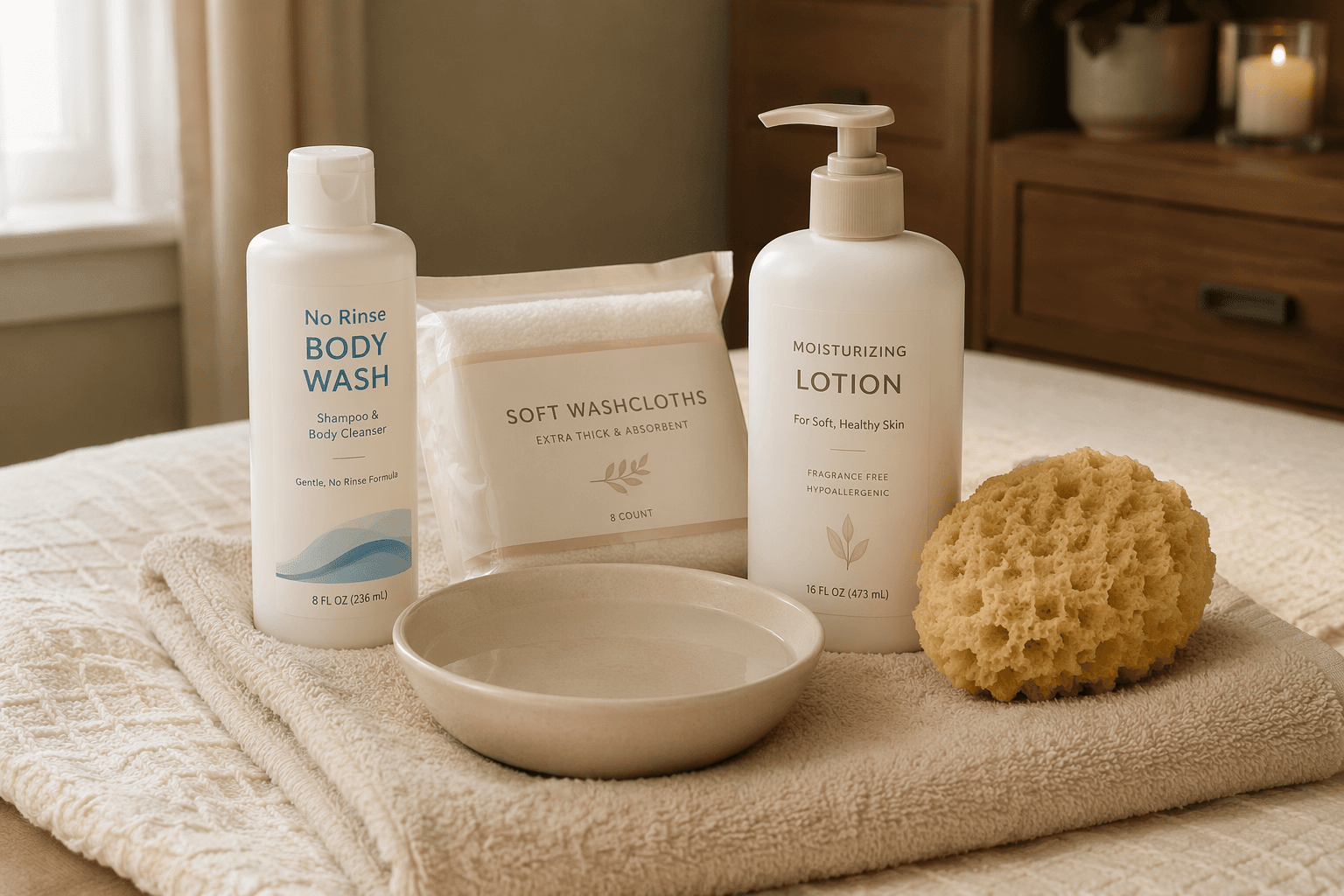
- Sponge baths. A warm, wet washcloth with mild soap can clean the entire body without the person ever needing to enter the shower or tub. The National Institute on Aging recommends considering a sponge bath if a bath or shower is too upsetting.
- No-rinse body washes and shampoos. These products require no water for rinsing — apply, wipe off with a warm towel, and the person is clean. They are especially useful for bed-bound individuals or those who cannot stand long enough for a shower.
- Wash one body part per day. The Alzheimer's Association suggests washing one part of the body each day — face and hands one day, arms and chest the next, and so on. Over the course of a week, the person is fully clean without ever enduring a full bath.
- Use warm, wet towels. A warm, damp towel can be used to wipe down the body, followed by a dry towel. This is less invasive than a washcloth and can feel more like a comforting treatment than a hygiene task.
When to Bring In a Professional Home Care Aide
A common and often surprising pattern reported by family caregivers is that a senior who refuses bathing assistance from a spouse or adult child will accept help from a trained professional — sometimes on the very first visit. This is not a reflection on the family caregiver; it is a matter of dignity and role dynamics. A professional aide is a neutral third party, and the senior does not carry the same history, expectations, or role-reversal discomfort with them.
The national median cost for private nonmedical in-home care in 2026 is $34 per hour, according to A Place for Mom, with median state costs ranging from $25 to $44 per hour. SeniorLiving.org reports a similar national median of $35 per hour for a home health aide. Most agencies require a 4-hour minimum per visit, which means a weekly bathing assistance visit would cost roughly $136–$140 per week. While this is a significant expense, it is often less than the cost of a single fall-related emergency department visit, and it can preserve the family relationship by removing the most stressful caregiving task from the family dynamic.
| Hours per Week | Estimated Monthly Cost (at $34/hr) | Estimated Monthly Cost (at $35/hr) |
|---|---|---|
| 7 hours (one visit/week) | ~$1,031 | ~$1,061 |
| 15 hours (two visits/week) | ~$2,208 | ~$2,273 |
| 30 hours (daily visits) | ~$4,416 | ~$4,545 |
Red Flags: When Bathing Refusal Signals a Medical Problem
While most bathing refusal is driven by the causes discussed above, there are situations where it signals an underlying medical issue that requires attention. Knowing the difference between a behavioral challenge and a medical warning sign is critical.
- Sudden or new-onset bathing refusal after a stroke, fall, or new diagnosis. A sudden change in bathing behavior can indicate new cognitive or physical deficits that need evaluation.
- Signs of a urinary tract infection (UTI). In older adults, UTIs often present as confusion, agitation, or a sudden change in behavior — not the burning or frequency that younger people experience. Poor hygiene increases UTI risk, and a UTI can in turn make bathing refusal worse. Look for changes in urine color or odor, increased confusion, or a new onset of incontinence.
- Skin breakdown or rashes. Redness, peeling, or sores in skin folds, the groin area, or under the breasts indicate that hygiene has been insufficient for too long. Board-certified physician Dr. Rhea Rogers of Aging Untold notes that aging skin is thinner and the immune system weakens, making regular bathing important for reducing infection risk.
- Significant weight loss or dehydration. If a senior is refusing bathing along with food and fluids, the issue is likely broader than bathing and requires a medical workup.
Related Guides
- Aging in Place vs. Assisted Living After a Fall: A Decision Guide for Adult Children
After a parent's fall, the decision between staying home and moving to assisted living is urgent and complex. This guide helps adult children match their parent's care needs to the right level of support, weighing safety, hidden costs, and caregiver capacity against the strong desire to age in place.
- The 9 in 10 Problem: Why Most Homes Aren't Ready for Aging in Place — and a Practical Room-by-Room Upgrade Plan for Families
Only 10% of U.S. homes are equipped for safe aging, yet over 90% of older adults want to stay home. This guide helps adult children and caregivers create a prioritized, budget-aware modification plan — starting with low-cost, high-impact changes and progressing to larger projects — so a parent can live independently and safely.
- The Complete Guide to Government Help for Elderly and Disabled Adults: 8 Major Programs and How to Access Them
A comprehensive, program-by-program guide for adult children and family caregivers navigating the fragmented landscape of federal and state assistance. Covers SSI, SSDI, Medicare, Medicaid/HCBS, OAA, PACE, VA benefits, and nutrition programs with current 2026 data, eligibility criteria, and concrete next steps.
Comments
Join the discussion with an anonymous comment.