
Caregiver decision guide
Bathing a Parent with Dementia: How to Reduce Resistance and Restore Calm
If your loved one with dementia resists bathing, it's not willful refusal — it's fear, sensory overwhelm, and loss of control. This guide explains why resistance happens and provides step-by-step techniques to reduce conflict and make bathing safer and more dignified.
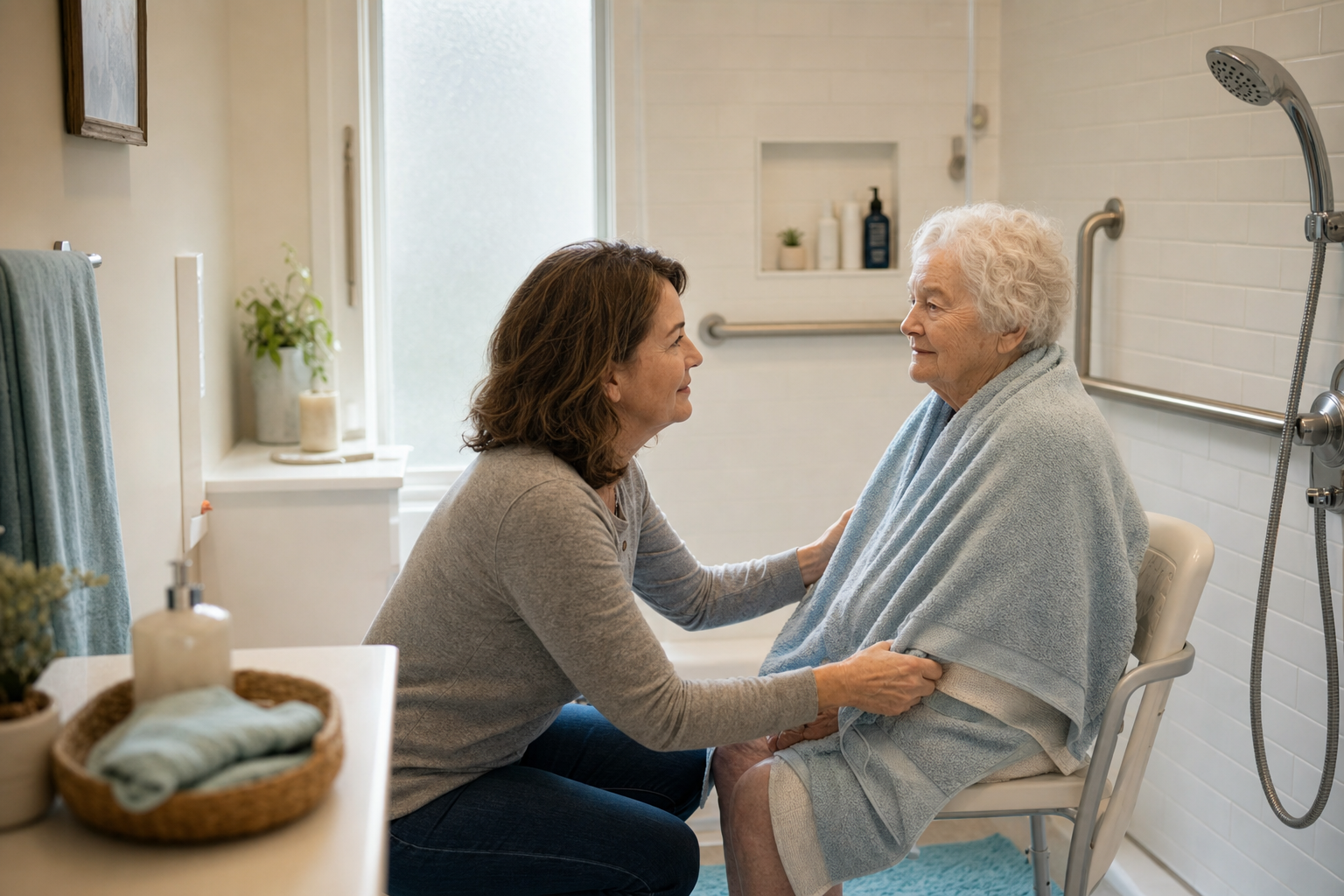
If you are caring for a parent or spouse with dementia, few tasks trigger more daily dread than bath time. The person you are trying to help may scream, swat your hands away, or physically refuse to enter the bathroom. It is easy to interpret this as stubbornness or ingratitude — but the research tells a different story.
Bathing resistance in dementia is almost never willful refusal. It is a fear response — driven by sensory overload, loss of control, and a brain that can no longer interpret the situation accurately. Understanding that distinction is the first step toward turning a daily battle into a manageable, even calm, routine.
Why People with Dementia Resist Bathing
To solve the problem, you first have to understand what your loved one is actually experiencing. Dementia damages the brain's ability to process sensory information, recognize familiar routines, and regulate emotional responses. What looks like a simple bath to you may feel like an entirely different event to them.
Common Triggers for Bathing Resistance
- Fear of falling: The bathroom is one of the most dangerous rooms in the house. The CDC reports that each year, there are about 3 million emergency department visits due to older adult falls. A slippery tub, hard tile floor, and the act of stepping over a ledge can trigger a primal fear response, even if the person cannot articulate it.
- Sensory overwhelm: The sound of running water, the sting of spray hitting the skin, the glare of bright lights on white tile — these can feel aggressive or even painful to a dementia-altered nervous system. The Family Caregiver Alliance notes that people with dementia may feel the "sting" of shower water as a threat.
- Loss of privacy and dignity: Being undressed and handled by another person is humiliating for anyone. A person with dementia may not recognize the caregiver as a trusted family member in that moment — they may see a stranger who is undressing them.
- Inability to perceive the need: Dementia can erase the awareness that one is dirty, sweaty, or has soiled clothing. If the person does not feel the need to bathe, being told to do so feels arbitrary and confusing.
- Misinterpreting the caregiver's intent: A person with dementia may not understand why you are leading them to the bathroom or reaching for their clothing. They may interpret your actions as an attack or an invasion, triggering a fight-or-flight response.
- Temperature sensitivity: Many older adults have thinner skin and reduced circulation. The Alzheimer's Association warns that people with dementia may not sense when water is dangerously hot, but they can still feel the shock of cold air or a cold seat.
Pre-Bath Preparation: Set the Stage for Cooperation
Most bathing resistance is triggered before the water even turns on. The environment itself — cold air, harsh lights, echoing tile — can put a person with dementia on edge before the first touch. Preparing the space in advance removes many of these sensory shocks.
Environmental Checklist
- Warm the room: Turn on a space heater or run warm water for a few minutes before bringing the person in. Cold air on bare skin is a common trigger.
- Gather all supplies in advance: Towels, washcloths, soap, shampoo, a change of clothes — everything should be within arm's reach before the person enters the room. Never leave a person with dementia alone in the tub or shower, as the National Institute on Aging strongly advises.
- Adjust lighting: Reduce glare and harsh shadows. Soft, even lighting is less disorienting than bright overhead fixtures. Dimmer switches are ideal.
- Play calming music: Familiar, slow-tempo music from the person's younger years can shift mood and reduce anxiety before the bath begins.
- Check water temperature: Set your water heater to deliver water no hotter than 120°F (49°C) to prevent scalding. The Alzheimer's Association emphasizes that people with dementia may not sense when water is dangerously hot, so always test the water with your wrist or a thermometer before the person enters.
Communication Techniques That Reduce Fear
How you communicate during bath time matters as much as what you do. A person with dementia processes language differently — long sentences, complex instructions, and questions that require reasoning can cause confusion and escalate anxiety.
What Works and Why
| Technique | How to Do It | Why It Works |
|---|---|---|
| Use simple, one-step phrases | Say "Put your feet in the tub" instead of "Let's get you in the bath now so we can wash up." | Dementia impairs working memory. One instruction at a time is all the brain can process. |
| Demonstrate, don't just describe | Touch the water with your own hand first. Sit on the shower chair to show it is safe. | The person may not understand your words, but they can mirror your actions. |
| Offer limited choices | Ask "Would you like to wash your arms or your legs first?" or "Do you want the blue towel or the green one?" | Giving a sense of control reduces the feeling of being forced. Two options are enough — more than that causes confusion. |
| Use a calm, low tone | Speak slowly, keep your voice low and steady, and avoid sudden changes in volume. | A calm voice signals safety. A high-pitched or urgent tone signals danger. |
| Avoid asking "Do you want to take a bath?" | Instead, say "It's time to freshen up" or "Let's get you ready for the day." | A yes/no question invites refusal. A declarative statement frames the activity as a normal part of the routine. |
The Alzheimer's Association specifically recommends using phrases like "Put your feet in the tub" and demonstrating the action yourself. This technique — called "watch me" — works because it bypasses the damaged language centers and engages the brain's mirror neuron system, which remains relatively intact longer into the disease.
Adapting the Bathing Process Step by Step
Even with perfect preparation and communication, the actual experience of being washed can be distressing. The following techniques, drawn from the NIA and the Alzheimer's Association, are designed to minimize sensory discomfort and preserve dignity throughout the process.
Key Techniques for a Calmer Bath
- The towel-in-tub method: Place a towel on the bottom of the tub or shower floor before the person steps in. The texture feels more secure underfoot than slippery porcelain or fiberglass, and it reduces the fear of slipping.
- Wash under a towel: The NIA recommends putting a towel over the person's shoulders or lap during washing. This simple step dramatically reduces the feeling of exposure and can prevent the person from trying to cover themselves with their hands, which interferes with washing.
- Start with extremities: Begin by washing the feet and hands before moving to the torso. These areas are less sensitive and less intimate. By the time you reach the torso, the person has already acclimated to the sensation of water and touch.
- Use a handheld showerhead with soft pressure: The Family Caregiver Alliance advises adjusting shower pressure so it is as soft as possible. A hard spray can feel like needles on sensitive skin. A gentle, rainfall-style flow is far less threatening.
- Never leave the person alone: The NIA is explicit on this point. Even if the person seems calm and seated securely, never leave them unattended in the tub or shower. Falls can happen in seconds, and a person with dementia may not be able to call for help or get up on their own.
Bathing Alternatives When a Full Bath Isn't Possible
Some days — or weeks — a full bath or shower is simply not going to happen. The person may be too agitated, too tired, or too resistant. On those days, alternatives are not a failure. They are a compassionate adaptation.
Evidence-Based Alternatives
| Method | How to Do It | Key Source |
|---|---|---|
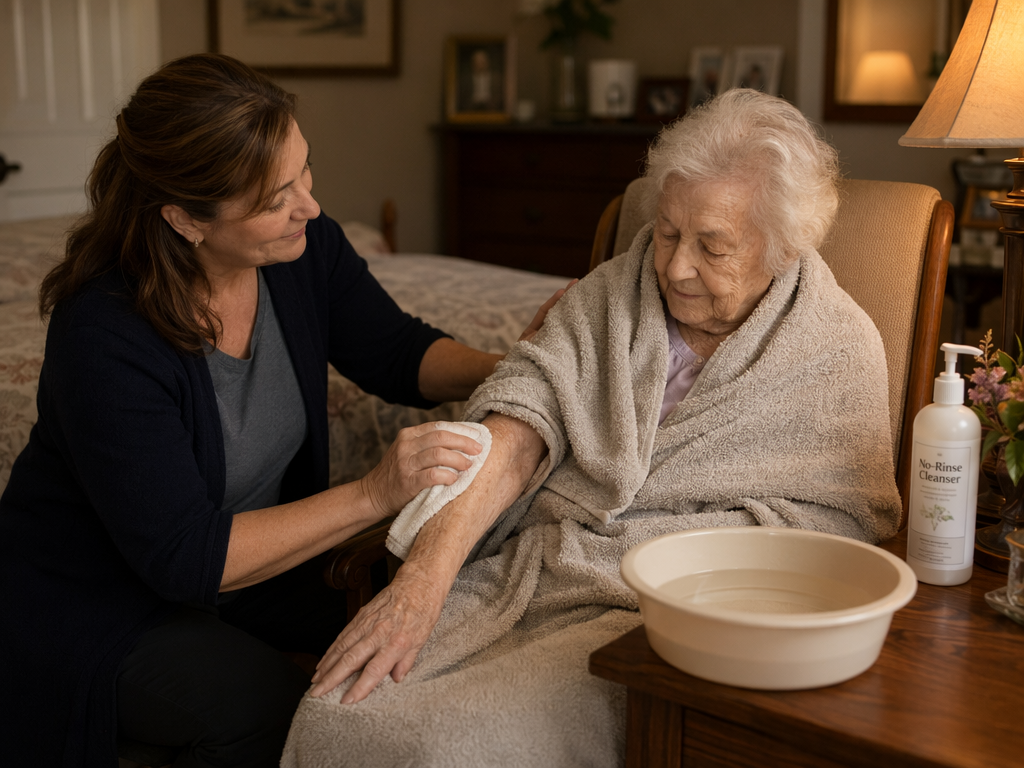
| Sponge bath with warm, wet towels | Use warm, wet towels and a no-rinse soap product. Wash the face, hands, feet, underarms, and private areas. Pat dry. | The Alzheimer's Association notes that research shows non-rinse soap products used with warm, wet towels are equally effective to traditional bathing. |
| Wash one body part per day | Wash the upper body one day, lower body the next, and feet on a third day. This breaks the task into manageable pieces. | NIA recommends this approach for days when a full bath is not possible. |
| Basin bath | Fill a basin with warm water and a no-rinse cleanser. Use a washcloth to clean the person while they remain seated in a chair or on the edge of the bed. | Family Caregiver Alliance supports basin baths as a less distressing alternative. |
The Alzheimer's Association is clear: unless the person is incontinent, daily bathing is not necessary. The NIA recommends bathing two or three times a week, and the Family Caregiver Alliance states that once or twice a week may be sufficient. These are general guidelines, not rigid prescriptions — individual needs vary, and the goal is to maintain hygiene without causing distress.
After-Bath Care: Skin Protection and Dignity
The period immediately after the bath is just as important as the bath itself. Older skin is fragile, thin, and prone to tearing and infection. A few simple steps can prevent common problems.
Post-Bath Routine
- Pat the skin dry, do not rub: Rubbing can irritate fragile skin and cause micro-tears. Use a soft towel and pat gently, especially in skin folds and areas where incontinence products are worn.
- Check for redness or skin breakdown: Examine the back, buttocks, groin, under the breasts, and between the toes. Early detection of pressure sores or fungal infections can prevent serious complications.
- Apply moisturizer: Older skin loses moisture quickly. Use a gentle, fragrance-free moisturizer while the skin is still slightly damp to lock in hydration. The Caregiver Action Network recommends using gentle, fragrance-free cleansers for sensitive skin.
- Dress promptly: Put on clean, dry clothing immediately to maintain warmth and dignity. For a person who is incontinent, consider using absorbent briefs or pads that are changed regularly to prevent skin breakdown.
- Address incontinence-related skin protection: If the person wears incontinence products, apply a barrier cream or ointment to protect the skin from moisture and irritation. Change products frequently and allow the skin to air-dry when possible.
When to Accept a Less Frequent Schedule
One of the hardest adjustments for family caregivers is letting go of the expectation that a loved one must bathe daily. For most of our lives, daily bathing is a non-negotiable standard of hygiene. But dementia changes the rules.
The expert consensus across the NIA, the Alzheimer's Association, and the Family Caregiver Alliance is consistent: for a person with dementia who is not incontinent, bathing once or twice a week is sufficient. Daily bathing is not necessary and, in many cases, causes more harm than good by triggering distress, agitation, and a breakdown of trust between caregiver and loved one.
If you find that bathing is consistently causing severe distress for both you and your loved one — despite trying the techniques in this guide — it may be a sign that care needs are escalating. Persistent bathing resistance can be one of the indicators that a higher level of professional support is needed. Our guide on 10 signs it's time for memory care can help you evaluate whether a transition to professional memory care may be appropriate. If you are weighing different care options, our comparison of home care, assisted living, and memory care provides a structured framework for making that decision.
In the meantime, give yourself permission to let go of the daily bath standard. A sponge bath today, a full bath tomorrow, and a skip day on Wednesday is not a failure — it is a realistic, compassionate approach to dementia care. Your relationship with your loved one matters more than a perfect hygiene schedule.
Questions to bring to a clinician or OT
This is not medical, legal, or a family's final decision — only a framework. Bring these questions to a clinician, occupational therapist, or your local Area Agency on Aging.
Find Local HelpRelated reading
- Bathing Assistance for the Elderly: A Complete Family Caregiver's Guide to Safety, Dignity, and Practical Technique
- Why Bathing Difficulty Is a Warning Sign of Declining Independence (And What to Do Next)
- Is It Time for Home Help? Recognizing When Your Aging Parent Needs Assistance and How to Start the Conversation
Noticed something outdated or inaccurate on this page? Flag a correction. We review every report against CDC, NIA, and AARP HomeFit guidance before updating a page.