
Caregiver decision guide
A Triage Checklist for Aging in Place: What to Do This Week, This Month, This Year
Most aging-in-place checklists list dozens of modifications without telling you which ones matter most. This triage checklist prioritizes the changes that prevent the most falls — starting with this week, then this month, then this year — so you can act immediately without feeling overwhelmed.
Open a typical aging in place checklist and the first feeling is often not relief. It is the sinking sense that the house needs everything: a stair lift, a bathroom remodel, new flooring, better lighting, wider doorways, smart sensors, different handles, fewer rugs, more rails. Meanwhile, the parent who lives there still has to get to the bathroom tonight.
That is where many families stall. The need is real, but the list is too flat. Only 18% of adults age 50 and older have made home modifications, while one secondary analysis cites Census Bureau data indicating that about 90% of homes are not aging-ready.[1] That gap matters because fall risk is not theoretical. The CDC identifies falls as a major threat to older adults, and available fall data cited for home safety planning identifies the home as the setting for 79.2% of falls.[2]
An aging in place checklist should not make a family feel late before it helps them do one useful thing. The better question is: what reduces the most likely danger first, what needs a little coordination next, and what belongs in the larger annual plan?
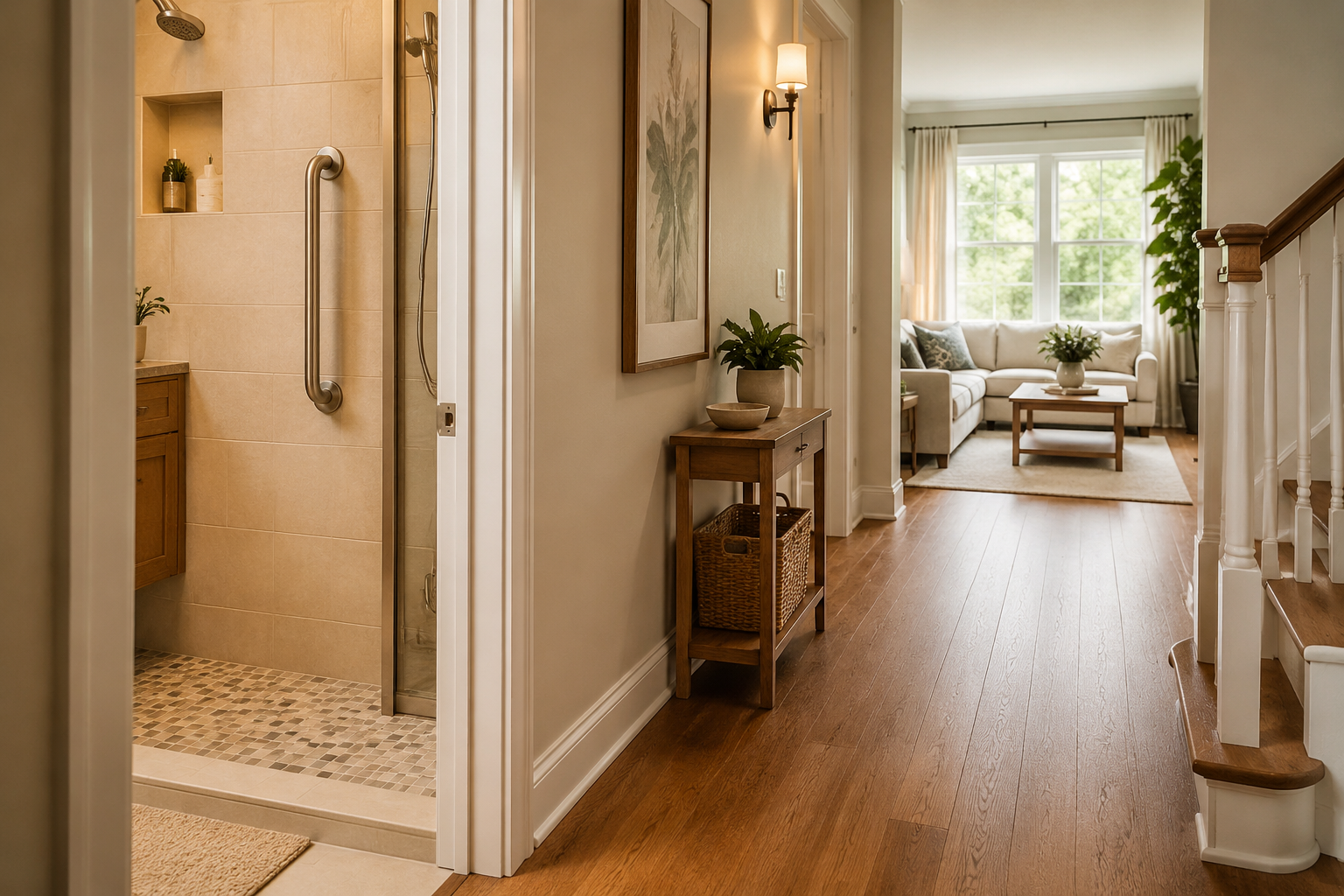
The Triage Version of an Aging in Place Checklist
The point of triage is not to dismiss bigger projects. A walk-in shower, ramp, stair lift, or doorway widening can be the difference between staying home and having to move. But those projects take bids, measurements, money, and often a family negotiation. They should not delay the small changes that can be finished this week.
| Timing | Priority | Typical actions |
|---|---|---|
| This week | Highest-probability fall risks | Install bathroom grab bars, improve night and stair lighting, remove throw rugs, clear pathways, secure loose floor edges |
| This month | Supports that need shopping, scheduling, or light installation | Add handrails on both sides of stairs, switch to lever handles, add raised toilet seats, use shower chairs, improve bathroom flooring, add stove safety devices |
| This year | Capital projects and larger accessibility changes | Plan walk-in showers, stair lifts, ramps, doorway widening, and smart home integration |
This order is deliberately plain. Start where a fall is most likely to happen and where the fix is visible, affordable, and quick enough that the family can stop talking and start changing the house.
This Week: Fix the Fall Risks Waiting in Plain Sight
The first week is not for designing the perfect forever home. It is for the bathroom wall, the dark hallway, the curled rug, and the stack of shoes beside the stairs. These are not cosmetic details. They are the places where balance, vision, urgency, and habit meet.
Install Grab Bars Before You Debate the Bathroom Remodel
Bathrooms deserve first attention because they combine wet surfaces, tight turns, low toilet seats, tub edges, and middle-of-the-night trips. Cleveland Clinic, citing JAMA research, reports that 42% of older adults who need grab bars do not have them.[3] That number is hard to ignore because grab bars are not exotic equipment. They are basic handholds in the room where people are most likely to reach for a towel bar, shower door, sink edge, or moving relative instead.
A useful first pass is simple: put properly mounted grab bars near the toilet and at the shower or tub entry. The research brief gives a typical price range of $15 to $80 per grab bar, before any installation labor. The important word is properly. A grab bar that is only screwed into drywall is a false promise. If no one in the family knows how to locate studs, use rated anchors, or mount into tile safely, this is a small handyman job, not a pride test.
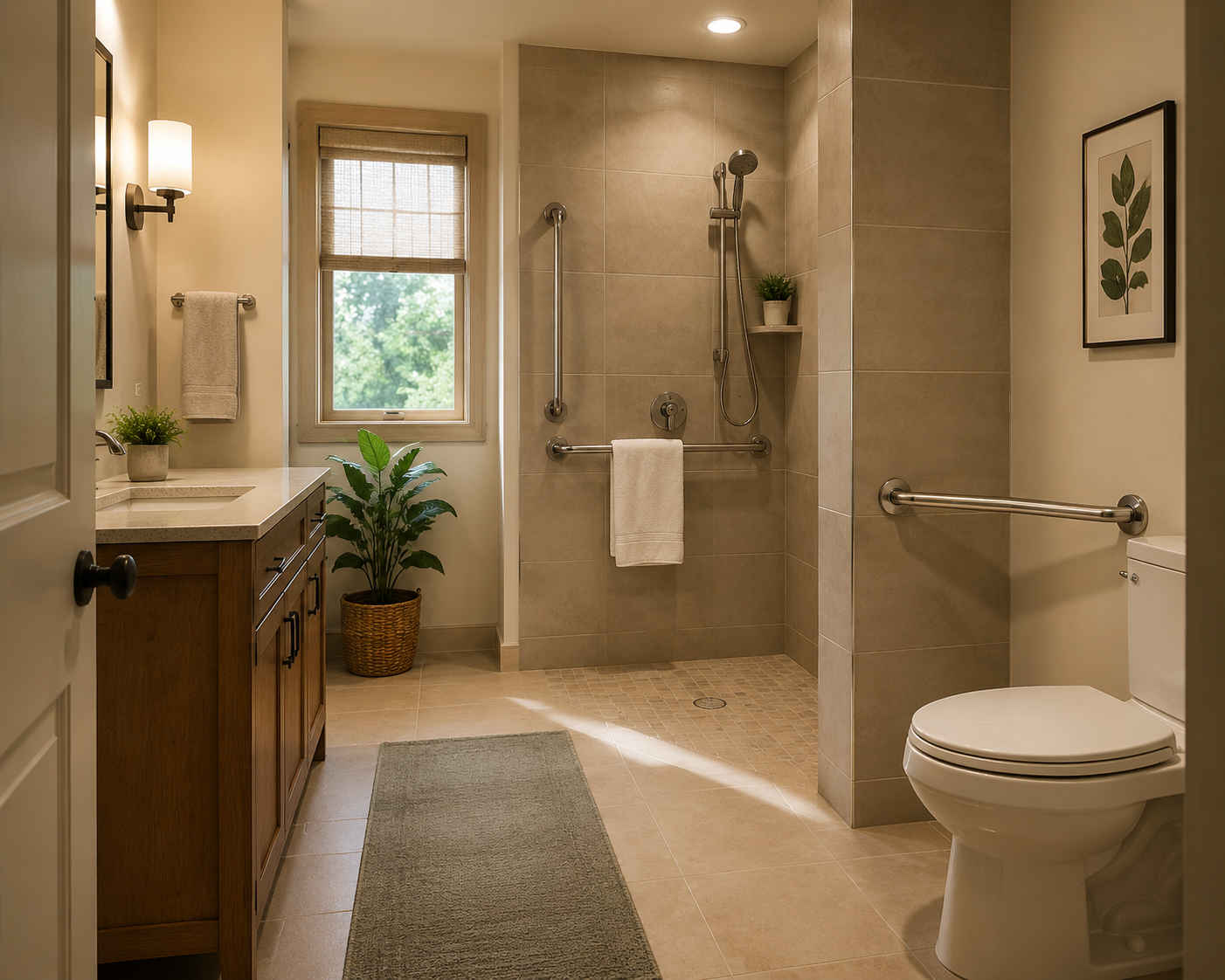
This is also where taste can get in the way. Many older adults resist anything that makes a bathroom feel institutional. That objection is worth hearing, but it should not end the conversation. Modern grab bars can look like towel bars, come in finishes that match existing fixtures, and disappear visually once installed. What they cannot do is help from the shopping cart, the garage shelf, or the family text thread.
Put Light Where Feet Actually Move
Lighting is one of the cheapest changes to underestimate. The goal is not to make the house bright all day. It is to make the route from bed to bathroom, bedroom to kitchen, and living room to stairs visible at the times when people are tired, hurried, or half awake.
Start with plug-in night-lights or motion-sensor lights along the bedroom, hallway, bathroom, and stair routes. Replace dim or burned-out bulbs. Check the stair landing after sunset, not at noon, because that is when the problem appears. If a parent avoids turning on a harsh overhead light at night, use softer path lighting rather than arguing about the switch.
AARP includes lighting among home safety considerations in its aging-in-place checklist, and the practical reason is straightforward: a person cannot adjust for a hazard they cannot see.[4]
Remove Throw Rugs, Even the Ones Everyone Likes
Throw rugs are where many families suddenly become sentimental. The rug was expensive. It protects the floor. It warms the room. It has always been there. All of that may be true, and it still may need to go.
Loose rugs create edges, slips, and small changes in floor height. Those changes matter more when someone uses a cane or walker, shuffles slightly, has reduced vision, or turns quickly to answer a phone. If removing every rug at once creates too much resistance, start with the worst locations: bathroom, bedside, hallway, kitchen sink, stair landing, and any route used at night.
Rug tape and non-slip pads can reduce movement, but they are not a universal fix. A rug that curls, bunches, slides, or catches a walker should not remain in a main pathway. This is one of the rare home safety decisions where being direct is kinder than being vague.
Clear Pathways Like It Is a Safety Task, Not a Housekeeping Lecture
“Clear clutter” sounds like a moral judgment until it is made specific. A safe pathway means the person can move from room to room without stepping around laundry baskets, pet bowls, extension cords, delivery boxes, shoes, low stools, magazine stacks, plant stands, or furniture corners that force a sideways turn.
Walk the actual routes with the person who lives there. Watch where they steady themselves. Watch where they hesitate. Watch what they carry. A hallway that looks clear to an adult child visiting on Saturday may be too narrow for a walker on Tuesday morning with a laundry basket in the way.
This first-week work can usually stay under about $500 total when it is limited to several grab bars, lighting, rug removal, basic floor-edge fixes, and small supplies. Labor can change that, especially in houses with tile, plaster, unusual framing, or a need for electrical work. Even then, these are still the modifications most families should price before they spend months studying larger renovations.
- Bathroom: properly mounted grab bars near the toilet and shower or tub entry
- Night routes: night-lights or motion lights from bed to bathroom and bedroom to kitchen
- Floors: remove loose throw rugs, curled mats, and slippery runners
- Pathways: clear cords, boxes, shoes, low furniture, and other objects from walking routes
- Edges: secure loose thresholds, lifted flooring, or carpet transitions
This Month: Add Supports That Need a Little Planning
The second tier is for changes that are still ordinary but may require measuring, ordering, hiring help, or persuading more than one person. They are not emergency remodels. They are the next layer of daily support.
Handrails on Both Sides of the Stairs
A single stair rail assumes every trip works the same way. It does not account for carrying laundry, favoring one side after surgery, turning at the landing, or needing support going both up and down. Adding a second handrail is often less dramatic than a stair lift and more immediately useful for someone who still uses the stairs but needs steadier contact.
Check that rails run the full usable length of the stairs, are easy to grip, and are mounted securely. Decorative rails that end early or cannot be grasped firmly do less than families assume.
Lever Handles, Raised Toilet Seats, and Shower Chairs
Door knobs become more difficult when grip strength, arthritis, or coordination changes. Lever-style handles reduce twisting and can make interior doors easier to manage with full hands or stiff fingers. They are not glamorous. That is partly why they belong in the monthly plan: useful, modest, and easy to overlook.
Raised toilet seats and shower chairs are similar. They address the mechanics of sitting, standing, and bathing before a full bathroom remodel is ready. The National Institute on Aging describes aging in place as living safely, independently, and comfortably at home as needs change; these small devices are exactly the sort of adjustment that can match a current limitation without turning the whole house into a project.[5]
Fit matters. A shower chair that wobbles, blocks entry, or is too wide for the tub will not be used consistently. A raised toilet seat that feels unstable may create a new problem. Buy or install these items with the actual bathroom dimensions in mind, not from a generic list.
Bathroom Flooring and Stove Safety
Non-slip bathroom flooring can mean several things, from replacing a slick surface to using safer mats or treatments. The useful standard is not whether the floor is labeled “senior-friendly.” It is whether wet feet, soap residue, and a quick turn create a slip risk.
Kitchen safety belongs in this tier too, especially when memory, reaction time, or mobility has changed. Stove safety devices, automatic shutoff tools, and easier-to-read controls may be appropriate when someone still cooks but has started leaving burners on, reaching across flames, or rushing between rooms.
This is also the stage to stop treating the aging in place checklist as one person’s private concern. If an adult child notices a change, the older adult, a primary care clinician, an occupational therapist, or another qualified professional may need to be part of the discussion. NCOA emphasizes that falls are not an inevitable part of aging, which is a useful corrective to the family habit of waiting until after a serious fall to act.[6]
This Year: Budget for the Projects That Change How the House Works
The third tier is not less important. It is less suited to panic. Walk-in showers, stair lifts, ramps, doorway widening, and smart technology integration can be decisive when mobility changes are larger or when the existing layout no longer fits daily life. They also carry enough cost and disruption that families should plan them with measurements, bids, permits where needed, and a realistic view of the person’s likely needs.
The research brief gives rough project ranges of $1,500 to $3,500 or more for a walk-in shower and $2,000 to $5,000 for a straight stair lift. Forbes Health’s aging-in-place remodeling checklist also treats these larger accessibility changes as remodeling decisions rather than quick household fixes.[7] Costs can rise with plumbing changes, curved stairs, structural work, local labor rates, and the age of the house.
This is where comparisons with long-term care costs can help, as long as they are not used like a sales pitch. AARP reported in June 2026 that assisted living costs about $64,200 per year and home care at 30 hours per week costs about $51,480 per year, using national figures that vary by location.[8] A one-time home modification may compare favorably with those annual costs, but it is not automatically the right choice in every house or every health situation.
Use the annual plan for questions that deserve more than a Saturday decision: Can the bathroom layout support safe bathing for the next few years? Are the stairs still reasonable with rails, or is a stair lift becoming necessary? Would a ramp solve an entry problem, or does the main entrance itself need rethinking? Is doorway widening needed for a walker or wheelchair, or are furniture changes enough for now?
Smart home tools belong here unless there is an immediate safety concern. Sensors, medication reminders, voice controls, automatic lighting, and emergency response devices can support aging in place, but they do not replace grab bars, clear floors, or usable stairs. Technology should reduce a real burden, not decorate an unsafe setup.
How to Use the Checklist Without Taking Over
For adult children, the hardest part is often the line between helping and invading. A parent’s home is not a job site simply because the family is worried. The way to keep the conversation grounded is to bring it back to specific movements instead of general decline.
- Instead of “This house is dangerous,” try “The hallway to the bathroom is dark at night. Can we add motion lights this weekend?”
- Instead of “You need a new bathroom,” try “The towel bar is not safe to grab. Let’s choose a grab bar that matches the fixtures.”
- Instead of “You have too much stuff,” try “Can we keep this walking path clear so you do not have to step around boxes?”
- Instead of “We need to do everything,” try “This week is lighting, rugs, and grab bars. We can price the bigger projects later.”
That last sentence is the difference between a checklist that shames people and one that actually gets used. The family does not need to complete every modification before the house becomes safer. It needs to stop leaving the most obvious fall risks in place while everyone researches the perfect future remodel.
Families who want a broader view of the housing-readiness problem can also read The Aging-in-Place Gap: Why 92% of Older Adults Want to Stay Home but Only 10% of Homes Are Ready. For the house in front of you, though, the sequence is enough: reduce the highest-probability fall risks this week, add daily supports this month, and budget larger access projects this year.
A safer aging-in-place plan begins with the bathroom wall, the stair light, the rug edge, and the pathway someone uses every day. Once those are handled, the rest of the checklist becomes less frightening because it is finally in order.
References
- Aging in Place: Statistics + How to Prepare in 2026, Choice Mutual
- Facts About Falls | Older Adult Fall Prevention, CDC
- Aging in Place: What To Know, Cleveland Clinic
- Your Home Checklist for Aging in Place, AARP
- Aging in Place: Growing Older at Home, National Institute on Aging
- Get the Facts on Falls Prevention, National Council on Aging
- Aging In Place Remodeling: A Checklist For Senior Homes, Forbes Health
- Long-Term Care Costs Outpace Income, AARP, June 2026
Questions to bring to a clinician or OT
This is not medical, legal, or a family's final decision — only a framework. Bring these questions to a clinician, occupational therapist, or your local Area Agency on Aging.
Find Local HelpRelated reading
Noticed something outdated or inaccurate on this page? Flag a correction. We review every report against CDC, NIA, and AARP HomeFit guidance before updating a page.