
Caregiver decision guide
How Much Coffee Is Safe for Seniors With Heart Concerns?
A caregiver's guide to safe coffee consumption for older adults with cardiovascular conditions, covering evidence-based caffeine limits, brewing methods, optimal timing, and when coffee may pose risks for seniors with hypertension or medication interactions.
The breakfast-table answer is reassuring, with a few real conditions attached: coffee is not automatically bad for an older heart. For most seniors, moderate caffeine intake can fit into a heart-conscious routine. The American Heart Association’s July 2026 scientific statement puts the usual safety ceiling at up to 400 mg of caffeine per day for most people, roughly the amount in 2 to 4 cups of filtered coffee, depending on cup size and brew strength.[1]
That does not mean every parent with a cardiac history should keep refilling the mug until dinner. The safer version of the habit is narrower: keep the amount moderate, make it paper-filtered when possible, drink it in the morning, know whether blood pressure is controlled, and check the medication list when symptoms or new prescriptions enter the picture.

Coffee is not the enemy; the routine around it matters
A caregiver weighing coffee for an older parent usually does not need a lecture on antioxidants. They need to know whether the cup in front of Mom or Dad is acceptable with hypertension, cholesterol concerns, atrial symptoms, sleep problems, or a crowded pill organizer.
The evidence does not support a blanket coffee ban for older adults. A 2023 review discussing cardiovascular outcomes reported a 43% reduction in coronary heart disease–related deaths among elderly coffee consumers in Framingham Heart Study data.[2] That kind of finding is useful for reassurance, not for turning coffee into medicine. People who drink coffee may differ from non-drinkers in many other ways, and no caregiver should read a mortality association as a prescription to start or increase coffee.
Still, the overall picture is friendlier to coffee than many families expect. The practical issue is not whether an older adult has to give up a familiar morning pleasure. It is whether the current pattern is moderate, timed well, filtered, and appropriate for that person’s blood pressure and medications.
What “moderate” means when you are filling an actual mug
The easiest anchor is the AHA’s 400 mg-per-day caffeine threshold for most people.[1] In household terms, that often lands around 2 to 4 cups of filtered coffee. The awkward part is that “a cup” in research does not always match the mug on the kitchen table, and caffeine content changes with the bean, grind, brew method, serving size, and whether someone is drinking regular coffee, instant coffee, espresso drinks, or a large café pour.
| Caregiver question | Practical interpretation |
|---|---|
| Is one morning cup usually reasonable? | For most seniors, yes, unless blood pressure is severely high, symptoms occur, or a clinician has advised avoiding caffeine. |
| Is 2 to 4 cups automatically safe? | It may still fit under the usual 400 mg/day ceiling, but only if the coffee is not unusually strong and the person tolerates caffeine well. |
| Does decaf count? | Decaf is useful when the ritual matters more than the caffeine, though it is not always completely caffeine-free. |
| What is the first thing to change? | Stop the refill habit after the morning before removing coffee altogether. |
For a senior with stable blood pressure and no caffeine-related symptoms, a moderate morning amount is usually the workable compromise. For a senior who drinks from the same mug all afternoon, has evening insomnia, reports palpitations, or shows high home blood pressure readings, the amount on paper may look acceptable while the daily pattern is not.
The hypertension fork in the road
Hypertension is where coffee advice needs to slow down. An older adult with well-controlled blood pressure is not in the same situation as an older adult whose readings are repeatedly in a severe range.
In a study of 6,076 adults age 65 and older with hypertension, moderate caffeine intake of 200 to 300 mg per day was associated with 30% lower all-cause mortality and 45% lower cardiovascular mortality. The benefit was significant among those with well-controlled blood pressure, including a reported hazard ratio of 0.63 for all-cause mortality.[3]
That is the reassuring side. The caution side is sharper: in an American Heart Association report on a Japanese cohort, people with severe hypertension, defined there as 160/100 mmHg or higher, who drank 2 or more cups of coffee per day had about double the risk of cardiovascular disease death.[4]
Two details matter before a family applies that finding too broadly. First, blood pressure categories are not identical across all studies and guidelines; one study may define hypertension at 140/90 mmHg, while U.S. AHA/ACC categories use 130/80 mmHg as the threshold for hypertension. Second, the severe-hypertension coffee finding came from a Japanese cohort, where coffee habits and preparation methods may differ from common U.S. routines.[4]
Even with those caveats, the 160/100 mmHg line deserves respect at home. If readings are repeatedly in that neighborhood, the family should not solve the coffee question by guessing. That is the point to bring the actual coffee amount, home blood pressure log, and medication list to the clinician or pharmacist.
A simple blood pressure screen before changing the coffee rule
- If blood pressure is well controlled and the person feels fine: moderate morning coffee is usually a reasonable routine to discuss at regular visits.
- If readings are often high but not severe: reduce all-day sipping first, avoid unusually strong coffee, and ask whether caffeine is affecting the treatment plan.
- If readings are around 160/100 mmHg or higher: treat coffee as a clinician-review item, especially at 2 or more cups per day.
- If there is chest pain, fainting, severe shortness of breath, confusion, or other urgent symptoms: do not troubleshoot with coffee changes; seek medical care.
Move coffee earlier before you take it away
Timing is one of the most caregiver-friendly changes because it does not ask an older adult to give up the ritual. It asks the routine to stop wandering into the afternoon.
A January 2025 study reported that morning coffee drinkers had 31% lower cardiovascular mortality and 16% lower all-cause mortality compared with non-drinkers, while all-day coffee drinkers did not show the same benefit. The analysis included 40,725 adults from NHANES, and the association was described as dose-independent, meaning the morning pattern mattered even among heavier morning coffee drinkers of 4 or more cups.[5]
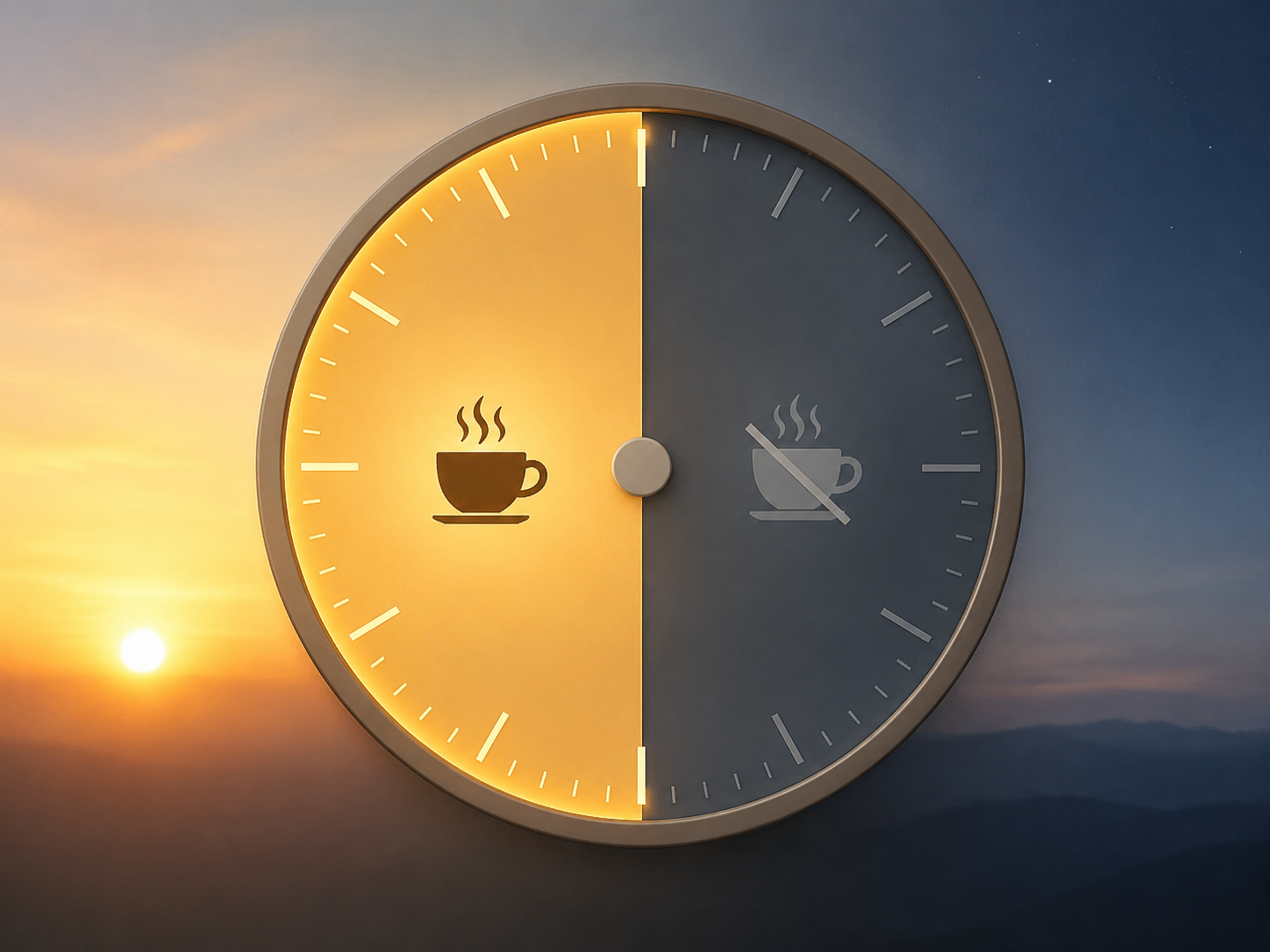
This is observational evidence, not proof that moving every cup before noon will lower a person’s risk. Morning-only coffee drinkers may sleep differently, eat differently, smoke less, or have other habits that help explain the result. Still, the change is low-cost, easy to observe, and biologically plausible because caffeine later in the day can interfere with sleep and circadian rhythm.
For a parent who nurses coffee all afternoon, the first practical target is not perfection. It may be enough to keep the regular cup with breakfast, allow a second cup midmorning if appropriate, and switch later refills to decaf, warm water, herbal tea, or another non-caffeinated routine.
Paper-filtered coffee is the better default for cholesterol concerns
Brewing method is one of the few coffee changes that can lower a specific heart-related concern without shrinking the cup. Paper filters trap more of the coffee compounds cafestol and kahweol, which are diterpenes linked with higher LDL cholesterol. Unfiltered methods, including French press, boiled coffee, and espresso, leave more of those compounds in the drink.[1][2]
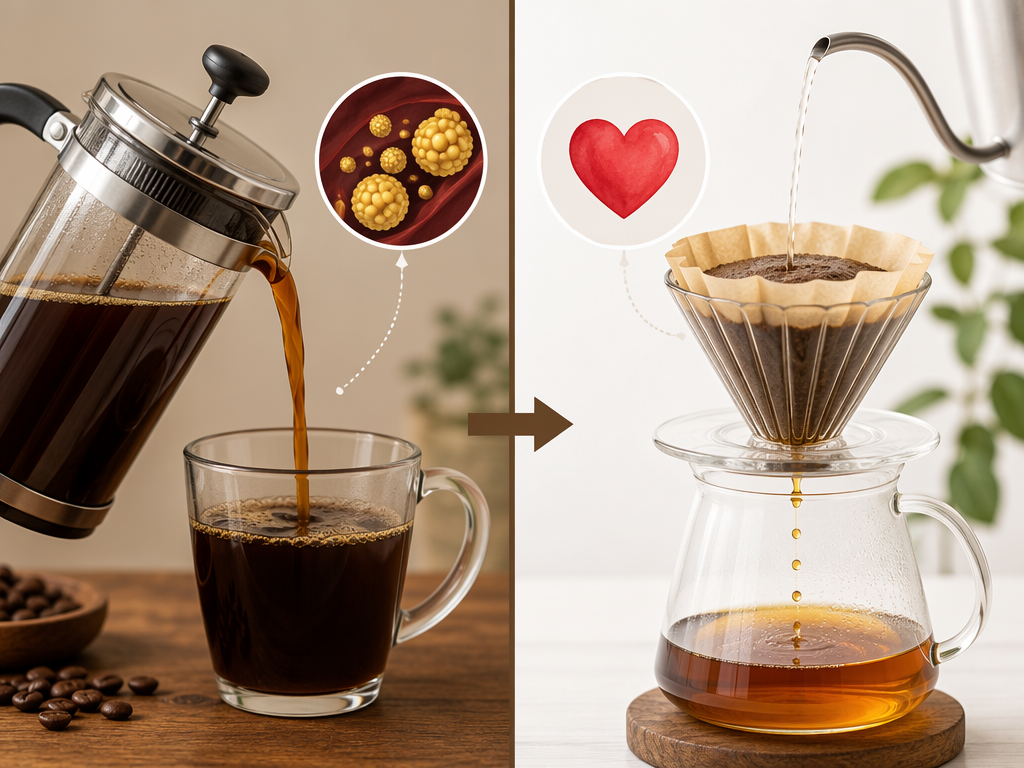
This does not mean an occasional espresso is a cardiac disaster. It does mean that for a senior already managing cholesterol, a paper-filtered drip setup is the safer everyday default than a French press habit. If the coffee ritual is important, changing the brewing method is often kinder and more sustainable than arguing over whether coffee is allowed at all.
Medication and sensitivity checks belong in the same conversation
Coffee can look harmless because it is familiar, but caffeine still has drug-like effects: it can raise alertness, disturb sleep, contribute to palpitations in sensitive people, and make some people feel shaky or lightheaded. Those effects matter more in an older adult who takes several medications or already has balance problems.
A pharmacist review is especially useful when a parent takes thyroid medication, certain antibiotics, some antidepressants, stimulant-containing products, or over-the-counter decongestants. The exact interaction depends on the medication, dose, timing, and the person’s kidney, liver, and cardiac status, so this is not a place for a family to improvise changes.
The most useful information to bring is ordinary and specific: how many cups, what size mug, regular or decaf, what time the last caffeinated cup is finished, recent blood pressure readings, sleep changes, dizziness, palpitations, and any new prescriptions. If caffeine seems to be worsening sleep, dizziness, or balance, it may also be worth reviewing the broader medication picture with a guide such as A Caregiver's Guide to Medications That Increase Fall Risk in Older Adults.
When green tea is the easier compromise
For families dealing with severe hypertension, green tea may be a useful step-down option rather than a wellness detour. In the AHA-reported severe-hypertension analysis, green tea did not show the same elevated cardiovascular death risk seen with 2 or more cups of coffee per day in people with blood pressure of 160/100 mmHg or higher. The report noted that green tea commonly contains about 30 to 50 mg of caffeine per cup and may differ because of polyphenols.[4]
That does not make green tea a treatment for high blood pressure. It is simply a gentler caffeinated ritual to ask about when regular coffee is no longer an obvious fit.
A caregiver-ready coffee routine
For most seniors with heart concerns, the safest everyday pattern is plain enough to put on the refrigerator: confirm that blood pressure is controlled, keep total caffeine moderate, make the usual coffee paper-filtered, finish caffeinated coffee in the morning, and watch for sleep disruption, palpitations, shakiness, dizziness, or rising home blood pressure readings.
If blood pressure is repeatedly near 160/100 mmHg or higher, if symptoms appear, or if the medication list is complicated, the next step is not a family vote on whether coffee is good or bad. It is a focused question for the clinician or pharmacist: “Given these readings, these medicines, and this actual coffee routine, what amount is safe?”
References
- Caffeine and Cardiovascular Disease: A Scientific Statement From the American Heart Association, American Heart Association / Circulation, July 2026.
- Impact of Coffee Consumption on Cardiovascular Health, PMC, 2023.
- Association of caffeine intake with all-cause and cardiovascular mortality in elderly hypertensive patients, PMC, 2022.
- Drinking 2 or more cups of coffee daily may double risk of heart death in people with severe hypertension, American Heart Association, December 2022.
- Morning coffee may lower risk of death from cardiovascular disease, European Society of Cardiology / European Heart Journal, January 2025.
Questions to bring to a clinician or OT
This is not medical, legal, or a family's final decision — only a framework. Bring these questions to a clinician, occupational therapist, or your local Area Agency on Aging.
Find Local HelpRelated reading
Noticed something outdated or inaccurate on this page? Flag a correction. We review every report against CDC, NIA, and AARP HomeFit guidance before updating a page.