
Caregiver decision guide
Eye Drops Recalled? What Seniors Should Do Now
Worried your eye drops were recalled? Here is the exact next-step path — checking the NDC, lot, and expiration date, deciding whether to stop or continue use, recognizing infection symptoms, and getting a safe replacement.
If the recalled eye drops might be in your hand right now, pause before another dose. Do not “finish the bottle.” Put the bottle and its carton, if you still have it, on the table and check the identifiers before deciding what happens next. FDA consumer guidance is clear that recalled eye drops should not be used, and suspected problems can be reported through FDA MedWatch. [1]
| Do this now | What you are looking for |
|---|---|
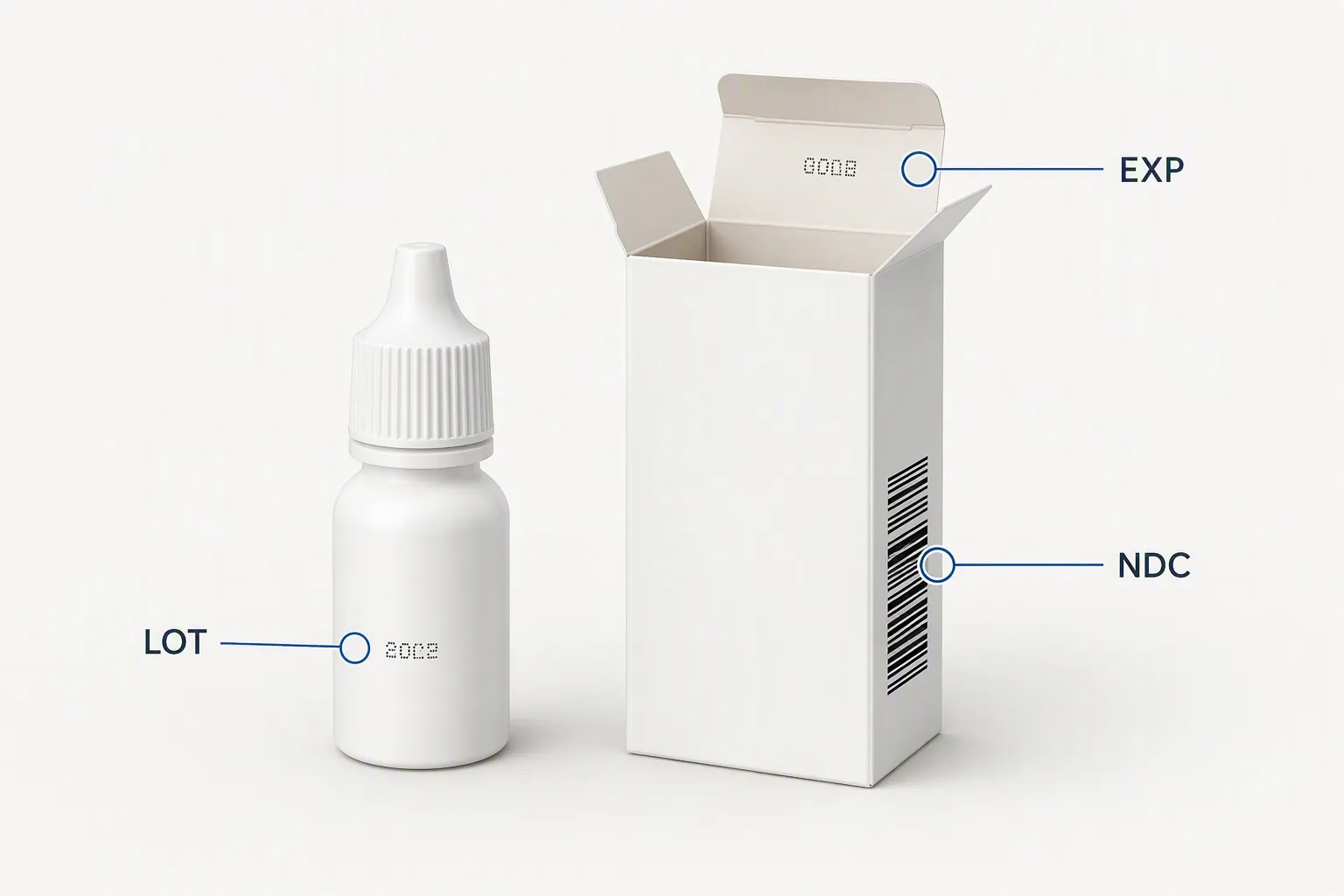
| Find the outer carton first, if you have it. | The 10-digit NDC is often easier to read on the carton than on the small bottle. |
| Find the lot code on the bottle. | The lot is the batch identifier. A brand name alone is not enough. |
| Check the expiration date. | The recall notice may apply only to certain expiration dates. |
| Compare all three: NDC, lot, and expiration date. | Use the FDA recall notice or the manufacturer, pharmacy, or retailer notice. A partial match is not the same as a confirmed match. |
| If the eye is hurting, vision is changing, or discharge is present, skip ahead to symptoms. | Symptoms matter more than paperwork. Get medical help promptly. |
Match the bottle, not the headline
The most common mistake is stopping at the brand name. A headline may say “Rohto,” “artificial tears,” or “prednisolone acetate,” but recalls usually live at the product-code and lot level. The bottle in your hand has to match the notice closely enough to identify it as the recalled product.
Use this order because it reduces false alarms:
- Product name: Confirm you are looking at the same product, strength, and package size.
- NDC: Compare the 10-digit National Drug Code when the notice provides one. The carton is often the best place to find it.
- Lot: Compare every character. Similar is not the same.
- Expiration date: Check the month and year exactly as printed.
If the bottle is the same brand but a different lot, or it is not on the FDA list after you have checked the identifiers, UC Davis Health quoted ophthalmologist Jeffrey H. Ma, M.D., saying it may be safe to continue using it. That is not permission to guess from memory; it means verify the actual bottle against the live notice first. [2]
| What you find | What to do |
|---|---|
| NDC, lot, and expiration date match the recall notice | Stop using it. Set it aside for return or disposal instructions. Do not test it “one more time.” |
| Brand matches, but lot or expiration date does not match | Recheck the notice. If it still does not match, it may not be part of that recall. |
| The bottle label is too small, smeared, or missing | Use the carton, pharmacy label, receipt, online order history, or call the pharmacy or retailer. Do not keep using it while you are unable to identify it. |
| It is a prescription drop | Call the prescriber or pharmacist for replacement instructions before stopping treatment on your own. |
| There are eye symptoms | Call an eye doctor or medical professional the same day; severe symptoms or sudden vision changes need emergency eye care. |
Last verified for the product examples below: August 1, 2026. Recall records can change, and FDA enforcement report pages are interactive. Recheck the live FDA recall notice or the notice from the retailer, pharmacy, or manufacturer before making a final keep-or-discard decision.
The current recalls show why exact matching matters. USA Today reported a Rohto recall involving about 12.46 million bottles, while other coverage has reported carton counts separately; Prevention reported specific lot numbers and expiration dates for the Rohto products. Those details are the action point, not the brand name by itself. [5][6]
K.C. Pharmaceuticals’ April 2026 recall involved more than 3.1 million bottles, according to UC Davis Health. Separately, Sjögren’s Foundation flagged several Excelvision-manufactured lots across major eye-drop brands. In those situations, the useful question at the kitchen table is still the same: does this exact bottle match the exact lot and expiration date in the notice? [7][8]
Symptoms decide the urgency
A recall check is paperwork until the eye is acting infected or vision is changing. Then it becomes a medical call.
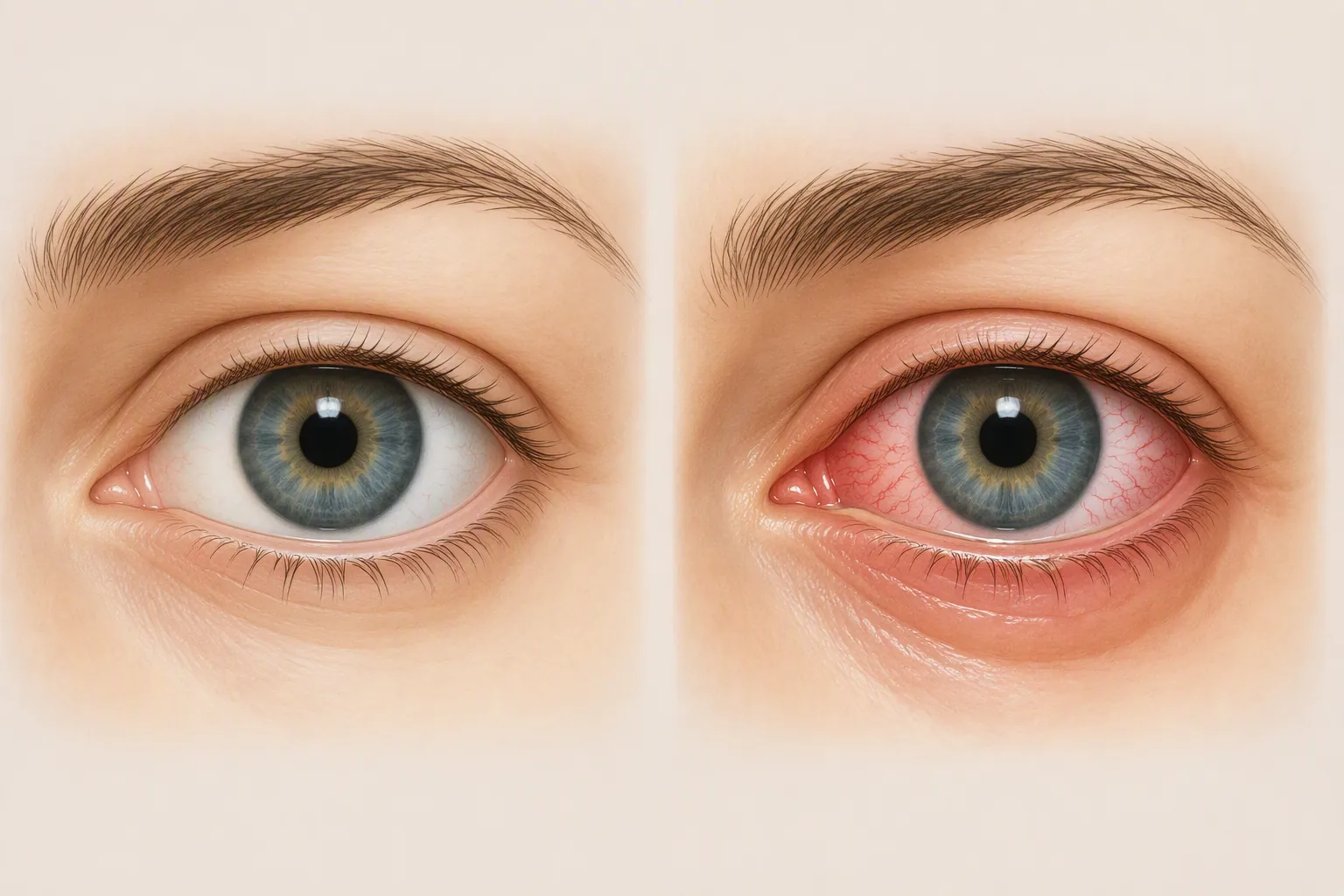
Seek medical care immediately if there is yellow, green, or clear discharge from the eye; eye pain or discomfort; worsening redness; a feeling that something is in the eye; increased light sensitivity; or blurry vision. CDC and UT Southwestern both identify these as warning signs after use of potentially contaminated eye drops. [3][4]
For an older adult, do not wait to “see if it clears up” when vision is blurry, light hurts, the eye is painful, or redness is getting worse. Call an eye doctor, prescribing clinician, pharmacist, urgent care clinic, or other medical professional the same day. Sudden vision changes, severe eye pain, rapidly worsening symptoms, or symptoms after eye surgery should be treated as an emergency eye-care situation.
This is the reason sterility warnings get taken seriously. In the 2023 EzriCare/Global Pharma artificial tears outbreak, CDC’s final update counted 81 patients in 18 states, with 14 reports of vision loss, 4 enucleations, and 4 deaths within 30 days. That outbreak is a severity benchmark, not proof that every later recall caused infections. [3]
The 2026 Rohto, K.C. Pharmaceuticals, and Excelvision-related actions described in the available notices were Class II recall situations tied to lack of assurance of sterility. The safer wording is important: lack of assurance of sterility is not the same as confirmed contamination in your bottle, and the available recall reports cited here did not establish confirmed infections from those 2026 products. [5][7][8]
If the recalled drop is over the counter
For an over-the-counter artificial tear, redness reliever, or lubricant drop that matches the recall notice, stop using it and follow the notice’s return or disposal instructions. Some notices send people back to the retailer. Others tell consumers to discard the product. If the notice says to discard it, do not pour it into another container or save it for “backup.”
Before throwing anything away, take clear photos of the front label, NDC, lot, expiration date, and any pharmacy or retailer label. Keep the receipt or online order record if you have it. Those details help if a clinician, retailer, manufacturer, or FDA report asks what was used.
If the older adult depends on lubricating drops for dryness, replace them with a product that is not on the recall list. A pharmacist can help choose a substitute, especially if the person has glaucoma, recent eye surgery, severe dry eye, contact lens use, allergies to preservatives, or several eye medications lined up on the counter.
If the recalled drop is prescription
Prescription eye drops need a different decision. Do not stop and restart a steroid, antibiotic, glaucoma medicine, post-surgery drop, or anti-inflammatory eye medicine on your own. Call the prescribing clinician or pharmacist and say: “I have a recalled eye drop. I need a replacement today, and I need to know what to do about missed doses.”
The Lupin prednisolone acetate example is the one to take seriously here. UC Davis Health reported a recall of 2,530,182 bottles of prescription prednisolone acetate ophthalmic suspension, with NDCs 70748-332-02, 70748-332-03, and 70748-332-04. Because prednisolone acetate is a prescription steroid eye drop, the replacement plan belongs with the prescriber or pharmacist, not with a caregiver guessing from a recall headline. [2]
When calling, have the bottle in front of you. Read the product name, strength, NDC, lot, expiration date, and pharmacy label. Ask whether the patient should skip doses until the replacement is in hand, switch to a different product, or be seen first because of symptoms.
If you are already reviewing an older adult’s medication area, this is also a good time to separate prescription eye drops from over-the-counter products and remove expired bottles. For broader medication housekeeping, see A Caregiver’s Guide to Medications That Increase Fall Risk in Older Adults. Vision changes, dizziness, sedating medications, and cluttered medication routines can all end up in the same place: a preventable fall.
Report the problem after the immediate safety step
Once the drop is stopped, replaced, or cleared as not matching the recall, report suspected side effects or quality problems to FDA MedWatch. FDA specifically directs consumers to report adverse events or quality problems with eye drops through MedWatch. [1]
- Report eye pain, discharge, worsening redness, blurry vision, light sensitivity, or an infection diagnosis after use.
- Report product problems such as visible particles, broken seals, unusual color, leaking, or a label that does not match the carton.
- Include the product name, NDC, lot, expiration date, where it was bought, when it was used, and what happened.
If the person using the drops is an older adult and you are unsure whether a medication should be stopped, FDA also lists a Drug Information line, 1-855-543-3784, as part of its medication safety information for older adults. That does not replace the prescriber for a prescription eye drop, but it can help when the household is trying to understand a medication-safety question. [9]
If the recall scare started because the person has chronic eyelid irritation, dry eye, or suspected mites around the lashes, do not self-treat with leftover drops. For a separate eye-care topic that often gets confused with irritation and dryness, see Can Ivermectin Treat Demodex Blepharitis in Seniors?.
References
- What You Should Know about Eye Drops, U.S. Food and Drug Administration.
- 2.5 million bottles of prescription eye drops recalled, UC Davis Health, July 2026.
- Outbreak of Extensively Drug-resistant Pseudomonas aeruginosa Associated with Artificial Tears, Centers for Disease Control and Prevention, May 2023.
- Eye drop recall infection, UT Southwestern Medical Center.
- Rohto brand eye drops recalled: See full list of affected products, USA Today.
- Rohto Cooling Eye Drops Recalled by FDA, Prevention.
- Eye drop recall 2026: FDA flags over 3 million bottles; eye doctors explain what you should know, UC Davis Health, April 2026.
- FDA Recall: Several Lots of Major Eye Drop Brands Manufactured by Excelvision Including, Sjögren’s Foundation, 2026.
- 5 Medication Safety Tips for Older Adults, U.S. Food and Drug Administration.
Questions to bring to a clinician or OT
This is not medical, legal, or a family's final decision — only a framework. Bring these questions to a clinician, occupational therapist, or your local Area Agency on Aging.
Find Local HelpRelated reading
Noticed something outdated or inaccurate on this page? Flag a correction. We review every report against CDC, NIA, and AARP HomeFit guidance before updating a page.