
Caregiver decision guide
How to Try Hot Yoga Safely After 60
Adults over 60 can try hot yoga safely when the right steps come first: medical clearance, hydration that starts hours ahead, and a class temperature matched to experience. Here are the before, during, and after rules — including the heat-warning signs that mean leave the room immediately.
The safest hot yoga decision after 60 is made before anyone unrolls a mat. Many older adults can try a heated class and enjoy it — the warmth, the focus, the feeling of moving without a clinical tone. But the room should not be treated like an ordinary exercise room with mood lighting. Heat changes the job your heart, sweat glands, blood vessels, and balance system are doing, and those changes matter more with age, medications, and chronic conditions.

Medical note: This article is educational and is not medical advice. If you are over 60 and have a heart condition, blood pressure issues, kidney disease, diabetes, a history of fainting, heat illness, dehydration problems, or take medications that affect fluid balance, sweating, alertness, or blood pressure, review hot yoga with a licensed clinician before class.
Why the heat deserves more respect after 60
The CDC says adults aged 65 and older may not adjust as well to sudden temperature changes, and that chronic medical conditions and some medications can interfere with the body’s ability to regulate temperature or sweat effectively.[1] That does not mean every older adult should avoid hot yoga. It means the class is a heat exposure as well as a workout.
Mayo Clinic’s practical boundaries are blunt in the useful way: people with heart disease, dehydration problems, heat intolerance, or a history of heat-related illness should avoid hot yoga or get medical guidance first, and anyone who feels dizzy should stop.[2] Those are not fine-print cautions. They are the difference between a challenging class and a preventable medical event.
The heat is not imaginary. Anglia Ruskin University, summarizing published studies on hot yoga, reports core temperatures around 38–40°C — about 100.4–104°F — and sweat losses up to roughly 1.5 liters in a session.[3] Those figures are secondhand study summaries, not a guarantee of what will happen in your body on Tuesday morning. Still, they make one point clearly enough: a heated class can raise body temperature and fluid loss into a range worth planning for.
| Decision point | Safer choice for a first hot yoga try after 60 |
|---|---|
| Medical readiness | Get clearance if you have cardiovascular disease, dehydration problems, heat intolerance, prior heat illness, fainting, or complex medications. |
| Room temperature | Start with a warm class, not the hottest format available. Ask for the actual room temperature before booking. |
| Hydration | Begin before thirst starts, bring water, and avoid treating sweating as proof that the class is going well. |
| In-room behavior | Use modifications early, rest before you feel forced to, and leave immediately for dizziness, nausea, clammy skin, weakness, confusion, or a fast weak pulse. |
| After class | Cool down, replace fluids as medically appropriate, and do not drive or walk alone if you feel lightheaded. |
Before class: the part that matters most
The first hot yoga safety tip for older adults is not a pose adjustment. It is a phone call, a medication check, and a water bottle filled before the house keys are in your hand.
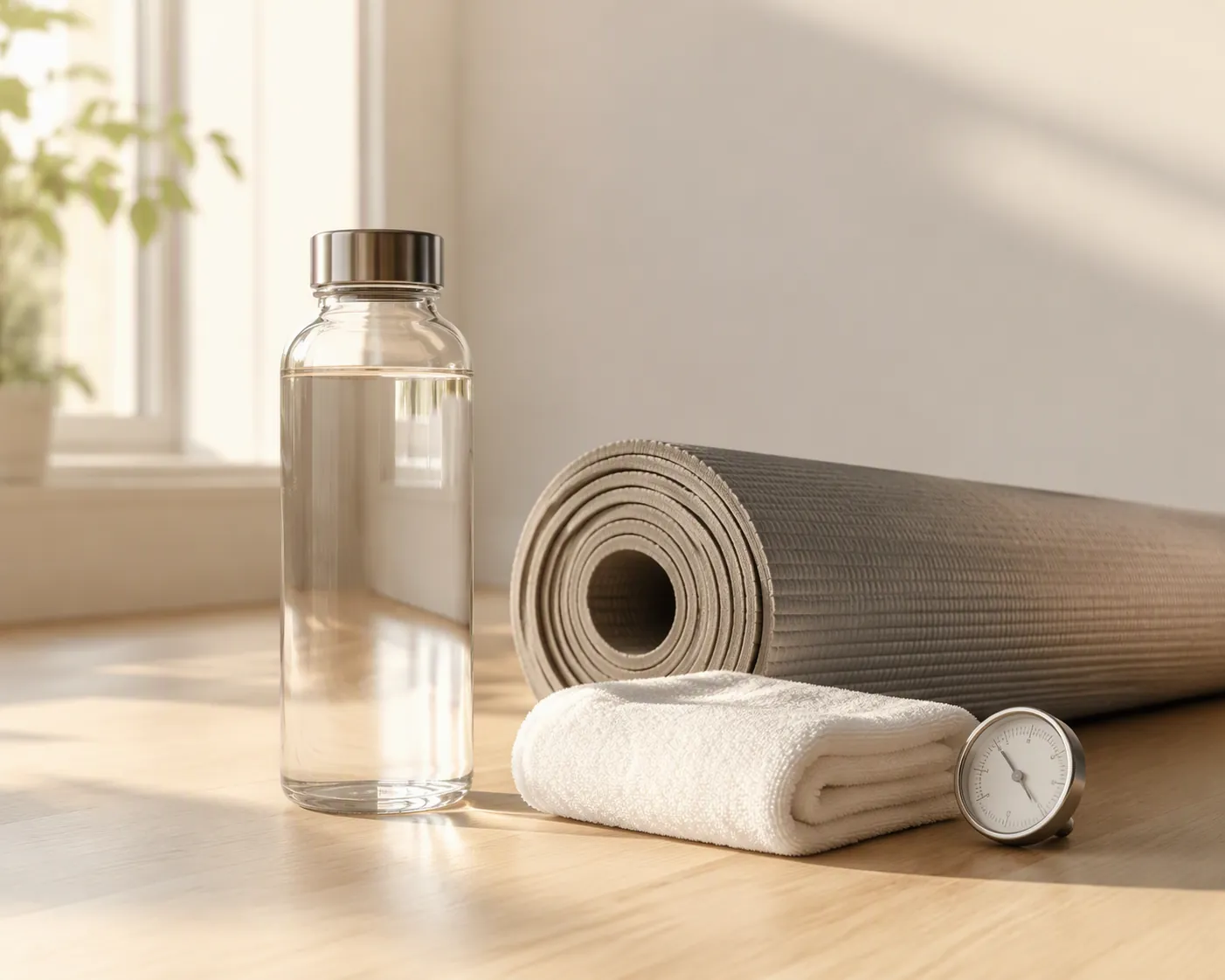
Get clearance for the body you actually have
Cleveland Clinic advises checking with a healthcare provider before hot yoga if you have health conditions or concerns about whether the heat is safe for you.[4] That conversation should be specific. “I want to try a 60- or 75-minute heated yoga class” is more useful than “Can I exercise?” Bring the studio temperature if you know it. Bring your medication list. Mention any recent falls, fainting, dizziness when standing, fluid restrictions, heart rhythm problems, or heat episodes from gardening, walking, or travel.
Medication review is not a formality. The CDC flags medications as one reason older adults can be more vulnerable to heat, and Banner Health similarly warns that some medicines can increase heat-related risk in seniors.[1][5] Ask directly whether any of your medications affect sweating, fluid balance, blood pressure, heart rate, alertness, or your ability to sense overheating. If your clinician tells you to restrict fluids, avoid sodium, or monitor blood pressure closely, do not borrow a generic hydration rule from a studio lobby and call it safe.
Call the studio before you book
Ask three plain questions: What is the room temperature? How long is the class? Does the instructor expect students to stay in the room, or is leaving to cool down acceptable? If the answer to the last question is anything other than an easy yes, choose another class.
For a first attempt, a warm class is the wiser experiment than the hottest room on the schedule. If the choice is a class around 85–95°F or a 105°F Bikram-style room, start lower. Mayo Clinic describes hot yoga as yoga performed in a heated room and identifies Bikram as a standardized 105°F format; that hotter room is not the place to find out whether a medication change, a skipped breakfast, or a poor sleep night has made you heat-sensitive.[2]
Hydrate before thirst starts
Do not wait until you are thirsty in the parking lot. The CDC’s heat guidance tells older adults not to rely on thirst as the signal to drink.[1] For hot yoga, that means beginning hydration hours ahead, bringing water into the room, and having a plan for after class. If you are on fluid restriction or have heart or kidney disease, your clinician’s instructions override any general fitness advice.
This is also where caregivers earn their keep, quietly. A parent who is proud of still taking challenging classes may not notice that the day started with coffee, a diuretic, errands in summer heat, and no real water. Dehydration and lightheadedness are not just comfort problems; they can become mobility and fall problems. For more on why fluid access can quickly become a fall emergency, see Why a Water Crisis Is a Fall Emergency for Older Adults.
Choose the first class for control, not pride
- Pick a shorter or beginner-friendly heated class before a long, intense one.
- Avoid your first hot class on a day when you are ill, sleep-deprived, hungover, unusually stressed, or already overheated.
- Eat in a way that suits your medical needs, but do not arrive depleted.
- Bring water, a towel, and clothing that lets sweat evaporate.
- Tell the instructor before class that you are new to heated practice and may step out if needed.
- Arrange a ride or check-in if you have any history of post-exercise dizziness.
None of this is dramatic. That is the point. The safer first class is the one with fewer surprises.
During class: leave early enough that leaving still works
Once the door closes and the room settles into heat, do not make endurance the measure of success. The first class is a test of how your body handles the environment. Resting in child’s pose, sitting on the mat, skipping a sequence, or leaving the room are all acceptable responses. The unsafe response is trying to prove that a warning sign is only weakness.

Heat illness often moves by degrees. Cleveland Clinic describes heat cramps as painful muscle cramps related to heat exposure; heat exhaustion can include heavy sweating, cold or clammy skin, dizziness, weakness, headache, nausea, and a fast, weak pulse.[6] Health in Aging, from the American Geriatrics Society Foundation, also warns older adults and caregivers to treat symptoms such as dizziness, nausea, weakness, and confusion seriously in hot weather.[7]
| What you notice | What to do |
|---|---|
| Muscle cramping, unusual fatigue, or feeling hotter than expected | Stop the sequence, rest, sip water if allowed for you, and cool down. Do not jump back in automatically. |
| Dizziness, nausea, weakness, headache, cold or clammy skin, heavy sweating, or a fast weak pulse | Leave the room immediately, cool down, and get help. Do not drive yourself if symptoms persist. |
| Confusion, fainting, collapse, very high body temperature, or suspected heat stroke | Call 911. Heat stroke is an emergency. |
Heat stroke is the line no one should negotiate with. Cleveland Clinic describes heat stroke as a medical emergency that can involve a core body temperature of 104°F or higher, confusion, loss of consciousness, and organ damage risk.[6] In a yoga studio, confusion may look like someone not following simple instructions, insisting they are fine when they are not, or being unable to get up and leave safely. That is not a “finish the pose” moment.
There is a small social trap here. Many older adults have spent decades being told to stay tough, keep moving, and not make a fuss. Hot yoga asks for a different kind of discipline: notice early, leave early, recover early. If you step out and feel better after cooling down, you have not failed the class. You have gathered useful information.
After class: the danger is not always over at the door
After a heated class, sit for a few minutes before standing quickly. Cool down in air conditioning or shade, keep drinking if fluids are safe for you, and change out of soaked clothing. Health in Aging recommends moving to a cool place, drinking fluids when appropriate, and seeking help for concerning heat symptoms in older adults.[7]
Be especially careful with the ordinary transitions: standing up from the mat, walking to the locker room, showering, stepping off a curb, or driving home. A class can feel finished while your blood pressure, fluid level, and balance are still catching up. If you feel lightheaded, sit down and ask for help. If symptoms do not clear promptly, or if there is confusion, fainting, chest pain, severe weakness, or concern for heat stroke, treat it as urgent.
What not to overpromise
Hot yoga may feel wonderful: warm joints, slower breathing, a satisfying sweat, a room that asks for attention. Those are good reasons to be interested. They are not proof that the heat is cleansing you, fixing blood pressure, or preventing falls.
If blood pressure is part of your reason for trying hot yoga, make that a reason to talk with your clinician, not a reason to self-prescribe heat. If balance is your goal, remember that yoga evidence in older adults does not automatically become hot-yoga evidence. A warm room can make movement feel easier, but dizziness in a hot room can also create a fall situation very quickly.
A reasonable first attempt
A sensible first hot yoga class after 60 looks almost plain from the outside: clinician clearance when needed, a known room temperature, water planned before thirst, an instructor who welcomes stepping out, and a promise to leave at the first warning sign. The class itself may still be challenging. It should not be a contest with heat.
If those conditions are in place, hot yoga can be a reasonable experiment. If they are missing, start cooler, shorter, slower, or with a different class. There is no dignity in winning an argument with a hot room and needing help in the parking lot afterward.
References
- Heat and Older Adults (Aged 65+), CDC.
- What is hot yoga?, Mayo Clinic.
- Exploring the risks and rewards of a hot yoga workout, Anglia Ruskin University.
- Is Hot Yoga Right for Me?, Cleveland Clinic.
- Heat warning: Summer safety tips for seniors and more, Banner Health.
- Heat Exhaustion, Cleveland Clinic.
- Tip Sheet: Hot Weather Safety Tips for Older Adults, Health in Aging.
Questions to bring to a clinician or OT
This is not medical, legal, or a family's final decision — only a framework. Bring these questions to a clinician, occupational therapist, or your local Area Agency on Aging.
Find Local HelpRelated reading
Noticed something outdated or inaccurate on this page? Flag a correction. We review every report against CDC, NIA, and AARP HomeFit guidance before updating a page.