
Caregiver decision guide
Grocery Delivery for Seniors Can Cost as Little as $0 – Here's How
Find out how to get groceries delivered for a senior on a fixed income — from free government programs like CSFP and Meals on Wheels to discounted memberships for SNAP recipients, all for $15 a month or less.
Last reviewed: July 20, 2026. If a parent needs groceries delivered and the budget is tight, start with the monthly cost, not the app. The useful range is wider than most families realize: some programs cost $0, several delivery memberships fall under $5 to $7 a month for people with SNAP, EBT, Medicaid, or other government assistance, and the standard paid options usually land below about $15 a month before tips, service fees, and grocery markups.
That “before” matters. Delivery can still cost more than shopping in person, and some programs have waitlists or state-by-state rules. But for a senior who has stopped driving, is recovering from a fall, or is quietly stretching meals because shopping is too hard, the right setup can be the difference between a weekly routine and a family emergency.
The Grocery Delivery Cost Ladder
| Monthly cost | Options to check | Best fit | What to verify first |
|---|---|---|---|
| $0 | CSFP food boxes, Meals on Wheels, TEFAP or food bank delivery, local senior food programs | Low-income seniors, homebound seniors, or anyone at risk of losing independence | Local availability, income or age rules, waitlists, and whether delivery is available instead of pickup [1][2][3] |
| $0 plus SNAP benefit value | SNAP enrollment, online EBT grocery payment where available | Older adults who qualify but have not applied, especially those on fixed income | Eligibility, application help, and which stores accept EBT online in the senior’s ZIP code [1][4] |
| $4.99 to $6.47 | Instacart+ for EBT at $4.99/month, DoorDash DashPass for SNAP at $4.99/month, Walmart+ Assist at $6.47/month | Seniors who already have SNAP, EBT, Medicaid, or qualifying government assistance | Current membership price, minimum order, delivery fees, service fees, and whether EBT can pay for the groceries [4][5] |
| $0 reduced membership, grocery costs still apply | Thrive Market’s EBT-related free option | Shelf-stable pantry items and households that use EBT | Whether the current free membership terms fit the senior’s shopping list and delivery area [4] |
| About $9.99 to $15 | Standard Instacart+, Walmart+, Amazon Fresh through Prime, and similar paid services | Families who do not qualify for assistance or need immediate coverage while applications are pending | Total delivered price after substitutions, tips, service fees, and grocery price differences [6] |
The table is the order I would actually work through it: free food first, SNAP next, discounted memberships after that, and full-price subscriptions only when the lower rungs do not apply or cannot move fast enough.

$0 Options: Check These Before Paying for an App
Free grocery help is not always branded as “delivery.” It may be called a food box, senior nutrition program, congregate meal program, home-delivered meal program, pantry delivery, or emergency food assistance. That makes it easy to miss when a family searches only for grocery delivery apps.
CSFP: the monthly food box many families never hear about
The Commodity Supplemental Food Program, usually shortened to CSFP, provides monthly food packages for low-income adults age 60 and older. NCOA describes CSFP food boxes as being worth about $30 to $70 per month, with foods such as cereal, shelf-stable milk, canned goods, pasta, and peanut butter [1].
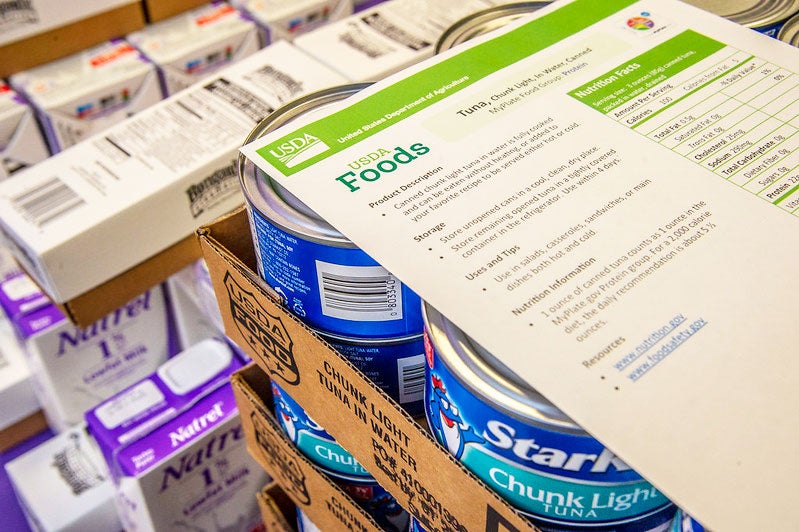
This is where the word “delivery” needs a careful check. CSFP is a food package program, but the handoff depends on the local agency. Some families may be told to pick up a box at a distribution site; others may find a partner that can deliver or coordinate pickup through a senior center, food bank, or volunteer network. USAGov directs older adults to state and local agencies for food assistance programs, and CSFP and the Senior Farmers’ Market Nutrition Program are not something to assume works the same way in every state [2].
The practical first move is not to ask, “Do you have free grocery delivery?” Ask, “Who handles CSFP for seniors in this county, and is there any home delivery or proxy pickup option for someone who cannot drive?” That second half of the question is often where the useful answer is.
Meals on Wheels: not a grocery order, but often the fastest food safety net
Meals on Wheels is usually not grocery delivery in the Instacart sense. It is a local-program model built around meals, wellness checks, and helping older adults remain independent. SeniorLiving.org describes Meals on Wheels as serving more than 2 million seniors through more than 5,000 local programs, with eligibility generally centered on being age 60 or older and at risk of losing independence rather than on a single national income test [3].
That makes it worth calling even when a parent would not describe themselves as “poor.” The limiting factor may be local capacity. Some programs can start quickly; others keep waitlists. Some ask for a suggested donation; others structure payment differently. The only safe assumption is that the local program decides how it works.
Food banks and TEFAP: local rules, real groceries
The Emergency Food Assistance Program, food banks, and senior pantry programs can also be part of the $0 rung. Feeding America’s senior food programs include options such as food boxes, mobile pantries, and connections to local food banks, but the exact service depends on the area [7].
For a homebound parent, the useful question is specific: “Does the food bank have senior delivery, mobile pantry service, a partner agency near this address, or a way for an adult child or neighbor to pick up on their behalf?” A pantry that does not deliver may still solve the grocery problem if it allows proxy pickup and the family can fold that into one weekly errand.
SNAP Is the Hinge: It Adds Food Money and Unlocks Discounts
SNAP is the benefit to check before deciding grocery delivery is unaffordable. NCOA reports that about 9 million eligible older adults are not enrolled in SNAP, and that the average SNAP benefit for older adults is about $100 per month [1].
That number bothers me more than any delivery fee. A $4.99 membership discount is helpful, but an unclaimed $100 monthly grocery benefit is the bigger missing piece. It can also make the delivery side cheaper because EBT status now connects to reduced memberships, online grocery payment, or both.
Online EBT does not mean every item, every fee, or every store is covered. NCOA’s guide to stores that accept EBT online explains that SNAP can generally pay for eligible food items online at participating retailers, while delivery fees, tips, service fees, and nonfood items usually require another payment method [4].
- If the senior has SNAP already: check which nearby retailers accept EBT online, then compare discounted memberships.
- If the senior may qualify but never applied: start the SNAP application before paying for a full-price delivery plan.
- If the application is pending: use the cheapest temporary delivery option, then switch once EBT or Medicaid documentation is available.
- If the senior cannot manage an app: look for caregiver account access, phone ordering, store pickup by proxy, or a local agency that can help place orders.
Under $7 a Month: Discounted Delivery Memberships for SNAP, EBT, Medicaid, and Assistance Recipients
This is the rung many families miss because it looks like private delivery at first glance. The discount is tied to benefit status, not age. A senior does not usually get the lower price just for being older; they get it because they can verify SNAP, EBT, Medicaid, or another qualifying assistance program.
| Service | Reduced price noted in the research | Who it may help | Caregiver check |
|---|---|---|---|
| Walmart+ Assist | $6.47/month | Seniors near a Walmart delivery area who qualify through government assistance | Walmart announced Walmart+ Assist as a half-price membership for people on qualifying government assistance [5]. |
| Instacart+ for EBT | $4.99/month | Seniors who want access to multiple local stores and already use EBT | Confirm current EBT-linked pricing, participating stores, order minimums, and fees before enrolling [4]. |
| DoorDash DashPass for SNAP | $4.99/month | Households that can use SNAP-linked offers and have useful grocery partners nearby | Check whether the stores that matter in the senior’s ZIP code accept EBT online and what fees remain outside SNAP [4]. |
| Thrive Market EBT-related option | $0 membership noted in the research | Seniors who rely on shelf-stable pantry goods more than same-day fresh grocery delivery | Verify current eligibility, delivery area, and whether the product mix matches the senior’s diet and budget. |
The low membership price is only one line in the notebook. The full monthly cost also includes the grocery prices, any service fees, delivery minimums, substitutions, tips, and the separate debit or credit card needed for charges SNAP does not cover. A $4.99 plan can still be a good deal, but only if the parent’s usual groceries are available at a sensible price.
Walmart+ Assist is the clearest published example in the source material because Walmart announced it as a half-price membership for customers on qualifying government assistance, priced at $6.47 per month at launch [5]. The caregiver task is to confirm the current price on the signup page, upload or verify the required benefit documentation, and test one real basket before assuming it solves the weekly shop.
Instacart, DoorDash, and Thrive Market can be useful in different ways. Instacart may matter when the parent’s preferred grocery store is not Walmart. DoorDash may be more useful in ZIP codes where grocery partners are strong. Thrive Market is more pantry-oriented and may fit shelf-stable items better than bananas, milk, and same-day dinner. The cheapest plan is not automatically the best one if it does not carry the foods the senior actually eats.
Standard Paid Services: Reasonable as a Fallback, Not the First Stop
Some families will not qualify for SNAP, Medicaid, CSFP, or local food assistance. Others need groceries delivered this week while applications and callbacks are still in motion. In that case, a standard grocery delivery subscription can be a practical bridge.
| Service type | Typical membership cost in the research | When it makes sense | Watch for |
|---|---|---|---|
| Walmart+ standard | $12.95/month | A parent already buys Walmart groceries and lives in a reliable delivery area | Substitutions, delivery windows, and whether the senior’s address qualifies [6] |
| Instacart+ standard | $9.99/month | The family needs several store choices or a familiar local supermarket | Service fees, item markups, and order minimums [6] |
| Amazon Fresh through Prime | About $15/month for Prime access | The senior already uses Amazon or a caregiver can manage the account | Fresh availability, minimums, and whether Prime is worth it beyond groceries [6] |
This is also where the delivery premium needs to be faced plainly. CNET’s grocery delivery cost comparison found that grocery delivery was roughly 10% more expensive than buying in person [8]. For a senior on a fixed income, that gap is not imaginary. Discounted memberships, SNAP benefits, and free local programs are the tools that can shrink it.
If the parent does not qualify for assistance, the job becomes more basic: choose the service with the fewest recurring surprises. One stable weekly order from a nearby store may beat a cheaper-looking app that changes fees, misses staples, or requires a caregiver to spend every Sunday fixing substitutions.
What About Phone Ordering and Concierge Services?
Not every senior can use an app, and not every adult child can be on call during every delivery window. Services such as GoGoGrandparent position themselves around helping older adults arrange services like groceries without using a smartphone app [9]. That can be useful for the right household.
I would not build the budget around it until the current pricing is verified directly. Concierge models can include membership costs, per-minute or service fees, or other charges that change the math quickly. For a parent who cannot use apps, it may still be worth pricing out, but it belongs after checking free programs, SNAP, EBT-enabled stores, and discounted memberships.
The Order I Would Make the Calls
For most families, affordable grocery delivery is assembled, not found in one perfect senior program. The right answer depends on benefit status, local availability, and how much help the parent actually needs with ordering, carrying, cooking, and remembering to eat.
- Check SNAP eligibility first, especially if the senior is on a fixed income and has never applied. The missed benefit can be larger than the delivery discount itself [1].
- Use USAGov or the USDA state contacts to find CSFP, SFMNP, and older-adult food assistance in the senior’s state and county [2].
- Call the local Meals on Wheels program or search through the Eldercare Locator if meals, wellness checks, or homebound support are part of the problem.
- Search Feeding America’s local network for senior food programs, mobile pantry options, TEFAP partners, and possible delivery or proxy pickup [7].
- If SNAP, EBT, Medicaid, or other assistance is already in place, compare Walmart+ Assist, Instacart+ for EBT, DashPass for SNAP, Thrive Market, and local online EBT retailers before paying full price.
- If no benefit-linked option works quickly, use a standard paid service as a temporary bridge and review the real delivered cost after the first two orders.
If groceries are only one part of a larger aging-at-home problem, it may help to step back and map the rest of the support system. Our guide to home help for the elderly in 2026 covers broader services such as meal support and PACE, while The First 90 Days of Caregiving is built for the family member who is suddenly handling food, medication, transportation, and bills at the same time. Grocery delivery is often the first fix, not the last one.
References
- 6 Benefits That Could Help Older Adults Pay For Food, NCOA.
- Food assistance programs for older adults, USAGov.
- Free Food Delivery Services for Seniors, SeniorLiving.org.
- Where Can I Pay With EBT Online?, NCOA.
- Walmart Launches Walmart+ Assist: Half Price Memberships, Walmart, July 20, 2023.
- The 9 Best Grocery Delivery Services of 2026, CNET.
- Senior Food Programs, Free Senior Meals, Feeding America.
- Here's How Much It Costs to Have Groceries Delivered Versus Buying in Person, CNET.
- Grocery Shopping for Seniors: Delivery Options That Work, GoGoGrandparent.
Questions to bring to a clinician or OT
This is not medical, legal, or a family's final decision — only a framework. Bring these questions to a clinician, occupational therapist, or your local Area Agency on Aging.
Find Local HelpRelated reading
Noticed something outdated or inaccurate on this page? Flag a correction. We review every report against CDC, NIA, and AARP HomeFit guidance before updating a page.