
Caregiver decision guide
Signs Your Elderly Parent Should Stop Driving
Worried your elderly parent may be unsafe behind the wheel? This guide sorts the warning signs by urgency — act-now red flags, changes that warrant a professional evaluation, and treatable conditions that can mimic “time to stop” — and includes a ride-along observation method so you can judge the situation objectively and know exactly what to do next.
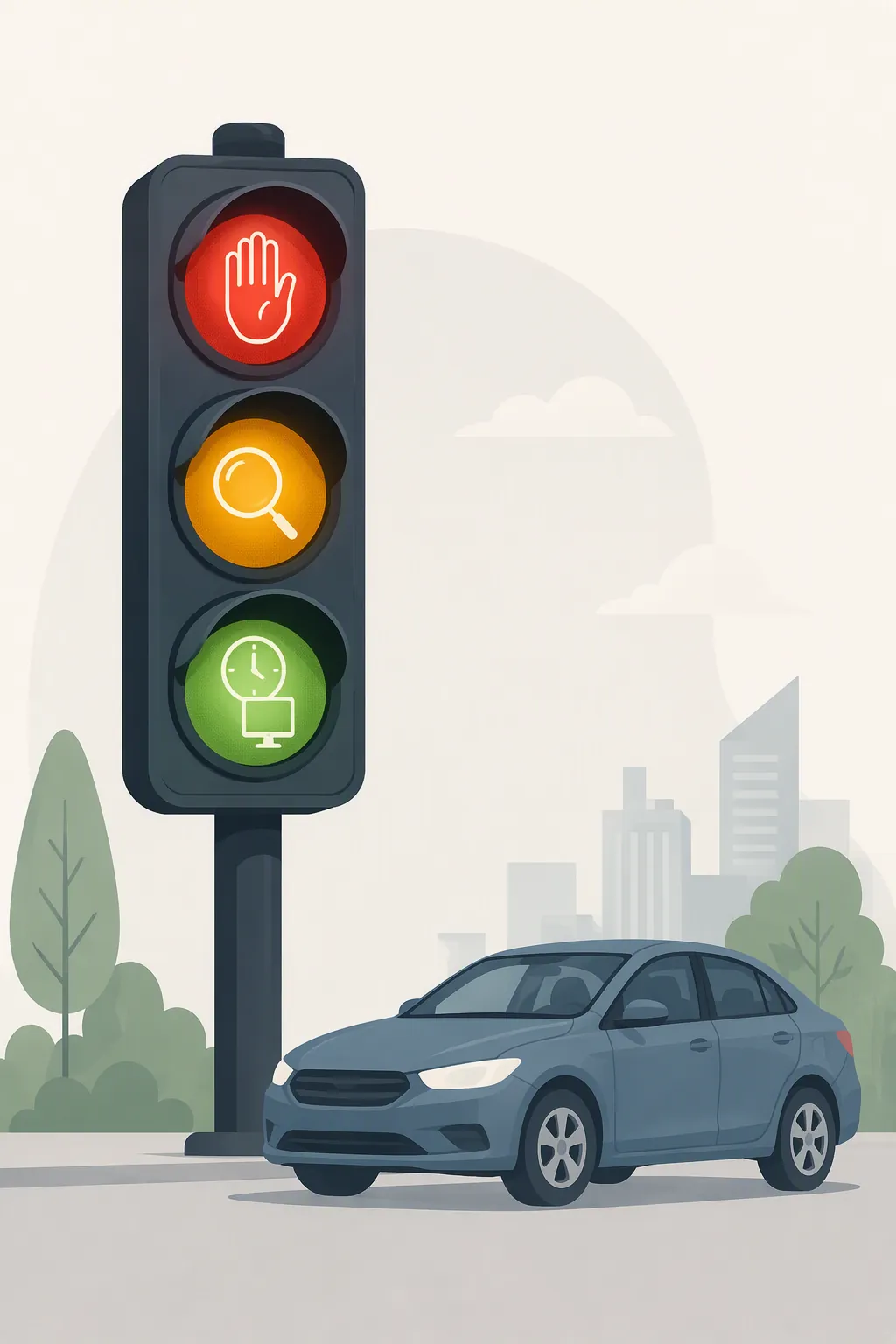
Start with the signs that should stop the car now
If you are looking for signs your elderly parent should stop driving, start with the things that change today’s answer. Not age. Not one clumsy parking job. The question is whether you are seeing a pattern that makes it unsafe for them to drive while the family keeps “watching it.”
These are the hard-stop signs I would not file under “let’s see how it goes.” They either show that the driving task is already breaking down, or they create enough risk that your parent should stop driving until a doctor, driver rehabilitation specialist, or licensing authority weighs in.
| Act-now sign | What it means in real life | What to do |
|---|---|---|
| Repeated crashes or near misses | More than one crash, curb strike, sudden braking incident, or “that car came out of nowhere” story. The National Institute on Aging lists crashes and close calls among warning signs of unsafe driving in older adults. [1] | Pause driving now and arrange formal evaluation. |
| New dents, scrapes, or damage on the car, mailbox, garage, or fence | Damage matters even when nobody admits knowing how it happened. NIA includes dents and scrapes on the car or garage as warning signs. [1] | Inspect the car, document the damage, and do not rely on reassurance alone. |
| Two or more traffic tickets or warnings | One ticket can happen to anyone. A pattern of citations means someone outside the family is also seeing unsafe behavior. NIA flags multiple tickets or warnings as a concern. [1] | Treat this as evidence, not as a family argument. |
| Getting lost on familiar routes | Missing a new exit is one thing. Getting lost driving to the usual grocery store, church, clinic, or a relative’s house is different. NIA and dementia-driving guidance both flag getting lost in familiar places as a major warning sign. [1][2] | Stop solo driving and involve the clinician, especially if memory changes are also present. |
| Confusing the gas and brake pedals | Pedal confusion can turn a parking lot mistake into a serious crash. NIA includes mixing up the gas and brake pedals among warning signs. [1] | Do not wait for a second incident before acting. |
| Moderate-to-severe dementia | This is the clearest threshold. Dementia-driving guidance from Alzheimer’s and caregiver organizations treats advancing dementia as incompatible with safe driving, and clinical guidance distinguishes mild dementia from moderate or severe disease when judging driving safety. [2][3][4][5] | Driving should stop. The next work is transportation planning, not more testing in traffic. |
The reason to sort these first is not to be dramatic. It is to avoid spending three weeks discussing whether Mom “still seems sharp” while the bumper, the neighbor’s mailbox, and the police warning are already telling the same story.
The stakes are real, but the statistics should not be used as a blunt instrument against one parent. CDC reported that more than 9,100 older adults were killed in motor vehicle crashes in 2022. [6] That tells us the problem deserves attention. It does not tell us that every older adult should stop driving at a certain birthday.
Dementia deserves its own threshold
Dementia is not just slower reaction time. It can affect judgment, navigation, attention, impulse control, and the ability to respond when the road does something unexpected. That is why moderate-to-severe dementia belongs in the act-now group. Family members often wait for a crash because the parent can still describe the route or sound confident. Confidence is not the test.
Early or mild dementia is harder. It does not automatically answer every driving question by itself, but it does mean the family should stop relying on casual impressions. Bring the physician into the decision, watch for getting lost, new dents, poor judgment in traffic, or panic in ordinary situations, and start planning for later even if driving continues for now. If you are already managing home safety changes, pair this with a broader dementia safety plan such as Do Today, Plan for Later: A Home Safety Checklist for Early-Stage Dementia.
Caution signs mean “get evaluated,” not “ignore it”
The next group is where families make most of their mistakes. These signs are not small. They can lead to unsafe driving. But they are also not always proof that your parent must permanently stop today.
NHTSA’s older-driver self-assessment materials point to practical changes that deserve attention: trouble looking over the shoulder, difficulty moving the foot between pedals, a fall in the previous year, walking less than one block a day, feeling overwhelmed at intersections, and slow responses to cars ahead. [7]
- Trouble turning the head or upper body to check blind spots. This may show up as drifting, missed lane changes, or relying only on mirrors.
- Difficulty moving the foot smoothly between gas and brake. Watch for delayed braking, hovering over the wrong pedal, or jerky starts and stops.
- A fall in the past year. A fall does not equal unsafe driving, but it can point to weakness, balance problems, medication effects, or slowed movement. If falls are part of the picture, also look at broader capacity signals such as Is It Time to Step In? 5 Signals of Declining Capacity.
- Walking less than one block a day. That can matter because driving still requires strength, range of motion, and stamina. If mobility is shrinking, the driving question belongs in the same conversation as walking support, home access, and whether equipment such as a walker or rollator is appropriate.
- Feeling overwhelmed at intersections. Four-way stops, unprotected left turns, and busy shopping-center exits are useful places to observe because they require attention, judgment, and timing all at once.
- Slow responses to cars ahead. A parent who notices hazards late may still sound perfectly reasonable after the trip. The timing problem is easier to see from the passenger seat than to prove in conversation later.
There is also one plain proxy question from the American Geriatrics Society’s public guidance that cuts through a lot of family fog: would you feel comfortable letting this person drive you somewhere? [8] Not “Do they deserve independence?” Not “Will they be furious?” Just: would you sit in the passenger seat and feel reasonably safe?
If the honest answer is no, that does not by itself diagnose the problem. It does tell you the situation has moved beyond polite waiting. The next step is observation plus evaluation.
Use a ride-along log instead of arguing from memory
A ride-along is not a trap. It is a way to stop turning every concern into a courtroom scene. Sit in the passenger seat on ordinary trips and write down what actually happens. The Hartford’s older-driver conversation guidance emphasizes looking for a pattern of warning signs over time rather than treating a single incident as the whole case. [9]

Use at least a few ordinary drives if there is no immediate hard stop. Choose different conditions: daylight, dusk if they normally drive then, a familiar errand, a slightly busier road, a parking lot, and a route with a left turn or intersection that usually feels manageable. Do not create a stress test your parent would never choose in real life. You are trying to measure their actual driving life, not stage an ambush.
| What to record | Why it matters |
|---|---|
| Date, time, weather, and route | A problem that appears only after dark or only in heavy traffic leads to a different decision than a problem that appears everywhere. |
| Specific event, not interpretation | Write “rolled through stop sign at Maple and 3rd” instead of “bad judgment.” Specific notes are harder to dismiss and easier for a clinician to use. |
| Driver response | Did your parent notice the mistake, correct it, deny it, blame everyone else, or seem confused? |
| Passenger response | Did you have to say “brake,” point out a pedestrian, remind them where to turn, or ask them to slow down? |
| After-trip evidence | Check for new dents, scrapes, mirror damage, tire marks, garage damage, or unexplained repair visits. |
A short log is often fairer than a long speech. “Three times this month you got lost on routes you drive every week” lands differently from “I just don’t think you should drive anymore.” It also protects your parent from being judged on one bad afternoon.
Inspect the car the same way you would inspect the driving pattern: calmly, repeatedly, and without pretending damage is harmless because nobody was hurt. If weather, car entry, or seasonal driving is part of the concern, it can help to separate driving skill from vehicle setup and conditions with a practical checklist such as a winter driving safety checklist for older drivers.
Check for treatable look-alikes before making a permanent decision
Some driving problems look like “time to quit” when the first honest step is medical or functional evaluation. That does not mean keep driving through clear danger. It means do not make an irreversible family decision before checking reversible causes.
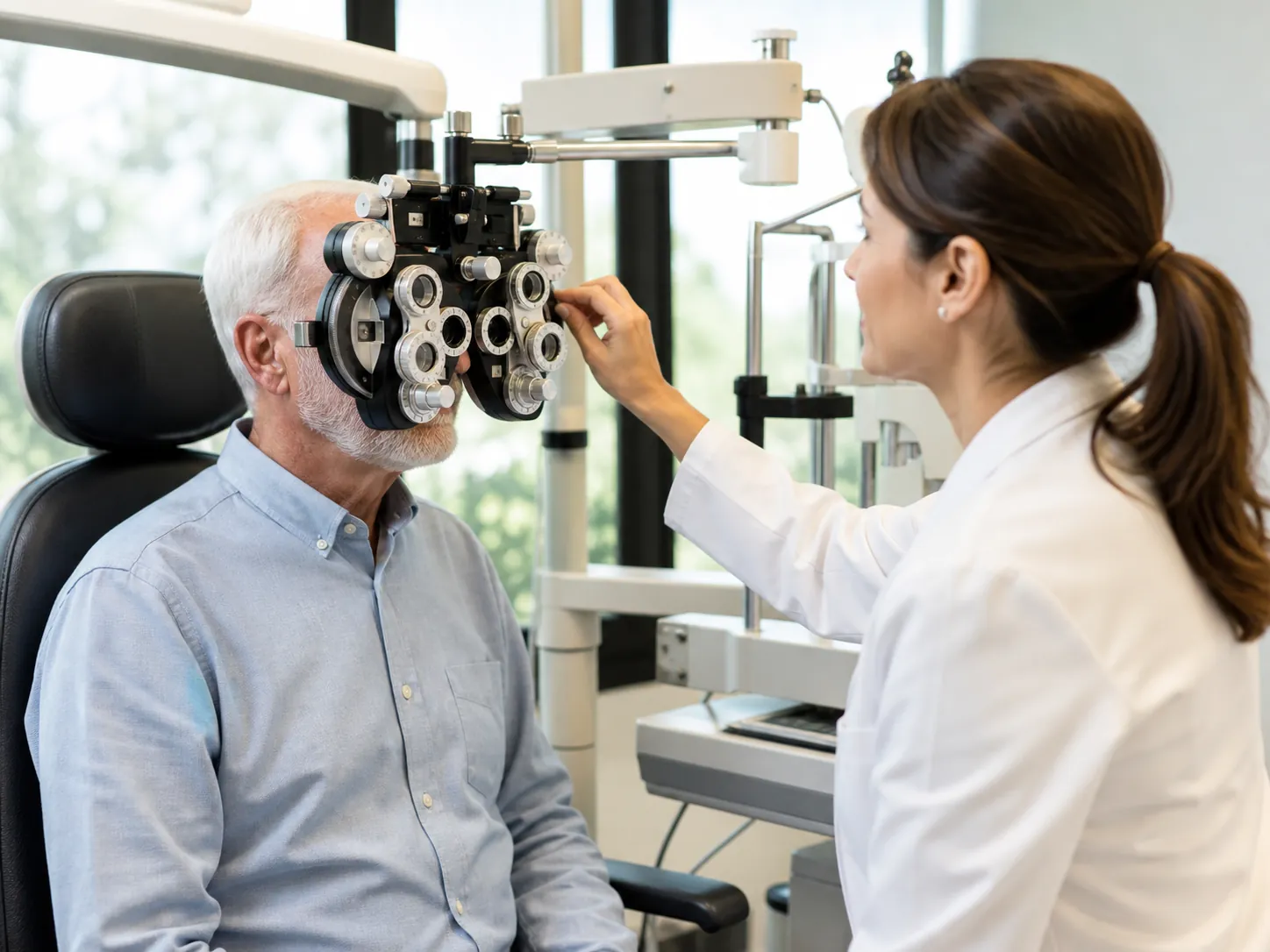
Hebrew SeniorLife’s discussion of senior driving, drawing on occupational therapy and driver rehabilitation expertise, points to treatable contributors such as cataracts, outdated eyeglass prescriptions, and weak hip flexors. Cataract removal, prescription review, and strength work may improve the specific function that is making driving look unsafe. [10]
| What you see | Possible treatable contributor | Evaluation to arrange |
|---|---|---|
| Trouble seeing signs, lane markings, pedestrians, or glare at night | Cataracts, outdated glasses, other vision changes | Eye exam before deciding whether the problem is permanent |
| Difficulty turning to check blind spots | Neck, shoulder, or trunk mobility limits | Primary care, physical therapy, or occupational therapy assessment |
| Slow foot movement between pedals | Hip weakness, leg weakness, stiffness, neuropathy, medication effects | Medical review and, when appropriate, driver rehabilitation evaluation |
| Sleepiness, fogginess, or sudden change in attention | Medication side effects, poor sleep, infection, dehydration, or other medical change | Prompt medical review, especially if the change is new |
The order matters. If your parent has confused the gas and brake, repeatedly gotten lost, or has moderate-to-severe dementia, you do not let them keep driving while waiting for a new glasses prescription. But if the problem is mainly glare, stiffness, or a new medication fog, evaluation can prevent the family from treating a fixable limitation as a final verdict.
What to do with what you observed
A checklist does not replace a physician, a driver rehabilitation specialist, or state licensing rules. It does give you a cleaner next move.
| What you found | Decision | Next step |
|---|---|---|
| Repeated crashes or near misses; new unexplained damage; two or more citations; getting lost on familiar routes; gas/brake confusion; moderate-to-severe dementia | Stop driving now | Remove solo driving from the plan, contact the clinician, and arrange transportation alternatives. If dementia is involved, treat this as a safety transition, not a debate about willpower. |
| Trouble checking blind spots; slow pedal movement; overwhelmed at intersections; recent fall; very limited walking; slow responses to traffic | Get evaluated | Schedule medical review, vision review, and/or a driver rehabilitation assessment. Keep the ride-along log and bring specific examples. |
| One isolated mistake, no repeat pattern, no damage, no navigation problems, no passenger interventions | Monitor | Repeat ride-alongs under normal conditions, inspect the car periodically, and write down events if they recur. |
| Problem appears tied to glare, glasses, cataracts, medication change, weakness, stiffness, or mobility limits | Treat first when safe to do so | Pause high-risk driving situations and address the medical or functional issue before making the final call. |
If the evidence points to stopping, the next conversation will still be hard. Keep the proof concrete: the dates, the routes, the damage, the times you had to intervene, the diagnosis stage if dementia is involved. Then move from judgment to logistics: who drives to appointments, how groceries arrive, what rideshare or community transportation is realistic, and when the car keys or vehicle access change.
For the actual family conversation, use the companion guide How to Talk to Your Parent About Stopping Driving. DMV reporting, physician reporting, and license-review rules vary by state, so treat that as a local legal and medical step, not as something a family checklist can settle.
If the evidence is weak, keep watching without turning every errand into a cross-examination. If the evidence repeats, worsens, or appears in more than one setting, stop calling it “one little scrape.”
References
- Safe Driving for Older Adults — National Institute on Aging
- Driving Safety and Alzheimer's Disease — National Institute on Aging
- Driving and Dementia — Alzheimer's Association
- Dementia and Driving — Family Caregiver Alliance
- Safe Driving for Patients With Dementia — American Academy of Family Physicians
- Older Adult Drivers — Centers for Disease Control and Prevention
- Driving Safely While Aging Gracefully — National Highway Traffic Safety Administration
- Tip Sheet: Discussing When it's Time to Stop Driving — HealthInAging.org
- Tackling the Difficult Driving Conversation — The Hartford
- When Should Seniors Stop Driving? — Hebrew SeniorLife
Questions to bring to a clinician or OT
This is not medical, legal, or a family's final decision — only a framework. Bring these questions to a clinician, occupational therapist, or your local Area Agency on Aging.
Find Local HelpRelated reading
Noticed something outdated or inaccurate on this page? Flag a correction. We review every report against CDC, NIA, and AARP HomeFit guidance before updating a page.