
Caregiver decision guide
What Seniors Should Know About Southwest's Seating Change
Southwest replaced open seating with assigned seats, and the new fare and boarding rules carry extra considerations for older travelers. Older adults and the family members booking for them can compare fares by seat choice, understand how need-based preboarding works, and get a mobility-friendly seat without overpaying.
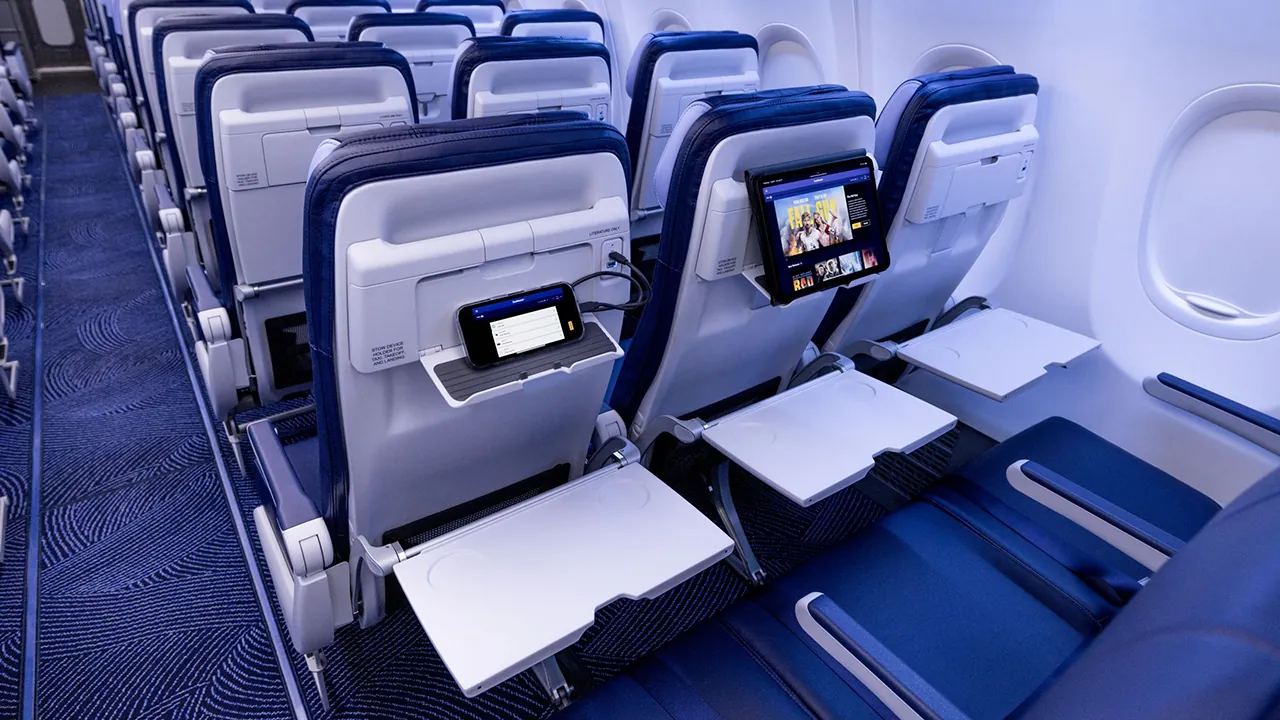
Southwest’s seating change is simple in one way and easy to misunderstand in another. Beginning Jan. 27, 2026, Southwest moved away from the open-seating system it had used for 53 years and began using assigned seats instead.[1] For many older travelers, that is a welcome change: an aisle seat, a seat closer to the front, or a seat near a lavatory can now be chosen before the airport day begins.
The catch is the fare. Buying the cheapest Southwest fare does not mean choosing a seat at purchase. Basic gets a Standard seat assigned at check-in. The fare tiers above Basic are where seat choice begins.[2] That is the part to understand before paying more out of worry — or paying less and discovering too late that the needed seat was never included.
Last verified: Aug. 5, 2026. Southwest has already refined parts of its new boarding process after launch, so treat boarding-group details as a current snapshot, not a rulebook carved in stone.[3][4]
What changed for an older traveler booking Southwest
Under open seating, a passenger’s actual seat depended heavily on boarding position and what was still available after earlier passengers boarded. That could work fine for a quick solo trip, but it was less reassuring for someone who walks slowly down the aisle, needs an aisle armrest, prefers not to pass twenty rows with a cane, or wants to sit with the family member helping with bags.
Assigned seating moves the important decision earlier. Instead of hoping the right seat is open after boarding begins, the traveler or caregiver can choose a seat during booking — if the fare allows it. That is the improvement. It reduces the airport scramble. It does not remove the need to read the fare screen carefully.
The fare screen is now the seat decision
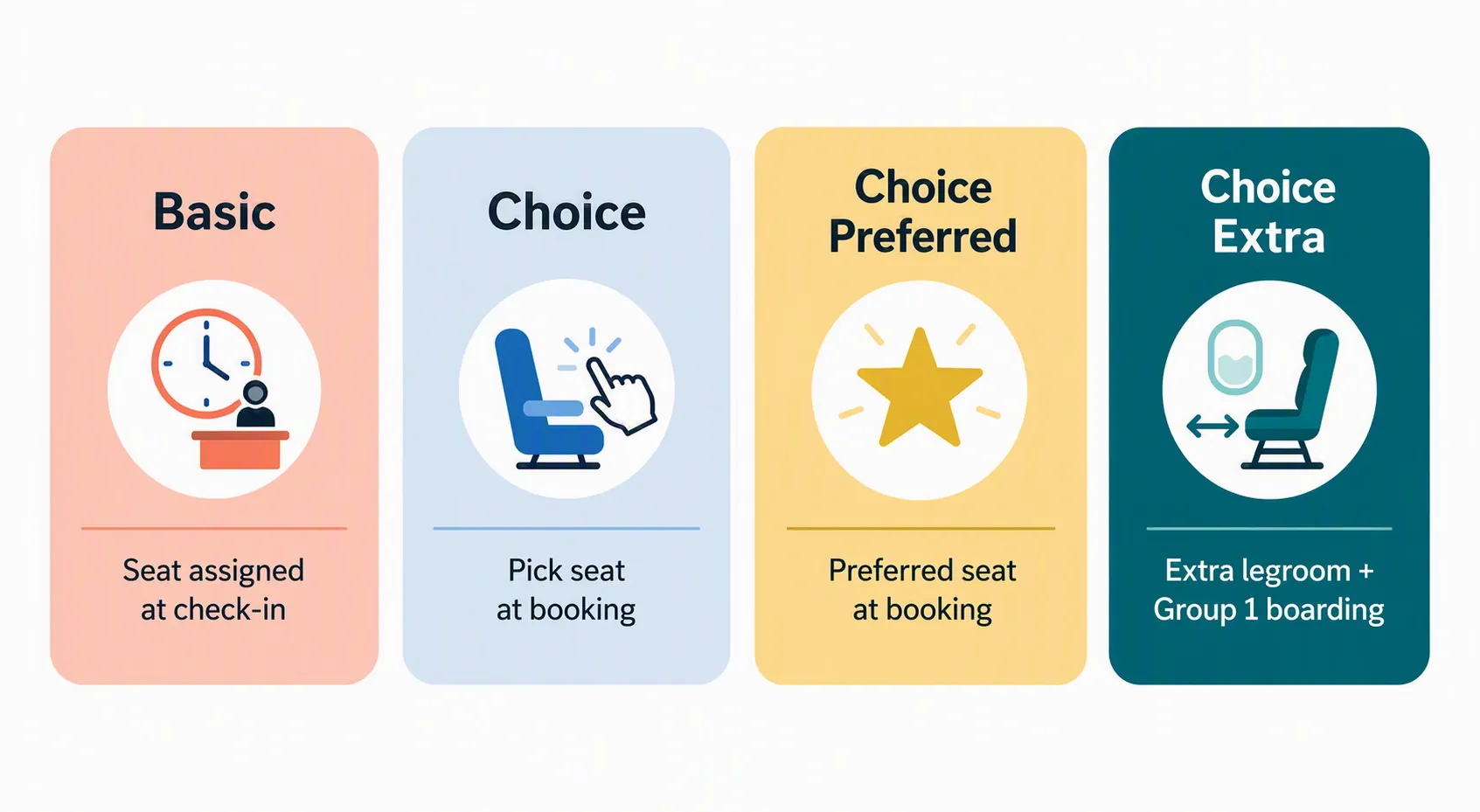
For a traveler with no strong seat need, Basic may be perfectly reasonable. For someone who needs a predictable aisle, a shorter onboard walk, or a particular cabin area, Basic can be the wrong place to save money. The difference is not whether the passenger gets a seat — everyone gets a seat — but when and how much control the passenger has over which seat.
| Southwest fare | What happens with the seat | What it means for an older traveler or caregiver |
|---|---|---|
| Basic | A Standard seat is assigned at check-in. | No seat choice at purchase. Check in right at the 24-hour mark to improve the assignment, but do not count on a particular aisle, row, or cabin area. |
| Choice | A Standard seat can be chosen at booking. | Usually the starting point when the traveler needs a specific Standard seat but does not need Preferred or Extra Legroom. |
| Choice Preferred | A Preferred seat can be chosen at booking. | May be useful when location matters more than extra legroom, depending on which Preferred seats are open on that flight. |
| Choice Extra | An Extra Legroom seat can be chosen at booking, and the fare includes Group 1 boarding. | Most useful when extra space and early boarding are worth paying for, but check whether the available Extra Legroom seat is an exit row before choosing it. |
That Basic line is the one worth slowing down for. A Basic fare can be cheaper, but it is not a “choose later for free” fare. The seat is assigned at check-in, and checking in at the 24-hour mark may improve what is available, but it is still not the same as selecting the seat at booking.[2]
If an adult child is booking for a parent from another city, the safest practical question is not “What is the cheapest Southwest fare?” It is “Does this traveler need a particular seat enough that we should choose it now?” If yes, begin with Choice, then compare the actual seat map before deciding whether Choice Preferred or Choice Extra adds anything meaningful.
When paying above Choice may make sense
Choice is the cleanest upgrade for many mobility-related situations because it gives Standard seat choice at booking. That may be enough if the traveler wants an aisle seat, wants to sit with a companion, or wants to avoid waiting until check-in to find out the seat assignment.
Choice Preferred can matter when the available Preferred seats put the traveler in a better part of the cabin for that person’s needs. The name alone does not tell you whether it is worth it. Look at the seat map. A Preferred seat that still leaves the traveler with an awkward walk or the wrong side of the aisle may not solve the problem you are paying to solve.
Choice Extra is the higher-cost answer when extra legroom and earlier boarding are genuinely useful. Southwest says Extra Legroom seats offer up to five extra inches of pitch on 737-700 aircraft, are located near the front and exit rows, and can also be purchased as an upgrade for up to $250 per segment.[1][2] That can be helpful for stiff knees or a traveler who has trouble rising from a tighter seat, but it is not automatically the right answer for every older passenger.
A mobility-friendly seat is not always the most expensive seat
For many older travelers, the best seat is the one that removes the hardest part of the flight day. Sometimes that is extra legroom. Sometimes it is simply an aisle near the front so the passenger does not have to move through a long cabin while others are standing, lifting bags, and waiting to sit down.
- If the main concern is walking distance inside the plane, look first at aisle seats closer to the front.
- If the traveler expects to use the lavatory, consider whether the chosen seat’s location makes that easier without creating a long walk during the flight.
- If knee bend, standing up, or getting settled is the concern, compare Extra Legroom seats — but check their location carefully.
- If the traveler needs help from a companion, prioritize seats together over chasing a slightly more desirable single seat.
Be careful with exit-row seats. Some Extra Legroom seats may be near or in exit-row areas, and exit-row passengers must meet airline safety requirements. A traveler should not choose an exit-row seat unless they can perform the required safety duties. If there is any uncertainty, choose a different seat or ask Southwest staff for guidance.
This is not medical advice. It is a way to think through an airline seat purchase. If a medical condition, recent surgery, balance problem, or assistive device affects the trip, the seating decision should be discussed with the traveler’s clinician when appropriate and with airline staff for airline-policy questions.
How boarding works now
Southwest’s current assigned-seating boarding order begins with Preboard, then moves through numbered boarding groups from Group 1 through Group 8. Group 1 includes Choice Extra travelers with Extra Legroom seating, and Southwest’s posted process also accounts for items such as A-List Preferred status and purchasable Priority Boarding.[1]
For an older traveler, the main point is this: boarding group and seat assignment are now separate pieces of the trip. A reserved seat means the passenger is not racing other travelers for a chair. But boarding earlier can still help someone who needs more time to walk down the jet bridge, put away a small carry-on, or settle before the aisle fills.
Because Southwest adjusted the process after customer complaints about boarding and bin space, do not build a delicate plan around a group number staying exactly the same months from now.[3][4] Build the plan around what matters most: the seat chosen at booking, any disability-related request made in time, and a realistic airport arrival schedule.

Preboarding is need-based, not age-based
Preboarding did not disappear with assigned seating. Southwest’s preboarding policy is for passengers with a disability or those who need extra time or assistance to board, and the passenger self-identifies at the gate. Southwest’s help information also states that one companion may preboard with the passenger who needs assistance.[5]
That distinction matters. A healthy 72-year-old who walks briskly and needs no help should not assume age alone provides preboarding. A 68-year-old recovering from a knee replacement who needs extra time, or a traveler using a cane who cannot safely move at the regular boarding pace, should not feel embarrassed about asking at the gate. The question is need, not birthday.
The practical step is direct: arrive at the gate early enough to speak with the Southwest agent before boarding starts. Do not wait until the line is moving. Explain the assistance or extra time needed in plain language. The gate is not the place for a long medical history; it is the place to identify the boarding need.
If the seat is disability-related, do not leave it to check-in luck
If the traveler has a disability-related seating need, choose the appropriate seat at booking if the fare allows it. If the needed seat cannot be selected online, Southwest’s disability seating help information says to call Southwest after booking and no later than 24 hours before departure.[6]
That call is especially important when a caregiver is booking for someone else. The booking screen may show fares and seats, but it does not always capture the human details: a cane on longer airport walks, difficulty stepping over another passenger, or a need to avoid being separated from the person providing help. Make the reservation, then handle the seating request while there is still time to fix it.
- Choose a fare that allows the needed seat to be selected, when possible.
- Review the actual seat map instead of relying on fare names.
- Call Southwest after booking if the seating need cannot be handled online.
- Handle the request no later than 24 hours before departure, based on Southwest’s disability seating help information.
- Still speak with the gate agent if preboarding or extra boarding time is needed on travel day.
There are no Southwest senior fares
Do not spend time hunting for a Southwest senior discount inside the new fare structure. Southwest’s senior fares help page states that senior fares are not available.[7] The meaningful comparison is not senior versus non-senior pricing; it is Basic versus Choice versus Choice Preferred versus Choice Extra, based on the seat control and boarding features the traveler actually needs.
That also means an older traveler should not buy a higher fare just because it sounds more protective. Buy up when the higher fare solves a specific problem: choosing the seat now, getting a better location, getting extra legroom, or boarding in a way that makes the trip safer and less rushed.
Two booking mistakes to avoid
The first mistake is buying Basic while expecting to pick the seat. Basic can still be the right fare for a traveler who is flexible. It is the wrong fare when the trip depends on a particular seat and no one wants to gamble at check-in.
The second mistake is assuming preboarding is automatic because the passenger is older. It is not. If there is a disability-related need or the passenger needs extra time or assistance, ask for it. If there is no such need, use the assigned seat and regular boarding process.
The seat is only one part of a calmer travel day. If the trip also involves medication timing, airport walking distance, identification documents, or a caregiver coordinating from home, pair the Southwest booking decision with broader senior travel safety tips. For international trips or travel affected by security advisories, it is also worth reading the site’s guide to senior travel safety during the 2026 worldwide caution before the seat decision becomes the only thing anyone has planned.
References
- Assigned Seating — Southwest Airlines. https://www.southwest.com/customer-enhancements/assigned-seating/
- How to Get the Best Seat on Southwest Airlines in 2026 — NerdWallet. https://www.nerdwallet.com/travel/learn/how-to-get-the-best-seat-on-southwest
- Southwest Airlines refining new seating process amid complaints over boarding, bin space — The Hill. https://thehill.com/homenews/nexstar_media_wire/5763135-southwest-airlines-refining-new-seating-process-amid-complaints-over-boarding-bin-space/
- Why Southwest Airlines Had To Rewrite Its New Boarding System Weeks After Launch — Simple Flying. https://simpleflying.com/why-southwest-airlines-rewrite-new-boarding-system-weeks-launch/
- Preboarding — Southwest Airlines. https://support.southwest.com/helpcenter/s/article/preboarding
- Disability Seating — Southwest Airlines. https://support.southwest.com/helpcenter/s/article/disability-seating
- Senior Fares — Southwest Airlines. https://support.southwest.com/helpcenter/s/article/senior-fares
Questions to bring to a clinician or OT
This is not medical, legal, or a family's final decision — only a framework. Bring these questions to a clinician, occupational therapist, or your local Area Agency on Aging.
Find Local HelpRelated reading
Noticed something outdated or inaccurate on this page? Flag a correction. We review every report against CDC, NIA, and AARP HomeFit guidance before updating a page.