
Caregiver decision guide
Elderly Monitoring Systems for Dementia and Wandering: Solving the Acceptance Challenge
For seniors with dementia, standard medical alert systems often fail because they are forgotten, removed, or not worn. This guide focuses on wandering detection technology, passive sensor alternatives, and the critical factor of technology acceptance — helping family caregivers choose monitoring that actually works when a loved one resists wearing it.
The Wandering Problem: Why Standard Monitoring Falls Short for Dementia
Wandering is not a rare or occasional behavior in dementia — it is a near-certainty for a majority of those living with the disease. The Alzheimer's Association estimates that 6 in 10 people with dementia will wander at some point. For a family caregiver, this statistic translates into a specific, recurring fear: the moment you realize your parent or spouse is not where you left them, the front door is unlocked, and they are not wearing shoes in cold weather.
Standard medical alert systems — the familiar pendant or wristband with a help button — were not designed for this scenario. They assume two things that dementia erodes: the user will remember to wear the device, and they will be able to press a button when something goes wrong. In practice, a person with moderate or advanced dementia may remove the pendant because it feels unfamiliar, forget to put it on after bathing, or lack the cognitive awareness to recognize a fall or disorientation as an emergency. The result is a device that sits in a drawer while the person it was meant to protect wanders out the door.
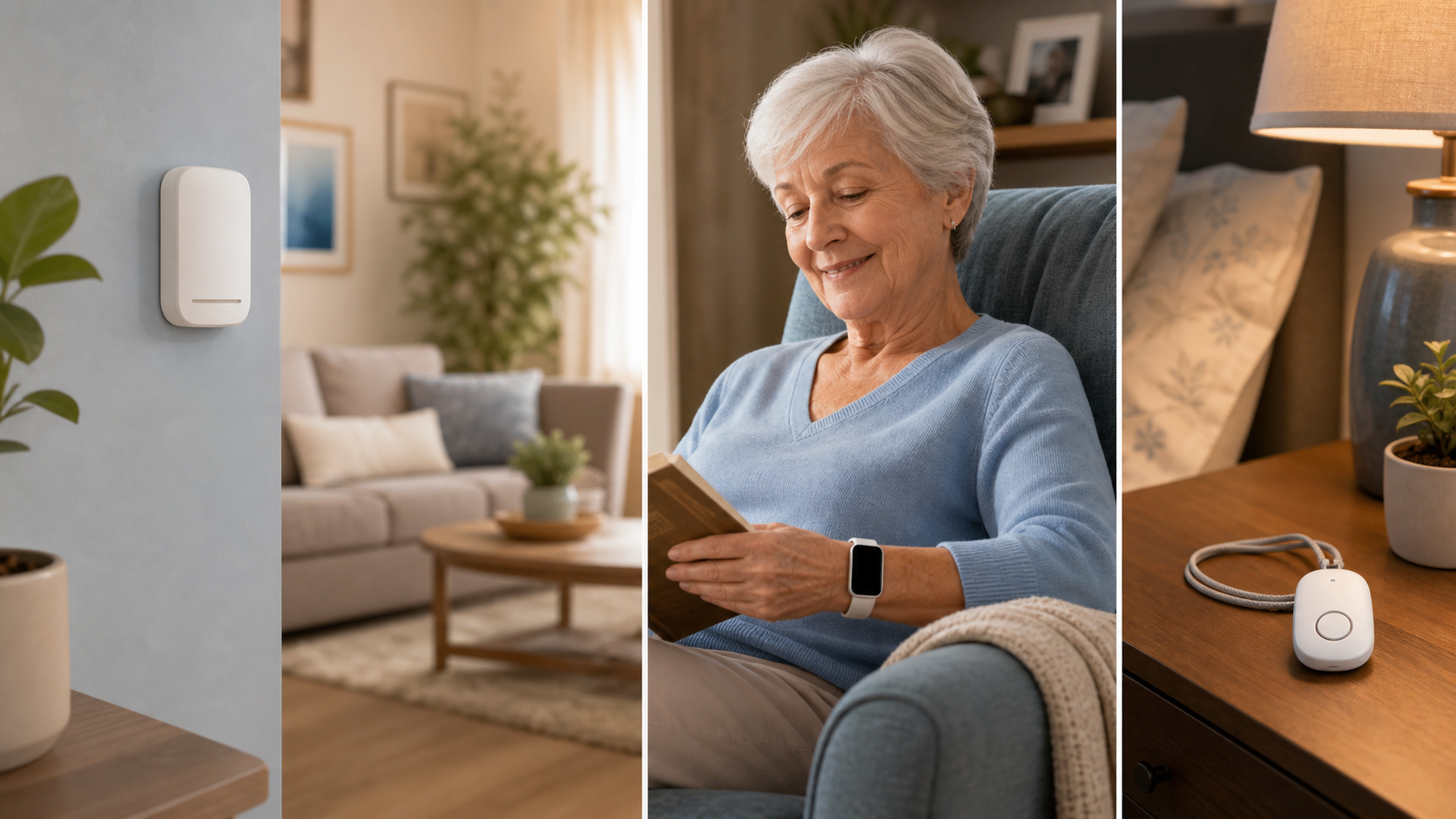
This is why dementia-specific monitoring must start from a different premise. Instead of asking "What device can we put on the person?" the question becomes "How can we detect wandering and falls without relying on the person to participate?" That shift in thinking opens the door to a very different set of tools — passive sensors, geofencing, bed-exit alerts, and tamper-resistant wearables — each of which addresses a specific failure point of the standard approach.
Questions to bring to a clinician or OT
This is not medical, legal, or a family's final decision — only a framework. Bring these questions to a clinician, occupational therapist, or your local Area Agency on Aging.
Find Local HelpRelated reading
Noticed something outdated or inaccurate on this page? Flag a correction. We review every report against CDC, NIA, and AARP HomeFit guidance before updating a page.