
Caregiver decision guide
Caregiver Stress and Burnout: Warning Signs, Prevention Strategies, and When to Seek Help
This guide helps family caregivers recognize the early warning signs of caregiver stress and burnout, understand why it happens, and take practical steps to protect their own health — from micro-breaks and support networks to knowing when professional help is needed.

Why Caregiver Stress Is a Predictable Health Risk — Not a Personal Failure
If you are reading this while running on too little sleep, skipping your own doctor's appointments, or feeling a low-grade hum of exhaustion that never quite lifts, you are not alone — and you are not failing. Caregiver stress is not a sign that you are doing something wrong. It is a predictable, well-documented outcome of sustained high-demand, low-resource caregiving.
The numbers make this plain. According to data from Guardian Life (2023) cited by the Caregiver Action Network, 41% of family caregivers report low overall well-being — a rate 32% higher than non-caregivers. Only 23% of caregivers say they have "good" mental health. And nearly 1 in 5 caregivers rate their own health as fair or poor, according to the NAC/AARP 2025 report summarized by the John A. Hartford Foundation. These are not abstract statistics. They represent millions of people who started out wanting to help a parent or spouse and ended up with declining health themselves.
This guide follows a warning-sign-to-prevention-escalation framework. You will learn to recognize the early indicators of caregiver stress, understand why caregivers systematically neglect their own health, and build a tiered prevention strategy that works for your situation — whether you are a spousal caregiver managing your own chronic conditions, a sandwich-generation parent juggling kids and aging parents, or a long-distance caregiver trying to hold everything together from across the country.
If you are brand new to caregiving and still figuring out the basics, you may want to start with our 5-Step Triage Framework for New Caregivers before diving into stress management. But if you are already feeling the weight, you are in the right place.
The 9 Warning Signs of Caregiver Stress (From the National Institute on Aging)
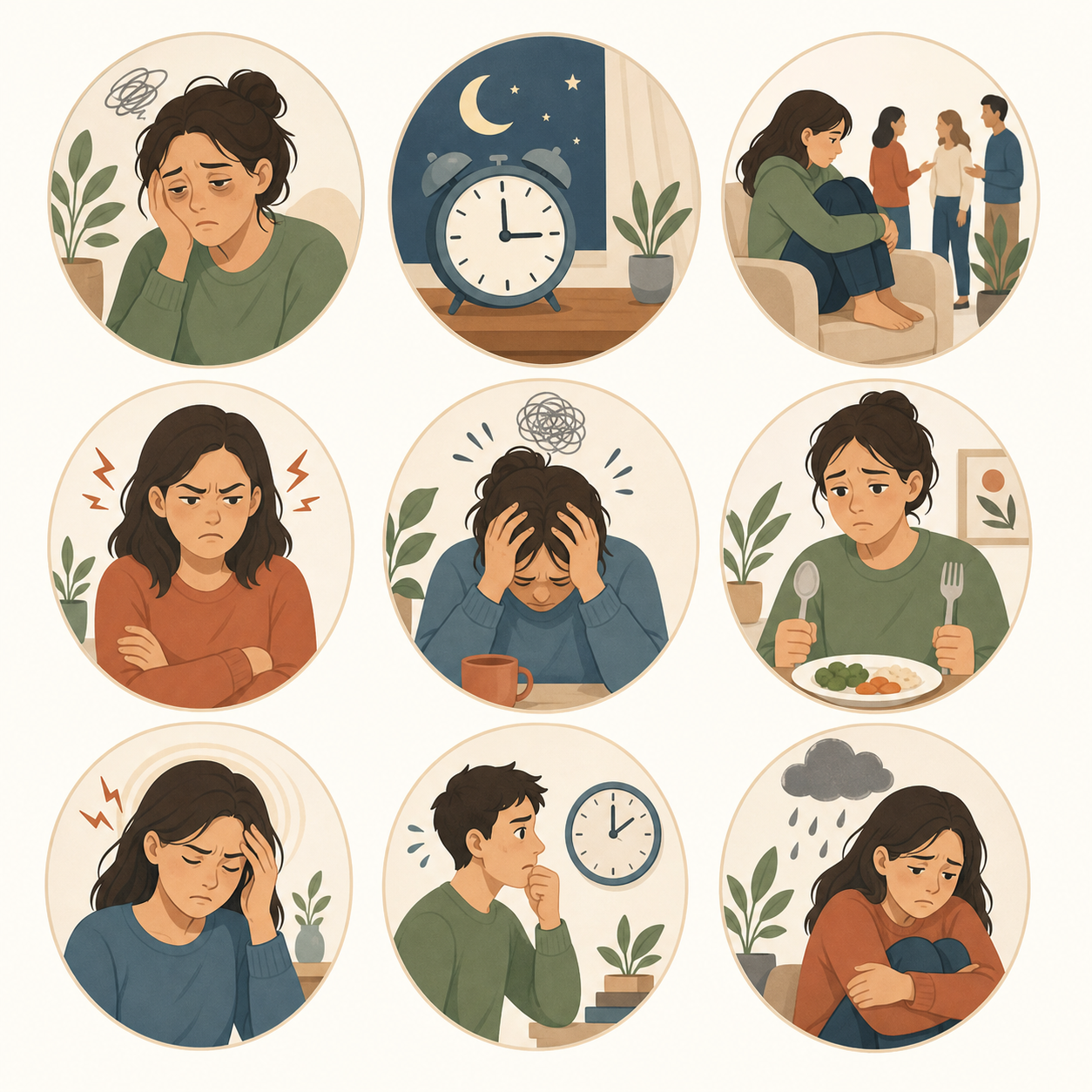
The National Institute on Aging (NIA) identifies nine specific warning signs that caregiver stress has moved beyond normal fatigue into territory that requires attention. These signs are not abstract — they are concrete changes in how you feel, think, and behave. Use the table below as a quick self-assessment, then read the expanded explanations to see which ones resonate with your current experience.
| Warning Sign | What It Looks Like Day to Day |
|---|---|
| Feeling exhausted, overwhelmed, or anxious | You wake up tired, feel dread about the day ahead, or find yourself worrying constantly about things you cannot control. |
| Becoming easily angered or impatient | You snap at your loved one, your partner, or the pharmacy tech over small things that would not have bothered you before. |
| Feeling lonely or disconnected | You have stopped returning calls from friends, declined invitations, and feel like no one understands what your life is like. |
| Trouble sleeping | You lie awake replaying the day, wake up multiple times at night, or cannot fall asleep because your mind will not shut off. |
| Feeling sad or hopeless | A persistent sense that things will not get better, or that you have lost the person your loved one used to be. |
| Frequent headaches, body pain, or other physical symptoms | You have more headaches, back pain, or stomach issues than you used to, and they do not seem to have a clear medical cause. |
| Not having time to exercise or prepare healthy food | Your meals come from whatever is fastest, and the idea of a 30-minute walk feels impossible. |
| Skipping your own medical appointments or personal care | You cancel your own checkups, put off the mammogram or colonoscopy, and cannot remember the last time you did something just for yourself. |
| Misusing alcohol, prescription medications, or other substances | You have increased your drinking to unwind, or you find yourself relying on sleep aids or pain relievers more than you should. |
These signs often appear gradually. You may not notice them building because each one feels like a reasonable adaptation to an unreasonable workload. "Of course I am tired — I am up twice a night helping my mom to the bathroom." "Of course I am irritable — I have not had a weekend off in six months." The danger is that these adaptations become your new normal, and by the time you realize something is wrong, your health has already taken a hit.
The A Place for Mom 2026 caregiver survey (1,029 respondents) found that 67% of caregivers report trouble sleeping regularly, 75% feel stressed or anxious at least monthly, and 42% experience emotional strain or feelings of burnout at least weekly. These are not outliers — they are the majority experience of family caregiving in America today.
Why Caregivers Neglect Their Own Health — The 'Tending to Everyone Else' Trap
Most caregivers do not consciously decide to neglect their own health. It happens through a slow, rational process that feels like the only choice available. You tell yourself: "I will get to the gym next week." "I can skip my checkup this year — nothing is wrong." "I do not have time to cook, so takeout is fine." Each individual decision seems harmless. Collectively, they create a health debt that compounds over months and years.
Several psychological and practical forces drive this pattern:
- Guilt: You feel selfish taking time for yourself when your loved one needs you. The NIA explicitly names this — many caregivers feel they should be doing more, not less.
- Lack of time: The average caregiver spends 25 hours per week on caregiving (Caregiver Action Network), and 24% provide 40+ hours (NAC/AARP 2025). That is a second job with no time off.
- Feeling irreplaceable: You believe no one else can manage medications, understand your loved one's routines, or communicate with their doctors. Letting go feels dangerous.
- Gradual erosion of boundaries: What started as "I will help with groceries" becomes managing finances, coordinating medical appointments, providing personal care, and being on call 24/7. The boundary moves one inch at a time until it has disappeared entirely.
The trap is that caregiving creates a feedback loop of declining health. You skip your own care to provide care for someone else. Your health worsens. You have less energy and resilience. Caregiving becomes harder. You skip more of your own care. Breaking this loop requires recognizing that your health is not separate from your ability to care for your loved one — it is the foundation of it.
Prevention Strategies That Work: From Micro-Breaks to Respite Care
Preventing caregiver burnout does not require a complete life overhaul. The most effective approach is tiered: start with small daily actions, build to weekly strategies, and escalate to more structured support when needed. Each tier corresponds to the severity of the warning signs you are experiencing.
Tier 1: Daily Micro-Breaks (5–15 Minutes)
When you are in the early warning zone — feeling tired but functional, irritable but managing — micro-breaks can reset your nervous system without requiring you to arrange coverage or leave the house.
- Step outside for five minutes of fresh air. No phone, no to-do list — just breathe.
- Drink a full glass of water and eat a piece of fruit. Dehydration and low blood sugar amplify stress responses.
- Close your eyes and take 10 slow breaths, counting to four on each inhale and exhale.
- Listen to one song you love without doing anything else at the same time.
These sound almost too simple to matter. But the NIA's prevention guidance emphasizes that small, consistent actions — being active, eating well, prioritizing sleep, reducing stress — are the foundation of sustainable caregiving. The key is consistency, not intensity.
Tier 2: Weekly Strategies (Support, Movement, Sleep)
If you are noticing three or more warning signs from the NIA list, it is time to build weekly habits that create structure and support.
- Connect with other caregivers. The Caregiver Action Network emphasizes that seeking support from people who understand your situation is one of the most effective things you can do. This can be an online group, a local support group, or even one friend who gets it.
- Move your body for 20–30 minutes, three times per week. This does not require a gym — a brisk walk, a YouTube yoga video, or gardening counts. The NIA specifically recommends physical activity as a stress-reduction tool.
- Prioritize 7–9 hours of sleep per night. If your loved one needs nighttime care, explore whether a family member or paid aide can cover one or two nights per week so you can get uninterrupted rest.
- Schedule one block of time each week that is yours — a coffee date with a friend, a solo walk, a bath with the door locked. Treat it as non-negotiable.
Tier 3: Structured Breaks and Respite Care (Hours to Weeks)
When warning signs are persistent — you have been exhausted for months, you have stopped seeing friends, your sleep is consistently poor — it is time to bring in structured support. Respite care is one option in this tier, but it is not the only one.
- Ask family members or friends to cover specific shifts. Be concrete: "Can you sit with Mom from 2–5 PM on Saturday so I can go to the grocery store and take a nap?" Most people want to help but do not know what you need.
- Hire a home health aide or companion for a few hours per week. Even four hours of coverage can give you time to run errands, see a doctor, or simply sit in a quiet room.
- Use adult day services. Many communities have centers where older adults can spend the day in a supervised, social environment while you get a full day to yourself.
- Plan a short respite stay. If you need multiple days away, the ARCH National Respite Network (703-256-2084) can help you find local options. For a detailed decision guide on using short-term care as a crisis solution, see our Short-Term Care for Elderly: A Crisis Decision Guide.
Gender Differences in Caregiver Well-Being: What the Data Shows
Caregiver stress does not affect all caregivers equally. A major Pew Research Center survey (February 2026, 8,750 U.S. adults) found significant gender differences in how caregiving affects well-being. Among caregivers who regularly help an aging parent, women are substantially more likely than men to report that caregiving has had a negative impact on their emotional well-being (47% vs. 30%) and their physical health (38% vs. 26%).
These differences likely stem from a combination of factors. Women tend to take on more emotionally intensive caregiving tasks — managing health care (42% of parent caregivers do this), coordinating services, and providing personal care (16% help with bathing, dressing, or toileting). They also face higher societal expectations around caregiving, which can amplify guilt and self-criticism when they feel they are falling short.
For a deeper exploration of how caregiving affects women and men differently, including the emotional and psychological dimensions, see our dedicated guide: The Emotional Toll No One Warns You About.
Special Considerations for Spousal Caregivers and the Sandwich Generation
While all caregivers face stress, two subgroups face particularly acute challenges that deserve specific attention: spousal caregivers and sandwich-generation caregivers.
Spousal Caregivers: Aging While Caring
According to the Caregiver Action Network, 42% of family caregivers are 65 or older. These are overwhelmingly spousal caregivers — people who are managing their own age-related health changes while providing care for a partner. The Pew Research survey found that 3% of all U.S. adults care for a spouse or partner 65+, and among them, 48% help with managing health care, 48% with finances, and 19% with personal care.
The challenges for spousal caregivers are distinct:
- They are often managing their own chronic conditions. The 53.4% rate of two or more chronic conditions among caregivers 65+ means many spousal caregivers are navigating their own hypertension, diabetes, or arthritis while providing care.
- Social isolation is more severe. Their peer group is also aging, and the demands of caregiving make it harder to maintain friendships. The NIA lists feeling lonely or disconnected as a key warning sign.
- They have less physical reserve. Lifting, transferring, and providing hands-on care is harder at 70 than at 50, and the risk of injury is higher.
- The emotional stakes are different. Caring for a spouse means watching your life partner decline, which carries a grief that is distinct from caring for a parent.
The Sandwich Generation: Pulled in Two Directions
The A Place for Mom 2026 survey found that 48% of caregivers are part of the sandwich generation — caring for both an older adult and children under 18. These caregivers face a unique form of time poverty: they are managing school schedules, extracurricular activities, and parenting demands on top of caregiving responsibilities that average 22.8 hours per week.
The survey also found that 42% of caregivers experience emotional strain or burnout at least weekly, and 37% say their financial situation has worsened since taking on caregiving. For sandwich-generation caregivers, these pressures are compounded by the cost of raising children and the career impacts of caregiving — half of working caregivers experience employment impacts, according to the NAC/AARP 2025 report.
If you are in the sandwich generation, you may find our dedicated guide helpful: The Sandwich Squeeze: How to Care for Both Aging Parents and Children Without Breaking.

When and How to Seek Professional Help
There is a line between manageable caregiver stress and clinical depression or anxiety. Crossing that line does not mean you failed at prevention — it means your body and brain are telling you that the current situation exceeds your capacity, and you need professional support to get back to stable ground.
Consider seeking professional help if:
- You have felt sad, hopeless, or numb for more than two weeks.
- You have lost interest in activities you used to enjoy.
- Your sleep is consistently disrupted — either trouble falling asleep, waking too early, or sleeping too much.
- Your appetite has changed significantly (eating too little or too much).
- You are using alcohol, medications, or other substances to cope.
- You have thoughts of harming yourself or that your loved one would be better off without you.
Professional support options include:
- Your primary care provider: A good first step. They can screen for depression, check for underlying medical causes of your symptoms (like thyroid issues or vitamin deficiencies), and refer you to a counselor or psychiatrist.
- A therapist or counselor: Look for someone who specializes in caregiver issues, grief, or family dynamics. Many therapists offer telehealth appointments, which can fit into a caregiving schedule more easily.
- Support groups: The Caregiver Action Network and Family Caregiver Alliance (800-445-8106) can help you find groups in your area or online. Sometimes talking to people who are in the same situation is the most effective medicine.
- Respite services: If you need a break to attend appointments or simply to rest, the ARCH National Respite Network (703-256-2084) maintains a locator for respite services across the country.
Resources for Caregivers in Crisis
If you are in immediate distress or need help right now, the following national resources can connect you with support. These organizations are drawn from the NIA's caregiver resource list and provide free, confidential assistance.
- Eldercare Locator: 800-677-1116 — A public service that connects you to local aging resources, including respite care, support groups, and home care services.
- ARCH National Respite Network: 703-256-2084 — Provides a respite locator to help you find short-term care options in your area.
- Caregiver Action Network: 202-454-3970 — Offers educational resources, peer support, and a caregiver help desk.
- Family Caregiver Alliance: 800-445-8106 — Provides information, referrals, and support for caregivers of adults with chronic or disabling conditions.
- Well Spouse Association: 800-838-0879 — A national membership organization that supports spouses and partners caring for a chronically ill or disabled mate.
For additional support, explore our Caregiver Wellbeing section, which covers burnout, difficult conversations, and emotional resilience. If you are still in the early stages of figuring out your caregiving role, our From Crisis to Confidence guide provides a structured framework for building confidence as a new family caregiver.
Questions to bring to a clinician or OT
This is not medical, legal, or a family's final decision — only a framework. Bring these questions to a clinician, occupational therapist, or your local Area Agency on Aging.
Find Local HelpRelated reading
Noticed something outdated or inaccurate on this page? Flag a correction. We review every report against CDC, NIA, and AARP HomeFit guidance before updating a page.