Room-by-Room Fall Prevention Checklist for Older Adults: A Priority-Based Home Safety Guide
12 minutes📄 PrintableReviewed: 2026-07-05
Room-by-Room Fall Prevention Checklist for Older Adults: A Priority-Based Home Safety Guide
A practical, printable room-by-room checklist that helps you identify fall hazards in an older adult's home by priority — Do Now, Do Soon, and Done — so you know which fixes need immediate attention and which can wait.
By Editorial Team
new caregiver
experienced caregiver
long-distance caregiving
spousal caregiver
working caregiver
daily routines
medication management
personal hygiene
care coordination
first steps
ADLs
IADLs
📄
A printable version of this guide is available. Use your browser's print function (Ctrl+P / ⌘P) to save or print.
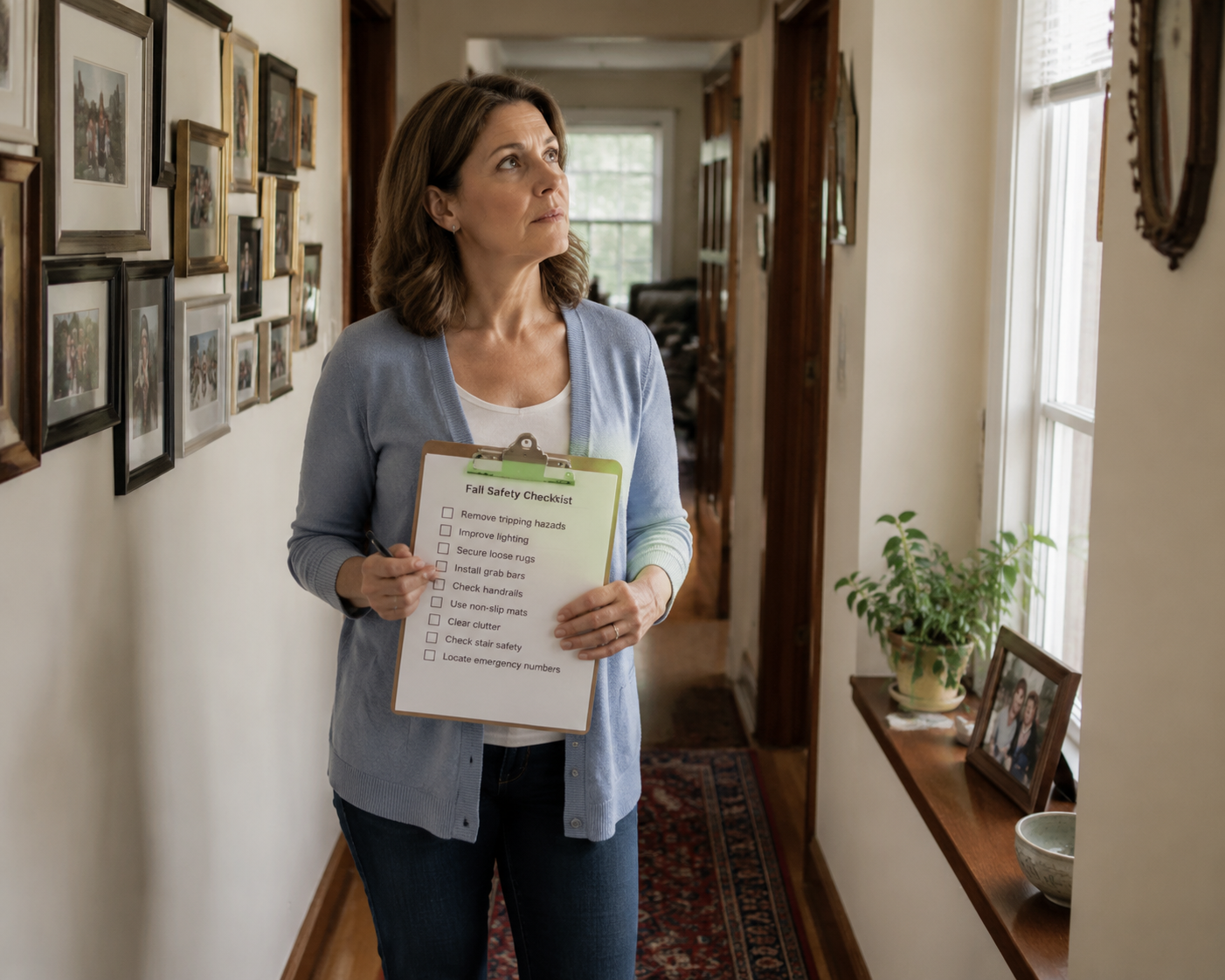
Start with the places most likely to hurt someone today: the bathroom, the stairs, and the dark path from the bedroom to the bathroom. You can walk the rest of the house after that. A room-by-room fall prevention checklist for an elderly parent is only useful if it tells you what cannot wait.
Priority
Use this label when
What to do
Do Now
A hazard could cause a fall today or tonight
Fix it before you leave, block access, or arrange help immediately
Do Soon
The risk is real but not an immediate trip point or transfer hazard
Schedule the repair, purchase, or installation within 2-4 weeks
Done
The hazard has been corrected and the fix is working
Mark it complete and recheck it after changes in health, mobility, or layout
This priority order is not just family anxiety talking. The National Council on Aging reports that more than half of older-adult falls happen at home, and the CDC reports that about 1 in 4 older adults falls each year.[1][2] The CDC’s STEADI “Check for Safety” materials and the National Institute on Aging’s room-by-room guidance both point families toward the same practical categories: floors, stairs, bathrooms, bedrooms, kitchens, lighting, pathways, and outdoor entry areas.[3][5]
Before You Walk the Whole House, Check These Three Areas
If you only have 20 minutes today, do not start with the spare bedroom closet or the decorative rug under a table nobody uses. Start where a tired, unsteady person is most likely to move quickly, turn, reach, step over something, or transfer from one surface to another.
Bathroom: check the toilet, tub or shower, bathmat, floor, towel bars, lighting, and anything used for balance.
Stairs: check handrails, lighting, step edges, loose carpet, objects on the steps, and switches at the top and bottom.
Bedroom-to-bathroom route: walk the exact path used at night, with the lights off first, then with the lights on.
A Washington University School of Medicine fall-prevention program found that home modifications reduced in-home falls by nearly 40% in the studied intervention, with an average intervention cost of $765 and estimated per-person savings of $1,613.[4] That does not mean every grab bar or nightlight produces the same result in every home. It does mean these fixes are not just cosmetic housekeeping. When the risk is obvious, removing it is prevention.
How to Use the Checklist Without Turning It Into a Family Debate
Walk each room with three columns in mind: Do Now, Do Soon, Done. Do not argue over whether the whole house is “safe enough.” Look at one object, one path, one transfer point. If it can trip someone today, it goes under Do Now. If it needs a purchase, handyman visit, landlord request, or family decision, it goes under Do Soon. Once it is fixed, it moves to Done.
Use ordinary movement as the test. Can your parent get from the bed to the toilet at 2 a.m.? Can they step out of the shower with wet feet? Can they carry a cup of coffee from the kitchen without stepping around a cord? Can they answer the door without crossing a loose mat? If the answer depends on perfect attention, perfect balance, and perfect lighting, treat it as a hazard.
Bathroom Checklist
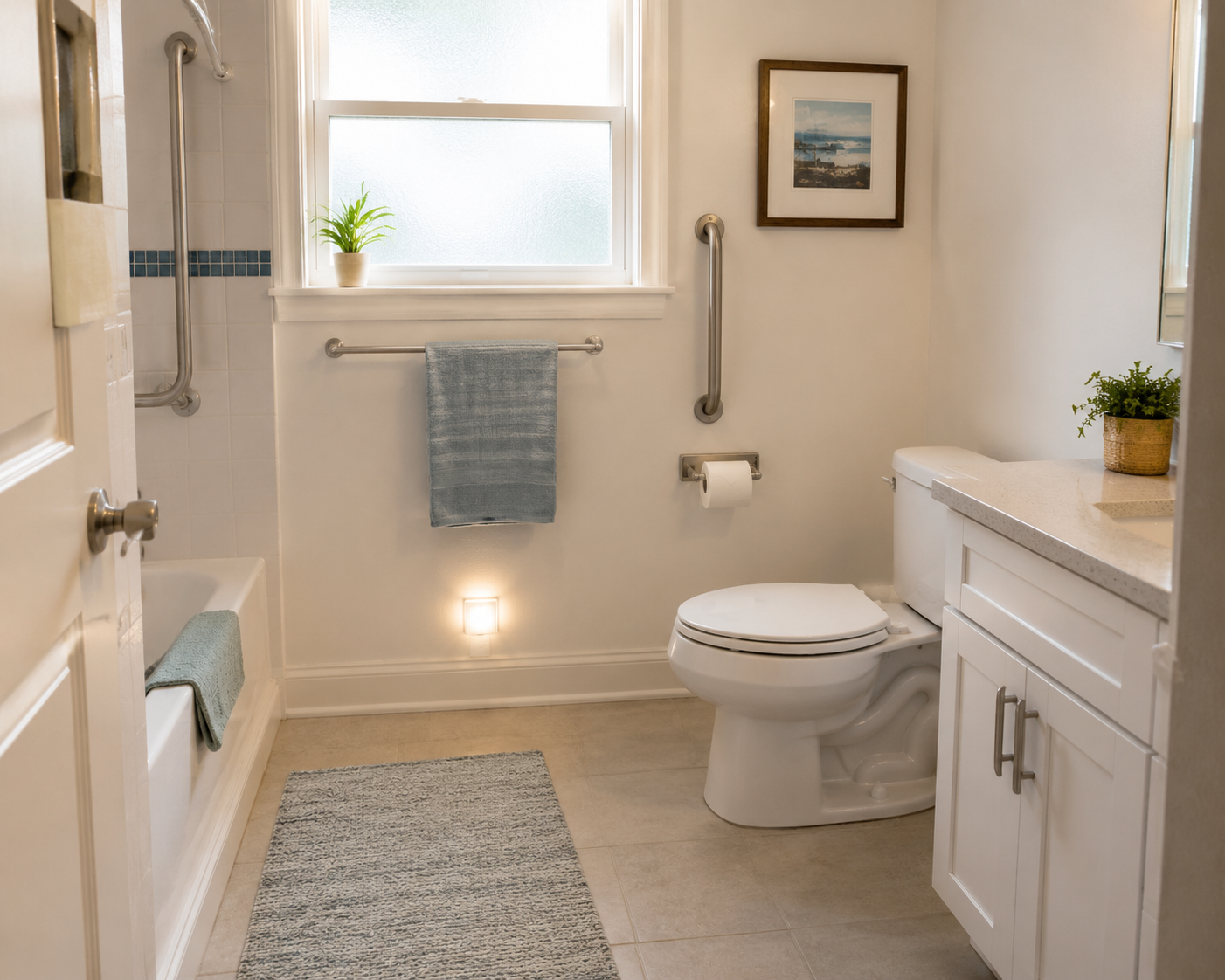
The bathroom deserves more suspicion than almost any other room. It combines wet surfaces, hard fixtures, small turning spaces, clothing changes, and transfers on and off the toilet or in and out of the tub. A towel bar that has “worked fine for years” is not a grab bar. A bathmat that curls at the edge is not a small issue if it sits exactly where wet feet land.
Bathroom item
Do Now
Do Soon
Done
Loose rugs or bathmats
Remove any loose, sliding, curled, or bunched mat before the next shower
Replace with a non-slip mat that stays flat and can dry properly
Floor is clear or mat grips securely without curling
Tub or shower floor
Stop use until a slippery surface is addressed if the person is already unsteady
Add non-slip strips or a secure non-slip shower mat
Wet feet have traction in the tub or shower
Grab bars
Do not let towel bars, glass doors, or sink edges serve as support
Install properly mounted grab bars near the toilet and bathing area
Grab bars are secure, reachable, and placed where transfers happen
Toilet transfer
Clear trash cans, scales, magazines, or baskets around the toilet
Consider a raised toilet seat or toilet safety frame if standing is difficult
The person can sit and stand without grabbing unstable objects
Lighting
Add a plug-in nightlight or leave a safe light on for nighttime bathroom use
Improve overhead lighting or add motion-activated lighting
Path, toilet, and shower edge are visible at night
Shower supplies
Move shampoo, soap, and towels within easy reach so bending and twisting are not required
Add a shower caddy or wall dispenser if bottles keep landing on the floor
No reaching to the floor or outside the tub during bathing
Door and lock
Unlock or remove a lock that could delay help after a fall
Consider an outward-opening or easy-access door solution if space is tight
Help can reach the person quickly in an emergency
A good bathroom fix usually changes the next movement, not the look of the room. The goal is simple: feet do not slide, hands do not reach for weak supports, and the person does not have to twist, bend, or rush while wet. If the bathroom needs a larger change, use a dedicated bathroom modification guide to plan grab bars, bathing access, flooring, and layout without trying to solve everything during one walkthrough.
Bedroom-to-Bathroom Night Route
Do this pass separately, even if you already inspected the bedroom and bathroom. Nighttime movement is different. People are sleepy, hurried, maybe wearing socks, maybe not wearing glasses, and often trying not to wake anyone. The safest-looking hallway at noon can be a trip course in the dark.
Night route item
Do Now
Do Soon
Done
Path from bed to door
Remove shoes, laundry baskets, pet beds, cords, fans, and small furniture from the walking line
Rearrange furniture so the path is wide and direct
The person can walk from bed to doorway without stepping around anything
Bedside lighting
Place a lamp, touch light, or flashlight within reach before standing
Add motion-activated or remote lighting if switches are hard to reach
Light can be turned on before feet hit the floor
Hallway lighting
Add nightlights along the route today if the hallway is dim
Install brighter bulbs, motion lights, or switch improvements if needed
The entire route is visible without glare
Floor surfaces
Remove loose runners and curled rugs along the path
Secure necessary rugs with proper backing or replace them
No rug edge, threshold, or mat catches the foot
Bathroom doorway
Clear scales, hampers, trash cans, and doorstops from the entry
Improve the threshold if the transition is uneven
Entry is clear and easy to see at night
Pets
Keep pet beds, bowls, and toys out of the nighttime route
Create a consistent overnight pet location if animals wander underfoot
The route is not shared with unpredictable pet clutter
The test is not whether you can walk the path safely. Walk it as if you are half-awake, moving slowly, and using one hand on the wall or furniture. If your foot catches, your shoulder turns sideways, or your hand reaches for something unstable, mark it Do Now.
Stairs Checklist
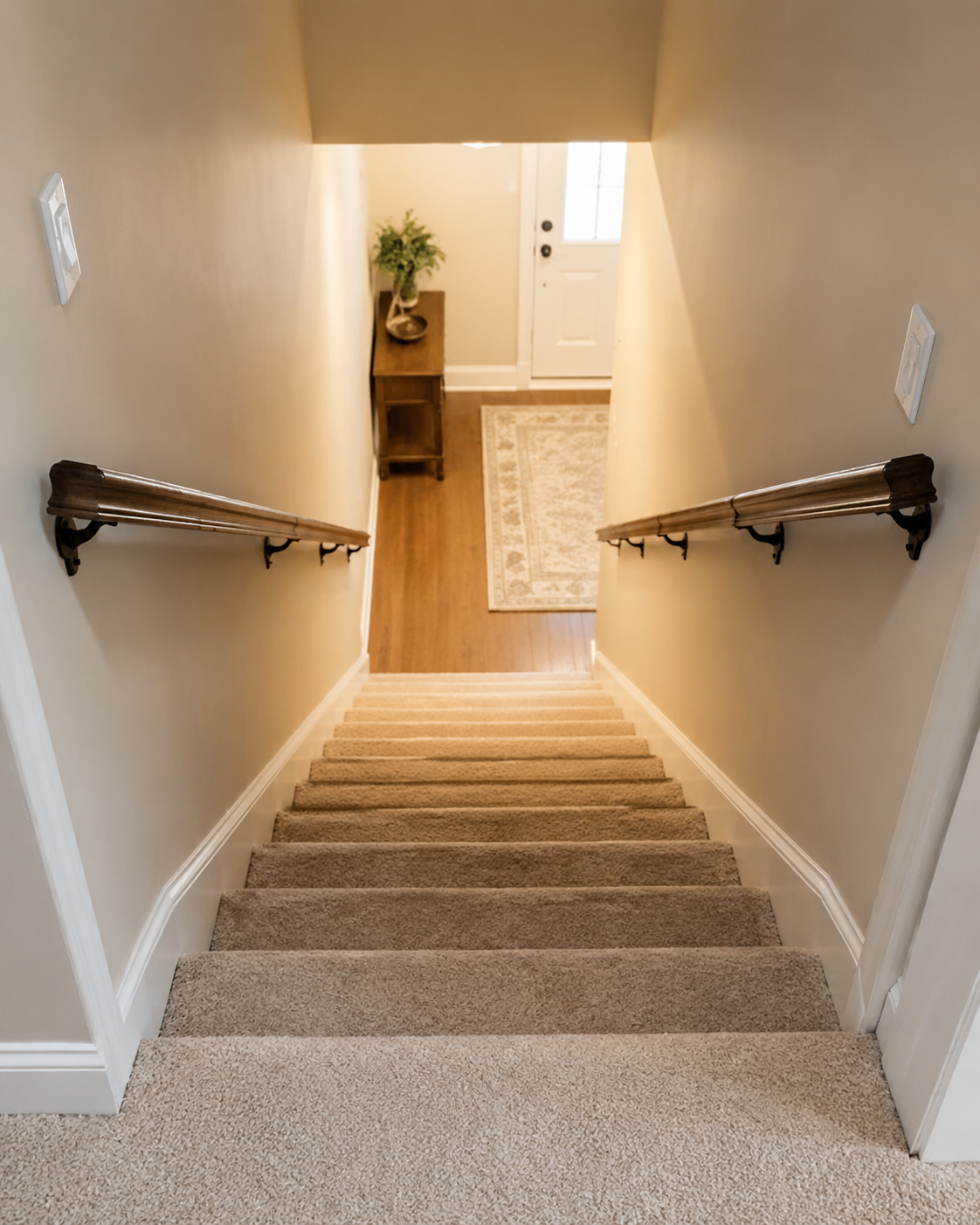
Stairs are where small tolerances disappear. A loose runner, dim bulb, missing rail, or stack of folded towels on a step does not give an unsteady person much time to recover. Check indoor stairs, basement stairs, garage steps, porch steps, and any single step between rooms.
Stair item
Do Now
Do Soon
Done
Objects on steps
Remove shoes, mail, laundry, tools, plants, and storage items from every step
Create a different drop zone so stairs stop being used as shelves
Steps are clear from top to bottom
Handrails
Do not use stairs without a sturdy rail if balance is poor
Repair loose rails or add a second rail where possible
Rails are secure, continuous, and easy to grip
Lighting
Replace burned-out bulbs immediately
Add brighter lighting or switches at both top and bottom if missing
Each step edge is visible before stepping
Carpet and treads
Stop use or supervise if carpet is loose, torn, or buckled
Repair carpet or add secure non-slip tread treatment
Feet land on a firm, non-sliding surface
Step edges
Mark hard-to-see edges temporarily if depth is unclear
Add contrast strips if vision or lighting makes edges blend together
The edge of each step is easy to distinguish
Carrying items
Move heavy or bulky items for the person rather than having them carry loads on stairs
Set up upstairs and downstairs duplicates for frequently used items
Hands are free to use the rail
A single step deserves the same attention as a full staircase if it sits in a normal walking path. Mark it with contrast, light it, clear both sides, and stop pretending everyone will remember it is there.
Throughout the Home
These are the hazards families stop seeing because they have been there forever. The extension cord under the side table. The rug that bunches near the hallway. The magazine basket beside the favorite chair. This pass is not about redecorating. It is about clearing the walking surface.
Whole-home item
Do Now
Do Soon
Done
Walkways
Clear cords, bags, shoes, boxes, footstools, and low objects from main paths
Rearrange furniture to make wider, straighter routes
Main paths are open and predictable
Throw rugs
Remove loose or curled rugs in walking areas
Secure necessary rugs with appropriate non-slip backing
No rug edge lifts, slides, or bunches
Cords
Move cords out of walking paths today
Add outlets, cord covers, or safer furniture placement if cords keep returning
No cord crosses a route used daily
Lighting
Replace burned-out bulbs and add temporary lamps where rooms are dim
Improve switches, bulbs, or motion lighting in dark zones
Entrances, hallways, stairs, and seating areas are well lit
Furniture height and stability
Remove unstable tables or chairs used for support
Replace very low seating or add firmer cushions if standing is difficult
Frequently used chairs support safe sitting and standing
Clutter habits
Move daily clutter off the floor before you leave
Create baskets, hooks, shelves, or drop zones away from walkways
The floor is not used for storage
Living Room and Favorite Sitting Areas
The favorite chair matters because it gets used when someone is tired. Watch the sit-to-stand movement. If your parent rocks several times, pushes on a rolling table, or grabs a lampshade, the problem is not theoretical.
Living area item
Do Now
Do Soon
Done
Chair or sofa
Stop using seating that is too low, too soft, or unstable if standing is difficult
Add a firmer cushion or replace the chair with one that has arms and proper height
The person can stand using stable armrests
Coffee tables and ottomans
Move sharp, low, or narrow furniture out of the walking path
Choose fewer pieces or reposition them to widen routes
There is clear space from doorway to chair
Remote, phone, glasses
Place essentials within reach so the person does not lunge or twist
Add a side table that is stable and reachable
Common items can be reached while seated
Rugs and cords
Remove sliding rugs and cords crossing the room
Secure lamp and device cords along walls
No trip line crosses the seating path
Pets and pet supplies
Move toys, bowls, and beds away from the chair and walkway
Set a consistent pet area outside the main route
Pet items are not underfoot
Bedroom Checklist
The bedroom check is partly about the room and partly about the first 30 seconds after waking. That is when lighting, footwear, bed height, and clutter matter more than anyone wants to admit.
Bedroom item
Do Now
Do Soon
Done
Bed height
Watch whether the person slides, drops, or struggles to stand from the bed
Adjust bed height or consider safer transfer supports if needed
Feet reach the floor and standing does not require grabbing furniture
Bedside floor
Clear slippers, books, oxygen tubing, cords, blankets, and baskets
Add bedside storage that keeps items off the floor
The first step out of bed is onto a clear surface
Lighting
Put a working light within reach from bed
Add motion lighting or a touch lamp if switches are awkward
The person can see before standing
Footwear
Remove loose slippers or socks that slide
Replace with well-fitting, non-slip footwear
Footwear stays secure during nighttime walking
Closet and drawers
Move daily clothing to easy reach if bending or step stools are being used
Reorganize storage so common items are between shoulder and knee height
No step stool is needed for everyday dressing
Kitchen Checklist
The kitchen has its own pattern: reaching, carrying, spills, cabinet storage, pets waiting near feet, and the temptation to climb for something on a high shelf. For a deeper zone-by-zone pass, use the Kitchen Fall Prevention Checklist. For today’s walkthrough, catch the hazards most likely to cause a fall during normal meal prep.
Kitchen item
Do Now
Do Soon
Done
Spills and mats
Clean spills and remove loose mats immediately
Replace mats with low-profile, non-slip versions only where truly needed
Floor is dry and flat
Frequently used items
Move daily dishes, pans, food, and medications out of high or low storage
Reorganize cabinets so common items are easy to reach
No climbing or deep bending is needed for daily items
Step stools
Remove unstable stools or chairs used for climbing
Provide a safer reaching plan or relocate stored items
The person does not climb for routine kitchen tasks
Carrying routes
Clear the path from stove, sink, refrigerator, and table
Add a small cart only if it does not create a new obstacle
Hands are not overloaded while walking
Pets and bowls
Move bowls and pet food away from the sink, stove, and main walkway
Create a feeding station outside the work triangle
No pet items sit where meals are prepared or carried
Entryway, Porch, Garage, and Outdoor Paths
Entry areas get ignored because they are not technically “rooms.” They are also where people juggle keys, bags, mail, weather, uneven thresholds, and visitors at the door. Check every entrance your parent actually uses, not just the front door.
Entry or outdoor item
Do Now
Do Soon
Done
Door mats
Remove loose, curled, thick, or sliding mats
Replace with a low-profile mat that does not move
Mat lies flat and does not catch the foot
Thresholds
Mark or temporarily manage uneven thresholds that catch toes
Repair, bevel, or add a safer transition where needed
The doorway transition is visible and smooth
Lighting
Replace burned-out bulbs at doors, garage, porch, and walkway
Add motion lights if switches are hard to reach or paths are dark
The person can see the walking surface when arriving or leaving
Steps and rails
Clear wet leaves, ice, packages, tools, and clutter from steps
Repair loose rails or add rails where steps are used regularly
Outdoor steps have stable support and clear footing
Packages and mail
Move deliveries away from the door swing and walking path
Create delivery instructions or a safer package location
The door can open without stepping around obstacles
Garage path
Clear hoses, tools, storage bins, and extension cords from the car-to-door route
Improve storage so the walking lane stays open
The route from car to house is clear
Laundry, Basement, and Utility Areas
These areas often combine stairs, dim lighting, carrying loads, and clutter. If someone is already unsteady, the safest laundry plan may be moving the task, not improving the basement.
Utility area item
Do Now
Do Soon
Done
Laundry baskets
Stop carrying full baskets on stairs if balance is poor
Arrange smaller loads, laundry help, or main-level laundry access
Laundry does not require carrying bulky loads on stairs
Basement stairs
Clear all objects and replace burned-out bulbs
Repair rails, treads, and lighting before routine use continues
Stairs are lit, clear, and have secure hand support
Floor clutter
Move tools, detergent, boxes, and cords out of the walking path
Add shelving or storage to keep the floor clear
Walking space is open
Leaks and damp floors
Dry wet areas and block use until slipping risk is addressed
Repair leaks or add appropriate non-slip flooring treatment
Floor stays dry under normal use
Turn the Checked Items Into a Short Action Plan
After the walkthrough, do not leave with a beautiful checklist and the same loose rug in the hallway. Sort the items before anyone gets distracted.
Fix today: loose rugs, cords in walkways, burned-out bulbs, clutter on stairs, slippery bathmats, blocked nighttime paths, and unstable objects being used for support.
Mark Done only when the fix is actually in place: not ordered, not discussed, not sitting in an online cart.
Recheck after any fall, hospitalization, new medication, noticeable weakness, vision change, or change in walking aid.
If there is family resistance, keep the conversation tied to the object in front of you. “This rug slides” is harder to dismiss than “the house is unsafe.” “The stair light is out” is not an accusation. It is a bulb that needs replacing.
When a DIY Checklist Is Not Enough
A family walkthrough can catch obvious hazards. It cannot evaluate strength, gait, medication effects, cognition, vision, fear of falling, or whether a cane or walker is being used correctly. Bring in an occupational therapist, physical therapist, or clinician when the pattern is bigger than household clutter.
There has been more than one fall, even if no one was seriously hurt.
Your parent has had a recent hospitalization, surgery, or major illness.
Walking, balance, or leg strength has noticeably declined.
There is new confusion, memory loss, or poor judgment around hazards.
Your parent grabs walls, furniture, towel bars, or another person to move through the house.
The family cannot agree on changes after a fall or clear near-miss.
For broader mobility planning, pair this checklist with a maintaining mobility at home resource. If the safety concerns began after a hospital stay, a post-hospital fall prevention plan may fit the situation better than a one-time home cleanup.
For today, the threshold is plain: clear the walking paths, make the bathroom safer, light the nighttime route, and remove anything sitting on the stairs. Then schedule the fixes that need tools, money, permission, or professional hands.

Comments
Join the discussion with an anonymous comment.