
The Aging-in-Place Preparedness Gap: Why 9 in 10 Homes Aren't Ready and What Family Caregivers Can Do
Nearly every older adult wants to age in place, but most homes, finances, and support systems are not ready. This guide helps adult children assess the four pillars of readiness and take concrete steps before a crisis forces the decision.
93% of adults 65 and older live at home. 60% want to stay there with care. Only 37% are confident it will happen.
That 23‑point gap between desire and confidence – from the Pew Research Center (February 2026) – is not a polling curiosity. It is the central fact of aging in place. Your parent is almost certainly in the 63% who have not planned.
I keep coming back to that number because it reveals something the warm talk about “aging in place” usually hides: the wish is real, but the preparation is not. And the consequences land on families, not on wishful thinking.
Only 1 in 10 Homes Is Ready
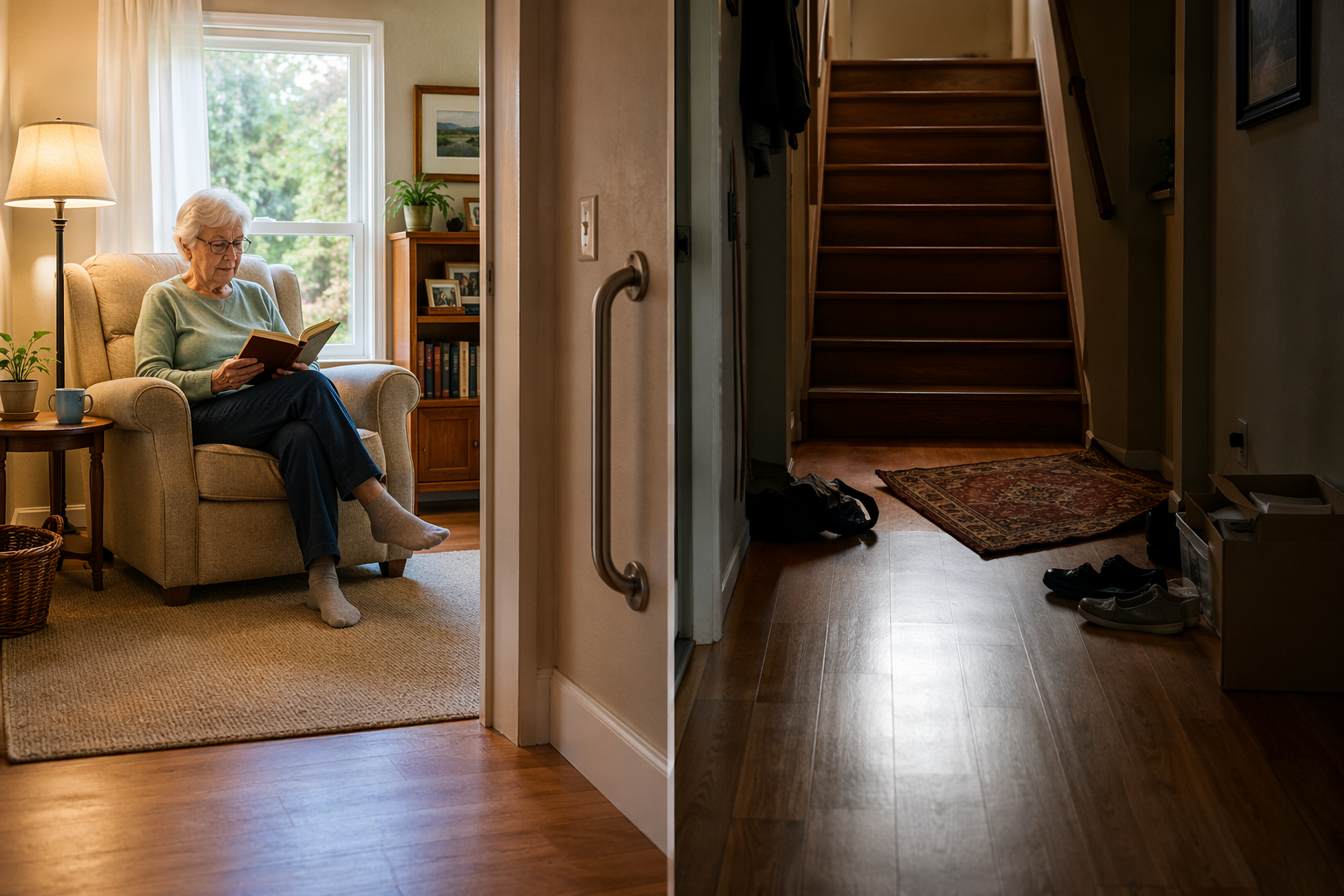
When I say “ready,” I mean specific things: a step‑free entry into the home, a bedroom and full bathroom on the first floor, and at least one grab bar in the shower or tub area. That’s the short list the U.S. Census uses. Only 1 in 10 homes meets it.
And even that low bar is aspirational for most families. According to the University of Michigan National Poll on Healthy Aging (cited by RubyHome), only 18% of adults 50+ have made any home modifications. The other 82% are living in homes that were never designed for the bodies they now have.
The good news: readiness is not binary. Many homes can be made safer for far less money than people assume. The British Geriatrics Society’s systematic review found that home modifications reduce falls by 38% – a number that holds across multiple studies. The barrier is not physics; it’s cost, stigma, and lack of awareness.
The modification cost spectrum
Cost is the most common reason families postpone. But the range is wide, and most of the effective changes are cheap.
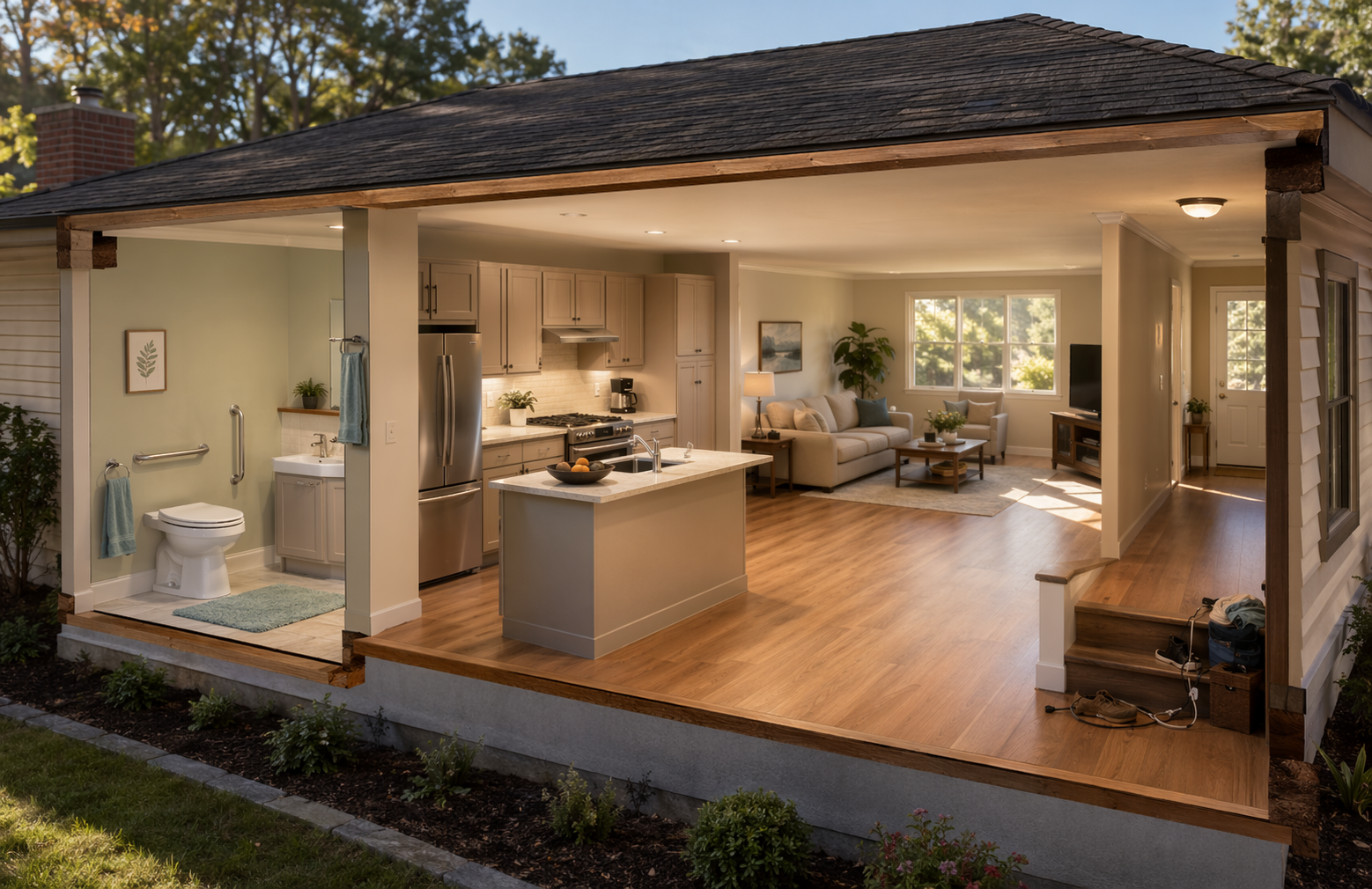
- Low‑cost ($25–$500): grab bars, lever‑style door handles, handheld showerheads, non‑slip bath mats, toilet risers, better lighting.
- Mid‑range ($1,000–$10,000): walk‑in showers, stair lifts, modular wheelchair ramps, comfort‑height toilets.
- High‑cost ($10,000–$50,000+): widening doorways, adding a first‑floor bedroom and bathroom, installing an elevator.
A single grab bar costs $20 to $150 and can prevent the most common type of fall – slipping in the bathroom. The room‑by‑room checklist below gives you a place to start.
Room‑by‑room quick‑check
- Bathroom: grab bars by toilet and in shower, non‑slip mat, raised toilet seat, handheld showerhead.
- Bedroom: clear path to the bathroom, nightlights, bed height that allows easy stand‑up.
- Stairs: sturdy handrails on both sides, good lighting at top and bottom, no loose rugs.
- Kitchen: frequently used items on low shelves, good task lighting, non‑slip flooring.
- Entryway: step‑free or a small ramp, clear door swing, a bench for sitting to remove shoes.
For a deeper look at how to adapt the whole living space, see this guide on maintaining mobility at home.
The Real Cost of Waiting: $80 Billion and Rising
Home modifications feel optional until a fall happens. Then the cost shifts from a few hundred dollars for a grab bar to tens of thousands in medical bills.
The National Council on Aging (NCOA) estimates the total health care cost of non‑fatal older adult falls at $80 billion per year – projected to hit $101 billion by 2030. Medicare covers 67% of those costs, but the remaining 29% is paid privately or out‑of‑pocket. One inpatient visit for a fall injury averages $18,658. An emergency department visit costs $1,112.
| Scenario | Estimated cost |
|---|---|
| Do nothing – hope no fall happens | $0 immediate, but risk of $18,658+ per fall |
| Make low‑cost modifications (grab bars, lighting, mats) | $25–$500 |
| Mid‑range modifications (walk‑in shower, stair lift) | $1,000–$10,000 |
| One fall hospitalization | $18,658 average, plus rehab and unpaid care |
| Assisted living (median monthly) | $6,313/month – $75,756/year |
The average aging‑in‑place remodel runs about $9,500 – less than a single fall hospitalization. And that ignores the value of the unpaid care that a fall often triggers: families provide an estimated $873 billion of free labor each year. That number comes from a ChoiceMutual analysis of Health Affairs data – it’s an approximation, but the direction is undeniable.
Who Will Care? The Hidden Burden on Family
The home and the money are only two pillars. The third is the human one: who will provide the daily help that makes aging in place work? Most families have not asked that question.
The $873 billion in unpaid caregiver labor is not an abstract statistic. It is the sum of adult children cutting back work hours, spouses providing hands‑on care, and long‑distance siblings coordinating appointments. The same ChoiceMutual analysis estimates that up to 24% of community‑dwelling older adults experience social isolation, which itself increases fall risk. I treat that 24% as indicative, not definitive – the primary source is Health Affairs, but the direction is clear: isolation and fall risk feed each other.
If you are the adult child reading this, the question is not just whether your parent’s home can be modified. It is whether you and your siblings have the time, energy, and resources to be the care network. If not, you need a plan that includes paid help or a different living arrangement. That is not failure; it is honesty.
For more on protecting yourself while caring for someone else, see our guide on caregiver burnout.
Should You Modify or Move?
By now you have the numbers: the home likely isn’t ready, the fall cost is enormous, and the family care burden is real. But what do you actually do with that information?
I use four questions to sort a situation. If you answer “yes” to all four, modifying the home and planning to stay is realistic. If you answer “no” to any, you should start discussing alternatives – including the possibility that assisted living or a live‑in companion may actually be safer.
- Is the home modifiable? Can you create a step‑free entry and a first‑floor bedroom/bath without spending more than the equivalent of a year’s assisted living (roughly $75,000)?
- Can the family afford both the modifications and the ongoing care? Factor in lost wages, unpaid labor, and the 21% probability of having long‑term care insurance.
- Is there a caregiver network? Do at least one family member or paid caregiver live within 30 minutes, and do they have the capacity to provide help weekly?
- Is the community supportive? Are there medical facilities, grocery delivery, and social opportunities within reach?
If you need to explore alternatives, this guide on live‑in companions for elderly adults can help you evaluate in‑home care options. And if you are open to relocation, our ranking of cities by home‑modification readiness may give you a starting point for a different conversation.
How to Start the Conversation
The hardest step is often saying the words. The data is clear, but your parent may not see the gap. They see the home where they raised a family, not a fall risk.
Here is a conversation opener that I have seen work – and it is not a therapist’s ideal; it is something an actual adult child can say:
“Mom, I love that you want to stay here. Let’s walk through the rooms together and see what might need a small change. Nothing big – just a grab bar here, a better light there. We’ll decide together, and if it turns out the house needs too much, we’ll figure out a plan that keeps you safe.”
- Start with one room, not the whole house. The bathroom is usually the highest‑risk area.
- Frame it as safety, not old age. “I don’t want you to trip on that rug, just like I wouldn’t want a guest to trip.”
- Involve them in decisions. Let them pick the color of the grab bar or the style of the handrail. A sense of control makes adoption far more likely.
- If you meet resistance, come back with the numbers: “One in four people your age falls each year – that’s why the CDC recommends these changes.”
The preparedness gap is real and dangerous. But it is also fixable – if you start now, with a checklist, a cost estimate, and a conversation. The alternative is waiting until the fall decides for you.
Related reading
Noticed something outdated or inaccurate on this page? Flag a correction. We review every report against CDC, NIA, and AARP HomeFit guidance before updating a page.
Part of the Fall Prevention section.